
Watch the podcast where I answered, “How did I end up in Regulatory Affairs and what the h!ll we do everyday”
Links:
June is here.
And in my world, that means exactly one thing: slow down.
I grew up in Turkey, where summer is not a season, it is a whole personality. You eat outside. You stay up late. You do nothing efficiently and feel completely fine about it.
Give me a beach, a cold drink, and absolutely no agenda. That is my summer. I am deeply, unapologetically a beach person who also hates heat which is its own kind of contradiction I have made peace with.
So in the spirit of slowing down, I am shifting to two issues per month through the summer. Less inbox noise for you, more time for both of us to actually enjoy whatever our version of summer looks like.
Which brings me to the important question: what is your summer plan?
Beach? Mountains? Pretending to relax while catching up on work email from a sunlounger?
Let me know in the comments and enjoy the read. ☀️
Today you will read in this issue:
a quote worth reflecting on
a recall worth learning from
a free course worth doing
linkedin post worth reading
What needs judgment is everything else.
A wound care device that also delivers a drug component. Is it a device, a medicinal product, or a combination product? The answer changes your entire regulatory pathway, your timeline, and your submission strategy.
A software algorithm that flags abnormal ECG readings. Does it diagnose, or does it inform? One word in the intended purpose can shift the classification by two risk classes.
A clinical investigation where the available data shows meaningful benefit in a subgroup, but the overall results are mixed. Do you have enough evidence to support the claim, or are you overstating what the data actually shows?
These are not edge cases. For most regulatory professionals, they are Tuesday.
This is why scientific thinking matters more than procedural knowledge. Procedures tell you how to move through a process. Scientific thinking tells you how to reason through a problem; how to look at incomplete information and still arrive at a position that is coherent, transparent, and defensible.
Share Beyond Regulation with Ceren: Insights, Career & MedTech
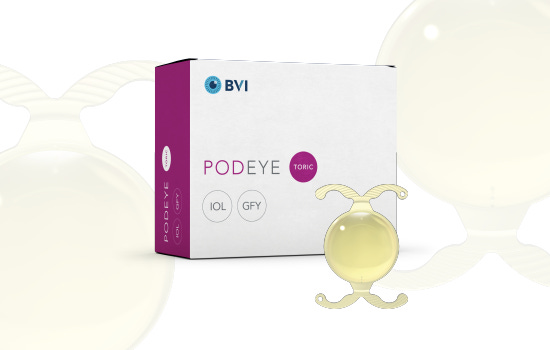
This week on my radar: the PODEYE IOL (PODAGF) by PhysIOL / BVI, which is an acrylic intraocular lens implanted after cataract removal.
Here is to the story:
The lens was not defective.
The design was not defective.
The sterile barrier was not defective.
The primary label was not defective.
They just put it in the wrong box.
221 units across three batches shipped in outer packaging labelled MICROPURE 123 which is a completely different product line.
Crossed the ocean and drowned in a puddle.
To be fair, the damage was genuinely contained. The primary label the surgeon reads in theatre was correct. The PODEYE is physically incompatible with the MICROPURE 123 injector so even a confused user would have hit a wall. No patient risk identified. No clinical follow-up required.
And yet: Urgent FSN. Because under MDR, “it would have been fine” is not a labelling standard.
For regulatory and quality teams, the lesson is simple:
Packaging lines are a vigilance risk. Multiple product lines. Shared storage. High volume. Time pressure. A device can clear every performance hurdle and fail at the box.
Take away from this case:
Outer packaging is a regulated label, not decoration.
Two independent safeguards can reduce risk to negligible, but they cannot cancel the FSCA obligation.
Serial-number traceability is what made this targeted rather than a full batch withdrawal.
Share Beyond Regulation with Ceren: Insights, Career & MedTech
SMEs (Small and medium-sized companies) make up around 90% of the medical technology industry in Europe, most employing fewer than 50 people. This means entry-level regulatory roles are often found in fast-moving startups rather than large organizations. So understanding the stages a medtech SME goes through is essential.
Understanding this journey helps you see how regulatory activities evolve, what’s expected at each phase, and how priorities shift as a company grows. It also gives you a practical edge in applications and interviews. The webinar below brings this to life, walking you through regulatory thinking across the early stages of a medtech startup.
No prior knowledge required.
Share Beyond Regulation with Ceren: Insights, Career & MedTech
I recently came across an interesting article by Lavanya Ramnath that highlights a distinction I think more people in regulatory should talk about.
Click for the original article
Here is the summary:
Not every “AI-powered” product is actually AI in deployment. Some products use machine learning during development to identify patterns but ultimately launch as fixed, rule-based software.
How a product is built is different from how it behaves in the market. A model may be trained using ML, but if the final released version follows predefined logic and does not learn, the deployed system may function more like conventional software.
True AI introduces different regulatory questions. Once an algorithm is actively making predictions based on learned behavior, topics like model updates, performance monitoring, drift, and governance become much more relevant.
Labels matter less than intended use and technical reality. Calling something “AI” does not automatically make it AI from a regulatory perspective. Documentation and architecture need to support the claim.
For RA professionals, this distinction changes the compliance strategy. Understanding whether a product contains deployed AI versus traditional software influences evidence generation, lifecycle management, and regulatory expectations.
This article was a good reminder that one of the most important regulatory skills today is asking a simple question early:
Are we regulating a learning system, or are we regulating software built using machine learning?
That is it for this week! :)
Have a great two weeks and see you in the next issue!
Share Beyond Regulation with Ceren: Insights, Career & MedTech
No posts
Comments
Nothing yet. Say the first thing.
Sign in to join the conversation.