
The recent IVDR and MDR proposals have confirmed what we already know: regulatory affairs is dynamic and multifaceted. Manufacturers, the EU Commission, Notified Bodies, and MedTech Europe all claim to prioritize patient safety, yet their position papers reveal fundamentally different perspectives on how to achieve it.
Each stakeholder operates from legitimate concerns—cost predictability, resource constraints, innovation, oversight—but they often collide. Understanding these competing interests shapes how we prepare submissions, manage timelines, and plan our certification strategy.
Today you will read in this issue:
news worth reading
a recall worth learning from
career advice worth exploring
MedTech voice worth following
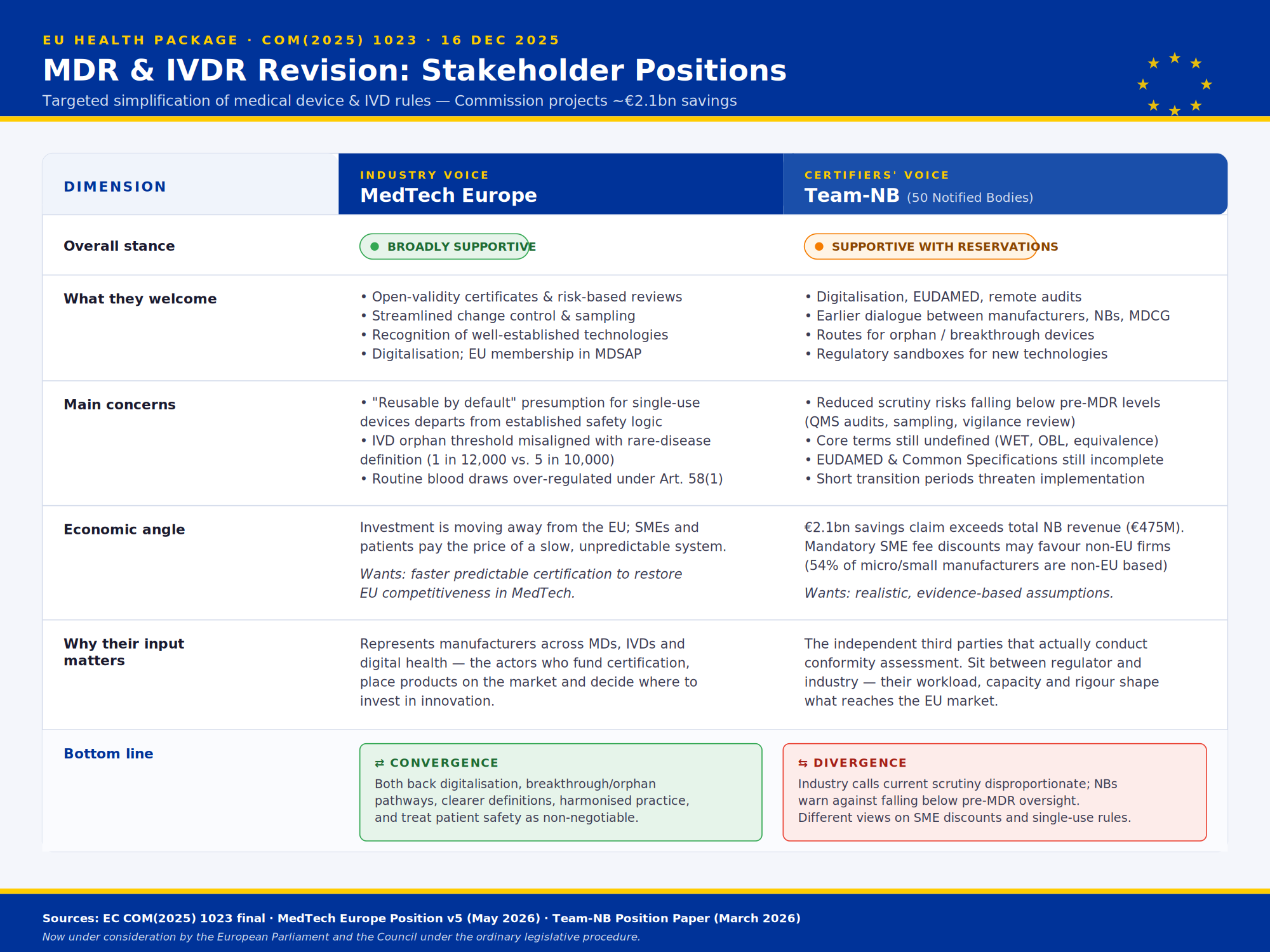
Position papers from MedTech Europe and Team Notified Body anaylzing IVDR/MDR proposal
IVDR/MDR proposal published in Dec 2025 keeps getting responses from important stakeholders of MedTech industry. Below is the comparison of these two position papers. A little background:
MedTech: European trade association for the medical technology industry including diagnostics, medical devices and digital health
Team-NB: European Association of Medical Devices Notified Bodies
Share Beyond Regulation with Ceren: Insights, Career & MedTech
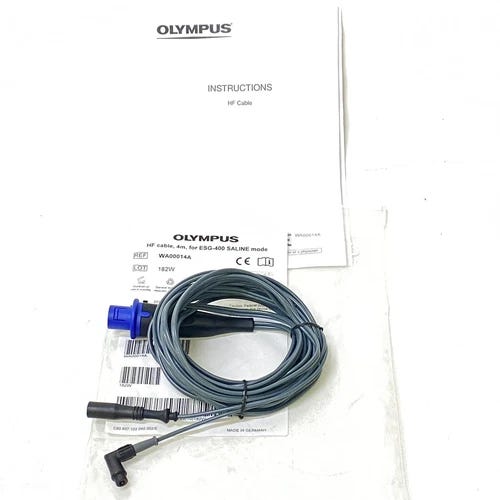
This week I have in my radar: the HF Cable, Bipolar (WA00014A) by Olympus — a cable connecting electrosurgical generators to surgical instruments in urology and gynecology.
The cable was not defective at the beginning.
It degraded.
Repeated use wore down the insulation, allowed corrosion to set in, and created the conditions for thermal events during live procedures.
Over four years:
109 related complaints,
17 burn incidents,
one confirmed user injury.
What makes this case striking is: A cable can pass a visual check and still fail during a procedure.
Olympus responded with an Urgent Field Safety Notice, not a recall, but a clear instruction: dispose after 12 months, inspect before every use, replace at any sign of wear.
For regulatory and quality teams, the lesson is simple:
Service life limits are safety controls, not guidelines
Invisible degradation is still degradation
Reusable accessories carry lifecycle risk just like the devices they support
Share Beyond Regulation with Ceren: Insights, Career & MedTech
Some of the strongest regulatory professionals I know came from somewhere else first. Quality. R&D. Clinical. Medical writing. They built domain knowledge, understood how products are developed and validated, and then moved into RA with a foundation that someone who started directly rarely has.
The switch is possible. But timing and framing matter.
Too early and you lack the context that makes RA meaningful. Too late and you may have to take a step back in seniority to make the transition. The sweet spot is usually when you have enough depth in your current role to bring something valuable and enough curiosity about the regulatory side to pursue it deliberately.
The same applies to sector switches. Moving from pharma RA to MedTech RA, or the other way around, is more common than people think. The frameworks are different. The mindset is not.
I am planning a series of real CV breakdowns, one for each transition below. If you have made one of these switches, or are actively trying to, I would love to feature your story anonymously.
I am looking for one volunteer per transition:
QA → RA
R&D → RA
Clinical Affairs → RA
Medical Writing → RA
Pharma RA → MedTech RA
MedTech RA → Pharma RA
Send me a message (best on substack) if you are interested. Your CV will be reviewed privately, and the breakdown will be shared without any identifying details.

This week, I want to highlight an Austrian colleague who has spent the last 15 years navigating the MedTech landscape from three angles simultaneously, as a builder, auditor, and community leader. His unique point gives him rare insight into how the industry actually works, not just how regulations say it should work.
On LinkedIn, he consistently shares thoughtful insights and infographics that break down MDR complexity into digestible pieces.
His work is a reminder that regulatory expertise often comes from those willing to operate across different roles and perspectives. Worth following if you want to stay current in MedTech.
That is it for this week! :)
Have a great week and see you in the next issue!
Share Beyond Regulation with Ceren: Insights, Career & MedTech
No posts
Comments
Nothing yet. Say the first thing.
Sign in to join the conversation.