
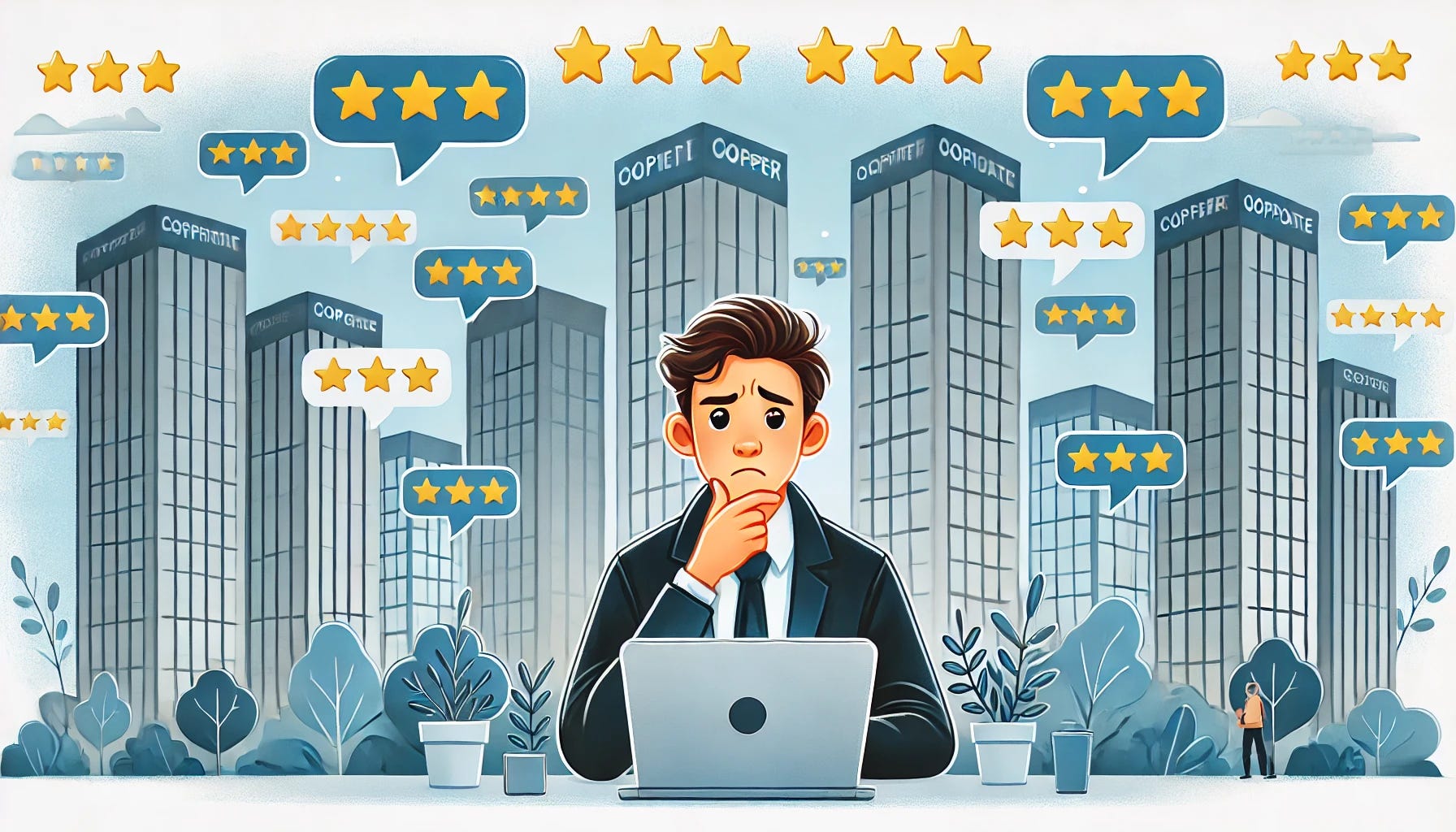
Trust me, I understand why these platforms were created in the first place, the idea is noble. A space where employees can share honest feedback and help others make more informed choices about where to work.
But the reality? It rarely works the way it should. And here’s why:
1. They’re easily manipulated by the companies themselves.
The moment a review platform becomes influential, it turns into a new marketing battlefield. Some companies push employees, subtly or explicitly, to leave positive reviews. Others work hard to bury the negatives. What was meant to be authentic becomes just another extension of employer branding.
2. The anonymity is fragile, and everyone knows it.
Some platforms force you to leave a review before accessing others. Sounds fair, until you realize you’re being asked to critique your current or past employer while logged in with your professional profile.
Let’s be honest, no one feels truly safe writing what they think when there’s even the slightest chance of being identified.
3. The system creates a distorted version of reality.
Those who speak out are often the extremes, people with either a very bad or an unusually good experience. The majority stays, in fact, silent. Not because they don’t have an opinion, but because the risks outweigh the benefits. What we read, in the end, is a filtered and incomplete picture.
Bottom line:
If the goal is to really understand what working somewhere feels like, there are better ways. Private conversations, trusted networks, real human interactions.
The stuff that doesn’t scale, and that’s exactly why it works.
Comments
Nothing yet. Say the first thing.
Sign in to join the conversation.