
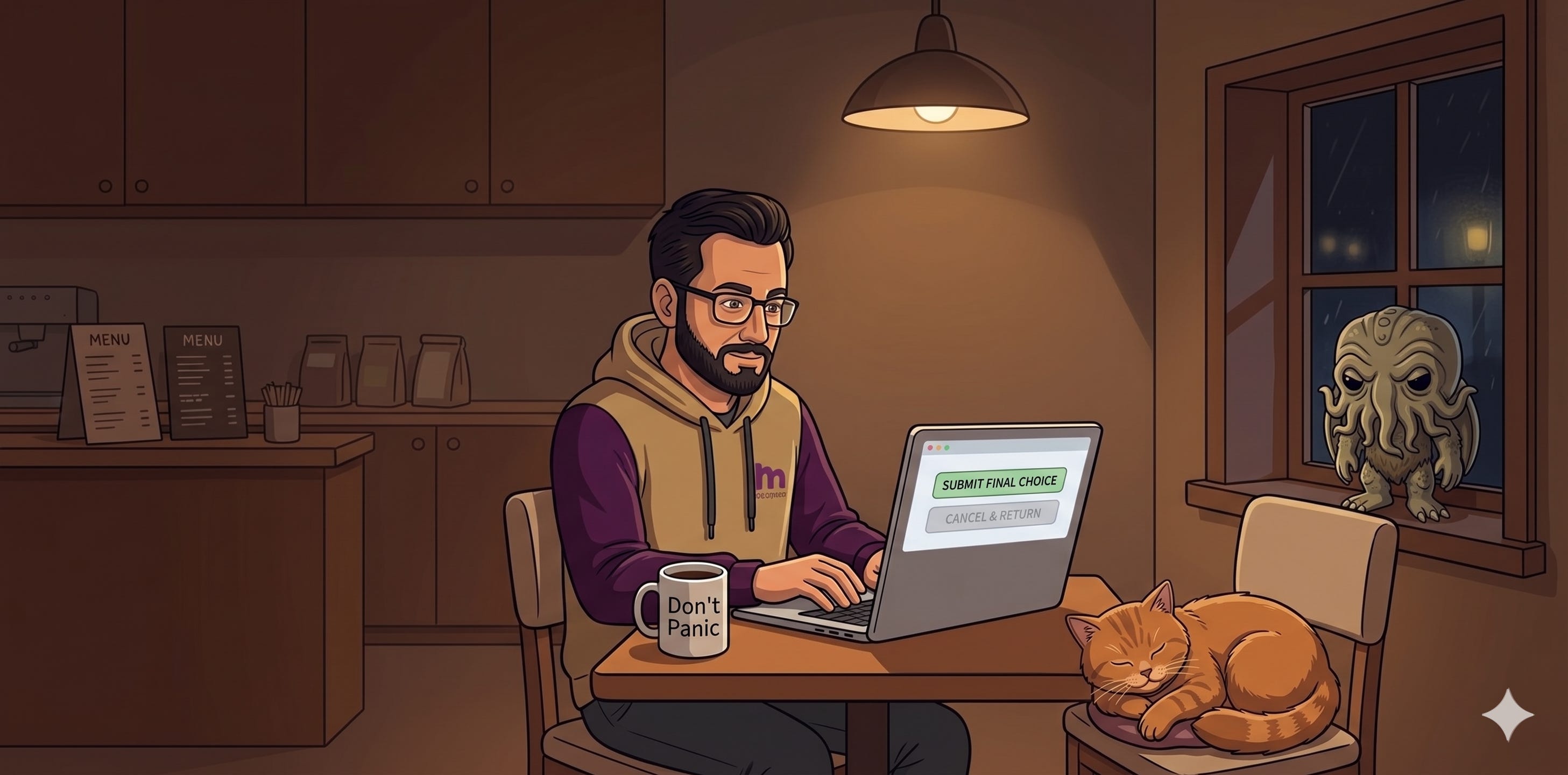
After February, I made a decision. I stopped using OpenAI.
I didn’t announce it. I didn’t send a note to my team or write a post about it. There was no manifesto, no statement of principles, no public positioning. It was simply a decision I made, quietly, for reasons that felt clear enough to me and then I moved on.
I’m telling you now because I think the way I made that decision says more about leadership in the AI age than the decision itself.
Thanks for reading Beyond The Code: Leadership, Strategy, and Mindset! Subscribe for free to receive new posts and support my work.
The Accumulation of Red Flags
Let me be precise about what happened, because I don’t want this to sound like a moral verdict.
When the Pentagon negotiations with Anthropic collapsed in February, OpenAI signed its deal the same day. That timing was striking. You can read it as opportunism, or you can read it as preparation: months of hiring former defense officials and lobbyists finally paying off. Either way, it told me something about how that company makes decisions under pressure.
But February wasn’t the whole story. It was the last signal in a longer sequence.
OpenAI is in the process of converting from a nonprofit to a for-profit company. Sam Altman is pursuing an IPO. The “Open” in the name, originally a statement of intent about open-source AI development, is now, at best, a historical artifact. At worst, it’s ironic.
None of these things, individually, would have changed my mind. Companies evolve. Priorities shift. I understand that. But there’s a pattern recognition that happens when you watch an organization long enough: you start to see not just what it does, but what it’s becoming. And what OpenAI is becoming didn’t align with what I need from infrastructure I depend on.
So I made a choice. Claude and Gemini. Not forever… these things are never forever. But for now.
The Decision Nobody Sees
Here’s what I find interesting about how that decision happened.
I didn’t build a scoring matrix. I didn’t run a formal vendor evaluation. I didn’t present the reasoning to anyone, because there was no one to present it to. It was a business decision, but an intimate one, the kind that lives at the intersection of professional judgment and personal values, where the two are hard to separate.
And I think this is actually where most of the real leadership decisions happen.
We spend a lot of time in the leadership literature talking about the decisions that get communicated: how you frame a pivot to your team, how you deliver difficult news to stakeholders, how you build alignment around a new direction. These things matter. But they’re almost always the second step.
The first step is the decision itself: the moment when you look at the information available, weigh it against what you believe, and choose. Alone. Before there’s anything to communicate.
That moment gets very little attention. And I think it’s where most of the actual work happens.
What Does “Responsible” Even Mean Right Now
The reason this is harder than it used to be is that the signals keep moving.
A year ago, OpenAI’s nonprofit status was part of how it framed its identity: a structural commitment to something beyond profit. Today, that structure is being dismantled. A year ago, Anthropic was a safety-first research organization. Today, it’s navigating Pentagon deals, government designations, and the uncomfortable reality that unilateral restraint is a competitive disadvantage if your rivals don’t apply the same restraint.
The companies whose tools you use are not static. Their values aren’t locked in at founding. They evolve, sometimes toward what they originally promised, sometimes away from it, and sometimes in directions that are genuinely hard to categorize as either.
This is the actual challenge of leading in the AI age. Not the technology. Not the implementation. Not even the organizational change management, as hard as that is.
The challenge is making principled decisions in a landscape where the principles keep shifting under your feet and doing it without the luxury of certainty, without a stable framework to apply, and usually without anyone to check your reasoning with.
The Questions Worth Asking
I’m not suggesting everyone should make the same choice I made. Context matters enormously: your use case, your organization, your geography, your risk tolerance. What I chose makes sense for me. It may not for you.
But I do think the process is worth examining.
When you evaluate an AI vendor, or any infrastructure partner, there are the obvious questions: performance, price, support, integration, compliance. Most procurement processes are built around exactly these.
And then there are the questions that don’t fit neatly into a scoring matrix:
When this company was under real pressure, what did it do? Not what it said. What it did.
Is the version of this company I’m buying into today the same one I’ll be depending on in two years? Not in terms of features, in terms of identity.
If this company had to choose between its stated values and its financial survival, which one would it protect? February gave us a fairly clear answer for all three major players. That information is available. Most people just haven’t used it yet.
The Leadership Nobody Talks About
The decision I made in February isn’t one I’ll put on a slide deck. It won’t appear in a case study. Nobody in my team noticed, because there was nothing to notice: the work continued, the tools changed, the output was the same (better actually, but that’s another story).
But I think that kind of decision, quiet, values-based, unannounced, is actually one of the most important things a leader does. Not because of the specific choice, but because of what it builds over time: a consistency between what you believe and how you act, that doesn’t depend on an audience.
The leaders I’ve respected most weren’t the ones who communicated their values loudly. They were the ones whose decisions were coherent with their values even when no one was watching.
That’s the kind of leadership the AI age requires more of, not less. Because the decisions are getting harder, the signals are getting noisier, and the frameworks are getting older faster than anyone can update them.
The work is still the same: figure out what you believe, and then act like it.
Have you made any quiet decisions like this about tools, vendors, or directions that you didn’t feel the need to announce? I’d be curious to hear how you think about it.
Find me on LinkedIn or reply here.
Thanks for reading Beyond The Code: Leadership, Strategy, and Mindset! This post is public so feel free to share it.
Comments
Nothing yet. Say the first thing.
Sign in to join the conversation.