
Poly(ADP-ribose) polymerase (PARP) inhibitors have reshaped the management of metastatic castration-resistant prostate cancer (mCRPC) with homologous recombination repair (HRR) defects, particularly in patients with BRCA1/2 mutations. Yet resistance is inevitable.
The AMPLITUDE trial tested whether introducing PARP inhibition earlier—combining niraparib with abiraterone acetate and prednisone (AAP) in metastatic castration-sensitive prostate cancer (mCSPC)—could improve disease control and delay progression in HRR-deficient tumors.
Design: Phase 3, randomized, double-blind, placebo-controlled
Population: 696 men with mCSPC and deleterious germline or somatic HRR alterations
Intervention: Niraparib (PARP inhibitor) + AAP vs placebo + AAP
Primary endpoint: Investigator-assessed radiographic progression-free survival (rPFS)
Key subgroups:
BRCA subgroup (n = 387)
HRR effector subgroup (n = 456)
Intention-to-treat (ITT) population (n = 696)
Primary endpoint (investigator-assessed rPFS) positive in favor of niraparib:
BRCA subgroup: HR = 0.52 (95% CI 0.37–0.72; p < 0.0001); median not reached vs 26 months
HRR effector subgroup: HR = 0.57 (95% CI 0.42–0.77; p = 0.0003)
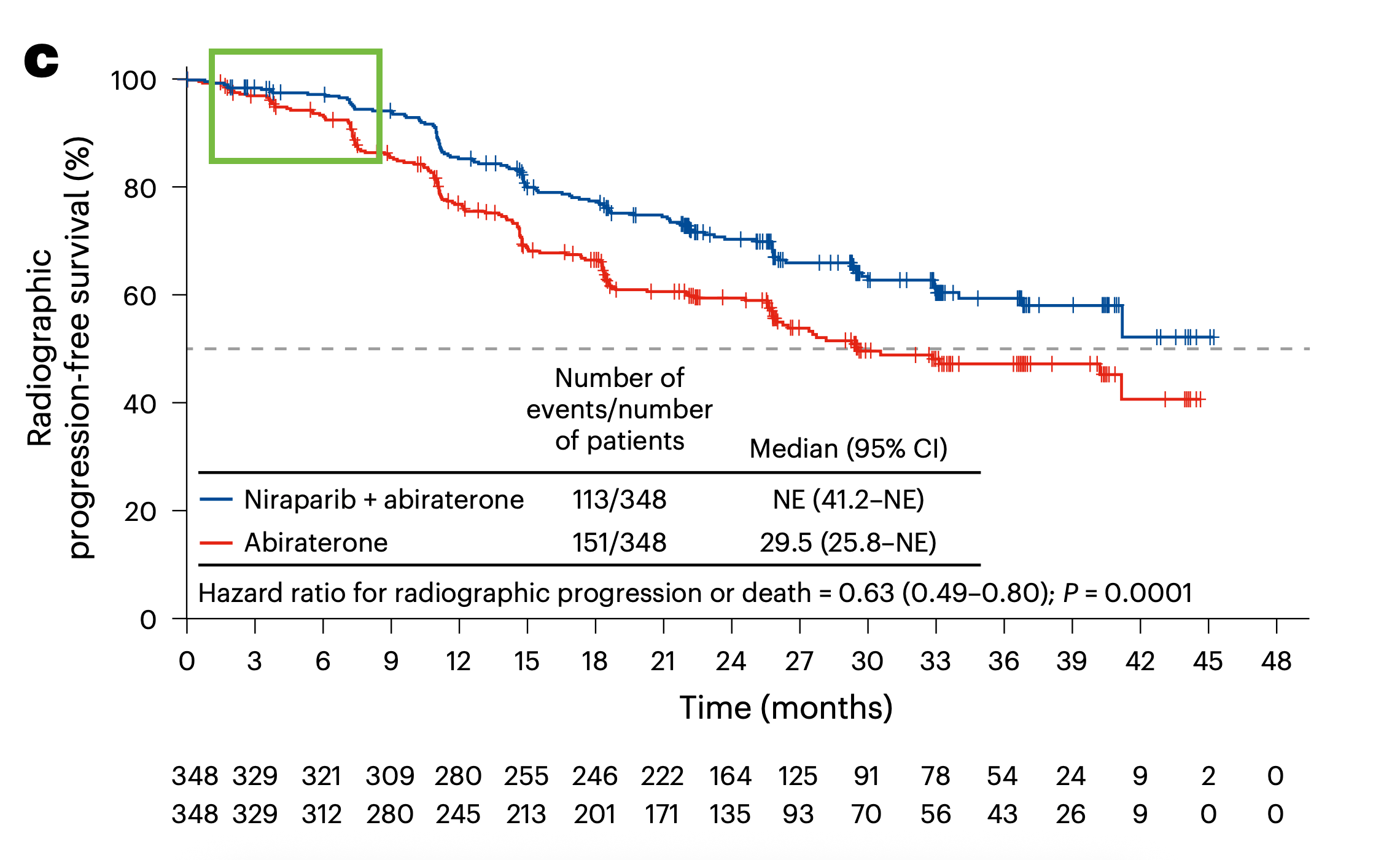
ITT population: HR = 0.63 (95% CI 0.49–0.80; p = 0.0001)
These findings were consistent across prespecified subgroups and confirmed by blinded central review.
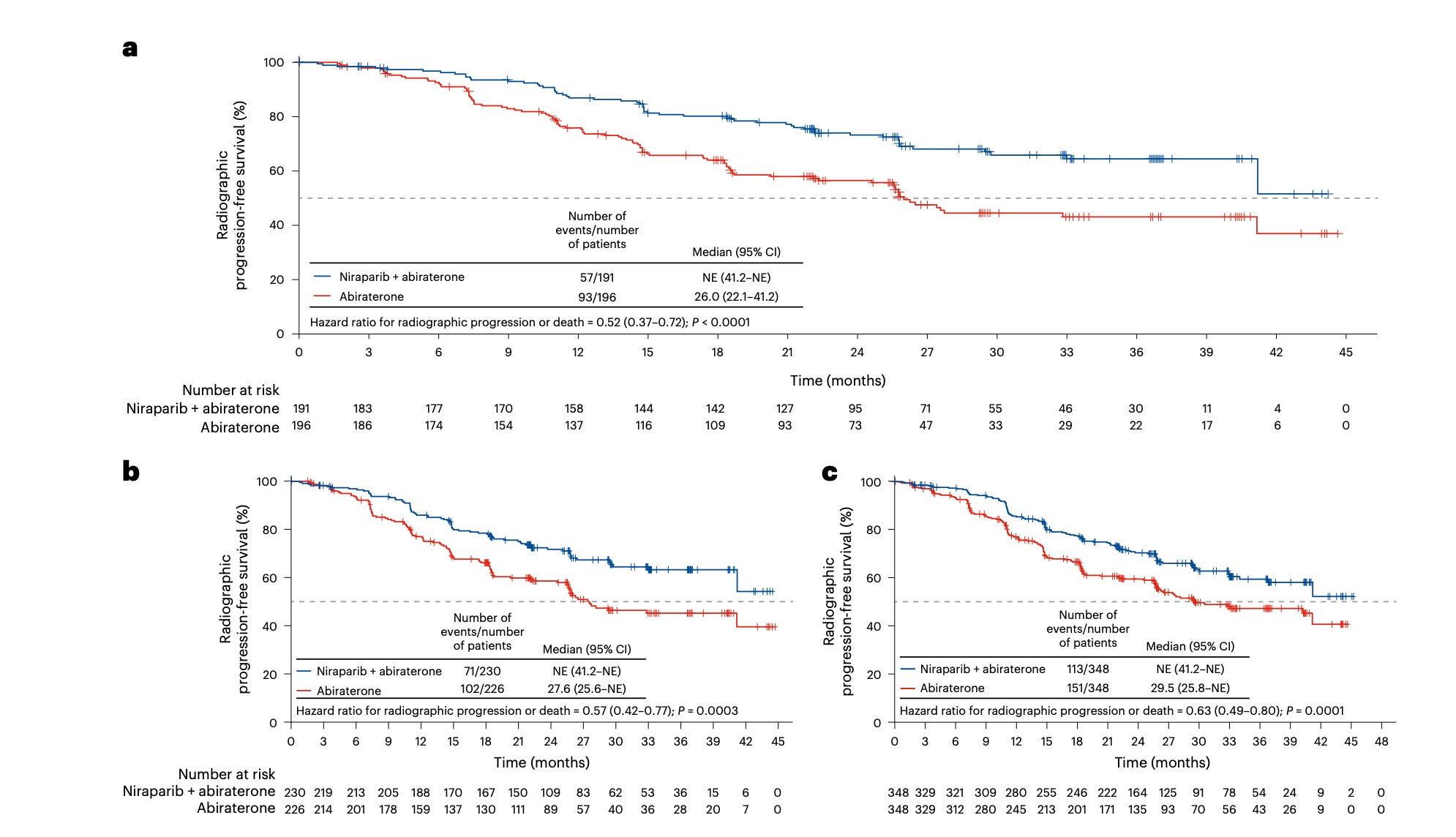
Kaplan-Meier estimates for PFS - a: BRCA subgroup / b: HRR subgroup / c: ITT subgroup
Secondary endpoints:
Time to symptomatic progression: HR = 0.50 (95% CI 0.36–0.69; p < 0.0001)
Overall survival: Immature, HR = 0.79 (95% CI 0.59–1.04); not statistically significant
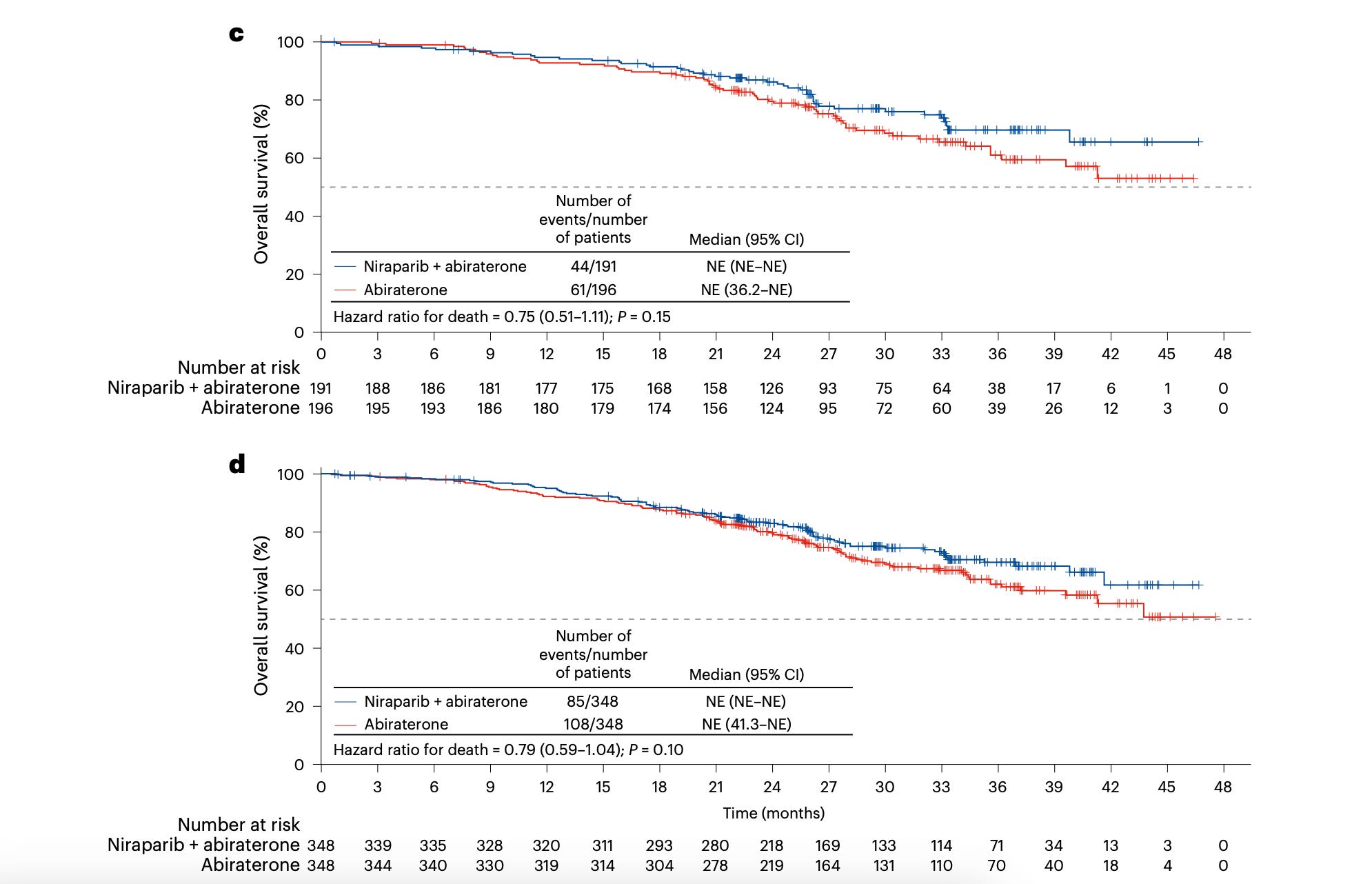
Kaplan-Meier estimates for Overall survival - c: BRCA subgroup / d: ITT subgroup
Safety:
Grade 3–4 adverse events occurred in 75% of the niraparib + AAP group, compared with 59% in the AAP-alone group.
Most common: anemia (29% vs 5%) and hypertension (27% vs 18%)
25% required transfusion for anemia
Serious adverse events: 39% vs 28%
Treatment-emergent deaths: 14 vs 7
Quality of life (FACT-P) showed an initial decline in the niraparib arm, with recovery only after several cycles.
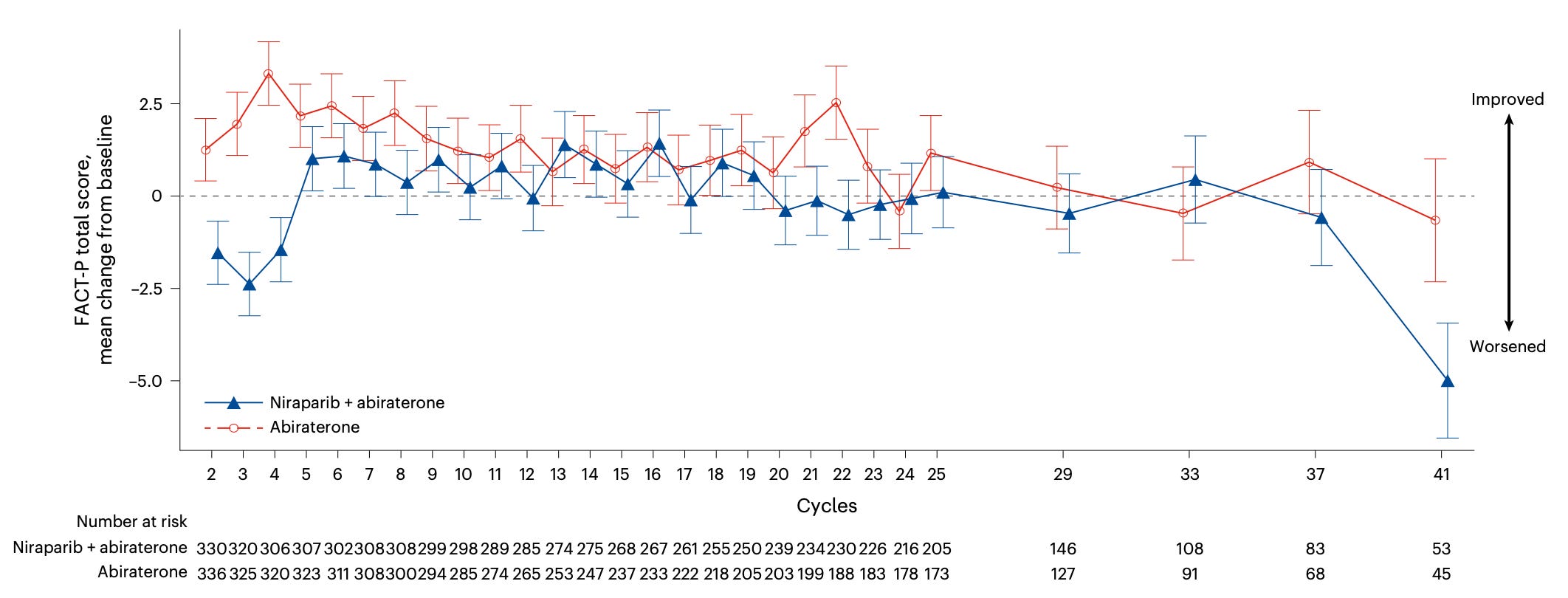
Patient-reported outcomes for Quality of Life: blue line shows initial worse QoL in the niraparib arm.
While AMPLITUDE achieved its primary endpoint, several aspects of its design and interpretation limit its immediate clinical impact.
Lack of crossover — a scientific and ethical flaw:
The trial did not allow crossover to niraparib for patients in the control arm who progressed, despite OS benefit of PARP inhibitors in later disease stages*.
This is not only an ethical concern. It also prevents answering the crucial sequencing question: is there true value in giving niraparib early, or could we safely reserve it for progression? If crossover was included in the trial, we could look at the difference in OS between patients who received niraparib immediately and those who received it upon progression.
* Admittedly, the OS benefit is compared to the ARPI switch, which is a weak comparator (PROfound trial).No overall survival benefit — and toxicity matters:
There is currently no OS benefit, and if we intend to move a toxic therapy earlier in the treatment course—thereby exposing far more patients—we must demand an OS benefit, not just improved PFS.
PFS alone is insufficient to justify a shift in standard practice with added toxicity.Serious adverse events and quality of life:
The combination carries a substantial toxicity burden, with far more serious adverse events and a measurable initial decline in quality of life. For a first-line therapy, this trade-off is nontrivial and clinically relevant.Potential bias through differential censoring:
Detailed censoring data were not reported, but inspection of the Kaplan–Meier curves suggests more early censoring in the control arm (cfr number of vertical ticks). This could reflect disappointment-driven withdrawal: patients perceiving a lack of side effects may suspect they’re on placebo and drop out early. Those who leave are often healthier and better connected, leaving behind more frail participants—potentially skewing the control curve unfavorably.
This remains a hypothesis, but it deserves verification with full censoring data.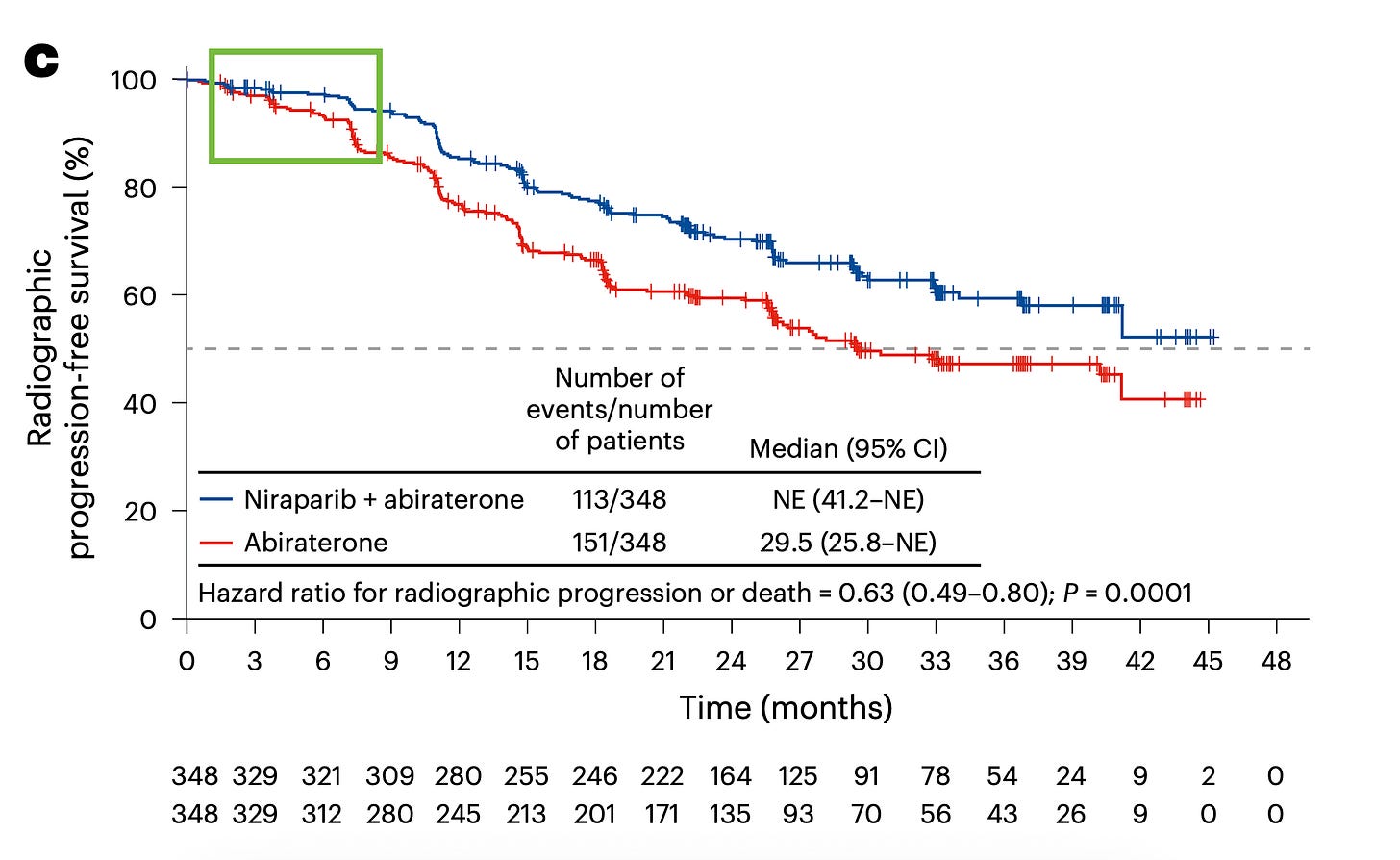
Kaplan-Meier estimates for PFS in the ITT group; the curves in the green box show more vertical ticks on the red line (control arm), suggesting increased censoring due to disappointment.
Post-progression therapy imbalances:
Only 56% and 72% of patients in the experimental and control arms, respectively, received any life-prolonging therapy after progression.
These figures are unusually low for mCSPC and likely reflect limited drug access in low- and middle-income countries participating in the trial.
Such disparities can dilute overall survival differences and complicate interpretation.
Investigator-assessed versus blinded central PFS:
It is difficult to understand why investigator-assessed rPFS was selected as the primary endpoint, while blinded central review was designated as the secondary endpoint. If the trial already funds an independent radiologic review, why not make that the primary measure? If investigator-assessed outcomes appear stronger than the blinded readout, this paradoxically highlights potential bias among trial investigators.The post-progression data raise several questions, but the one I can’t get my head around is the fact that 11% of patients in the niraparib arm received another PARP inhibitor (olaparib) after progression. This makes no biological sense, so why would a patient opt for this, or would the treating physician advise this?
AMPLITUDE demonstrates a statistically significant improvement in investigator-assessed rPFS with niraparib plus AAP in HRR-deficient mCSPC, confirming biological activity in BRCA1/2-altered disease.
However, the trial’s lack of crossover, the absence of an overall survival benefit, substantial toxicity, and early decline in quality of life make it challenging to support early PARP inhibition as standard of care.
Without evidence that upfront niraparib leads to better survival than its use after progression, exposing all patients to its toxicity cannot be justified.
In essence: AMPLITUDE shows biological promise but falls short of clinical justification. Until an overall survival advantage—or a crossover design—demonstrates that early PARP inhibition is truly superior, niraparib should not be used in the hormone sensitive setting outside of a clinical trial.
No posts
Comments
Nothing yet. Say the first thing.
Sign in to join the conversation.