
This is a short but significant update.
However, first and foremost, the authors of MAST (Metformin in Active Surveillance Trial) should be applauded for persevering through a lengthy accrual period and, importantly, for publishing the negative results. These findings matter.
Why This Trial Matters
It must be one of the most common questions I get in the outpatient clinic:
Thanks for reading Beyond The Abstract: Urology! Subscribe for free to receive new posts and support my work.
“Are there no pills to prevent me from getting prostate cancer?”
And once low-risk disease has been diagnosed, the question quickly becomes:
“What can I do to prevent progression?”
For more than a decade, metformin has been one of the brightest hopes among repurposed metabolic agents—a familiar, inexpensive drug with plausible anticancer effects based on epidemiology and preclinical work. If it were going to help anywhere, the active surveillance space seemed like the right setting.
But if there was ever any hope for metformin to delay progression, that hope is now buried with the publication of the MAST study.
The MAST Trial
The design of the Metformin Active Surveillance Trial (MAST) was commendably straightforward:
Population: Low-risk localized prostate cancer
Randomization: 1:1 to metformin (850 mg BID) vs placebo
Design: Multicenter, double-blind
Exclusion: Type 1 or 2 diabetes
Assessments: Confirmatory biopsy at 18 and 36 months, or biopsy for cause—mirroring real-world active surveillance
Primary endpoint: Time to progression (therapeutic or pathologic)
One notable omission from the protocol is the lack of routine prostate MRI, something that has become standard in contemporary AS pathways.
A total of 408 patients were randomized:
203 to placebo
205 to metformin
The cohort was overwhelmingly White (93.6%), limiting extrapolation to other racial groups—especially relevant given the higher prostate cancer risk and different tumor biology in men of African ancestry.
Results
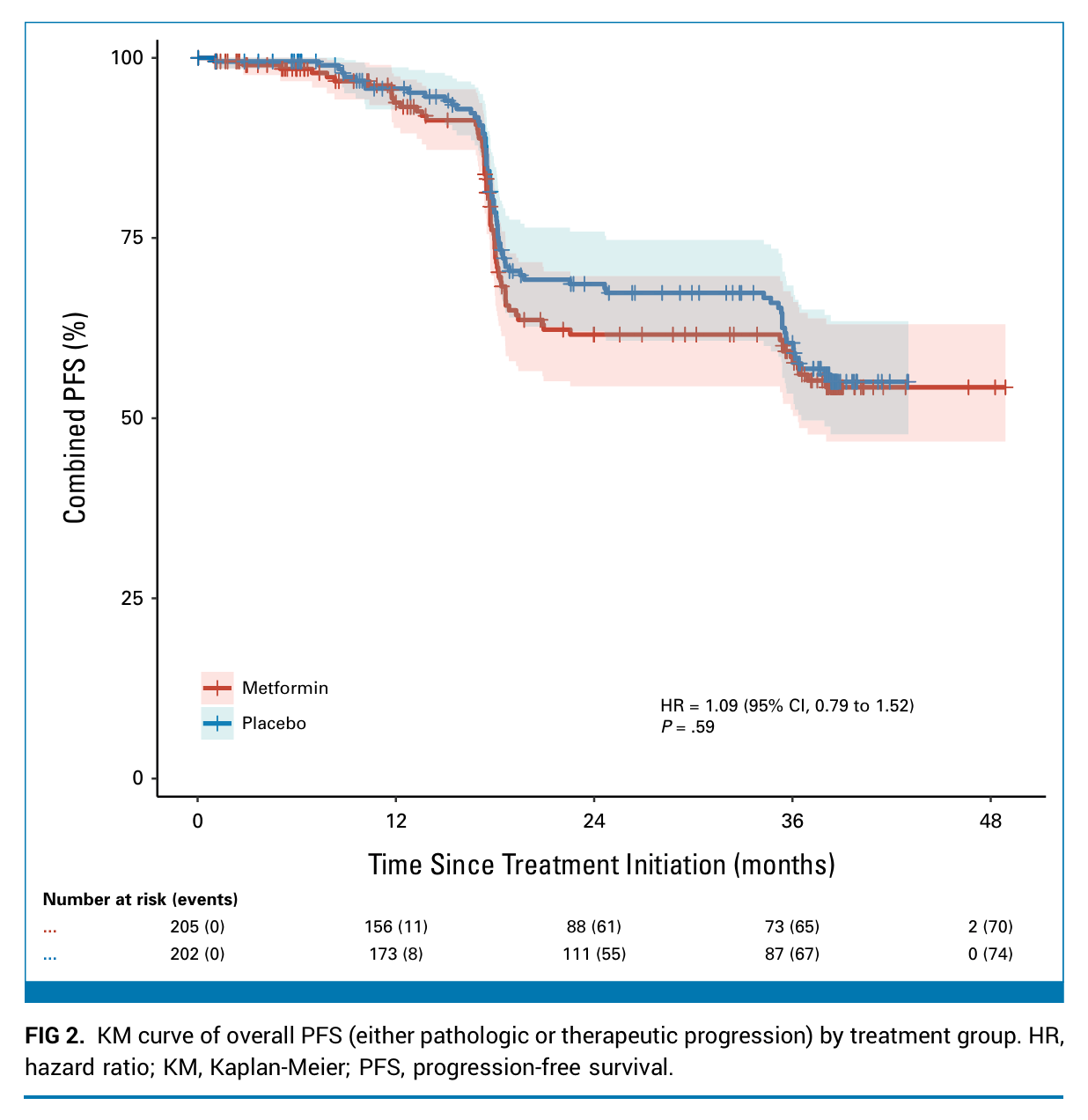
At a median of 36 months, there was no difference in progression between arms.
Among 144 patients who progressed:
70 were in the metformin group
74 in the placebo group
The hazard ratio for progression with metformin was essentially null: HR 1.09
Time-point analyses reveal similarly overlapping curves, with no indication of a clinically relevant benefit.
The BMI Signal
A prespecified subgroup analysis stratified by BMI revealed an unexpected finding.
Among patients with a BMI ≥ 30, those receiving metformin had increased pathologic progression compared with placebo. This signal was not observed in men with a BMI < 30.
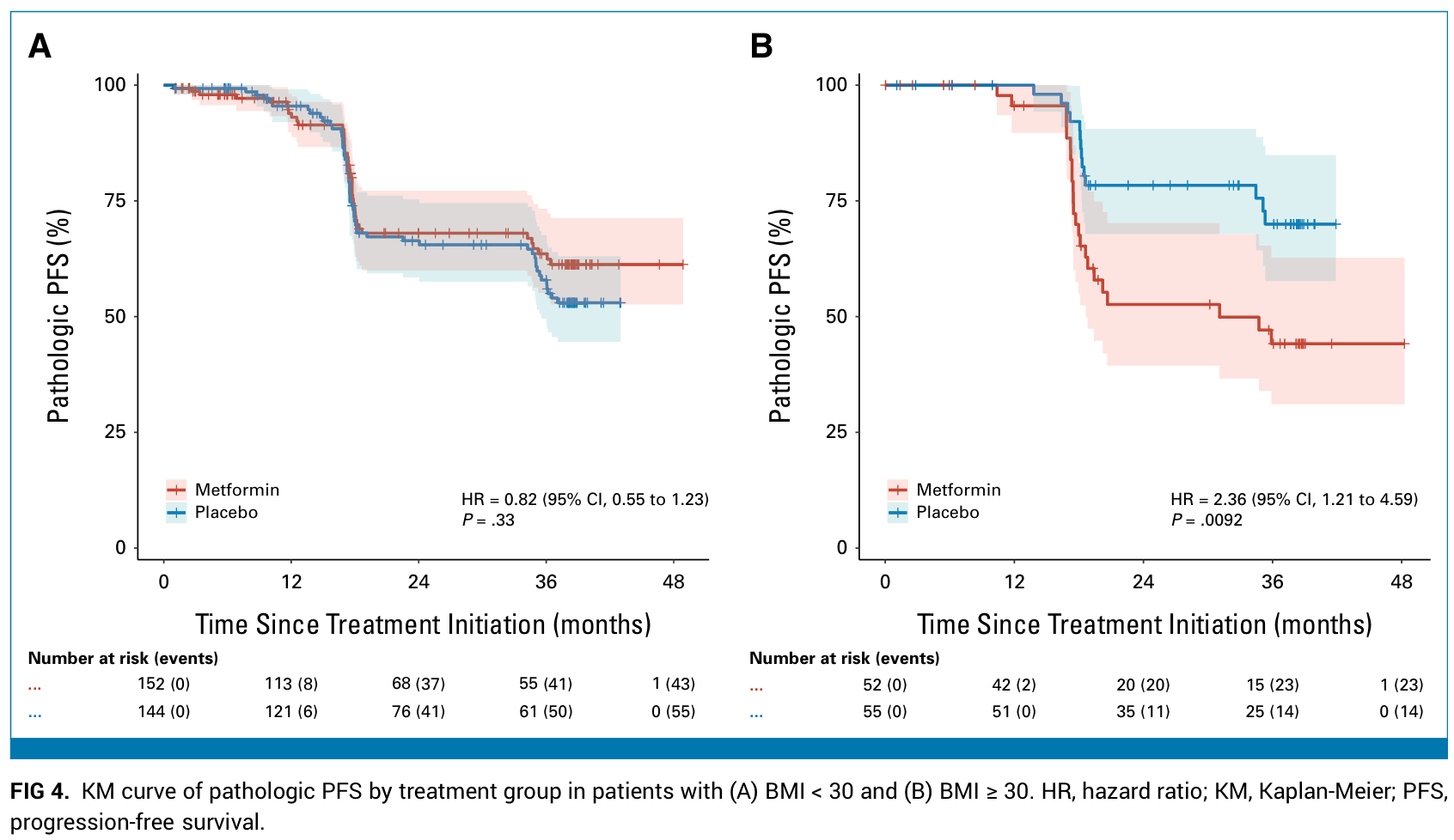
It is challenging to determine whether this interaction is due to biology, chance, or the unique metabolic and immune microenvironment associated with obesity.
Nevertheless, it’s a clear signal: don’t use metformin to slow progression, especially not in obese patients with low-risk prostate cancer.
Conclusion
Taken together with the previously negative data on adding metformin to ADT in metastatic hormone-sensitive disease, this trial likely marks the end of the road for metformin in prostate cancer.
It does not reduce the risk of progression in men with low-risk disease on active surveillance.
And in obese patients, outcomes may be worse when treated with metformin.
So when patients ask what they can do to prevent developing clinically significant prostate cancer, the answer remains simple:
Maintain a healthy lifestyle, and stay fit for treatment if you need it in the future.
With this, we can bury the hope for metformin in prostate cancer.
And that, too, is progress.
Strong randomized science can—and should—close chapters as confidently as it opens them.
Thanks for reading Beyond The Abstract: Urology! Subscribe for free to receive new posts and support my work.
Comments
Nothing yet. Say the first thing.
Sign in to join the conversation.