
This is a long one, but bear with me, it’s necessary given the trial's significant impact!
IMvigor011 is one of the most discussed urology papers of 2025 — and for good reason. Published in The New England Journal of Medicine, the trial reports significant improvements in disease-free survival and overall survival with adjuvant atezolizumab in muscle-invasive bladder cancer.
What distinguishes IMvigor011 is not the drug, but the strategy.
Rather than treating patients based solely on clinicopathologic risk, the trial limits intervention to those with molecular evidence of residual disease, as identified by circulating tumor DNA (ctDNA).
The intent is explicit: escalate treatment only for patients at high biological risk, while sparing others unnecessary toxicity.
Exactly what we need in clinical practice!
That intent deserves both recognition and careful scrutiny.
However, careful scrutiny is always needed, even in “hot” trials.
The trial's selective nature, the timing of the intervention, and the patients who never reached randomization are central to interpreting the results.
This Beyond the Abstract review examines what IMvigor011 truly tested, why it succeeded where IMvigor010 failed, how robust the efficacy signal appears under sensitivity analyses, and what the trial reveals about the limits of post-cystectomy risk stratification in an aggressive disease.
IMvigor011 tested a straightforward idea: treat only patients with molecular evidence of residual disease after cystectomy.
Patients with muscle-invasive bladder cancer who had undergone radical cystectomy and had no radiographic evidence of disease entered a surveillance phase. During this period, they underwent serial ctDNA testing for up to one year after surgery.
Patients who remained ctDNA-negative received no adjuvant therapy.
Patients who became ctDNA-positive at any point, while still radiographically disease-free, became eligible for randomization.
These ctDNA-positive patients were randomized in a 2:1 ratio to receive atezolizumab or placebo every four weeks for up to one year. Disease-free survival (DFS) from the time of randomization was the primary endpoint, with overall survival (OS) as a key secondary endpoint tested hierarchically.
This design deliberately enriches for patients at the highest biological risk — a strength that also shapes how the results must be interpreted.
Among 761 patients enrolled in the surveillance phase, 379 developed ctDNA positivity during follow-up. Of these, 250 were randomized, while 95 (25%) were excluded because they developed radiographic recurrence before randomization.
This attrition is not incidental.
It reflects the aggressive natural history of muscle-invasive bladder cancer and indicates that the randomized population represents a biologically and temporally selected subset of ctDNA-positive patients.
Within this selected cohort, adjuvant atezolizumab significantly improved DFS compared with placebo (median 9.9 vs 4.8 months; HR 0.64). The Kaplan–Meier curves separate early — within the first two months after randomization — and then largely run in parallel.
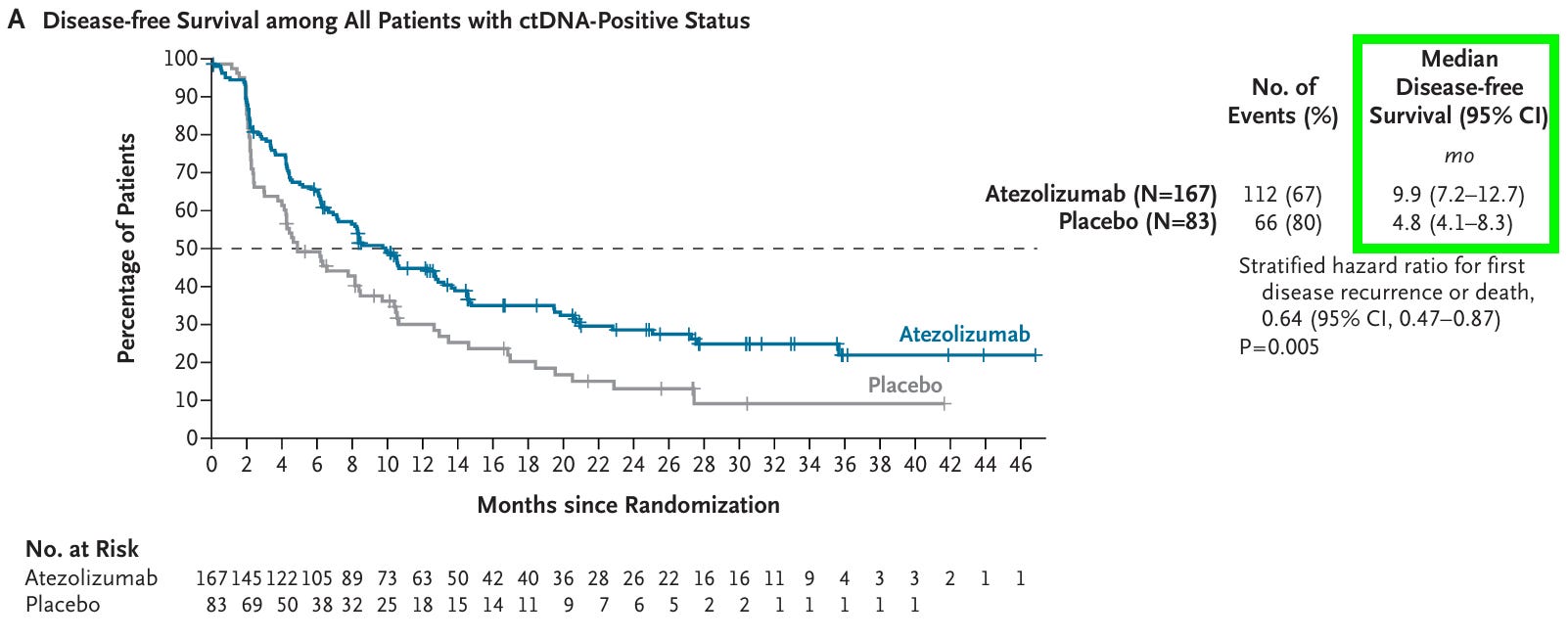
An early split followed by parallel curves raises legitimate concerns about informative censoring, particularly disappointment-driven dropout in the placebo arm.
To explore this, I asked Timothée Olivier to digitize the published curves and performed sensitivity analyses (using the BREAKING-ICE app) adjusting for potential informative censoring (huge shout-out!). Reassuringly, the hazard ratio remained stable after adjustment, suggesting that the DFS benefit is not an artifact of early attrition or censoring patterns.
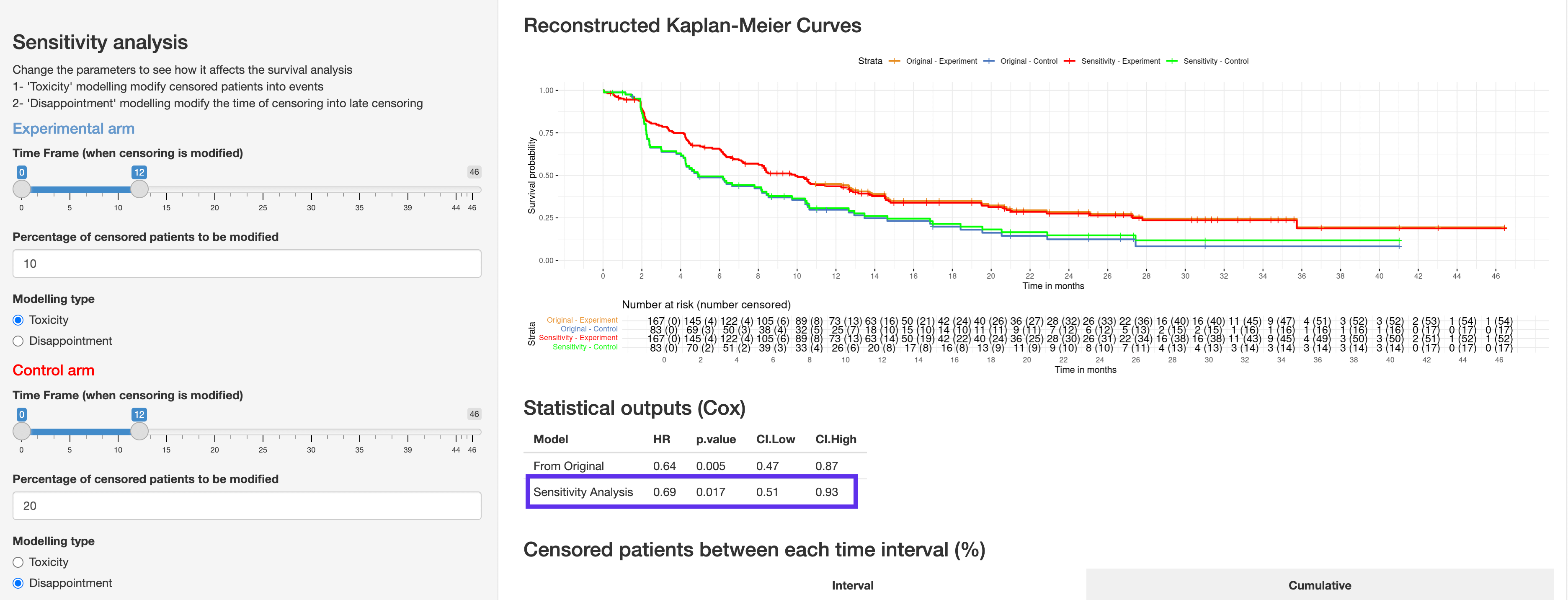
How did I get to this sensitivity analysis? I’ll explain at the bottom!
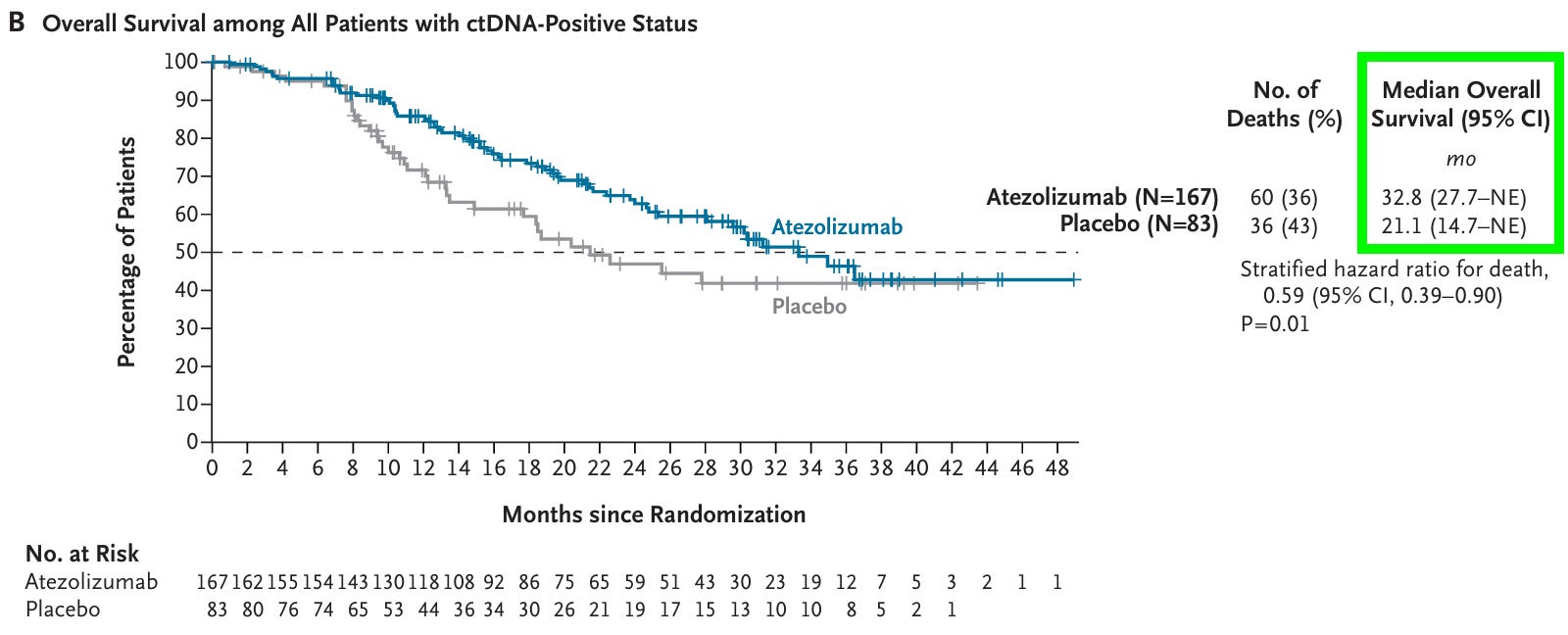
But more important than a PFS benefit, the trial is positive for overall survival (HR 0.59), which is far less susceptible to censoring bias.
This is very encouraging, though necessarily provisional.
Enrollment in IMvigor011 began in May 2021 and continued until November 2024, a period during which adjuvant immunotherapy entered routine practice. Adjuvant nivolumab was FDA-approved in August 2021 for high-risk muscle-invasive urothelial carcinoma regardless of PD-L1 status, and EMA-approved in May 2022 for patients with PD-L1 expression ≥1%.
Despite this, the control arm of IMvigor011 remained placebo throughout accrual.
It is not possible to determine precisely how many patients in IMvigor011 would have been eligible for adjuvant nivolumab. The trial used the VENTANA SP142 assay and reported PD-L1 status as <5% versus ≥5% immune-cell expression, which does not map directly to the EMA cutoff of ≥1%. However, at least 35% of patients in each randomized group had PD-L1 expression ≥5%, meaning a substantial proportion would almost certainly have met EMA eligibility, and an even larger proportion would have been eligible under FDA labeling.
Nivolumab was approved solely on the basis of a disease-free survival benefit, without a demonstrated overall survival advantage. Nonetheless, for much of the trial’s conduct, many high-risk patients would have had access to adjuvant immunotherapy outside the trial, rather than observation or placebo.
This context is not discussed in the IMvigor011 manuscript. While it does not invalidate the trial, it matters for interpretation. IMvigor011 does not compare ctDNA-guided atezolizumab with ctDNA-agnostic adjuvant nivolumab, nor does it address whether ctDNA-negative but clinicopathologically high-risk patients should forgo approved therapy.
These questions fall outside the sponsor’s scope, but they are unavoidable in clinical practice — and they belong in any complete reading of the trial.
IMvigor011 did not succeed because atezolizumab suddenly became more effective. It succeeded because patient selection fundamentally changed.
IMvigor010 randomized patients immediately after cystectomy based on clinicopathologic risk. In that less selected population, adjuvant atezolizumab failed. Subsequent retrospective analyses showed that the benefit was confined to patients who were ctDNA-positive — a signal diluted by the inclusion of many patients already cured by surgery.
IMvigor011 operationalized that lesson prospectively. By requiring ctDNA positivity before randomization, the trial enriched for patients with true minimal residual disease and avoided unnecessary treatment of low-risk patients. The result is not proof that adjuvant immunotherapy works broadly, but proof that biology-guided escalation can succeed where non-selective strategies fail.
IMvigor011 is frequently labeled an adjuvant trial, but that description deserves nuance.
Treatment was not initiated from a disease-free state at a fixed postoperative time point. Instead, therapy began after molecular relapse had already occurred, but before radiographic progression. In practical terms, IMvigor011 evaluates early salvage therapy triggered by molecular progression, rather than classical adjuvant treatment.
This distinction helps explain both the trial's success and its limits. DFS is measured from randomization — not from cystectomy — and therefore reflects control of molecularly evident disease rather than prevention of recurrence from a truly disease-free state. The OS signal is therefore the more compelling endpoint, but also the one requiring the most caution.
The same design that strengthens IMvigor011 also exposes its blind spots.
A substantial proportion of ctDNA-positive patients progressed to radiographic recurrence before treatment could begin. These patients represent a biologically aggressive subgroup for whom ctDNA-triggered post-operative intervention did not create a therapeutic window.
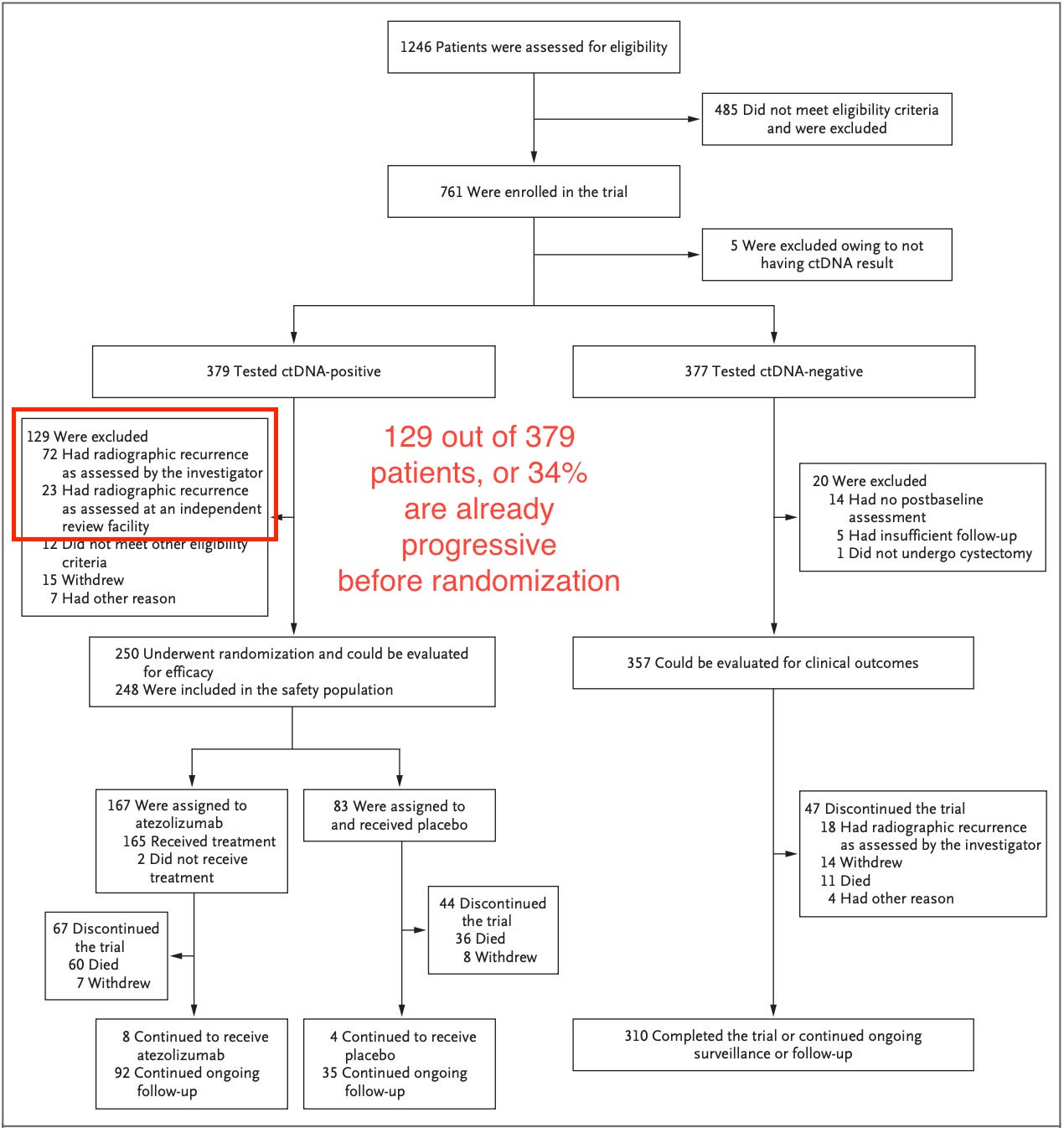
Importantly, these patients were not only missed by adjuvant strategies — they were likely overtreated with cystectomy alone. Early relapse suggests that surgery was never sufficient for disease control, raising the broader question of whether meaningful risk stratification must occur before cystectomy, not only after.
It would be particularly informative to know whether these excluded patients, on average, entered surveillance later within the allowed 6–24 week post-cystectomy window. If aggressive cases were disproportionately enrolled later, this would support the hypothesis that the issue is not ctDNA selection itself, but delayed intervention, and that adjuvant treatment may need to start earlier for some patients.
This remains hypothetical, but it is a testable and clinically relevant question that the published data do not address.
IMvigor011 provides proof of principle, not a finished clinical algorithm.
First, outcomes of the excluded ctDNA-positive patients with early radiographic recurrence are essential to understand who is being systematically missed and why.
Second, longer follow-up is required. The OS signal is encouraging, but remains immature. In muscle-invasive bladder cancer, survival curves can converge late due to differences in subsequent therapy upon progression, making durability of benefit critical.
Finally, IMvigor011 does not address how ctDNA-guided strategies will perform in an evolving perioperative landscape that increasingly includes neoadjuvant and perioperative immunotherapy and antibody–drug conjugates.
IMvigor011 is a strong trial. Its core idea — to restrict adjuvant immunotherapy to patients with molecular evidence of residual disease — directly addresses the problem of overtreatment after cystectomy. Within this biologically enriched population, the results are reassuring: disease-free survival improves, an early overall survival signal is observed, and sensitivity analyses support the robustness of the findings.
The trial’s success, however, is inseparable from its selectivity. A substantial fraction of ctDNA-positive patients progressed before treatment could begin, highlighting both the aggressiveness of the disease and the limits of post-cystectomy intervention. These patients were likely overtreated with cystectomy alone, suggesting that meaningful risk stratification may need to occur earlier, potentially before surgery.
IMvigor011 was also conducted in a changing therapeutic landscape. During much of its accrual, adjuvant nivolumab was an approved option for high-risk patients, meaning that some participants would have had access to immunotherapy outside the trial rather than placebo. This context, not discussed in the original manuscript, matters for how the results are translated into practice.
Taken together, IMvigor011 should not be viewed as a replacement for existing adjuvant strategies, but as convincing evidence that biology-guided escalation can succeed where broad approaches fail. It moves the field forward while making clear that timing, patient selection, and evolving standards of care remain central challenges.
What about the sensitivity analyses?
Since the authors don’t provide the censoring data, we have to estimate it.
For this, I look at the PFS curves and focus on the first interval at 2 months.
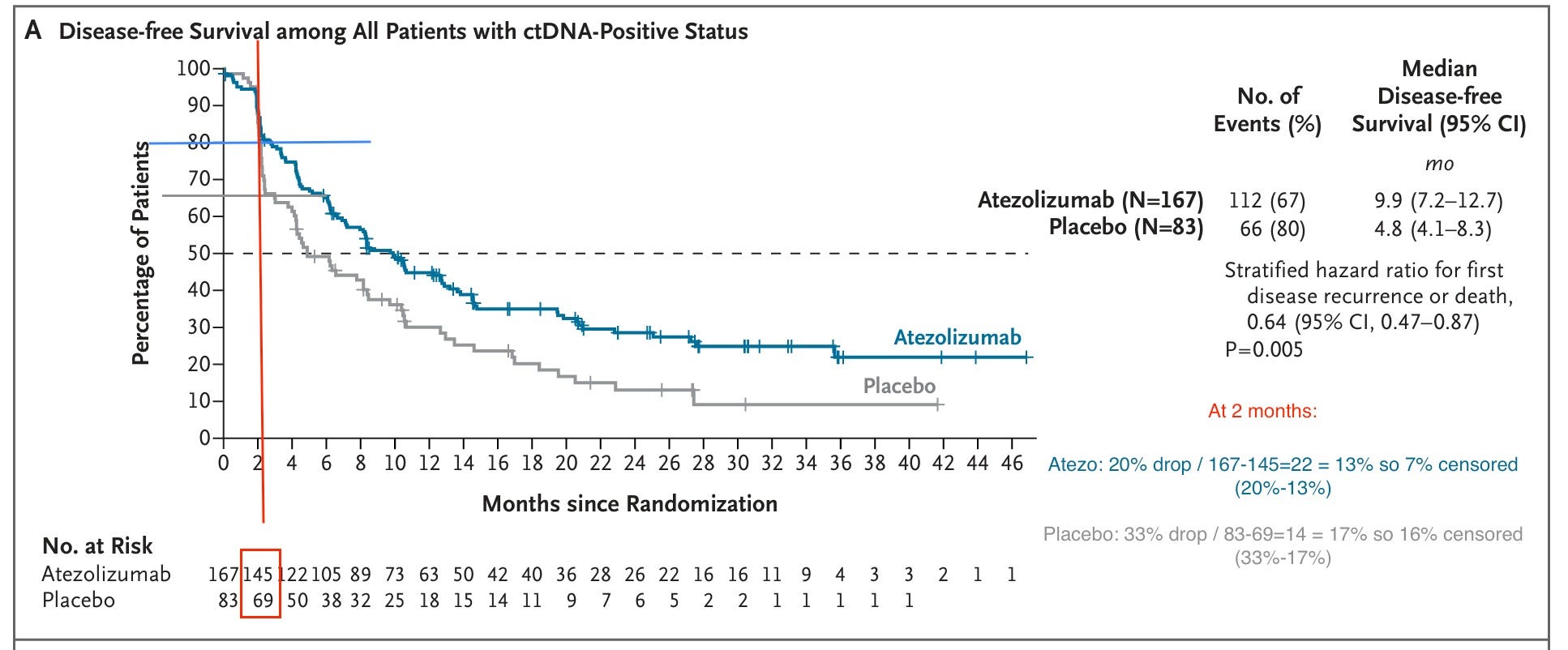
You can see my calculations at the bottom right of this picture.
At 2 months, the Atezolzumab is around 80%; in other words, there is a 20% drop, or 20% of patients either experienced the event or were censored. We start with 167 patients, and at 2 months, 145 patients remain at risk. This means 22 (167-145), or 13% of patients experienced the event. However, since 20% of patients are lost, this means about 7% are censored.
We can do the same calculations for the placebo arm, accounting for a drop of around 33%. Using the same calculations, we estimate that approximately 16% of patients are censored.
Now, for the sensitivity analysis, I increased the amount of censoring relative to what I estimated. In other words, in the sensitivity analysis, I censored more patients than I estimated were actually censored, and I increased the censoring time from 2 months to 12 months.
Even with this overestimation of censoring, the HR holds strong at 0,69 - p=0,017
In other words, even if there was informative censoring, it would probably not have influenced the results!
No posts
Comments
Nothing yet. Say the first thing.
Sign in to join the conversation.