
The phase 3 KEYNOTE-905 (EV-303) trial reports something the field has been waiting for: a clear survival benefit with perioperative systemic therapy in patients with muscle-invasive bladder cancer who are ineligible for cisplatin or decline it. This is a population for which, until now, surgery alone has largely remained the default.
Patients were randomized to receive perioperative enfortumab vedotin plus pembrolizumab — administered both before and after surgery — or surgery alone, with adjuvant nivolumab permitted later during the trial. The results are striking. Event-free survival shows a hazard ratio of 0.40, with a 2-year rate of 74.7% versus 39.4%. Overall survival is also improved, with a hazard ratio of 0.50. Pathologic complete response rates are substantially higher. There is early and sustained separation of the curves.
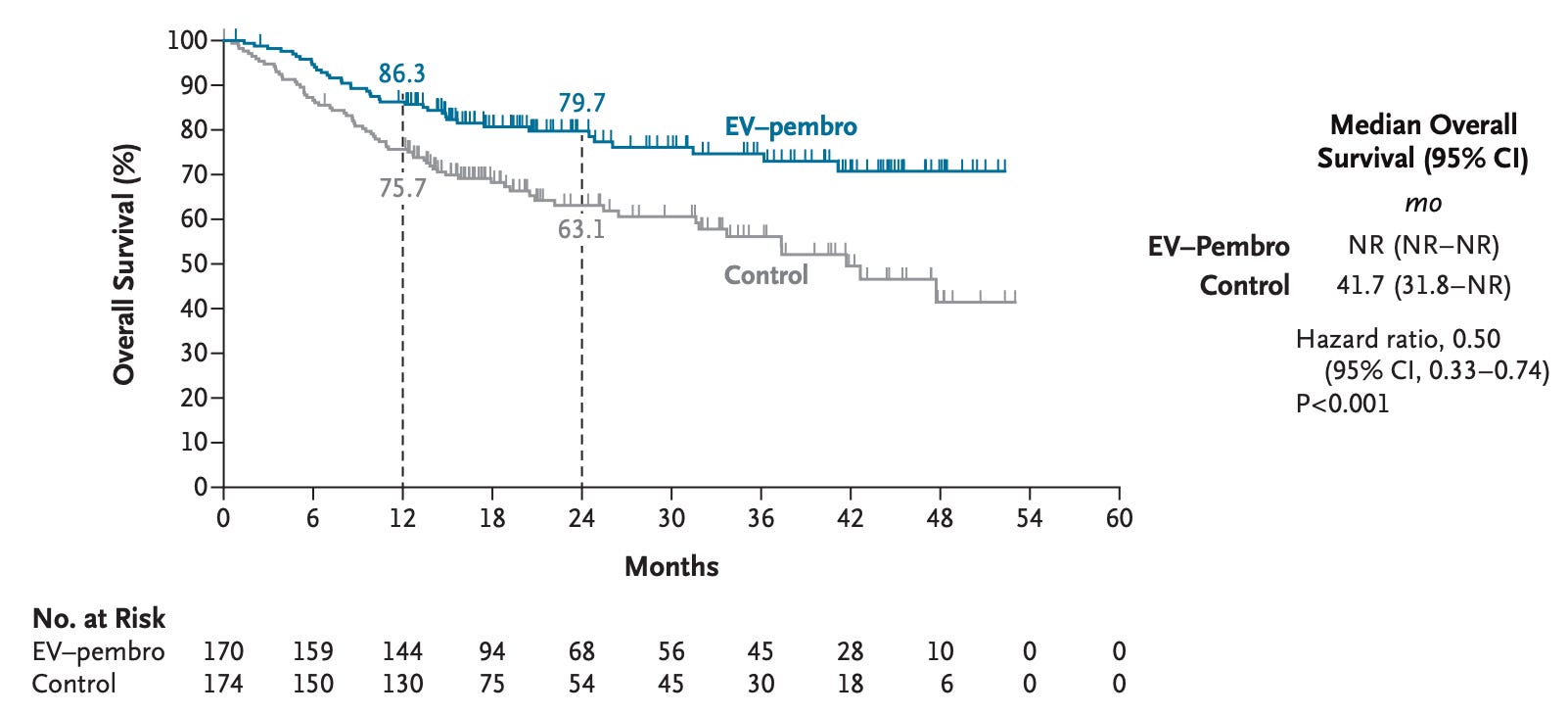
Taken at face value, this is a positive and likely practice-changing trial.
Once the headline numbers are set aside, a more nuanced question emerges. What exactly is the trial comparing?
The key clinical issue is not whether enfortumab vedotin plus pembrolizumab works. Its activity in metastatic urothelial cancer is already well established. The relevant question is whether this regimen needs to be given upfront, in the perioperative setting, or whether it could be reserved for the time of recurrence without compromising outcomes. In other words, is earlier truly better than later?
The design of EV-303 suggests that it could inform this question. In reality, it does not.
The most important limitation lies in what happened after progression. Among patients in the control arm who developed recurrent or metastatic disease and received systemic therapy, most were treated with chemotherapy. Only a minority received enfortumab vedotin, and almost none received the combination of enfortumab vedotin and pembrolizumab — the very regimen under investigation.
In practical terms, most patients in the control arm were never exposed to the study drug at any point during their disease course, despite it being standard-of-care after progression.
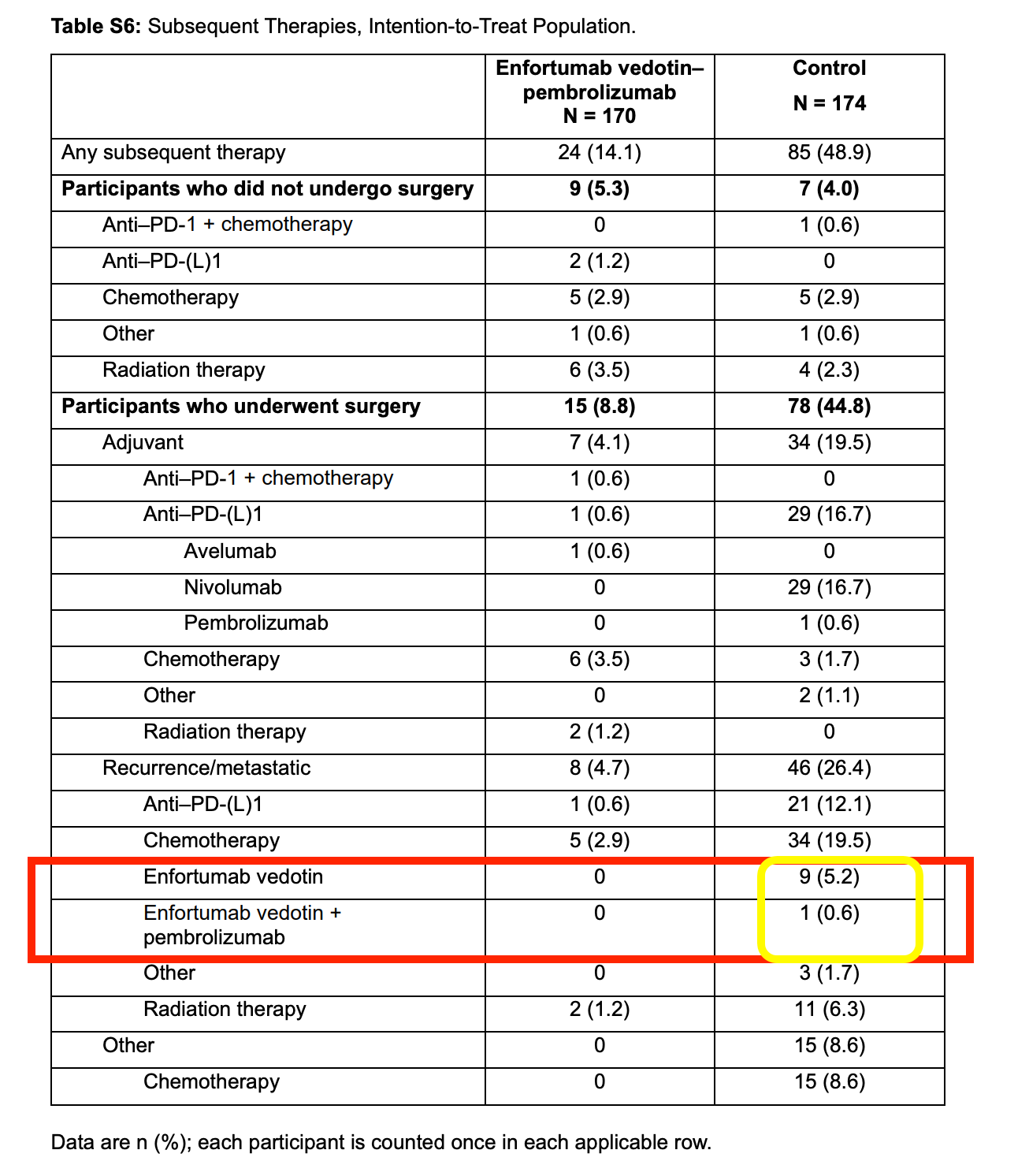
This has direct consequences for interpretation. The trial was not designed to compare perioperative versus deferred use of enfortumab vedotin plus pembrolizumab, and it successfully demonstrates superiority over surgery alone with heterogeneous subsequent therapy.
However, the pattern of post-progression treatment raises an important and unexpected question. Among control patients treated for recurrent or metastatic disease, only one received the combination of enfortumab vedotin and pembrolizumab, despite this regimen being described as first-line standard therapy in the metastatic setting.
At the same time, many of these patients received chemotherapy, despite having been classified as cisplatin-ineligible before surgery. In some cases, this may be clinically plausible—for example, if renal impairment related to tumor-associated obstruction improved after cystectomy. However, the trial does not provide sufficient detail on the reasons for initial ineligibility or on changes in eligibility over time.
This creates an internal inconsistency: patients appear to become eligible for chemotherapy after progression, yet rarely receive the study regimen for which they were previously eligible. Without further clarification, it remains unclear whether this reflects changes in clinical status, access to therapy, or treatment selection patterns.
Although the trial was not intended to address treatment sequencing, the limited use of enfortumab vedotin plus pembrolizumab after progression restricts any indirect inference about deferred use.
A second, more subtle issue concerns the definition of the cisplatin-ineligible population. The trial relies on Galsky criteria, which include an ECOG performance status of 2 or higher. However, there is a small discrepancy between the number of patients classified as ECOG 2 in the main baseline table and those listed as ECOG 2 among the reasons for cisplatin ineligibility.
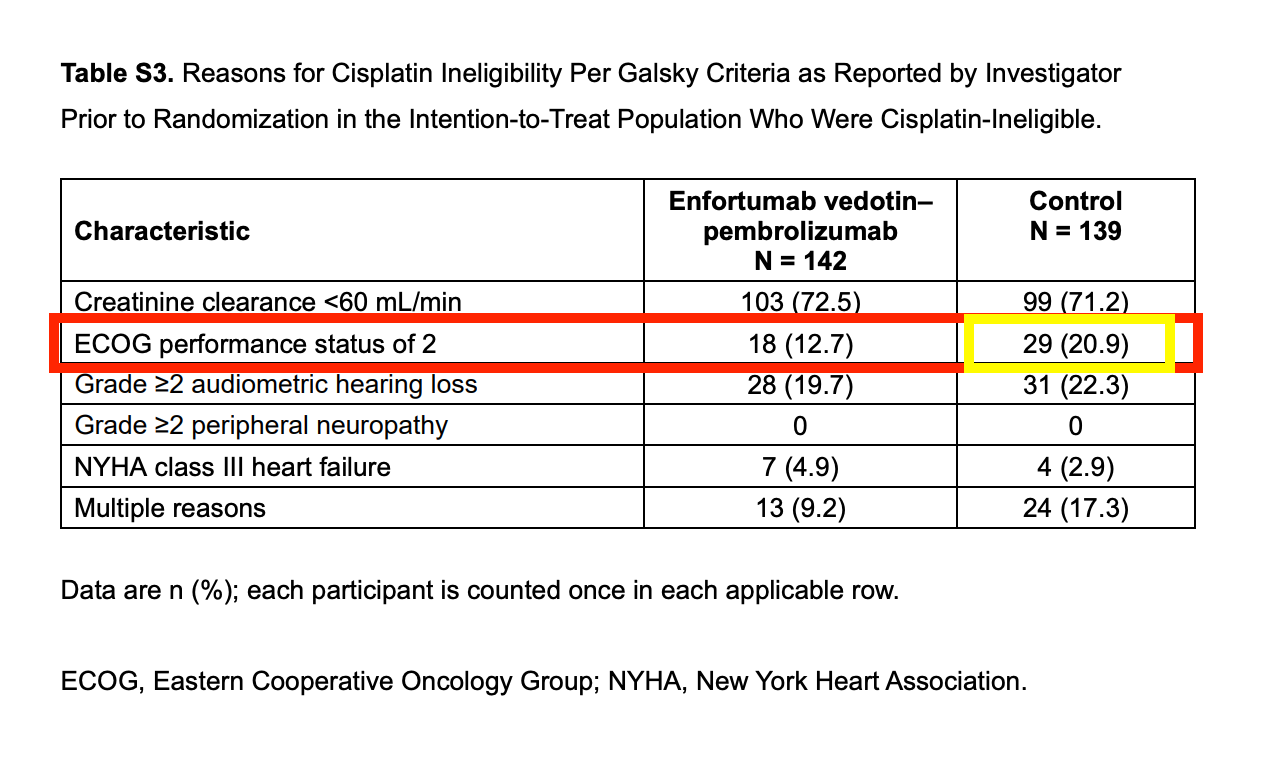
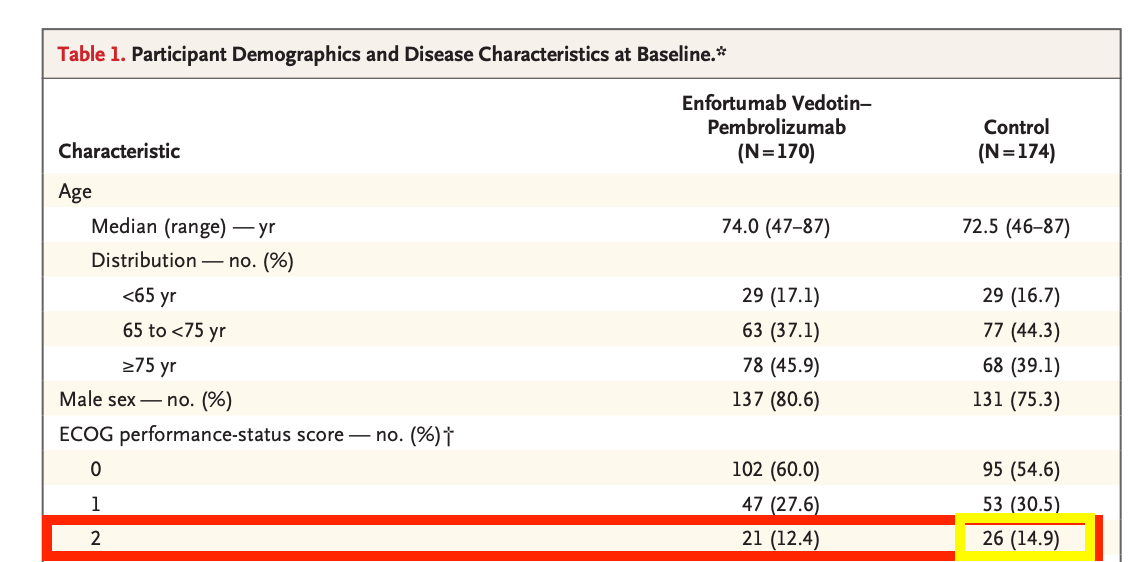
The difference is minor in absolute terms, but it suggests that performance status as a baseline variable and as a criterion for ineligibility may not have been entirely aligned, or there is a problem with the data itself, which should not happen in a trial of this magnitude. Given that ECOG status is both prognostic and central to eligibility, this lack of clarity is not entirely trivial.
None of these points undermine the main finding of the trial. EV-303 is a strong study with a clear signal. It will change practice.
But it does not fully answer the question of sequencing, and it leaves important aspects of patient selection and post-progression management insufficiently explored.
I’m looking forward to the full manuscript of the sister trial EV-304 in which the patient population is not limited to cisplatinum-inelegible patients. If the control group in this trial also lacks exposure to EV-pembro after progression, this would be a strong signal of bias.
Enfortumab vedotin plus pembrolizumab is effective in this setting. Whether it must be given perioperatively, or could be reserved for relapse without compromising outcomes, remains unresolved.
No posts
Comments
Nothing yet. Say the first thing.
Sign in to join the conversation.