
As I’m sure you don’t need me to tell you, Sri Lanka A completed a 3-0 sweep of the List A series over New Zealand A over the weekend, chasing down 302 with four wickets and 22 balls to spare.
What, have you been focusing on the IPL or County Cricket instead of scouring YouTube for streams of A-team cricket broadcast from a 35,000-seat stadium that somehow attracted negative attendances?
Pfft, grow up, and let me tell you about some real cricket.
Following on from last year’s successful A tours to Bangladesh and South Africa, NZC have smartly kept the A-team momentum rolling, this time sending the next generation to Sri Lanka while the big boys are all either at the IPL, PSL, or imminently set to play for Tom Latham’s Super Smash All-Stars in the upcoming series in Bangladesh. Oh, or doing whatever a ‘Strategic Advisor’ does at Lucknow, in Kane’s case.

Before I jump into the more granular series recap, let me just say—up with this sort of thing. Not to get all ‘spirit of cricket’ on you, but in a cricketing calendar increasingly dominated by franchises and T10s and tours with no warm-up fixtures, there is something so refreshing and pure about watching a genuine development tour where young players are desperate to impress and represent their countries.
Best to enjoy it while it lasts, with the tour shifting to the first-class portion starting on Thursday, and all games streamed live and free on YouTube.
For those of you who, for whatever reason, haven’t been glued to every ball of this series, here’s a broad overview.
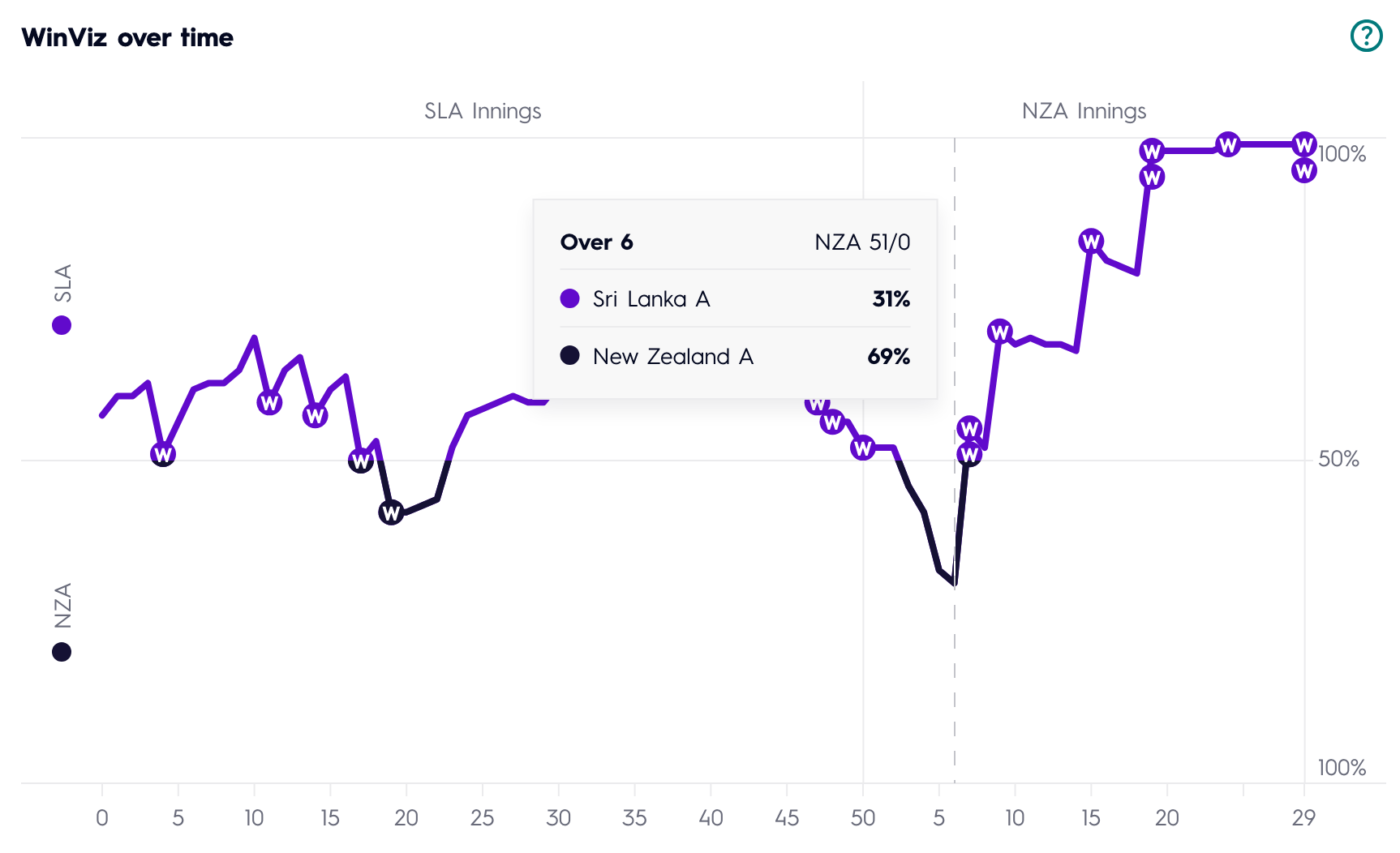
Realistically, the only time when New Zealand A looked like winning a game was during the first match, when they bowled Sri Lanka A out for 261 in 49.2 overs with 7 different bowlers chipping in with at least one wicket, before openers Rhys Mariu and Dale Phillips raced to 51/0 after 6.1 overs. At this point, WinViz gave NZA a 69% chance of winning. Unfortunately, from there, wickets in consecutive balls started the collapse, with NZA ultimately bundled out for 121 in 28.2 overs on the back of Wanjua Sahan’s 5/13.
During the second match, Sri Lanka A raced out of the blocks to bring up their hundred within 12 overs, and at one point looked like passing 400. NZA ultimately managed to pull that back slightly and restrict Sri Lanka A to 368 with Tim Pringle picking up 3/58 and Sri Lanka A opener Lasith Croospulle scorching 103 (76).
In response, New Zealand A reached a respectable 158/3 in 28 overs before bad light stopped play, with Curtis Heaphy on 53* (62). Even so, they never seriously threatened to haul in the score, with SLA winning by 44 runs on DLS.
The final match saw NZA bat first with Rhys Mariu looking promising initially for his 28 (30), before three quick wickets saw them fall to 3/60. From there, Matt Boyle and Muhammad Abbas put on NZA’s best partnership of the series, adding 122 before Boyle was dismissed for 85 (80). The two dovetailed nicely and complemented each other, with Abbas starting cautiously, reaching 22 (51), as Boyle raced to his half-century in 55 balls. From there, Abbas showed excellent maturity to accelerate through the gears, reaching his 50 in 75 balls, and then bringing up his hundred off 107. Accordingly, Abbas’ innings could be broken up into three distinct phases, initially scoring 22 (51), then adding 31 (24) to bring up his half-century, before exploding to add 57 (37) at the death and reach his hundred. Unfortunately, 302 never quite looked like enough, even despite Simon Keene’s 4/54, with three of Sri Lanka A’s top five scoring half-centuries to chase the total down with four wickets and 22 balls to spare.
Despite the 3-0 result, there were a number of individually promising performances for NZA, with Abbas, Heaphy, Boyle, Pringle, and Keene all coming out of the series with enhanced reputations in my eyes. While it would have been nice to nab at least one win, this is obviously by far the most important aspect of an A tour, so let’s analyse each player’s performances in detail.
Let’s start with the players who had middling series, mostly because I have the least to say about them.
It is nearly impossible to assess Mitch Hay’s series with the bat, as he only actually made it to the crease in the first game, scoring 8 (18) after coming out at 4/75 with the team already in trouble. In the second match, bad light stopped play before Hay got a bat, while he was rotated out of the side for the final game.
With the gloves, Hay was more impressive, taking four catches in the first game, including one full-length dive where first slip would have been. While this series did little to enhance Hay’s reputation, it also did nothing to dissuade me from the notion that Hay will be New Zealand’s long-term wicketkeeper in all three formats sooner rather than later.
It really wasn’t a series for NZA’s keepers to shine, as Max Chu, who was the captain for the List A leg of the tour, was also barely sighted. Unfortunately, Chu didn’t bat in the first match due to an injury, before missing the second game, and then scoring a breezy 16 (15) in the final match until he himself out chasing a risky second.

Chu also took the gloves for the final game and did a good job, highlighted by an athletic diving catch to his right off Simon Keene.
It was a frustrating series for Dale Phillips in many ways, getting off to good starts in both of his innings, but failing to convert. The first match saw Phillips race to 30 (17) with all of his runs coming in boundaries—six fours and a six.
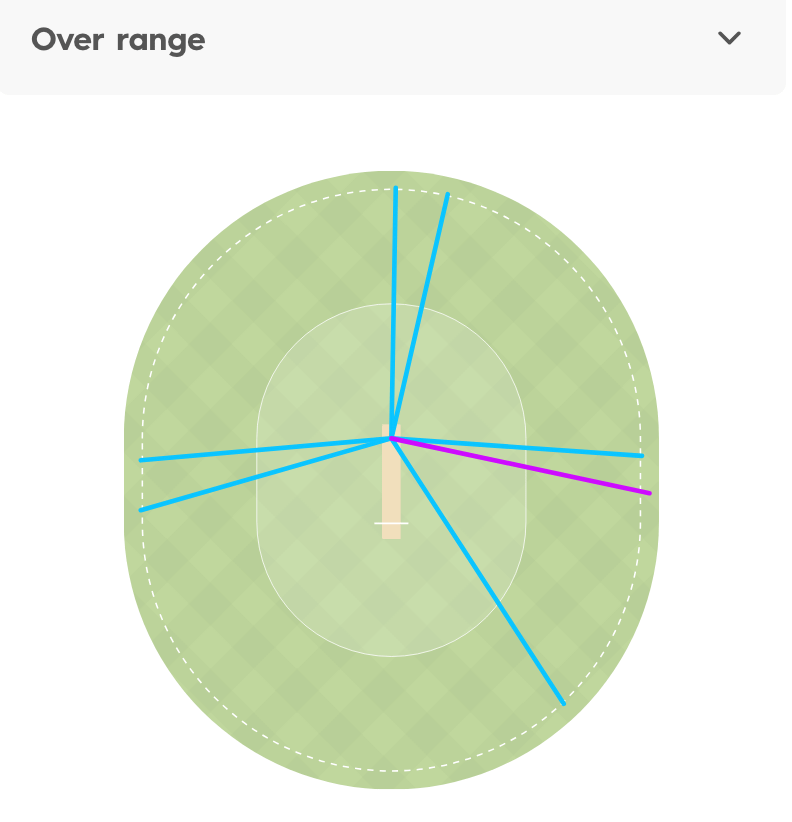
Likewise, in the second match, Phillips made his way to 34 (55), hitting sixes over third and midwicket, before falling to Rathanayake. On both occasions, Phillips looked comfortable and assured, but he will need to convert his starts during the first-class portion of the tour.
I am still all-in on needing to see Dale and Glenn Phillips in the same NZ team at least once throughout their careers—the sheer kinetic energy could power the stadium.
Ben Lister’s series can’t have been that bad, given that it resulted in him being called up to the New Zealand squad in Bangladesh for the injured Kristian Clarke. Like Hay, it was more a case of lack of opportunities than poor form for Lister throughout this series.
In the first game, Lister only delivered 3.2 overs on a pitch that heavily favoured spin, returning figures of 1/25 and picking up the final wicket to clean up the Sri Lanka A tail. Likewise, in the final game, Lister was solid without being outstanding, delivering 9 overs for figures of 0/50.
Hopefully, Lister is finally able to convert his clear talent into international performances during the Bangladesh series, as New Zealand’s attack could really benefit from the left-arm variety after losing Boult and Wagner in recent years.
As mentioned above, Clarke was injured mid-series, so it’s hard to mark him down too much. When he did play, he was perfectly solid, picking up 2/42 from 9 overs in the first match, and following that up with 1/57 from 7 overs in the second match, finally dismissing the centurion Croospulle after he spooned a mistimed drive to mid-off.
With the bat, Clarke only got one opportunity, finishing as the not-out batter on 18* (22) as the team collapsed to 121 in the first game.
I continue to be impressed with Clarke’s all-round abilities every time I see him play, and expect he will be a consistent contributor to Black Caps teams of the future. My only concern is that he is slightly slow with the ball at the international level—it would be ideal if he could find a way to add an extra ~5ks, as Tim Southee did mid-career, though that is easier said than done.
Ashok continues to be the future of New Zealand spin bowling, and I am particularly glad he has been getting opportunities to develop his bowling in the subcontinent on this tour and the Bangladesh A tour last year.
Ashok was arguably the pick of the NZA bowlers in the first outing (though Clarke might disagree), picking up 2/45 from his 8 overs. The first wicket was not a ball Ashok will remember all that fondly—a longhop that was luckily mishit down deep midwicket’s throat. However, his second is one of the reasons I’m so excited about Ashok’s future, delivering a beautiful slider to Sonal Dinusha, who has played Test cricket, to trap him on the crease and secure an edge behind to Hay who took a sharp catch.
Ashok was also probably the pick of the NZA bowlers in the second game, picking up 2/60, though that doesn’t exactly say much when they threatened to concede 400. Ashok was the only NZA bowler to complete their full allocation of 10 overs and was the equal-most economical. Neither of Ashok’s wickets in that outing was particularly memorable, the first being hit straight to cover, and the second being skied to long-off, but it was more a reward for Ashok consistently putting the ball in good areas.
If his series had stopped there, I would have put Ashok in the ‘good’ section below, but unfortunately, he took some tap in the last game, delivering 6 overs, 0/60. Better that Ashok learns those lessons now than for the Black Caps, and he should have learned a lot from the Sri Lanka A batters targeting him so aggressively.
Unfortunately, Robinson was unable to back up a strong Ford Trophy season this year, where he averaged 41.44 at 91.2, scoring two hundreds, mustering only 41 runs at 13.66 across his three innings.
Robinson started the series poorly, dragging his back foot out of his crease attempting an expansive cover drive to be stumped for 9(10) at a time when he needed to consolidate, having lost wickets in consecutive balls only two overs earlier.
Robinson bounced back somewhat to score a punchy 27 (20) in the second match, with five of his six boundaries coming in the V.
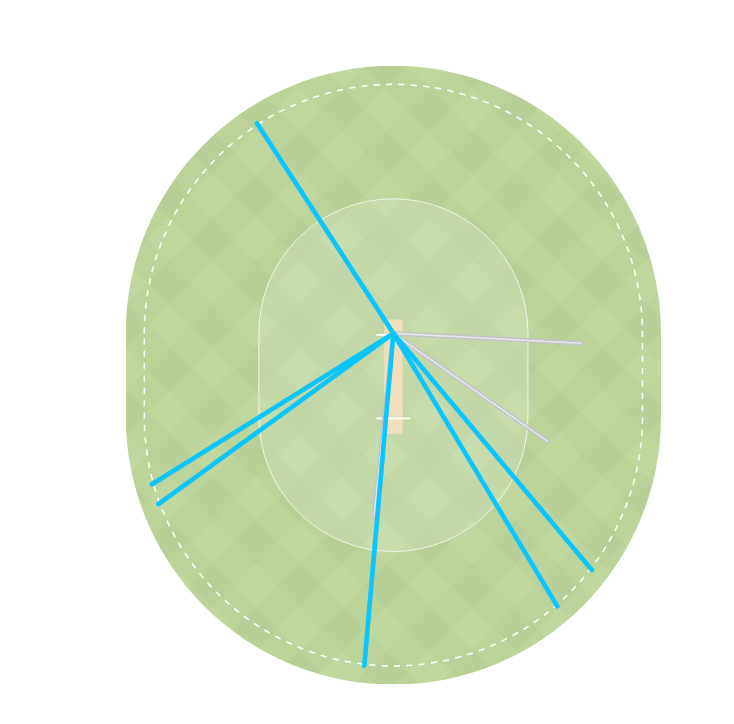
However, Robinson’s series ended in disappointing fashion, scoring 5(6) and being dismissed caught behind flashing at a very wide ball outside off.
Robinson will be available for the first of two first-class games, before joining the Black Caps squad proper for the T20I leg of the Bangladesh tour.
It feels harsh to say Mariu had a bad tour, as he got starts and looked like his usual classy, elegant self in both innings, but, a bit like Phillips, he found ways to get out. Ultimately, an average of 23.5 for the series doesn’t lie.
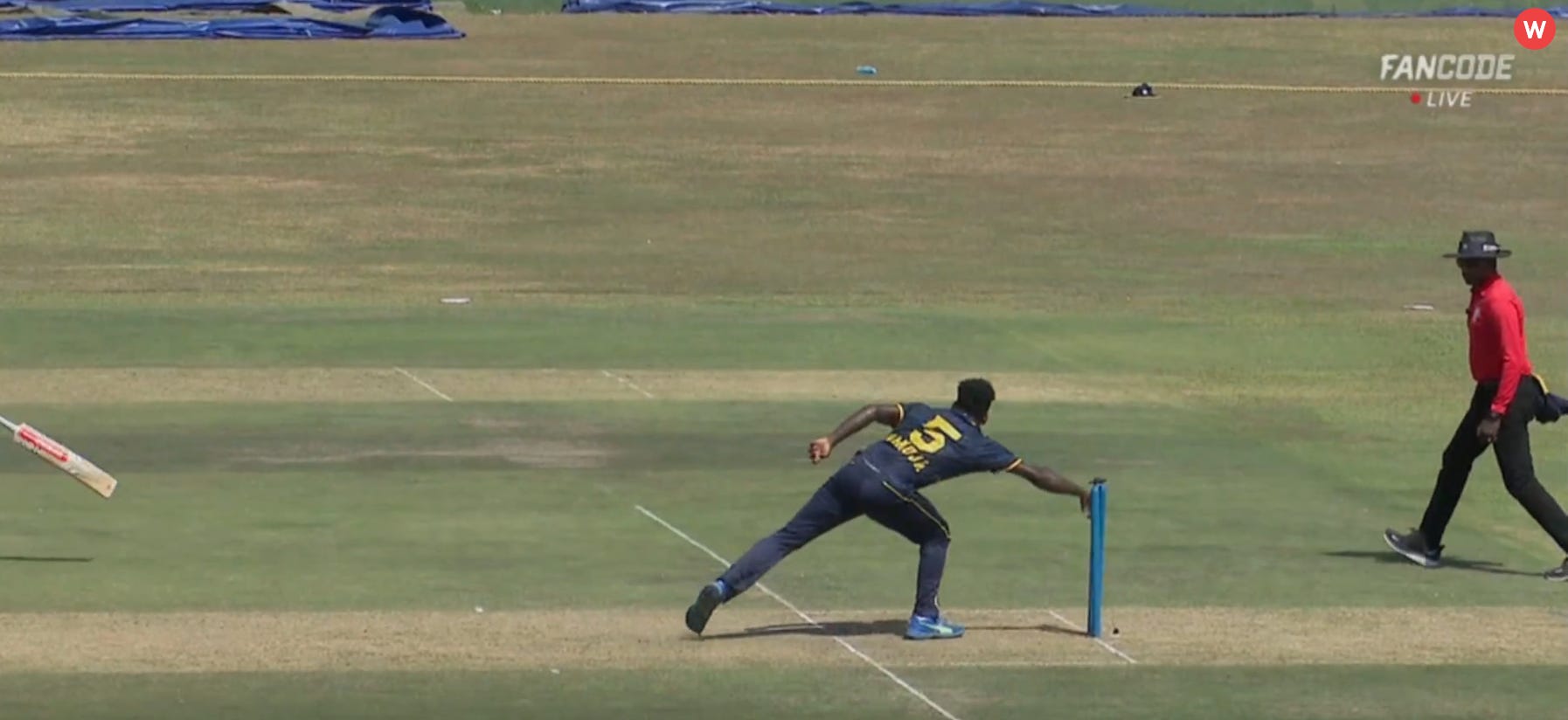
The first match saw Mariu get off to a brisk start, scoring 19 (22) with two boundaries through point and one hard pull through square leg, before a massive brain fade saw him run himself out the ball after Phillips had been dismissed. Robinson, facing his first ball, pushed what should have been a comfortable single to deep midwicket, but the pair decided to run a second. The replays don’t make it entirely clear who called the second, but Mariu was always running to the danger end, so, at least in theory, it should have been his call, leaving him with no one but himself to blame. As you can see, he was barely in the picture, and the runout sparked a collapse.
In the final match, Mariu again looked good for his 28 (30), hitting five boundaries—two via clips off his pads, one edged over the slips, one cut through point, and one picturesque cover drive where he ended up on one knee. He didn’t do a lot wrong in his dismissal, to be fair, with 21-year-old Traveen Mathew getting a ball to turn just enough to beat Mariu’s outside edge and drag his back foot barely out of his crease for a touch-and-go stumping.
Without wanting to be too harsh, Rohit Gulati, the 27-year-old slow left arm bowler from ND, had the worst series from an NZA perspective.
In the second match, Gulati delivered 7 overs to pick up 1/56, with his wicket coming from a ball that drifted in nicely and beat the advancing batter, hitting leg stump. Similarly, in the final match, the Sri Lanka A batters clearly targeted Gulati as he delivered 10 overs, 0/79.
As something of a late bloomer—Gulati has only played 8 first-class matches, 9 list A games, and 12 T20s at the age of 27, having only made his professional debut last January—these two games should be invaluable for Gulati as a learning experience and the first time he has played a professional fixture overseas.
Although there were no speed guns throughout this series, my impression from the eye test was that Gulati bowled a bit too slowly for modern international cricket, with the Sri Lankan batters looking assured in their footwork. While averaging 135 and conceding 8 and over won’t have been on Gultati’s vision board, he can only be better for the experience, so fingers crossed for an improved showing during the first-class series.
There is absolutely no question that Abbas comes out of this series having enhanced his reputation more than anyone else. I kicked off this entire blog just over a year ago with an article about Abbas, and I have seen nothing in the intervening year to change my mind: Abbas is going to be a very, very good player for New Zealand one day in the not too distant future. He will have more opportunities to prove that shortly, as part of the ODI squad in Bangladesh.
While Abbas didn’t set the world alight in the first match, scoring 11 (34), he at least showed the right temperament for the situation and attempted to dig in, having come to the crease at 5/88. Abbas faced more balls (34) and lasted at the crease for longer (47 minutes) than any other New Zealand A batter in that game—small consolation, but a consolation nonetheless. He also picked up a wicket with a nice bouncer from over the wicket that was hit straight to midwicket, although he was also taken to, going for 31 in 3 overs.
Abbas also took 1/31 in the second match, this time off five overs, taking his wicket with a similar ball from over the wicket, which was this time hit uppishly to point. With the bat, Abbas was starting to settle in on 11* (18) before bad light stopped play.
But Abbas saved the best performance of the series for last, notching a new highest score in List A cricket with a mature 110* (112). As detailed above, it was a well-paced innings by Abbas, starting cautiously to initially score 22 (51), then adding 31 (24) to bring up his half-century, before exploding to add 57 (37) at the death and reach his hundred.
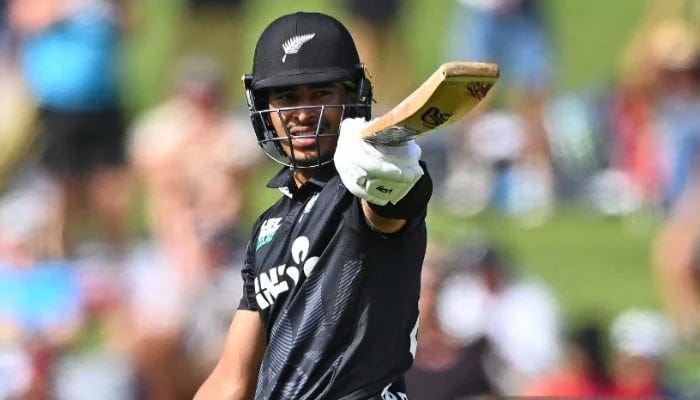
It was noticeable that Abbas was more watchful against the spinners, hitting just one six against spin and otherwise being content milking them for singles, while his other 7 boundaries and 3 sixes all came against pace. Abbas was particularly brutal through the legside, with 68% of his runs coming there, and 48% coming between midwicket and square leg. I hate to sound like every early-00s commentator, but it’s impossible to watch Abbas bat and not marvel at his wrist-work on certain shots. There are certainly no prizes for guessing his favourite hitting arc when you look at his wagon wheel:
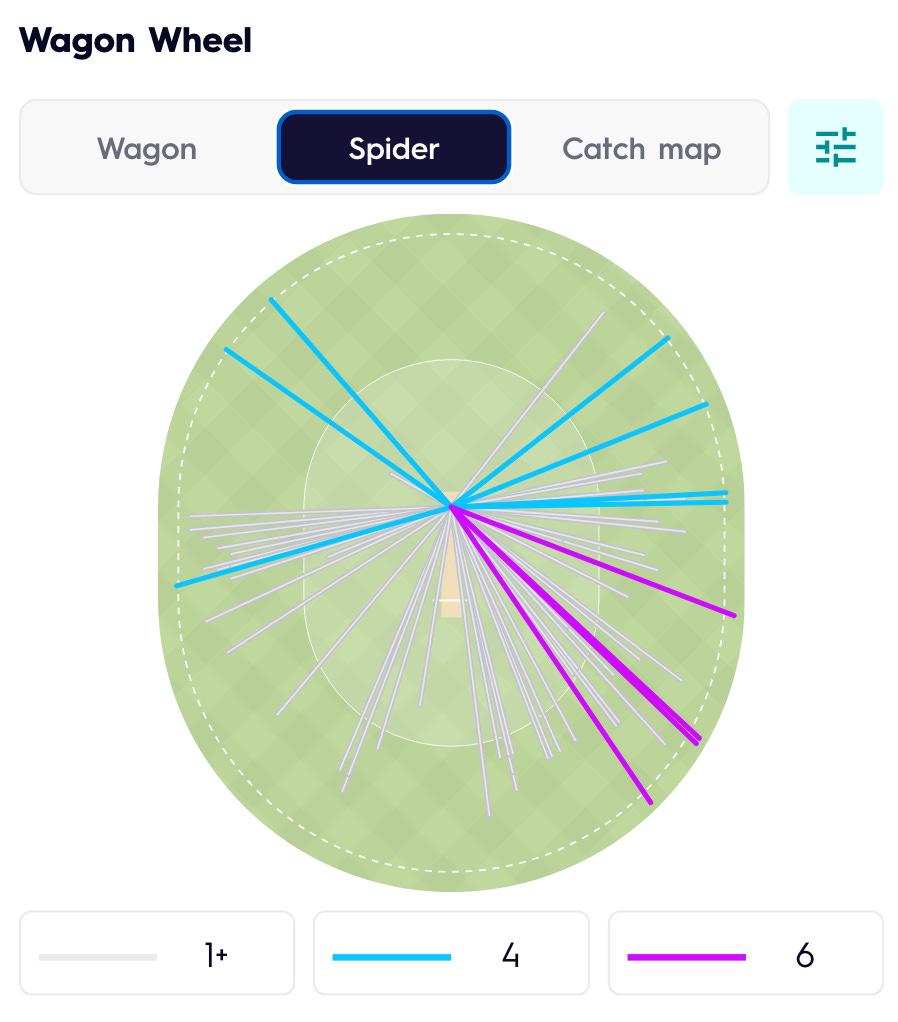
This is a very picky and harsh criticism for what was a fantastic innings, but for such a clean, natural ball-striker, I would love to see Abbas target hitting straight down the ground just slightly more often. No doubt that will come with time and experience.
Matt Boyle saved his best for last in this series. For starters, he was lucky in hindsight to miss the first game and not be tarred as part of the collapse, then started nicely for his 17 (13) in the second game before holing out to deep square leg attempting to slog sweep and up the run rate.
But it was the third game where Boyle showed his talent, scoring 85 (80) to rescue the side from 3/60. Where Abbas decided to dig in and set himself up for the long haul, Boyle preferred to counterattack his way out of a crisis, at one stage finding himself on 60 (66) while Abbas was stuck on 22 (50). Like Abbas, Boyle was also brutal through the legside, and midwicket particularly, scoring 39% of his runs through this region. However, where Abbas is strong through square leg and point, Boyle is stronger through the covers and down the ground. In this sense, the two complemented each other perfectly.
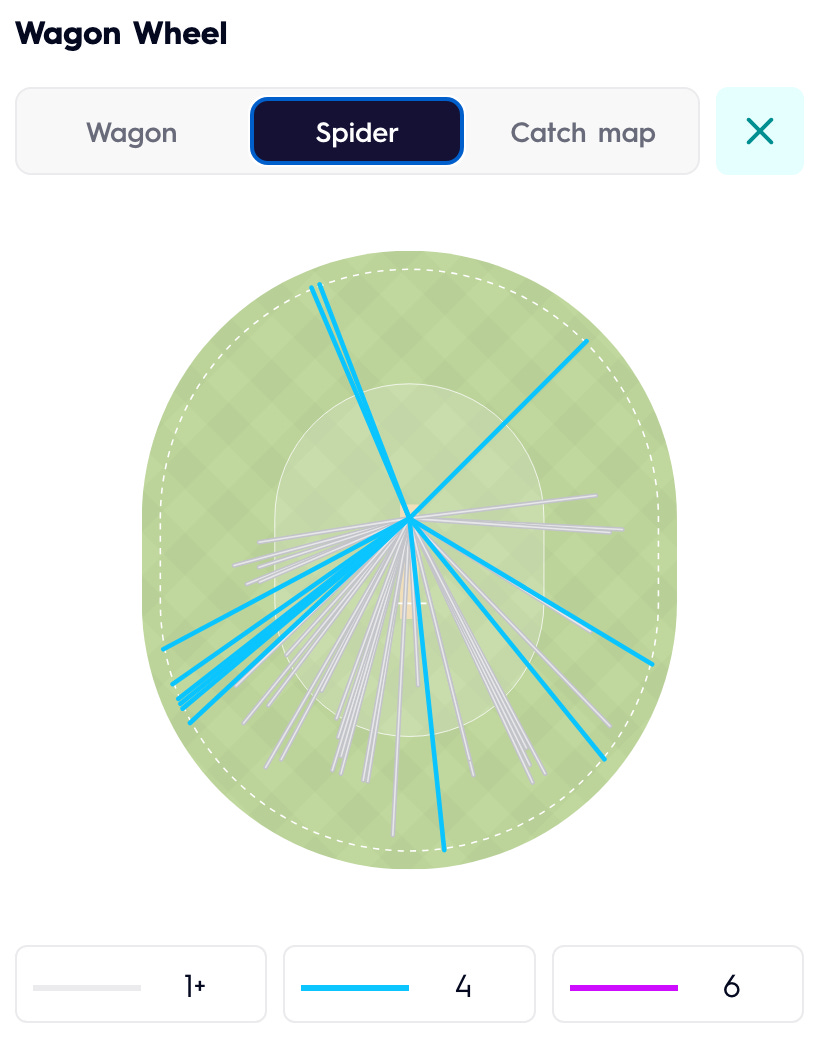
Unfortunately, Boyle will be very disappointed with his dismissal with a hundred there for the taking, as he hit a lofted drive directly to mid-off for a straightforward catch.
I am about to offer some very, very high praise, but there is the odd shot—particularly when driving down the ground—where Boyle reminds me of Stephen Fleming, if you squint just right. Perhaps it is the fact that he is another tall left-hander in black, but there is something particularly elegant about Boyle’s straight drives that is reminiscent of Fleming at his best. If he can be even half as good as Fleming, New Zealand will be very pleased.
While I never thought NZA were a genuine shot at chasing down 369, it was a real shame that bad light stopped play in the second match, as Heaphy was just starting to go through the gears on 53* (62), and it would have been fascinating to see how his innings developed from there.
Unfortunately, this was Heaphy’s only real contribution to the series, scoring 18(33) in his other chance with the bat, but he showed more than enough talent in that 53* to earn himself a spot under ‘Good’. The most noticeable and encouraging aspect was how well Heaphy played spin in this innings. 43 of his 53* came against the tweakers, with Heaphy pulling out an array of sweeps and reverses. Interestingly, all 10 of the runs he scored against the seamers came through the onside.
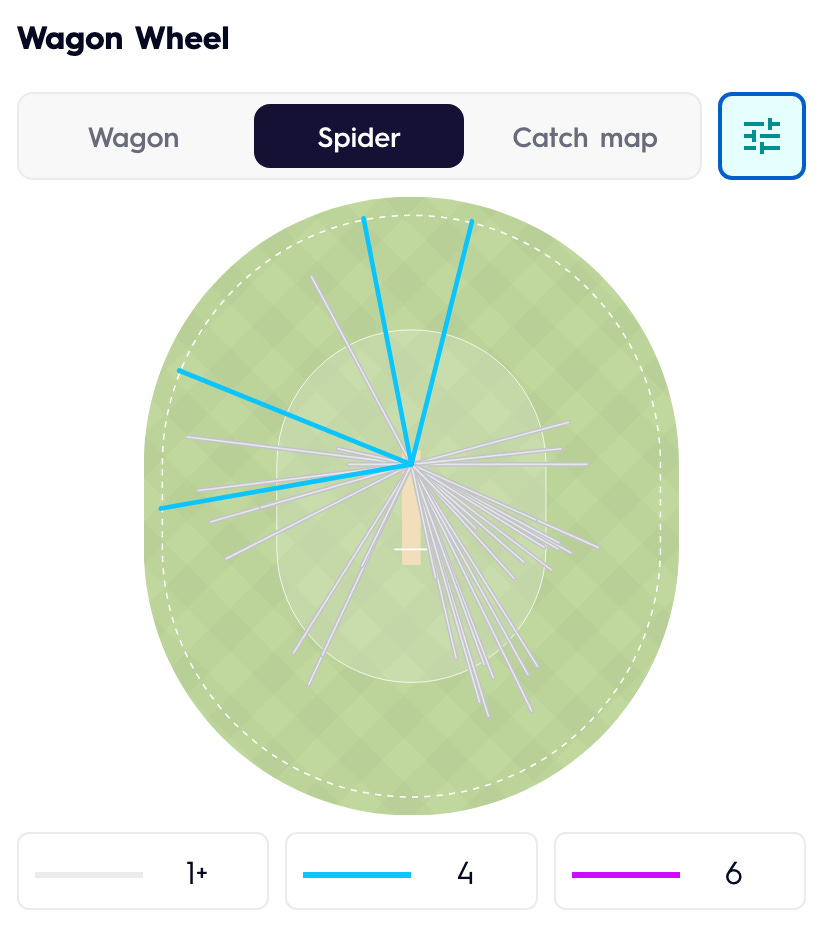
As I’ve mentioned before, my only concern with Heaphy going forward is not his raw ability—he averages 43 in FC cricket and 53 in List A cricket already at just 22—but his strike rates, which continue to be on the slow side in all three formats. Heaphy strikes at just 40 in FC cricket, 68 in List A cricket, and 110 in T20s, with those numbers being 43, 68, and 97, respectively, in the most recent domestic seasons. This was on display in Heaphy’s 18 (33) in his other innings, while he also started slowly during his 53*, given the target of 369, initially scoring 18 (32).
Heaphy is quite clearly never going to be a dasher like a Finn Allen or Brendon McCullum, and nor should he try to be, but he will need to lift his white ball strike rates at some point to play for New Zealand, while he could also stand to pick up the pace just slightly in first-class cricket, with his current SR nestling him between Mark Richardson (37) and BJ Watling (42). Still, time is well and truly on Heaphy’s side, and at this stage of his development, I would far prefer him to be making more runs slowly and getting this experience than fewer runs at a better SR.
Tim Pringle, son of former Black Caps’ seamer Chris Pringle, is arguably the story of this series for NZA.
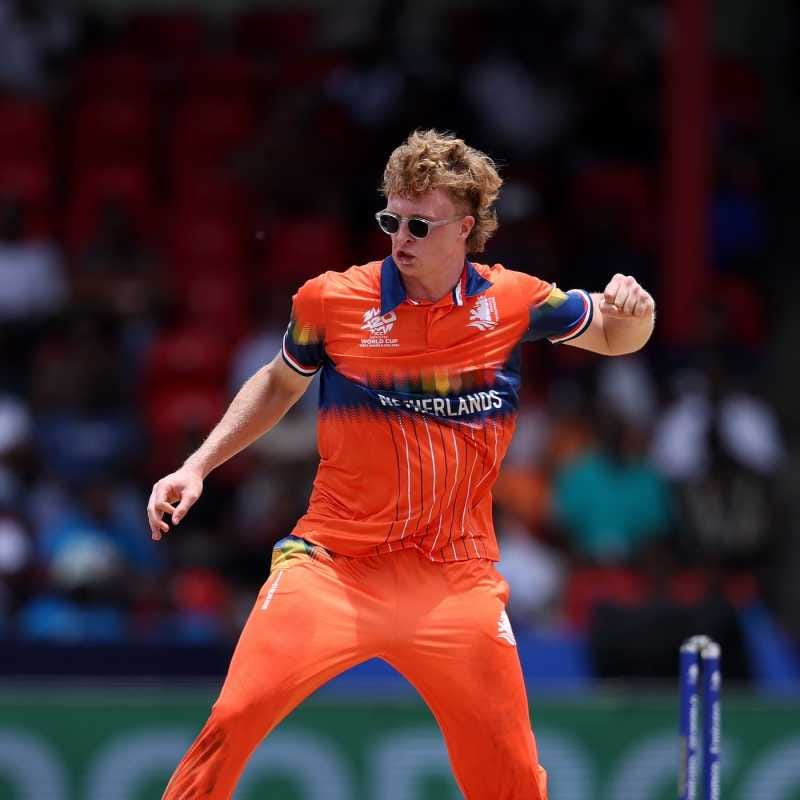
As you may recall, Pringle has already represented the Netherlands in 22 T20Is and 4 ODIs, including as recently as last September. However, he is immediately eligible to make the switch from the Dutch to New Zealand if he chooses, with this call-up suggesting that option is firmly on his mind. In an interview with Cricinfo last October, Pringle indicated that his ultimate dream is to play Test cricket:
“I’ve played five four-day games and that’s the most fun I’ve had on a cricket field. So it’s not really a choice between Holland or New Zealand, it’s more like this [four- and five-day cricket] is what I want to play.”
Given the Dutch aren’t going to be playing Tests any time soon, it seems a switch to NZ is on the cards, and, based on what I saw in this series, he would be a welcome acquisition. Pringle finished as NZA’s equal leading wicket-taker alongside Simon Keene, and as one of only two NZA bowlers (Dale Phillips being the other) to finish the series with an economy below 6 (5.48).
In the first match, Pringle bowled his full complement of 10 overs, taking 1/48, with his one wicket coming to the platonic ideal of a delivery for a left arm orthodox bowler—it pitched on middle before turning just enough to take the outside edge, with Hay taking a sharp catch behind the stumps.
Pringle was more expensive in the second outing (though so was pretty much everyone), taking 3/58 off 7 overs. Two of these came in the penultimate over, caught on the boundary with the Sri Lankans hitting out, but the first came from a smart bit of bowling. Pringle found a length where Nuwanidu was unsure whether to come forward or back, ultimately getting on the back foot and spooning a catch to point, having been beaten in flight.
Pringle was again extremely tidy in the final match, taking 2/42 from his 10 overs. In both cases, it appeared to me that the Sri Lanka A batters were beaten in flight, with Gamage trapped LBW to a ball that drifted and beat his inside edge, while Rathanayake found himself taking a step down the wicket and pushing at a ball outside off that wasn’t quite there, with the turn taking the edge straight to Mariu at first slip.
Pringle also had a nice cameo with the bat in the final match, scoring 20 (14), including a towering six over long-on.
Of all the players in this NZA squad, Pringle was probably the one I had seen the least of previously (maybe Gulati), and I was very, very impressed by his flight, control, and accuracy, especially for a 23-year-old. With the first-class series up next, and with Pringle having his eyes set on Test cricket after taking 31 wickets at 28 in this year’s Plunkett Shield to be the second-leading wicket taker, I’m fascinated to see what else he can deliver.
From Vettori to Santner to Pringle, I’m starting to wonder if NZC made some sort of deal with the devil where it’s mandatory to always have a bespectacled left-arm orthodox spinner who’s also handy with the bat in the side—not that I’m complaining.
After a breakthrough domestic season, Simon Keene was one of the players I was keenest to watch on this tour—pun very much intended—and so far, he hasn’t disappointed.
As mentioned, Keene was the equal-highest wicket taker for NZA throughout the series with 6, following up a strong Ford Trophy campaign where he took 13 wickets at 20, to go with his 25 wickets at 28 (7th most) in the recently-completed Plunket Shield season.
On paper, Keene is pretty much everything you’d expect from a New Zealand seamer: a canny right-armer who bowls decent pace without being rapid and is very capable of moving the new ball. I say that as though it’s somehow boring or ineffective, but as the saying goes, if it ain’t broke, don’t fix it.
In the first match, Keene bowled tidily on a pitch that was better suited to spin, taking 1/31 from his six overs, with his wicket coming from a full ball that moved just enough to take the outside half of the bat and spoon to cover. With the bat, Keene looked confident for his 11(11) before playing across the line to a straight one and getting bowled. Keene was NZA’s most expensive bowler in the second match, conceding 18 off the opening over and never recovering to take 1/65 off 7, with his sole wicket coming caught at third man off a miscued cut.
In the final game, Keene did everything he could to keep NZA in the hunt with his 4/54 from 9.2, but just didn’t get enough support from the other bowlers, Pringle aside. Keene’s first wicket was his best, getting a full ball to swing just enough to catch the outside of the bat and spoon to point, much like in the first game. From there, Keene got two more caught at deep square leg, with his other wicket coming to the full-stretch Mitchell Hay catch I mentioned above.
Like Kristian Clarke, it would be ideal if Keene could add an extra ~5ks to his pace, though, again, that is far easier said than done.
While we didn’t get to see it in this series, Keene is also a very capable batter, averaging 34 with two hundreds so far in first-class cricket, and striking at 161 in T20s. I don’t quite think Keene is the finished product just yet—few all-rounders are at just 24—but with his collection of skills, I expect him to be a extremely handy option for New Zealand in the future.
Thanks for reading! Like my work? Please consider supporting me via a paid subscription or Buy Me A Coffee. You may have noticed I’ve been posting slightly less often lately—this won’t be permanent, but having started a new job recently, I’ve had less time to dedicate to this. It’s something I enjoy and will always make time to do, but the best way to support me in creating more of this sort of thing is to subscribe if you don’t already and share the article with a friend or two. For more info on how your support helps me produce this work and what your contributions go towards, see my About Page!
Just keen to keep reading about cricket? Same! If you liked this article, you might also enjoy:
Comments
Nothing yet. Say the first thing.
Sign in to join the conversation.