
On April 24, Daisy would have been seven.
I try to picture her that way, but it doesn’t hold. I can pull pieces from other kids—longer limbs, gap-toothed grins, the way they’re suddenly all opinions and no filter. Old enough to be embarrassed by you, young enough to still crawl into your lap. But it doesn’t resolve into her. It doesn’t land.
What’s harder lately isn’t just that I can’t see her at seven. It’s everything that should have come before it. Five, six—the years keep lining up like they belong to something. They don’t. They’re not blank, exactly, just uninhabited—like rooms that were built but nobody moved into.
I have the Aprils she lived.
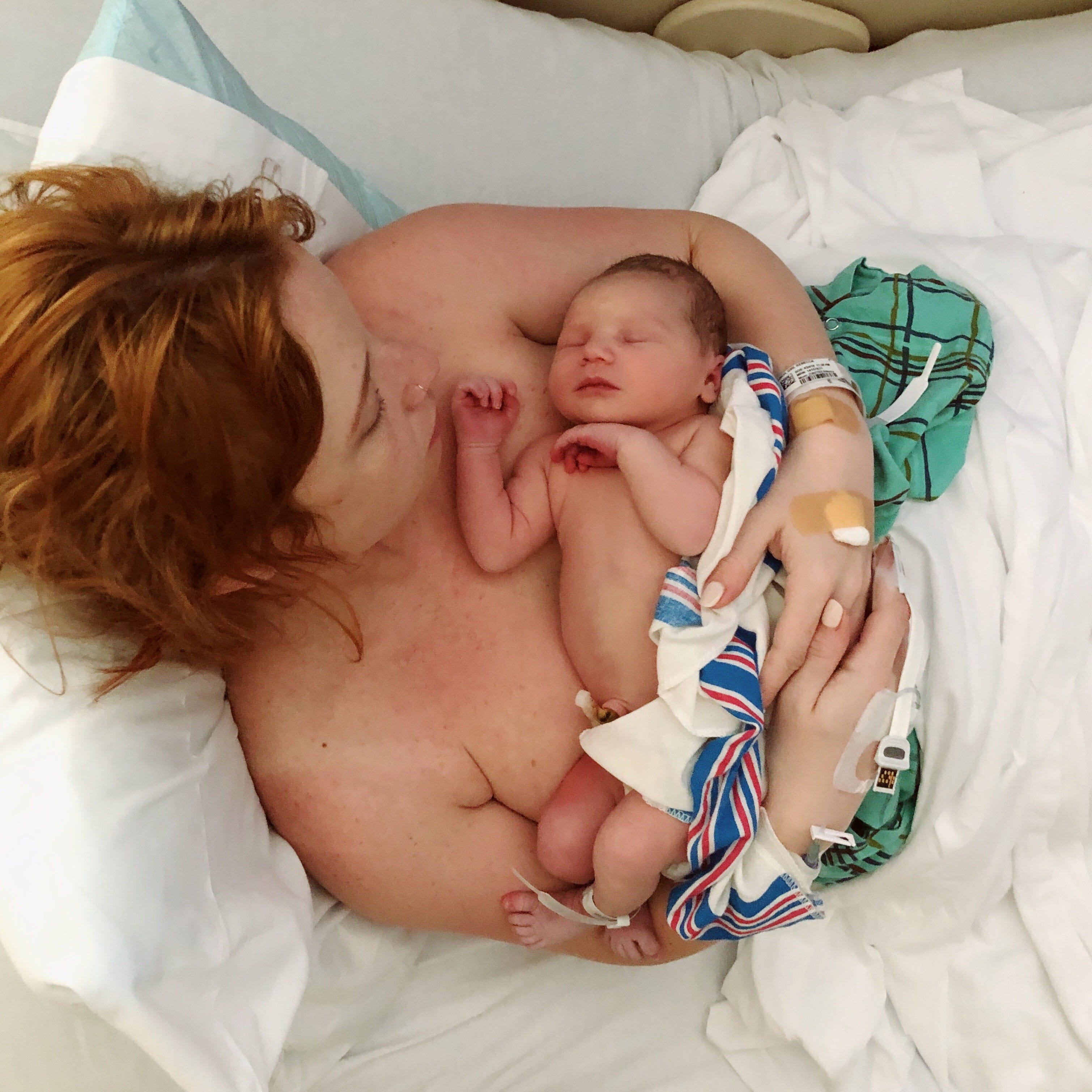
Newborn, folded against me in a hospital bed, still soft from wherever she’d just been, her weight more suggestion than certainty. I didn’t trust my own arms, like they weren’t enough for what had just been handed to me, because there was no transition between not having her and having her, just this sudden, impossible presence. The room felt too bright and ordinary for it. I kept thinking this is too quiet for something that just happened.
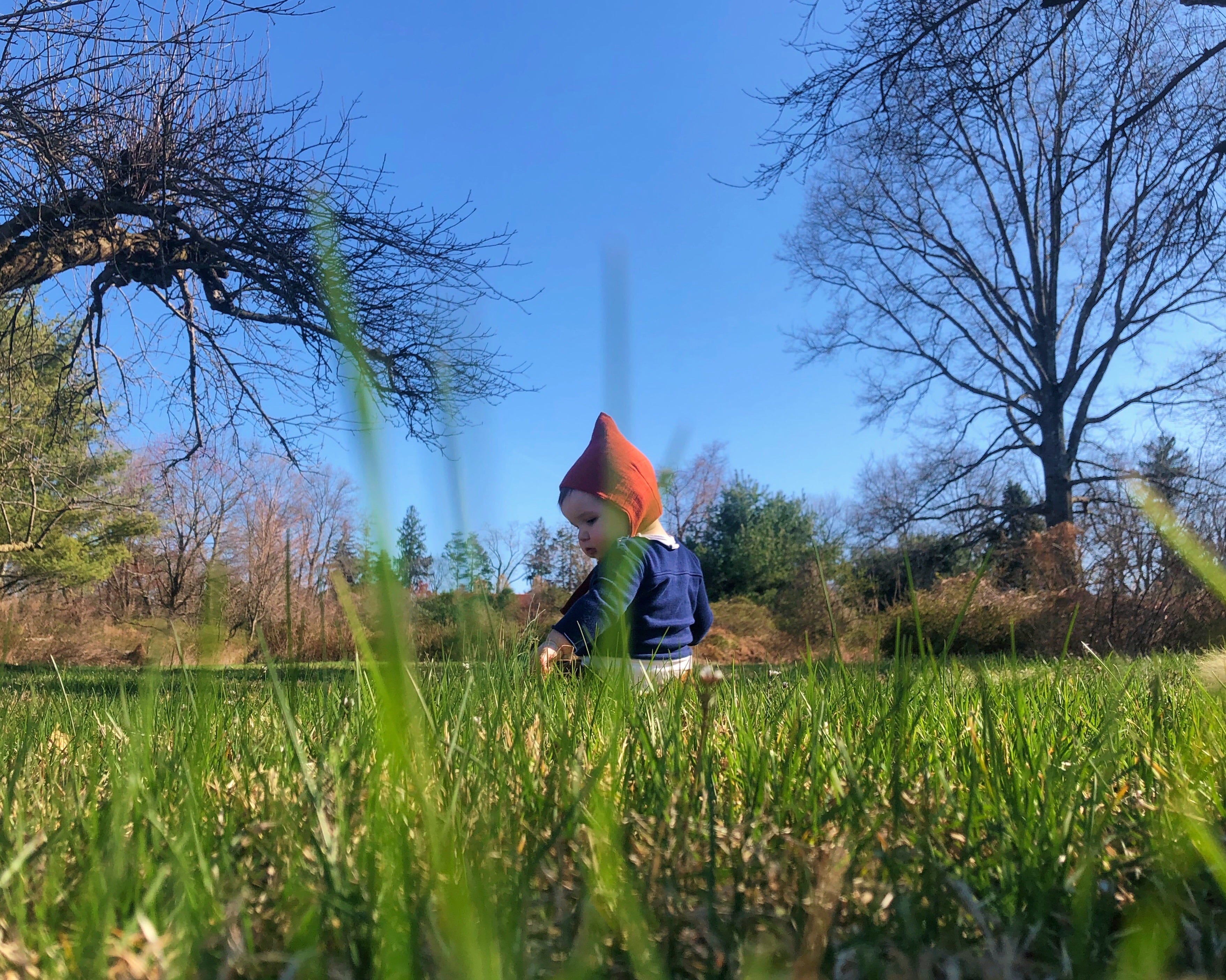
One, in the grass in a red bonnet, sitting low to the ground like the world had been built too large around her. She wasn’t moving through it so much as taking it in—the light, the air, the strange insistence of grass under her chubby hands, which she kept pressing into the dirt and lifting up again like something might stick, bringing her fingers to her mouth before I could stop her, always just ahead of me.
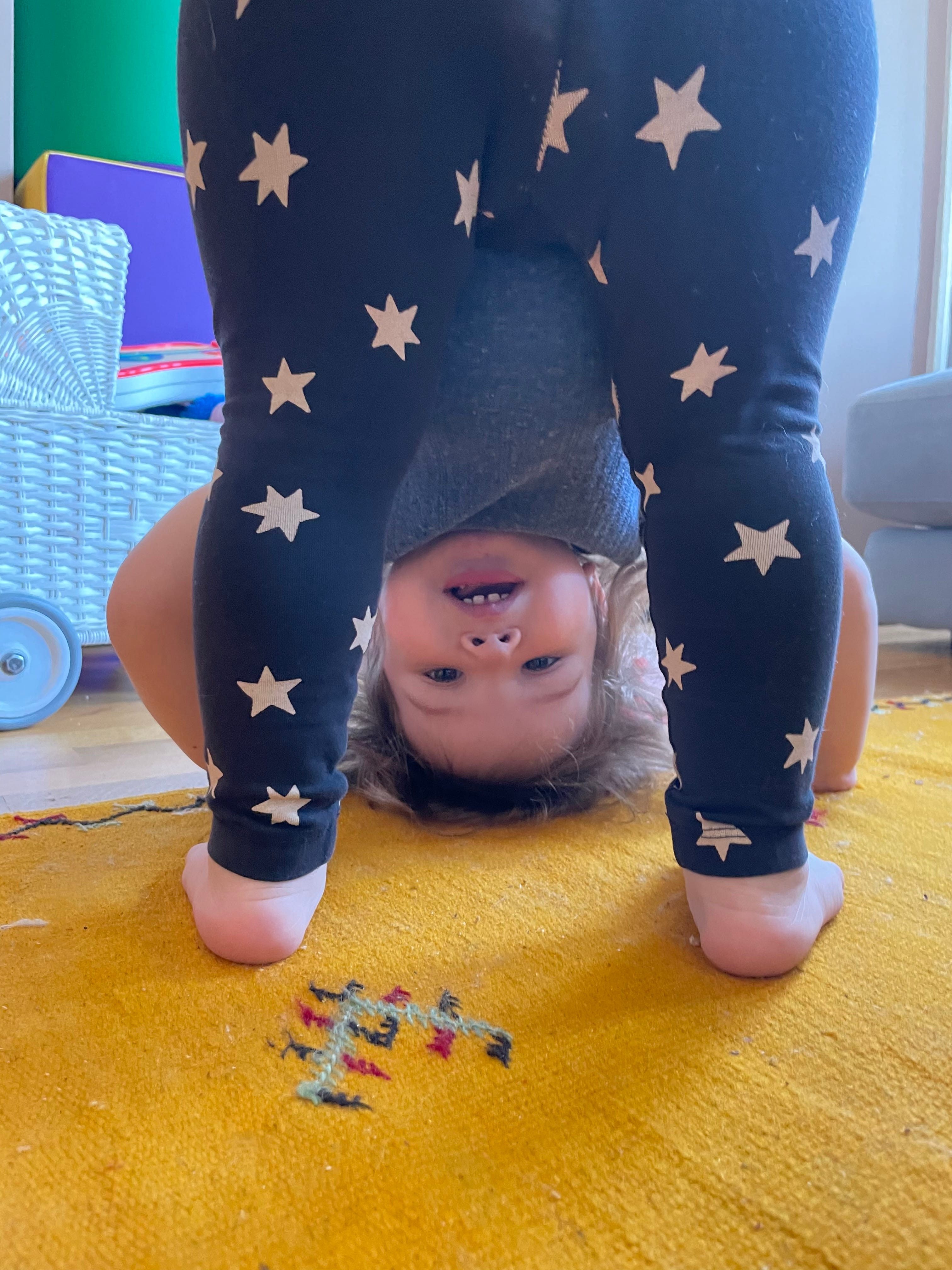
Two, upside down in star leggings, already testing the rules, looking at me through her own legs, laughing at something I couldn’t quite reach. She asked if everything looked different to me when I turned upside down and I said no without really trying it, and she didn’t believe me, just kept watching me like I was the one who wasn’t getting it. She spent her days discovering things I was already done discovering—everything I was missing because I thought I already knew what a room looked like.
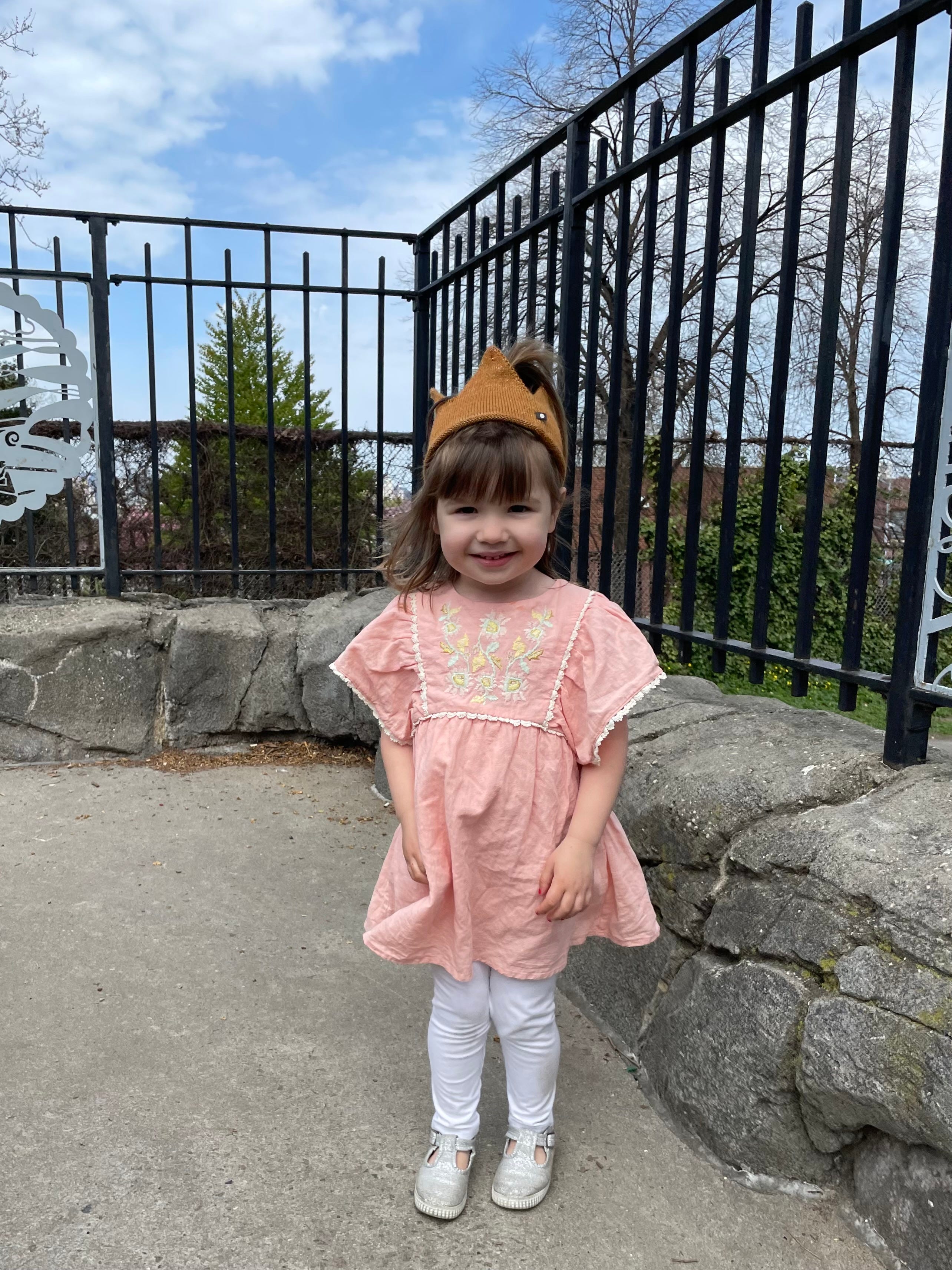
Three, in a knit crown and pink birthday dress, standing with her weight evenly planted like she's already decided this is exactly where she belongs, the crown not costume but correct, completely correct, the smile not performative but at home. She was three and she had figured out she took up space in the world.
Four, on the garage floor with paint on her hands, her tights, the concrete, me. Working with conviction and no plan—not trying to make something good, just making something hers, dipping her hands straight into the paint instead of using the brush, holding up her fingers to show me like proof of something. She reached for me without thinking, leaving streaks I didn’t notice until later. I remember the split second where I almost stopped her, almost said let’s keep it on the paper, and then didn’t, and the relief of that—the feeling that I had chosen correctly without exactly knowing why.
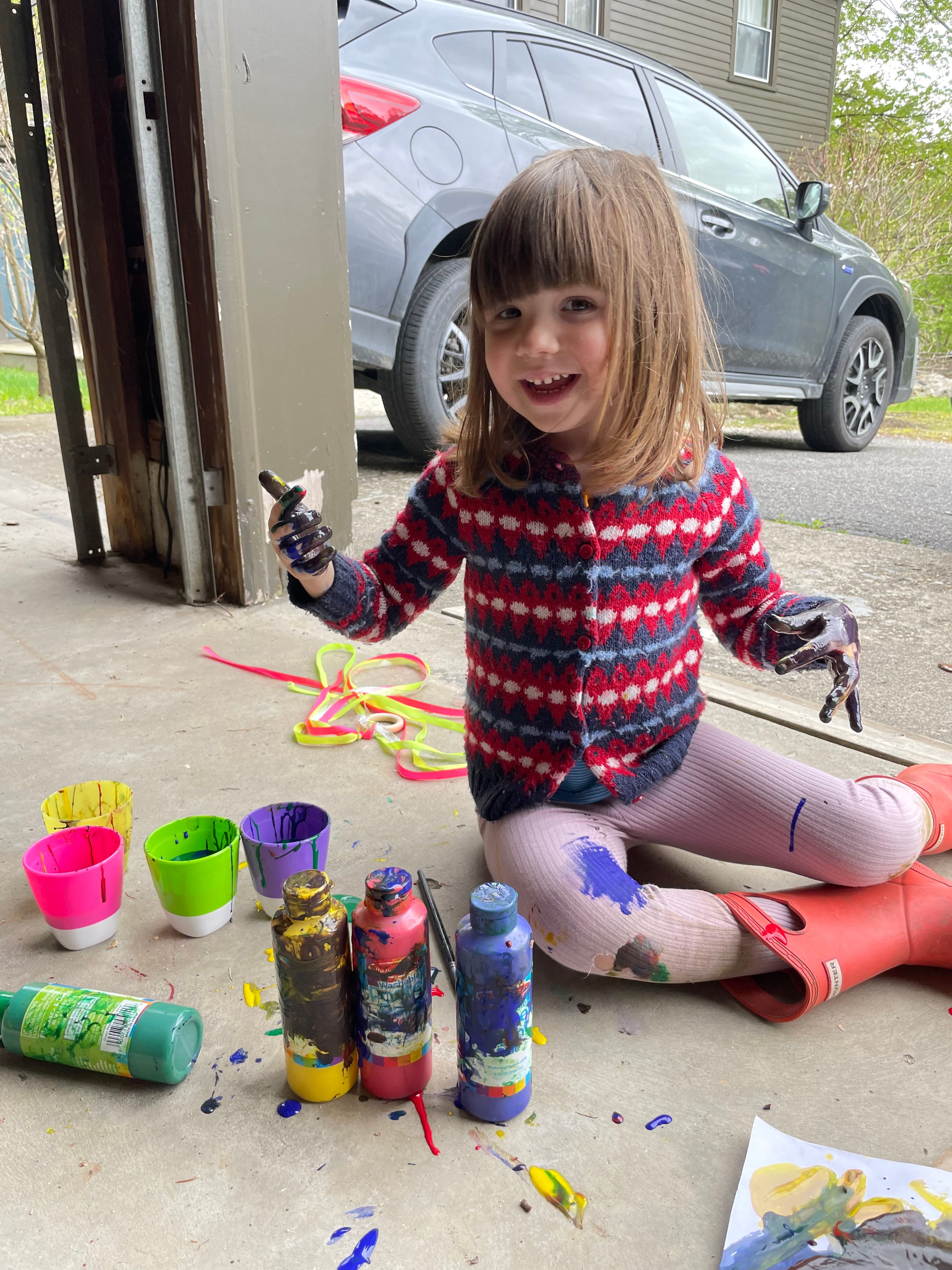
And that’s where it stops.
I have five Aprils and then nothing. Or rather, not nothing—tulips. Peach blossoms. Mud. Seedlings. The first bees. Everything coming back, right on time. Just not her. Not at five. Not at six. Not at seven.
The garden starts up again anyway, as it always does, as though April were not also the month my life split open. I don’t know what to call it anymore. Some days it feels like cruelty; other days, something closer to mercy. The extravagance of spring showing up at the exact site of catastrophe, asking nothing, offering nothing. Just continuing.
I don’t know what parts of her would have stayed. I barely got enough time to figure out which parts were even hers to begin with. I was still learning her when she got sick—still trying to tell what was just passing through and what might stick. I thought that was the most ordinary thing in the world. Having time to find out who your child is.
Instead, I have photographs.
And because I have them, I can see something that feels almost worse than absence—I can see her changing. It’s not just that she was here. It’s that she was still becoming. Nobody knew it was finite. I lost not only the child I loved madly, but the child who was on her way to being someone. A whole future self felled in greenwood.
There are still moments when I think of her in the present tense before I can stop myself—when I’m talking to someone, or just to myself.
Daisy says “wadoo” instead of “water” and “fwatee” instead of “strawberry.” Daisy calls lizards “dudes.” Daisy craves seaweed snacks. Daisy loves “Lucky Star,” but calls it “Gummy Star” because it’s her favorite card in CandyLand. Daisy smells Mr. Bunn for comfort. Daisy sleeps in the hallway between our rooms with half-eaten plums under her blanket. She laughs with her entire body, as though laughter is a weather event moving through her.
Daisy stayed with people.
And then the other things.
Daisy never turned five.
Daisy never lost a tooth.
Daisy never learned to read.
She never had a best friend who broke her heart.
She never saw her brother grow.
She didn’t continue. The years did.
If Daisy were seven, I think she would still want to be outside before it was really warm enough. I think she would still come home with damp hems and pockets full of useless treasure. I think she would still pick things and bring them to me, not because they were beautiful but because they had been found. I think she would be old enough now to remember some things clearly and young enough to misremember others completely. I think she might be getting a little private. I think there would still be traces of babyishness clinging to her in very specific places, and I think I would notice each one with the greed of a mother already aware of how fast childhood moves.
Every April she would have been something new. Five, six, seven. The numbers just keep coming—a little ladder built against empty air.
The garden doesn’t solve anything. It has never once healed me, and I no longer ask it to. But it does enact, over and over, a version of time I can actually look at. Time, moving. Things emerge. Things fail. Things rot down. Things come back a little different. I can kneel down and see exactly where something has returned, where winter killed it back and where it didn’t. Every spring I put things in the ground that weren’t there before. Beginning again.
I don’t want to invent her too much. I’ve seen it done—dead children sanded down into symbols. I can’t do that to her. Daisy was not a symbol. She was a child. Funny and stubborn and tender and strange. She wore things on her head that had no business there. She made requests with the confidence of a small empress. She belonged entirely to herself, even when she was tiny.
I don’t know seven-year-old Daisy, but I know the path toward her was real. I’ve seen it. It exists in photographs and memories and the deep muscle memory of being her mother—in my hands, in whatever part of the body holds the memory of someone you carried.
So this is what I live with: five Aprils, a garden that keeps beginning, and a child who remains absent and impossibly, specifically present—against my skin, in the red bonnet, the star leggings, the knit crown, with the paint-blackened fingers. Present in how I still feel the weight of her and the shape of her and the terrible ongoingness of loving someone who stopped growing while the world keeps handing me her ages anyway.
Seven is not mine to know.
But she is.
For My DaughterI wanted to bring her a chalice
or maybe a cup of love
or cool water I wanted to sit
beside her as she rested
after the long day I wanted to adjure
commend admonish saying don’t
do that of course wonderful try
I wanted to help her grow old I wanted
to say last words the words famous
for final enlightenment I wanted
to say them now in case I am in
calm sleep when the last sleep strikes
or aged into disorder I wanted to
bring her a cup of cool water
I wanted to explain tiredness is
expected it is even appropriate
at the end of the day
—Grace Paley
Comments
Nothing yet. Say the first thing.
Sign in to join the conversation.