
There’s a moment in April where the garden starts answering questions I don’t remember asking. At first it’s small enough to miss—a seam in the soil loosening, something pressing upward, not dramatically, not all at once, just enough to change the surface. You have to be looking closely, and often, with a kind of patience that feels less like attention than like waiting for something to show up.
The other day, I saw the pink tips of peonies just breaking through. No leaves yet—just that unmistakable color, like something alive remembering itself. I didn’t have to go looking for them. My body found them first, scanning for what should be there.
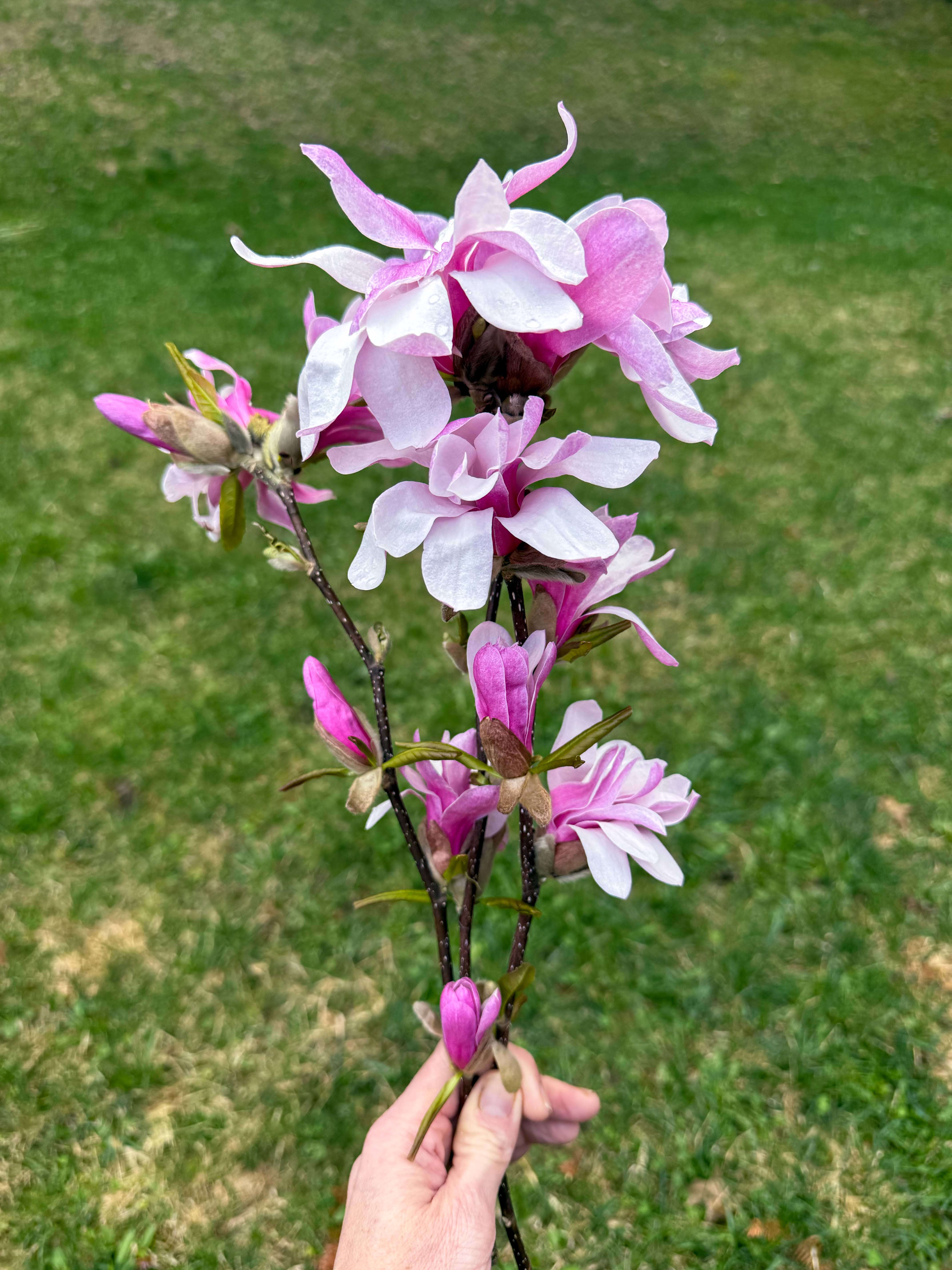
Then the daffodils trumpeted open, loud against the still-bare edges of everything else, no longer goosenecks but declarations. Hyacinth thickened and lifted, the scent already gathering in the air before I got close enough to name it. The magnolia opened all at once, less blooming than an event—pale, improbable cups on bare branches.
It’s no longer subtle. I don’t have to look for it. The garden is happening whether I’m paying attention or not.
All winter, it disappears without explanation. Stems collapse, and everything withdraws into a version of itself that is indistinguishable from absence. And still, something is happening underneath without evidence. It feels older than intention.
By April, the proof doesn’t just surface—it insists. Crooked at first, then suddenly not.
Last year, I cut a lot of plants back without knowing what I was cutting toward. I remember the feeling of it—the dry snap of stems, the way the ground gave slightly under my weight. I was careful in the way you are when you don’t trust yourself to know what matters. Leaving things I wasn’t sure about, cutting things I was—or thought I was.
It’s possible I cut something that would have come back. It’s possible I didn’t. The garden doesn’t correct me. It doesn’t explain the difference.
Looking at what’s returned, I tell myself I left enough. But that isn’t how I actually live. It isn’t even how I think.
April is Daisy’s. She is pinned to this month, beginning and end, as if time decided to hold her there. The days lengthen and I feel it in my body the way I feel the light—too much, too sudden, nowhere to put it.
The garden begins again at the exact time my life stopped making sense.
It insists on cycles. It does this without hesitation or reverence. It doesn’t lower its voice or slow down.
But this doesn’t feel like a cycle. It feels like two things happening at once that shouldn’t be able to.
I find myself scanning for what isn’t there in the same way I scan for what is—a space where something should be, a delay that feels intentional. I try to remember what I planted, what I tended. What I was certain of.
Sometimes I think it’s just late. Or I never planted it. And sometimes I know exactly what’s missing.
There is no version of the season that brings her back.
What it does instead is keep going. The peonies will push further up, no longer just pink but leafing up and out. The daffodils hold their faces open. The hyacinth deepen, collapsing inward even as they bloom. The magnolia will let go almost as quickly as it began. Everything continues, exactly as instructed.
I stand here, holding both versions—the one where things begin again, and the one where they don’t—and neither one cancels out the other.
I don’t believe everything returns, but I keep making space for it—clearing the same beds, putting my hands in the same soil, feeling for something I can’t see, something I know better than to expect, something I look for anyway.
I wanted to speak at length about
the happiness of my body and the
delight of my mind for it was
April, a night, a
full moon and—
but something in myself or maybe
from somewhere other said: not too
many words, please, in the
muddy shallows the
frogs are singing.
—Mary Oliver
There has been a noticeable shift in Feather Locklear’s behavior.
Science might say this is seasonal—longer days, increased light exposure, more testosterone.
Science might say spring has activated an ancient biological imperative that ensures the survival of the species.
Science might say he’s just doing what roosters do this time of year.
That’s fine.
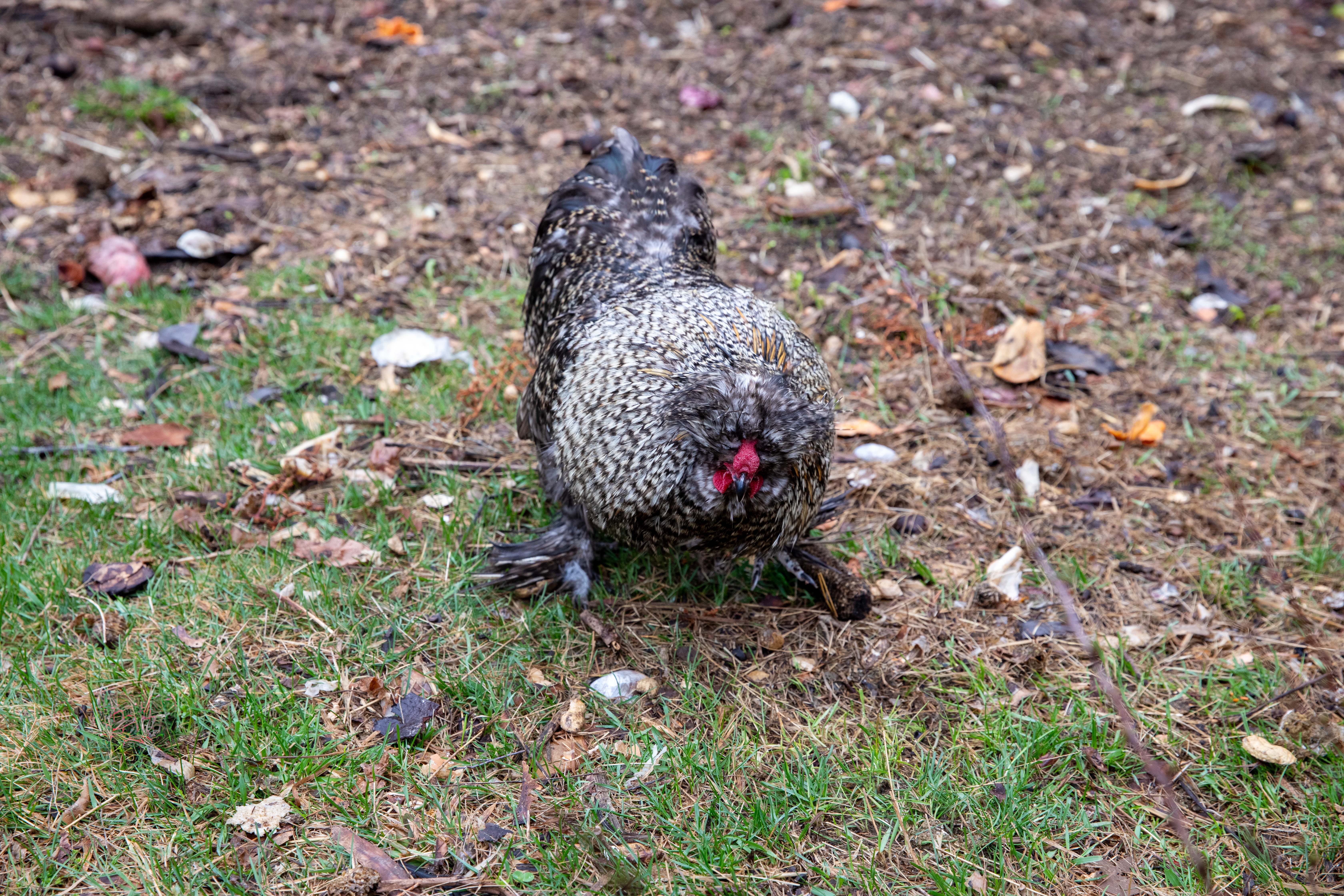
What I am seeing is that Feather Locklear has become extremely intense.
In winter, Feather was more of a personality than a problem. Loud, occasionally dramatic, but mostly ornamental. There were little bursts of aggression, sure, but they felt symbolic—like he was trying something out or putting on a show for the ladies.
Now he is fully committed. He patrols constantly, he watches everything, he engages quickly and without much explanation. Movement triggers him. Stillness also triggers him. At this point, I feel comfortable saying that existing within his general field of awareness is enough.
Science might say this is heightened territorial behavior.
Science might say he is monitoring perceived threats to the flock.
Science does not explain the sense—difficult to quantify, but present—that I was being stalked.
Earlier this week I was in the garden building pea tepees—an activity that, in my mind, had nothing to do with him. The garden is catty-cornered from the chicken run. He came over and stood at the fence and just…watched me.
For at least thirty minutes, or one third of my podcast.
Not pacing, not fluffing up, not doing the usual theatrical “Feather’s just being Feather” routine. He just stood there, completely still, maintaining eye contact, occasionally stepping back to crow at the sky like he was checking in with someone.
Then right back to watching me.
Science might call that vigilance.
It did not feel like vigilance.
It’s possible this had nothing to do with me. It’s also possible it was entirely about me. I’m trying not to impose a narrative, but, in a way, the narrative is imposing itself.
Yesterday I entered the run wearing shorts, which in hindsight reads as a failure to respect the data. He saw me. There’s a pause now before he charges—a small moment where he squares up, like he’s making a decision. He gets down low, flares his neck feathers, and becomes the Dilophosaurus from Jurassic Park (1993).
Then he goes for it.
I’ve made some small adjustments in my own behavior. Nothing dramatic, really—just when I enter, how I stand, where I look, what I wear, who I was before I had to think about this. There has been a shift in my relationship to exposed skin. It’s not avoidance. It’s awareness.
Science would call this instinct.
Science would say this phase will pass.
Science says many things.
Science has never met Feather Locklear.
Blooming: Daffodils, unabashedly open; hyacinth, heavy with scent; Chinese magnolia, soft and slightly unreal.
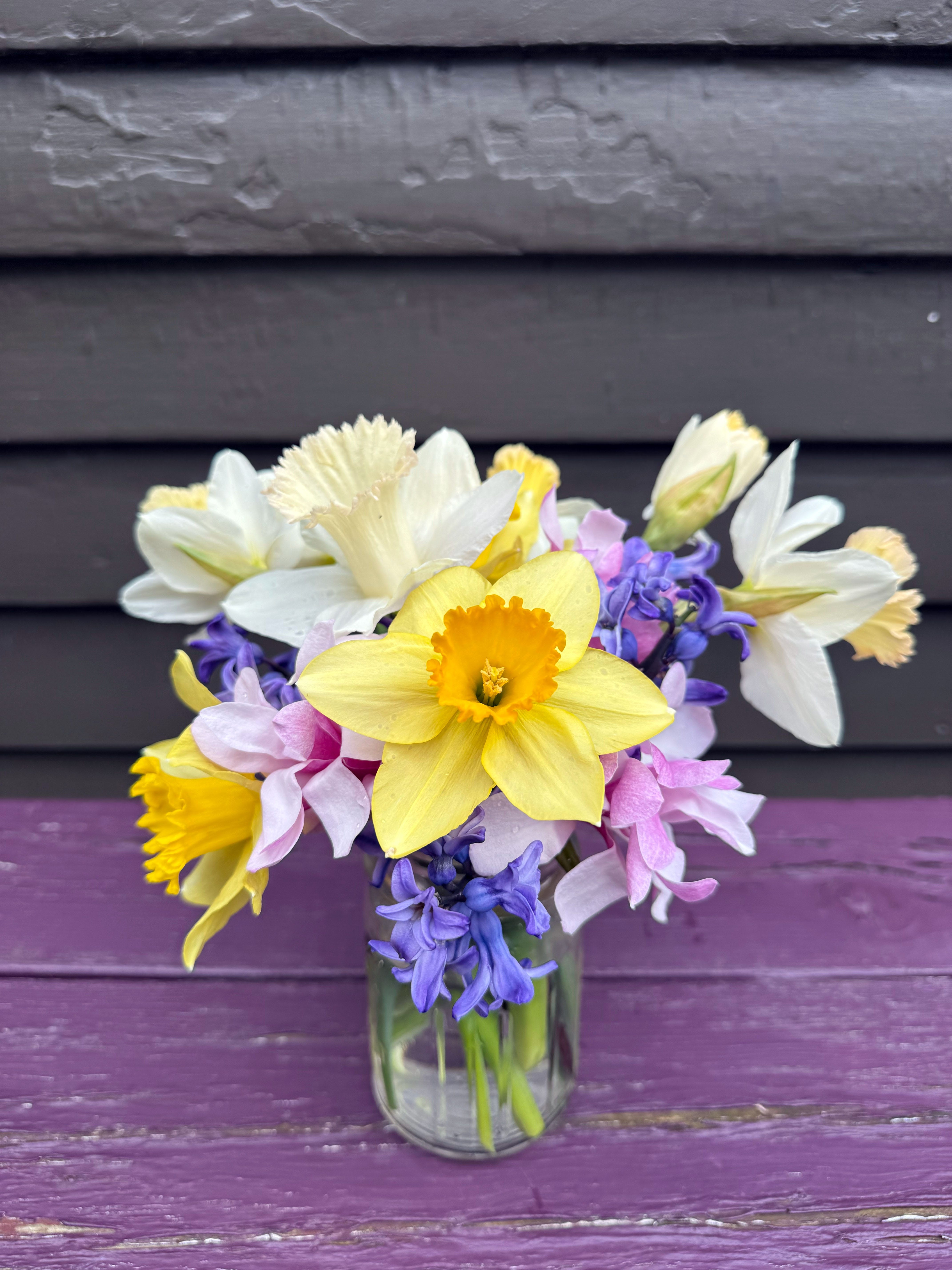
Dying: Crocus, who did something important here and are now gone; several regimes, ideally; all the flowers I cut and brought indoors.
I planted snap peas and sweet peas this week, which feels like the kind of thing a gardener does in spring.
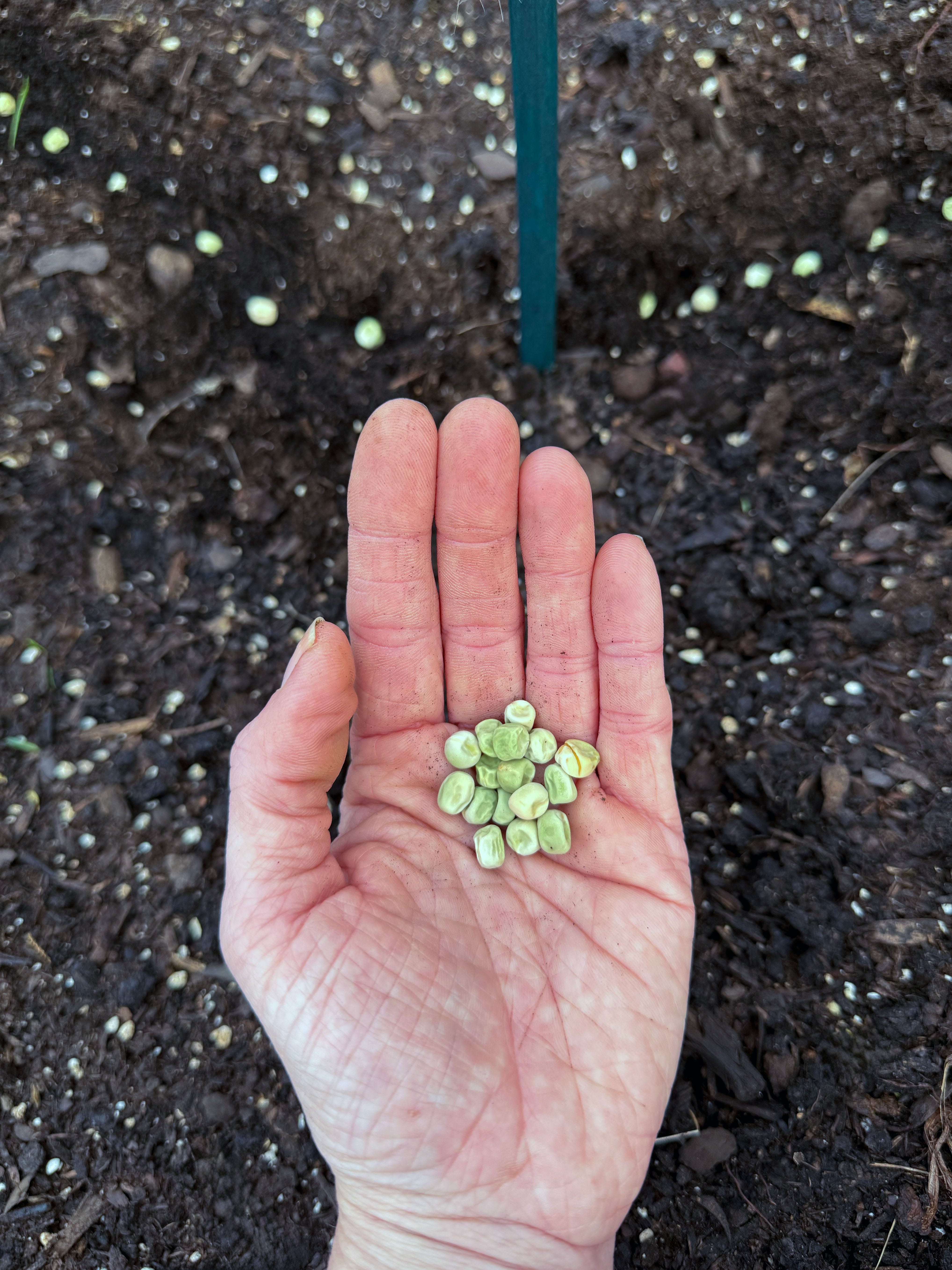
Peas are small, dry, and deeply unconvincing. If I found one in my pocket, I would assume it was debris. If I dropped one on the ground, I would not break stride. A thawed frozen pea, perhaps.
I soaked the sweet peas first, for about twenty hours, which feels like a strange amount of care to extend to something I would otherwise flick off a table.
And yet—into the soil they go!
I built something for them to climb, which is remarkably optimistic of me. Small tepees made of bamboo stakes and twine that currently serve no purpose except to suggest a future and make it seem like I know what I’m doing.
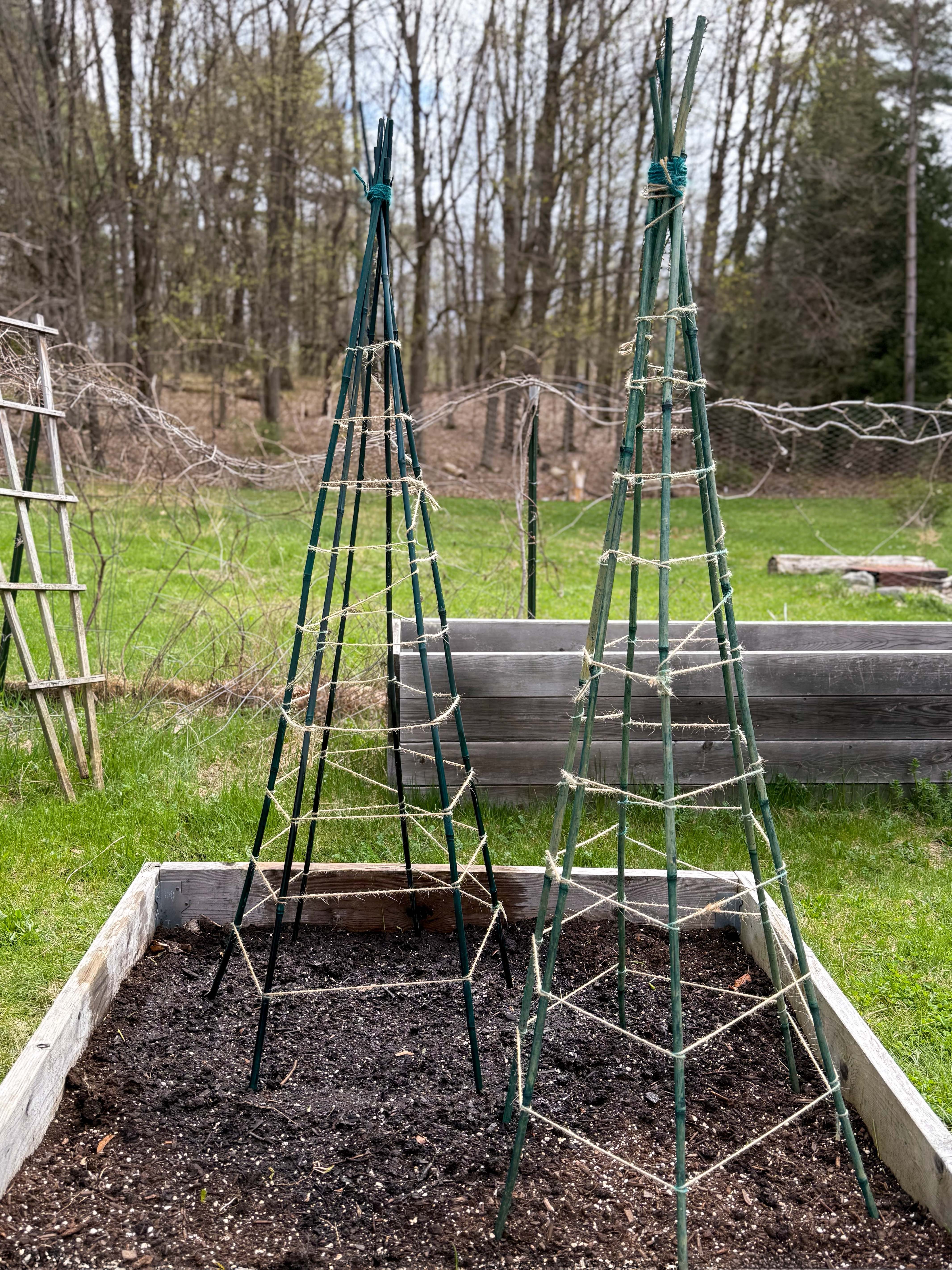
It’s early for peas, or maybe it isn’t. According to the ladies at the garden center, it’s too early. According to Monty Don, it’s the perfect time.
Let’s go with the suspendered Brit.
Peas, Monty says, are cold weather crops. They prefer this—cold soil, early planting, a general lack of interference. They don’t want heat mats or someone hovering over them whispering encouragement. They just need to be there, in the ground, left alone in conditions that feel, to me, like a poor decision.
So I did that.
🫛
Pea ‘Sugar Ann’; sweet peas ‘Jilly,’ ‘April in Paris,’ ‘Beaujolais,’ ‘Mammoth,’ ‘My Navy’
The return of spring has set off a full-scale renewal of auditory activity, without my consent.
Winter’s quiet has lifted without telling me, other than the calendar. In its place, there is a dense and ongoing presence of birds, often beginning before dawn and continuing with no clear endpoint or editorial oversight.
wake at an hour that feels incorrect
remain very still, as if movement might escalate things
attempt to identify one bird and build from there
assign names, roles, and backstories
open the window to “get a better sense of it”
close the window because the sense is too strong
High.
Aggressive. Peak activity occurs at 4:57 a.m.—a time I did not previously consider part of my day.
Extensive.
early waking, unsolicited
reluctant admiration
the sense that something important is being communicated, not to me
the persistent feeling of being watched, possibly unrelated
a brief but recurring urge to respond, though it’s unclear how
In rare cases, subjects (me) report feeling generally unhinged. Available data suggests this is baseline.
At 5:03 a.m., a robin begins a sustained vocal performance directly outside my bedroom window. The sound is clear, structured, and repeated with minor variations.
No immediate response is detected.
At 5:47 a.m., a second, unidentified bird begins a separate pattern from an unknown location. The two continue simultaneously for several minutes.
No conflict is observed.
No resolution occurs.
I remain awake for the duration.
Silence has been discontinued. Replacement sound is now active, avian, and shows no interest in moderation.
Further study is unlikely to reduce exposure.
Moby—“Flower”
I’ve been in my Mobyssance for the better part of a year.
It continues. Spring has only made it more convincing.
Comments
Nothing yet. Say the first thing.
Sign in to join the conversation.