
I plant too many seeds because I cannot tolerate the possibility of emptiness.
This is irrational. I know how seed packets work. I understand germination rates. I have access to both experience and basic mathematics. And still, I lean over rows of turned soil dropping seeds with the concentration of someone trying to prevent loss in advance.
Because what if they don’t come up? What if I believed too hard in something tiny again?
Then, inevitably, they do.
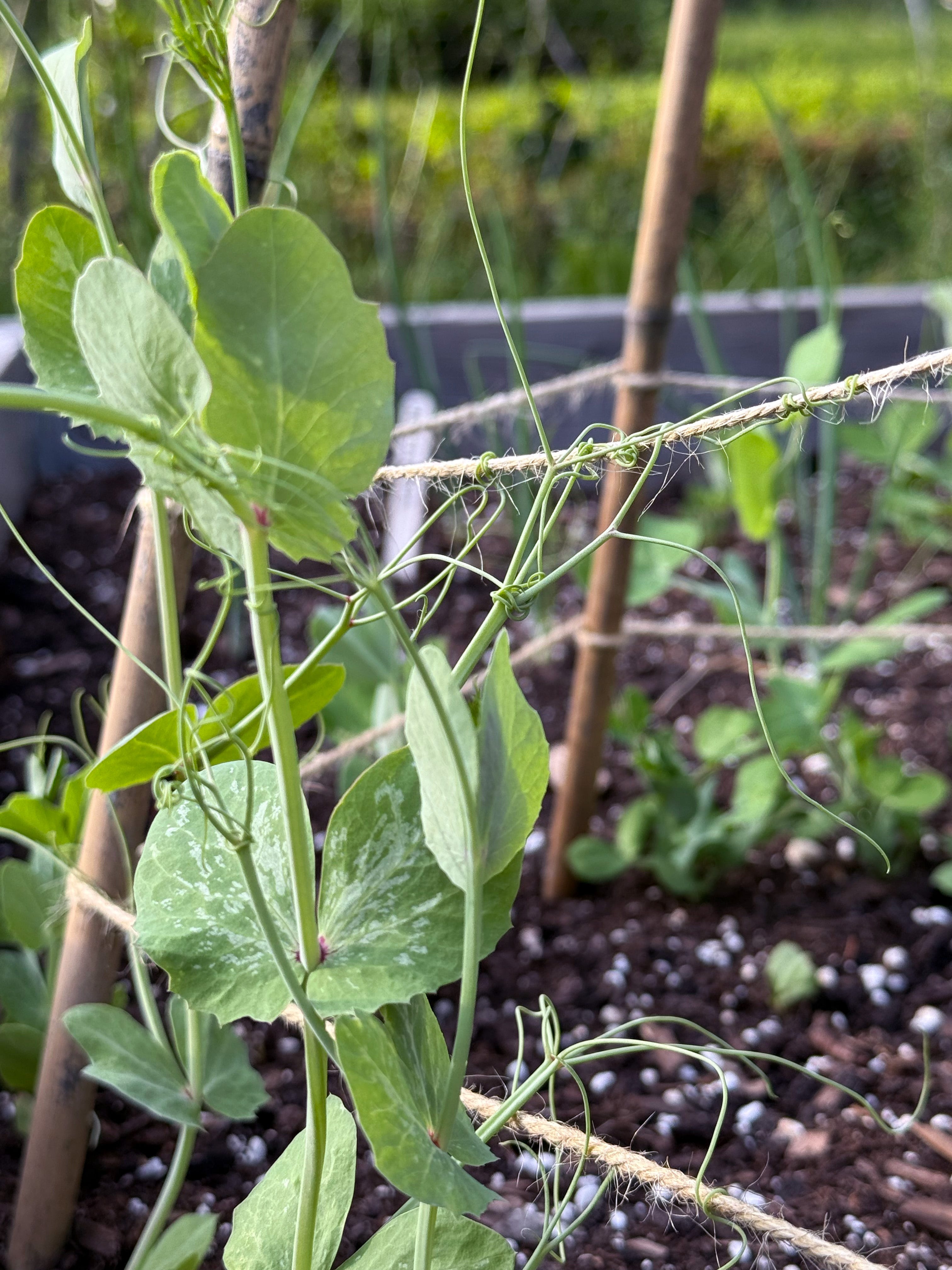
The carrots especially—hair-thin green threads appearing shoulder-to-shoulder in dense hopeful little crowds. Lettuce seedlings packed together so tightly they resemble panic, pushing upward in clusters beneath the soil where they are already competing with each other for room.
And eventually comes the task I dread more than almost anything else in the garden: thinning.
If you don’t thin seedlings, nothing develops properly. The roots compete, the plants weaken each other. You can leave them crowded for a while out of sentimentality or avoidance or superstition, but eventually the entire row suffers for it.
I crouch there preparing to remove living things that have done absolutely nothing wrong. The seedlings I pull didn’t fail. They germinated exactly as asked. They pushed upward through cold soil. They survived rain and fluctuating temperatures and whatever strange emotional weather settled over the garden that week. They reached for light with their whole tiny bodies.
There is simply not enough room for all of them to stay.
I always linger there longer than I should, hunched beside the raised bed staring at seedlings no bigger than eyelashes while the evening cools around me. Dirt pressing damp through the knees of my leggings. Mourning doves somewhere beyond the fence line. The smell of watered soil lifting upward as the heat leaves the day.
Maybe that’s part of why thinning feels so impossible. I’m never just thinning lettuce—I’m crouched in the accumulated overgrowth of my life trying to decide what deserves space.
The instructions always say to snip seedlings at the soil line rather than pull them, to avoid disturbing nearby roots. Which somehow makes it worse—worse to cut them cleanly, to leave the root system beneath the soil where it grew, intact but severed.
I postpone thinning too long every year. The rows become ridiculous—overcrowded jungles of avoidance. Entire civilizations of small greens pressed together because I can’t make myself choose.
The lettuce are easier, at least somewhat, because I can eat the thinnings. I crouch next to the bed with a bowl in the dirt at my knees, dropping leaves into it one after another as I work. At a certain point I just start eating them straight out of my hand, crisp and cold and tasting so intensely green they feel almost unfinished.
Maybe it’s practicality. Maybe it’s that baby lettuce tastes impossibly alive in a way grocery store greens never do. Maybe it’s that eating them transforms the act into harvesting instead of removal. Maybe it’s an attempt to convince myself nothing is being lost.
But I think the real reason is simpler and stranger than all of that. I think I eat the seedlings because I can’t bear for them to disappear completely. So I carry them with me instead, one small green life at a time.
The strange thing is how often care looks terrible while you’re doing it. How frequently tending requires removal. How often your hands are full of living things you wish you could keep.
Not because the removed thing mattered less. Sometimes exactly the opposite.
Even briefly, even like that.
I am not resigned to the shutting away of loving hearts in the hard ground.
—Edna St. Vincent Millay
I am trying to build a relationship with one of my chickens. Not in a weird way—just in a deeply normal backyard poultry way where you imprint emotionally onto a small creature and begin assigning profound meaning to whether she chooses to stand near you.
The chicken in question is Emily Chickinson, who remains, pound for pound, the gentlest organism currently operating in western Massachusetts. The emotional equivalent of a warm teacup with feathers.
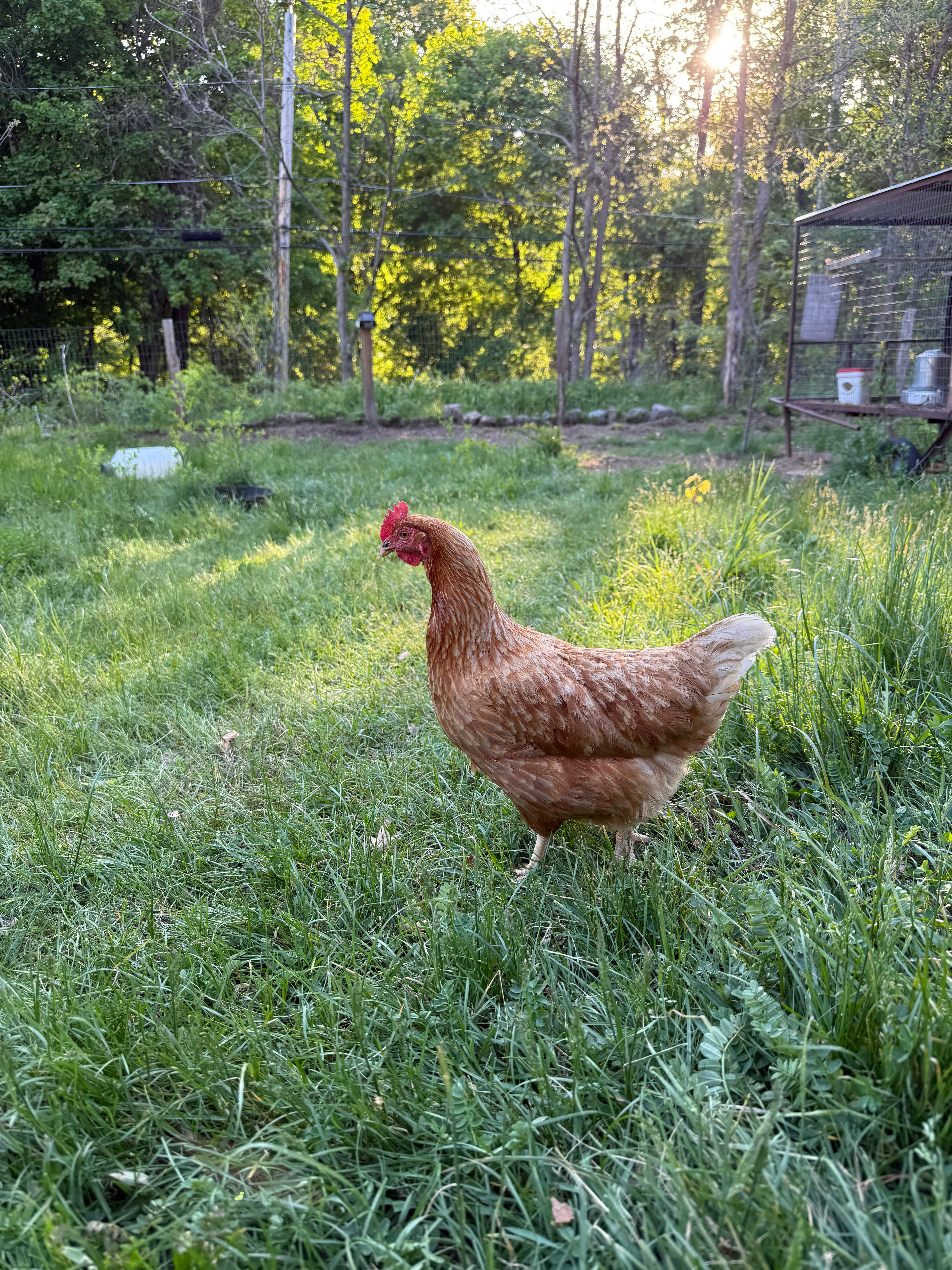
Emily walks like someone apologizing for entering a room. She makes tiny questioning sounds under her breath constantly, as though narrating a very tender documentary to herself. The one time I picked her up, she settled against me with the weight of a child staring out a rain-covered window.
Unfortunately, our attempts at deepening this connection have been repeatedly interrupted by Feather Locklear, who appears to have appointed himself her personal security detail.
Every time Emily and I begin to have a moment, he appears instantly from somewhere offscreen as though alerted electronically.
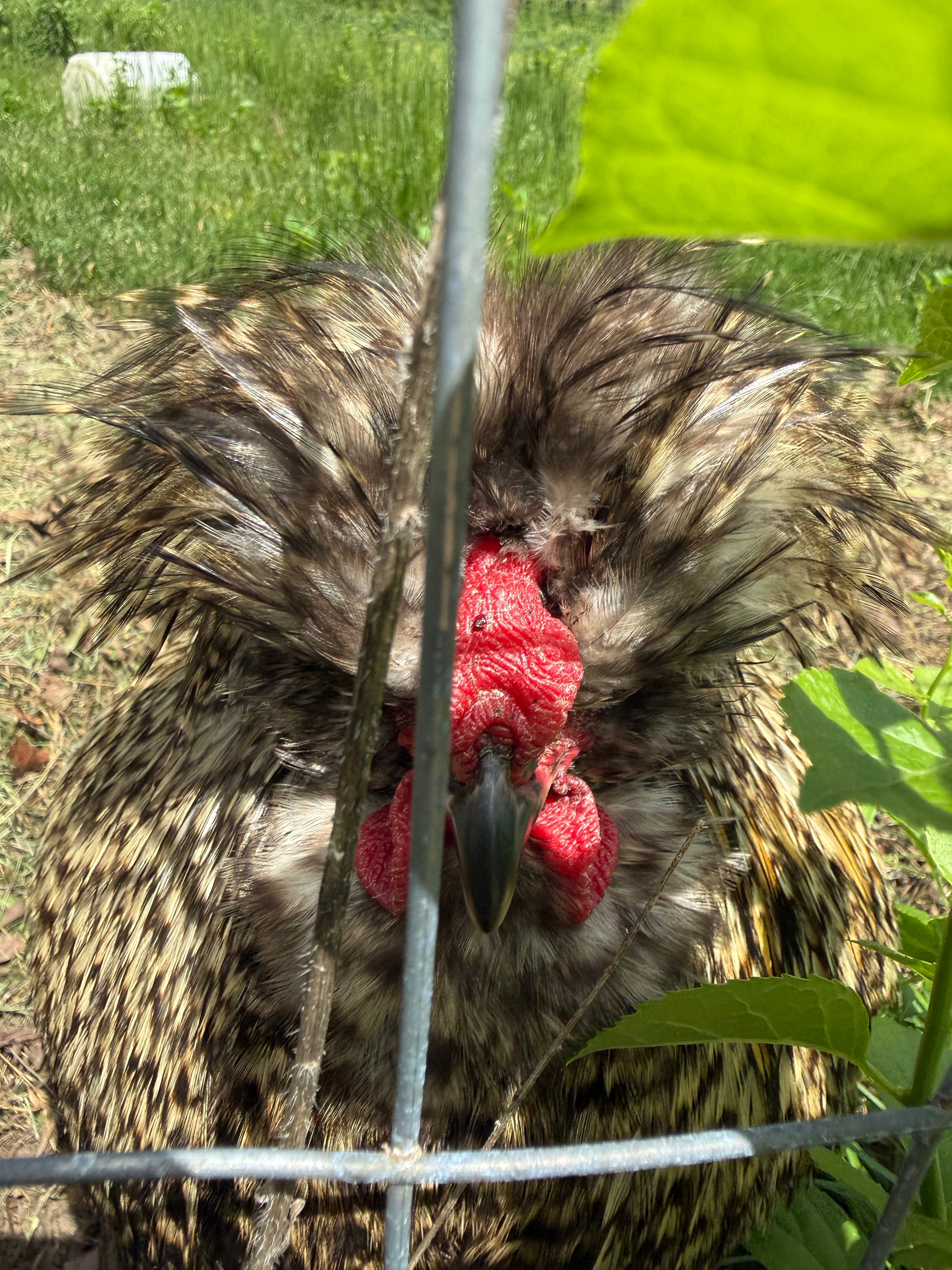
I crouch at the fence to speak softly to her—he sprints over at full velociraptor speed.
I offer her a dried mealworm—he materializes at my left flank.
I attempt to sit quietly near her in the grass to establish trust—suddenly Feather is between us puffed to approximately three times his natural volume, making direct eye contact with me like he’s heard rumors.
Emily and I will be having a perfectly lovely interaction. She’ll hop up beside me, blinking slowly, doing her little rusty-gate-hinge cooing. I’ll feel the fragile beginning of interspecies emotional understanding unfolding between us.
Then I’ll glance up and see Feather standing absolutely motionless beside the dead cherry tree.
Watching.
Not attacking—just monitoring the situation with grim concentration.
Sometimes he escorts her away mid-interaction. He’ll walk directly between us, pause, and Emily, apparently honoring some ancient poultry covenant I do not understand, will quietly follow him elsewhere while I remain crouched in the dirt like a woman recently removed from society.
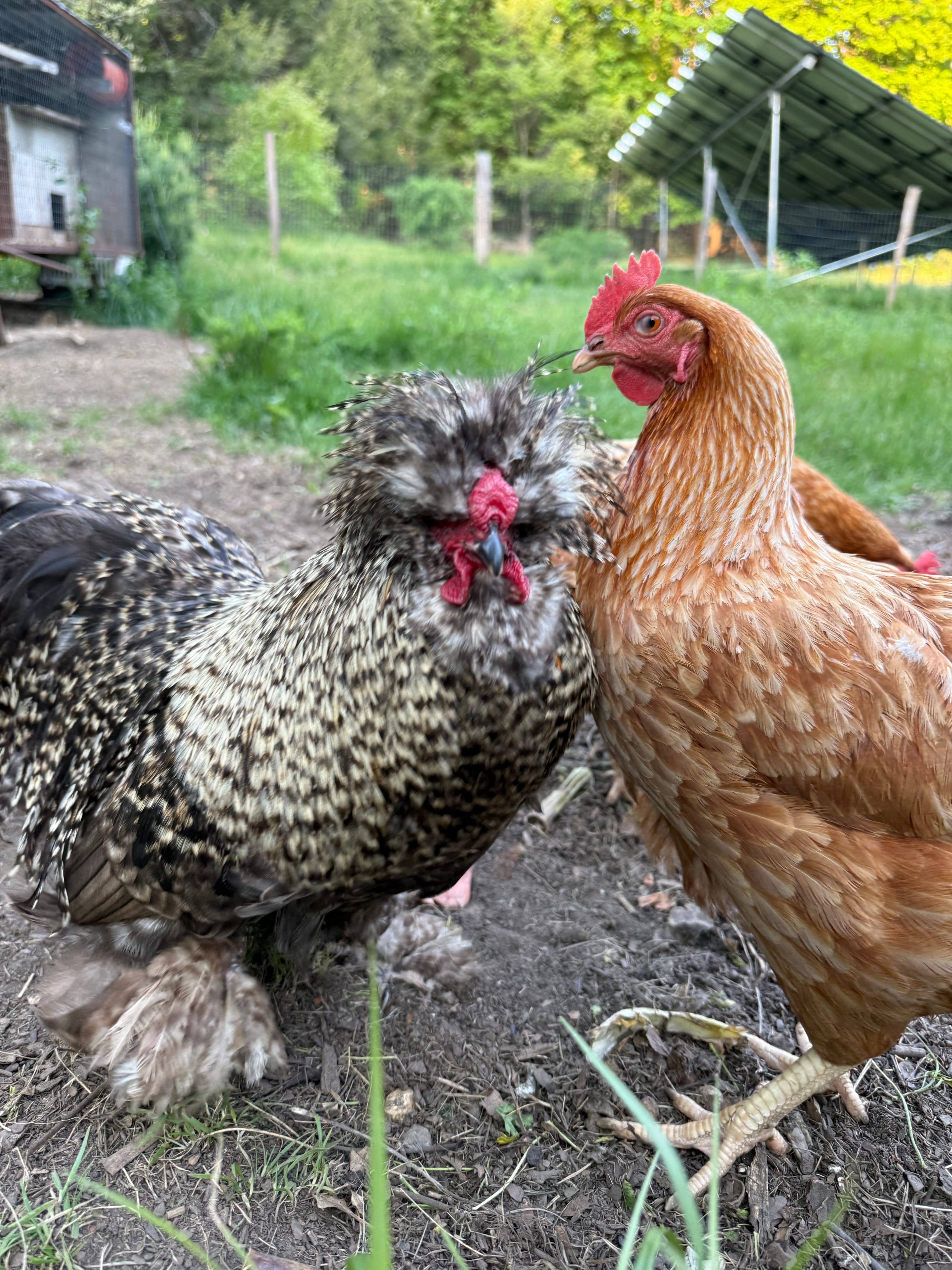
Yesterday I actually managed to feed Emily mealworms from my hand without incident and had approximately four transcendent seconds of happiness before Feather launched himself onto a nearby stump and screamed directly into my spinal cord.
Emily blinked once, softly, then continued pecking at the dirt beside him like none of this was unusual. Which, to be fair, for her, it probably isn’t.
She just stood there making her little kettle-about-to-boil noises while Feather monitored me from below like a man who keeps files. I don’t currently know what Feather believes is happening between us, but I appear to be under observation.
Lily of the valley does not behave like something trying to be noticed. It arrives low to the ground and delicate, two smooth leaves folded around a stem lined with white bells, each one hanging downward as though the flower itself is slightly shy about existing.
The blooms are impossibly precise—miniature white porcelain bells with scalloped edges so perfect they look manufactured, as though someone placed them there one by one in the night.
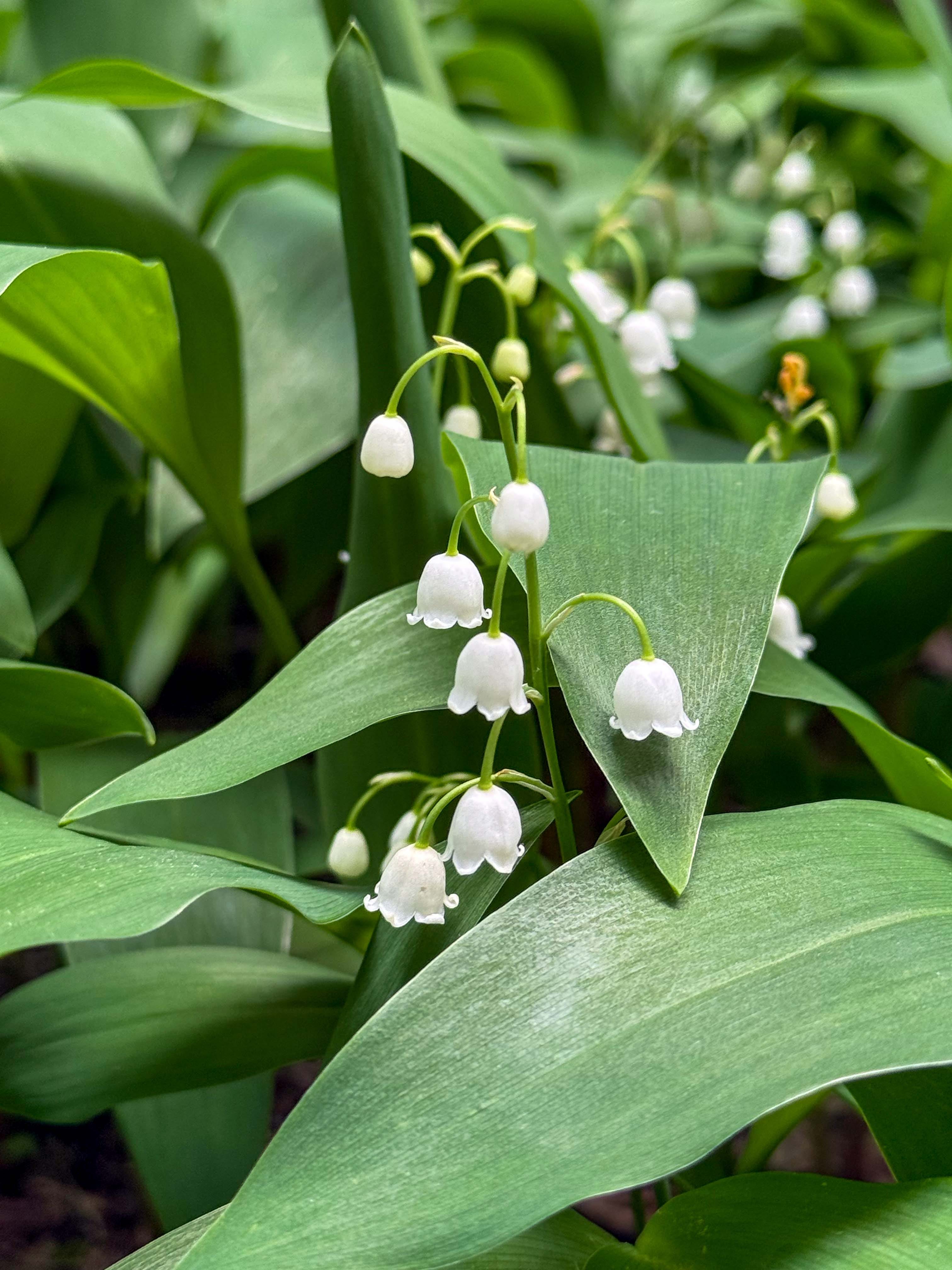
And the scent—this is where the situation escalates.
You don’t notice it gradually. You walk past and suddenly the air changes completely, cool and sweet and green in a way that feels less like perfume than memory itself. Not a smell, exactly—more like the atmosphere around a feeling.
They sit there quietly beneath everything else, almost hidden, while the scent reaches you from several feet away like a hand finding your wrist in the dark.
You smell it before you see it.
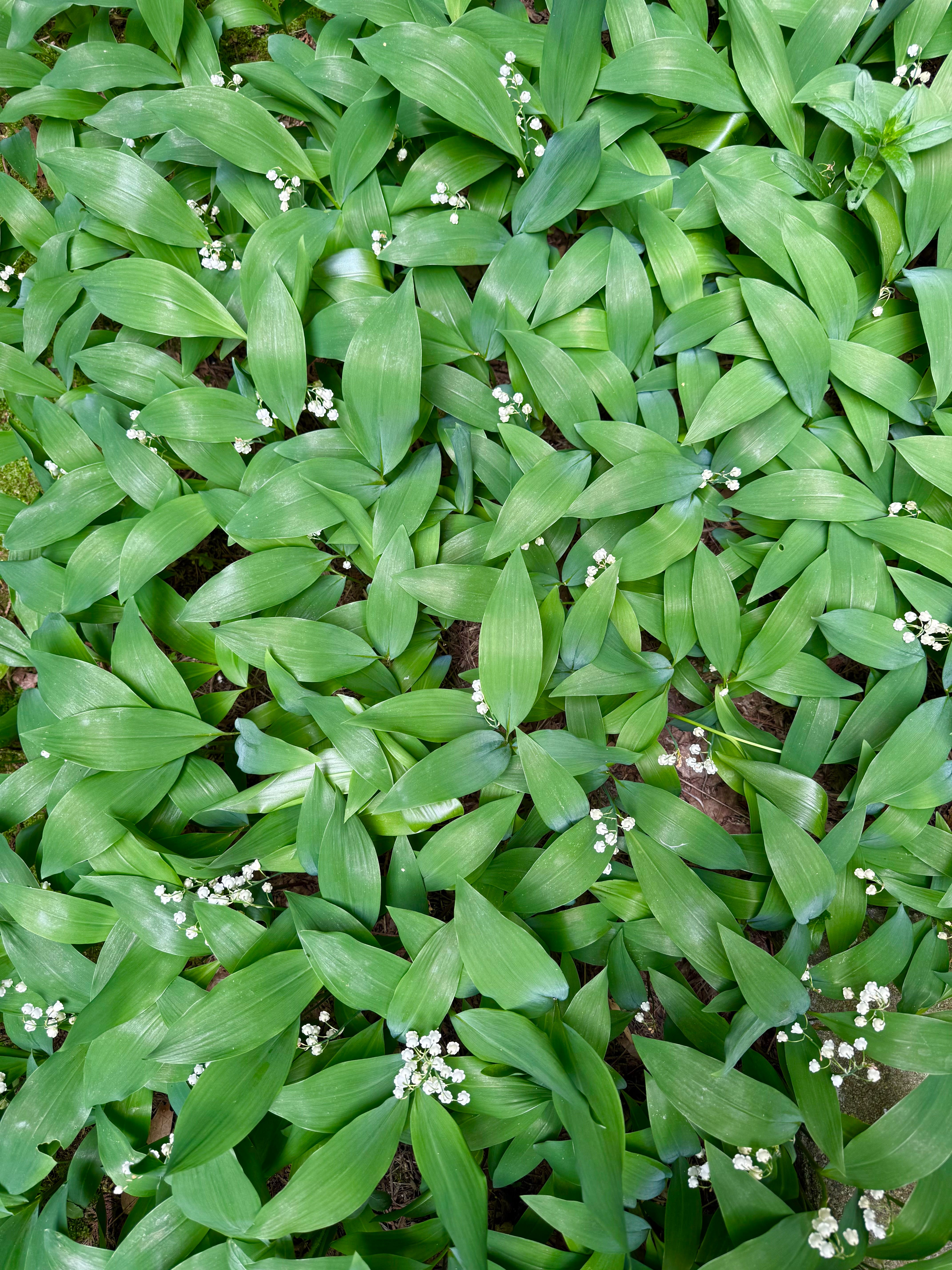
Lily of the valley prefers the understory. Damp soil, shade, the edges of things. Places where you have to discover it by accident. It doesn’t bloom loudly or show off. It simply appears for a brief stretch of spring and turns that shady part of the yard into something charged and difficult to explain.
Which is honestly a lot of pressure to put on what is essentially a collection of tiny haunted bells.
One week they’re everywhere, filling the shade beneath the trees like small dropped chandeliers. The next, the bells begin to soften and disappear back into the leaves, the scent fading so gradually you wonder if you imagined the whole thing in the first place.
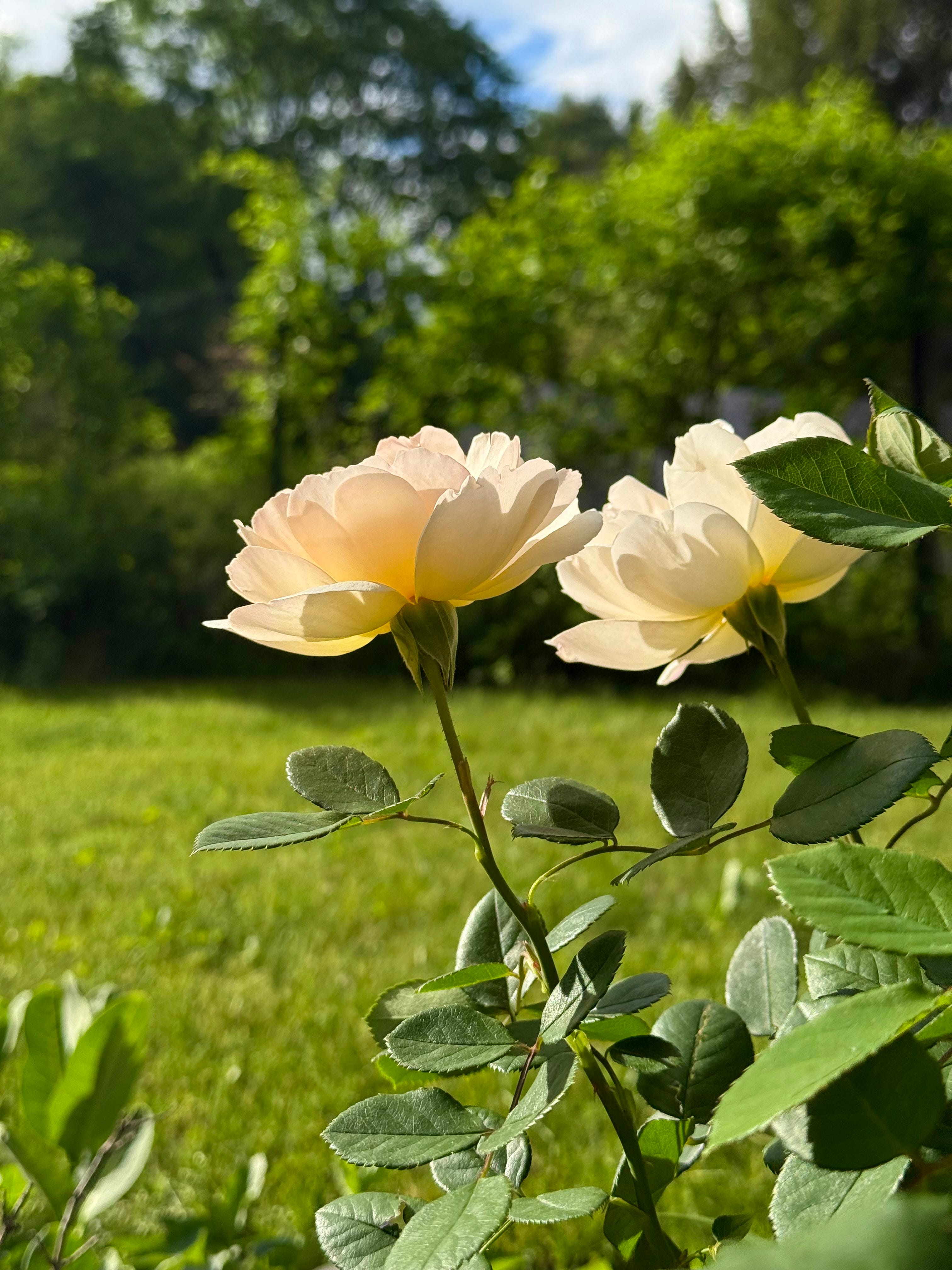
Rose ‘Wollerton Old Hall’ smelling so aggressively English I half expect fog, unresolved damp, and a vicar nobody asked for to roll in behind it
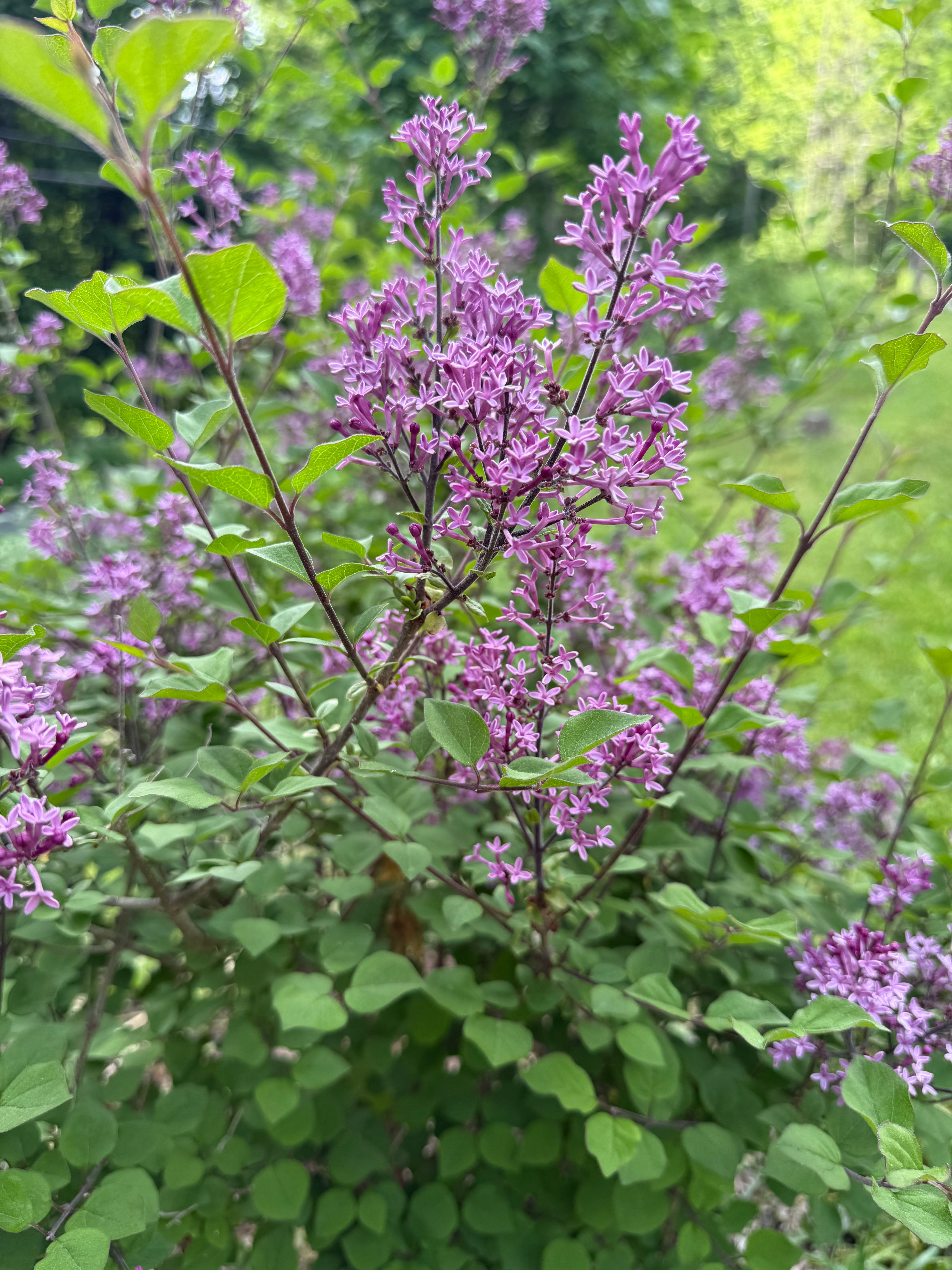
Baby lilac somehow producing nostalgia for something that hasn't happened yet
One side effect of spending this much time outside again is that walks stop functioning as walks—they become extremely slow-moving negotiations with whatever has decided to bloom beside the trail that day. Every few feet: another small botanical incident requiring a full internal monologue.
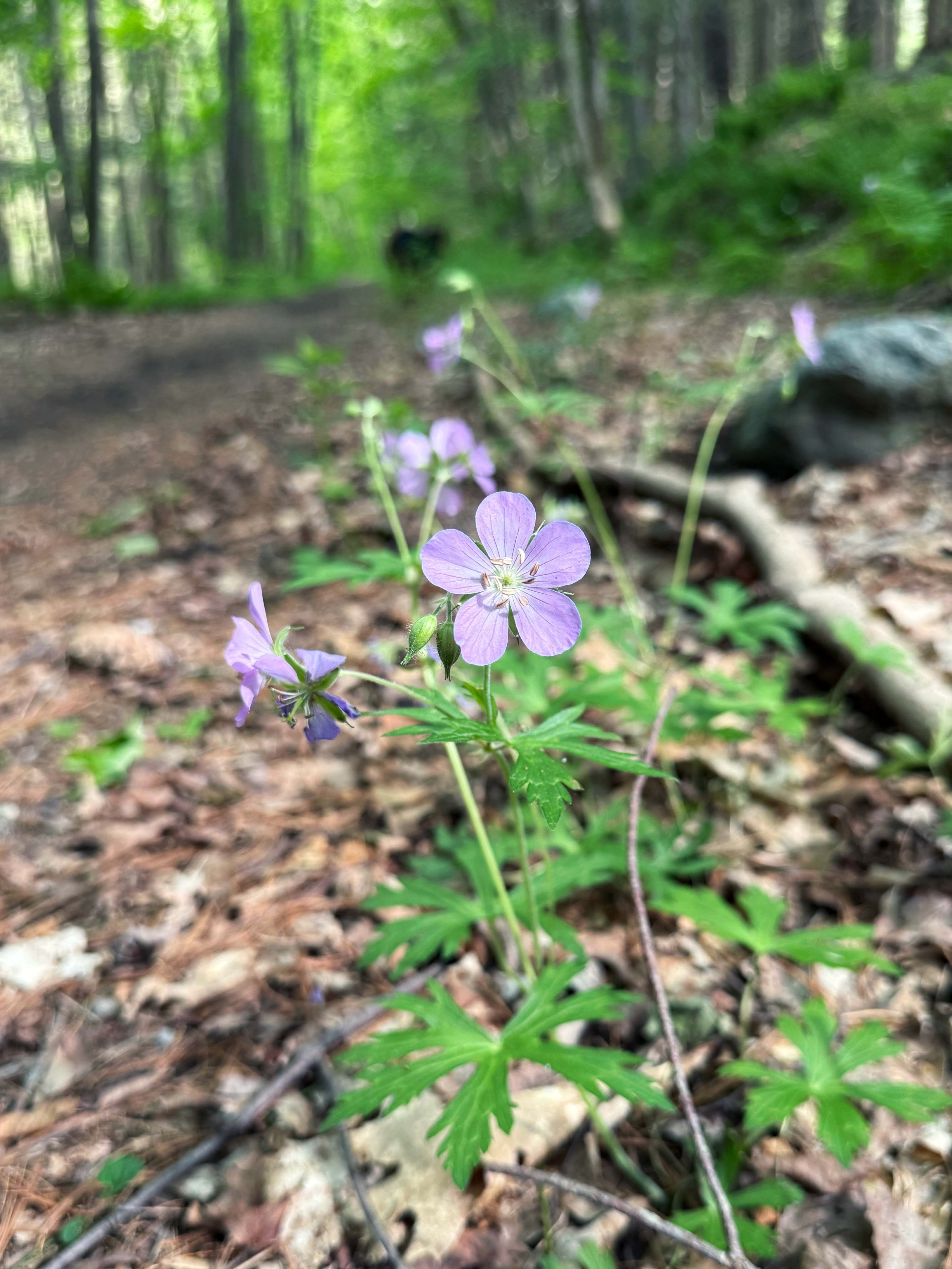
Wild Geranium
Delicate, self-possessed, and devastating in a quiet way. A purple flower growing out of a rock crevice with the emotional energy of a 19th century love affair.
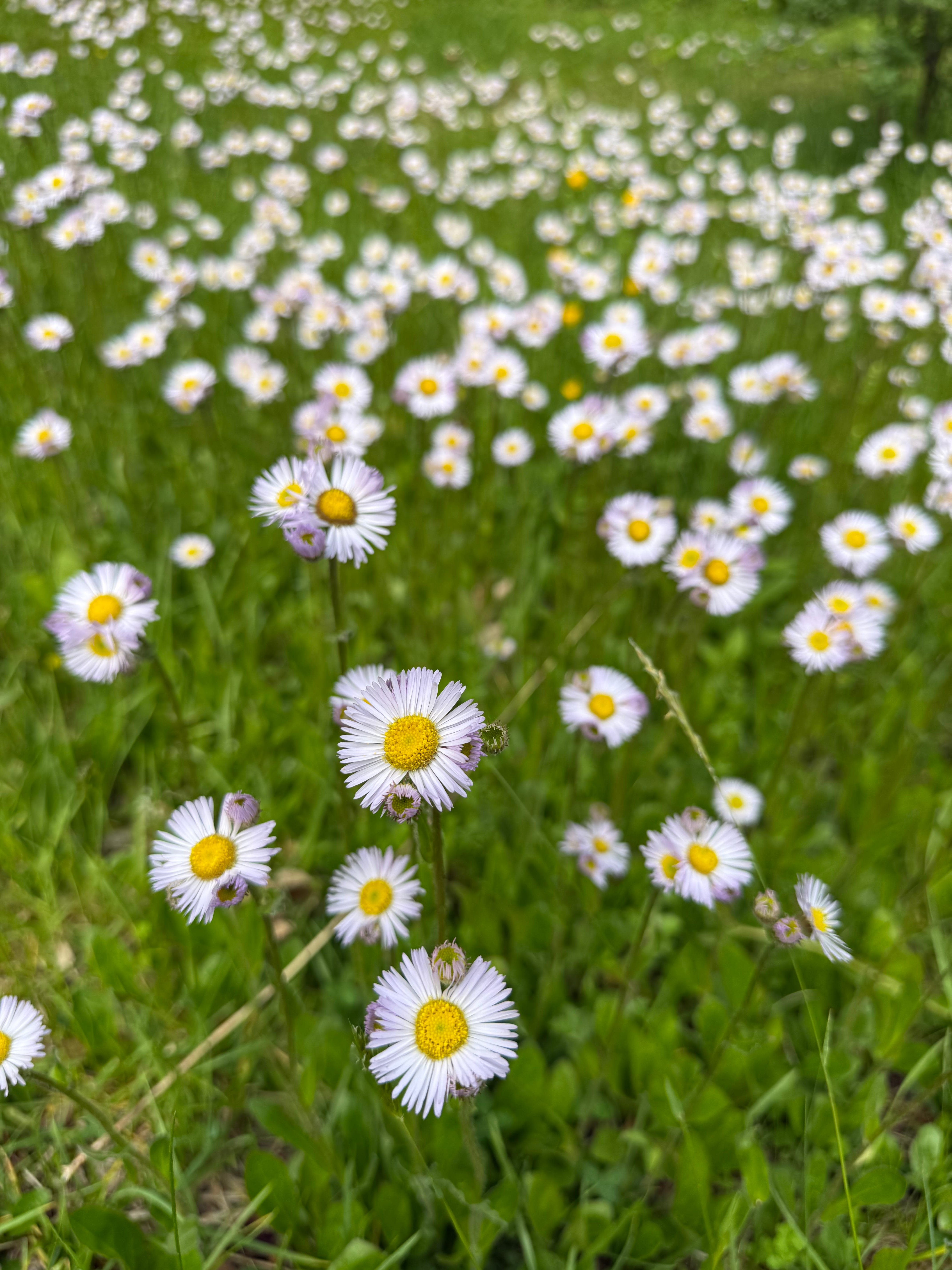
Fleabane
Sounds like something treated with leeches. Looks like fine stationery.
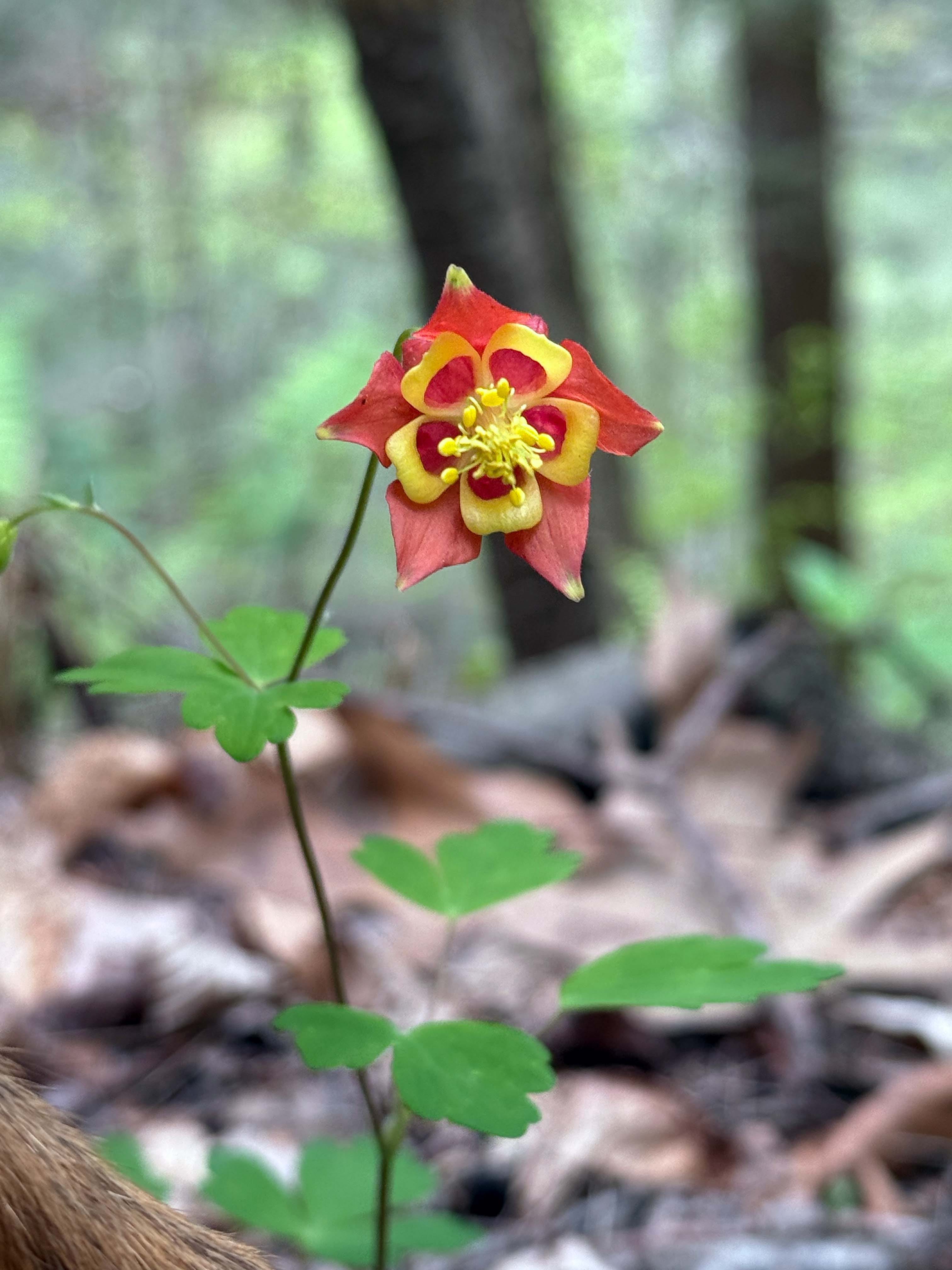
Eastern red columbine
Looks less like a flower than an enchanted object you accidentally accept during the first act of a fantasy novel.
I hate when people say, “Follow your gut!” with the breezy confidence of someone handing you a map they have never needed to use.
My gut is not a wise old forest path lined with lanterns and intuitive mushrooms. My gut is a damp, lightless tunnel system where strange sounds echo from unknown chambers and everything oozes and undulates with uncertainty.
People say “your body knows” as though my body has not repeatedly demonstrated catastrophic judgment. My body reacts to minor social ambiguity the way medieval villagers reacted to eclipses. A period instead of an exclamation point has been interpreted internally as evidence civilization was collapsing.
And what exactly is the gut suggesting?
“Cancel plans.”
“Buy twelve foxgloves.”
“Interpret eye contact like an astronomer studying comets.”
“Leave society and become known to locals as The Woman Near The Trellis.”
We’ve assigned an alarming amount of authority to an organ system whose primary hobbies include manufacturing dread from absolutely nothing, treating cold brew like an assassination attempt, and inventing new food sensitivities recreationally.
Sometimes my gut is right, unfortunately, which has only emboldened it. Now every vague feeling arrives with the confidence of prophecy.
“She sensed something once,” the villagers whisper.
“The tunnel knows.”
And the terrible thing is that I keep going back in. Not because I trust it. Not because the tunnel has earned it. But because I haven’t found a more reliable darkness yet, and at some point you stop waiting for the lanterns and just start walking.
The Cars—“Moving in Stereo”
Sounds like driving home with the windows open at dusk and dirt under your nails.
Comments
Nothing yet. Say the first thing.
Sign in to join the conversation.