
For a long time I thought gardening reassured me because it made me feel useful against uncertainty. Tie the tomato. Cover the seedling. Build the fence. Anticipate the frost.
But after Daisy died, I lost the ability to fully believe in several ideas I once believed in—
that safety is earned
that structures protect us
that good behavior preserves love
that life waits until we’re ready
This has complicated gardening for me somewhat, because gardening is essentially an elaborate series of optimistic acts performed by people pretending they are not participating in an ongoing relationship with catastrophe.
Every gardener I know is out there performing small rituals of protection against forces fundamentally beyond human control. We build cages around tomatoes using engineering principles that would not hold during a medium-sized dog incident. We drag frost cloth over vulnerable seedlings at dusk like mothers placing blankets over feverish children. We monitor rain totals with the concentrated vigilance of intelligence agencies.
And sometimes it works, which almost makes it worse. Occasionally the tomato survives the storm, and you begin, slowly, accidentally, to absorb the idea that vigilance alters outcome. That preparedness creates safety. That care establishes terms with the universe.
Grief is rarely as cinematic as people want it to be. It’s a long series of tiny revisions to your understanding of reality—like discovering the house you’ve lived in for years has shifted half an inch off its foundation and now every door sticks slightly in the frame.
Nobody warns you about the surplus. Everyone talks about grief as absence, as hollowing out, and that part is true. But there is all that love you’re still generating, with nowhere left to go. Still producing. Still looking for somewhere to land. The heart apparently did not get the message that the situation had changed.
The human brain clings to causality like a burr. Causality implies control. The alternative is admitting that terrible things sometimes enter loving homes uninvited, and also that love does not stop just because there’s no longer anywhere obvious to put it.
The garden disproves earned outcomes constantly. Healthy plants die overnight. Entire trays fail while one accidental volunteer squash punches through a crack in the gravel. The illusion that results are deserved is impossible to maintain out there—which may be one reason I trust it more than I trust almost anything else.
Nothing in the garden pretends permanence is available. The lilacs bloom with reckless openness despite lasting about eleven seconds, and peonies spend ten months preparing for a bloom period roughly equivalent to the shelf life of a cut avocado. No hesitation, no bargaining. No attempt to hedge against loss.
To plant something at all is to participate in a future you cannot control—kneeling in April and May burying dry objects in cold soil while already imagining July and August. Already decorating a future that will probably not arrive exactly as pictured.
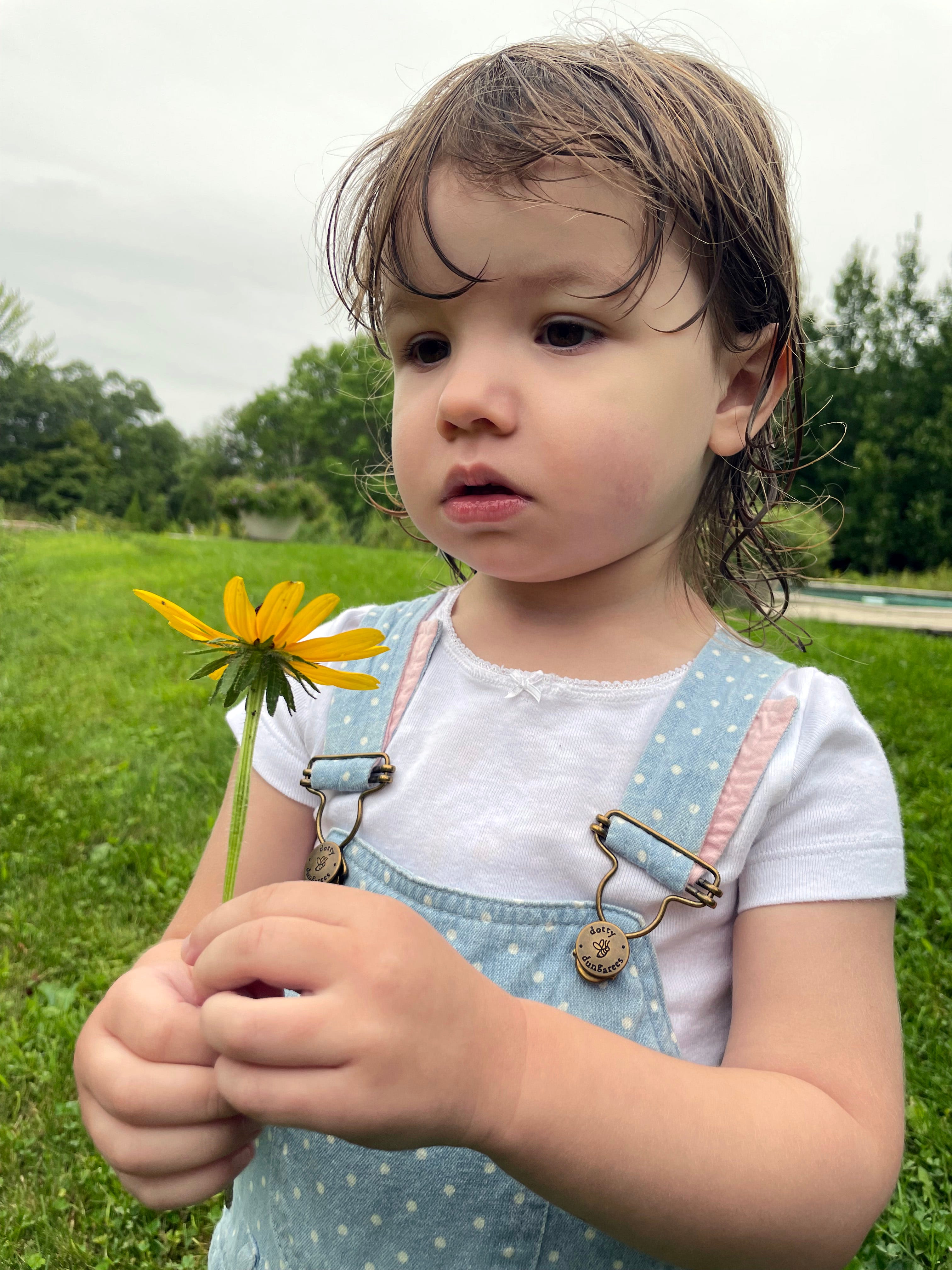
Daisy was gentle in the garden. Reverent, even. She didn’t grab at things the way some children do. She touched what she thought she could, or should—some private sense of permission guiding her hands. She would crouch down next to the buttercups and just look at them for a while before she did anything else.
I don’t know where she learned that. I don’t know if it was simply her, or if it was something I modeled without realizing, or if some children just arrive already knowing how to be careful with small things.
The peas undo me every year. They climb no matter what happened to you. They send tendrils outward searching for structures to hold. If they can’t find one, they grab each other instead.
The other morning I was out there with twine in my mouth trying to guide the young pea vines onto the trellis before rain came and suddenly I couldn’t breathe properly. Not in a poetic way—in a very physical way. I ended up crouched beside the raised bed staring at tendrils wrapped around each other like tiny desperate fingers, and I understood that I had been doing the same thing: directing it somewhere. Toward the forty-seven seedlings, the tied tomatoes, the staked dahlias. Not because any of it was safe. Because the love had to go somewhere and the garden would take it.
Lady was nearby eating something she absolutely should not have been eating, glancing up every few seconds with the vague guilty expression of someone trying to finish a crime before something like weather interfered. The chickens were standing under the coop, waiting out the storm before it had even arrived. The air had gone green in that strange way it sometimes does before a storm.
The garden refuses to support the fantasy that emotional devastation pauses time. Lettuce bolts anyway. Roses open anyway. Weeds arrive with organized criminal efficiency anyway. Birds scream at six in the morning, and peonies push through cold soil with the determination of something answering a command older than grief.
The world didn’t become empty after Daisy died. If anything, beauty became almost too intense to tolerate—a pink sky through the trees, the smell of tomato plants on your hands, the sound of rain moving across leaves before it reaches you, wet sparrows bathing in dust beneath the bird feeder, utterly absorbed in their own small joy.
I look at these things and think: how dare this still exist. How dare I still love it.
And then, against all logic, I keep planting things. Not because I believe nothing bad will happen. Not because love protects living things from endings. I keep planting because withholding love changes nothing—the love exists whether or not I do anything with it. I can freeze it, board it up, carry it around like something too fragile to set down—and it will still be there, still generating, still looking for somewhere to go.
So I put it in the ground. I keep crouching in the dirt making absurd hopeful arrangements for a future that has never once promised me safety.
I don’t think gardening heals grief. I think it simply refuses to participate in illusion. The garden never told me good things happen to good people. It never promised preparedness would save me. It never suggested love could prevent loss.
The garden just says: here—this is what living things do. They reach. They bloom. They attach themselves anyway.
🌹 BLOOM REPORT
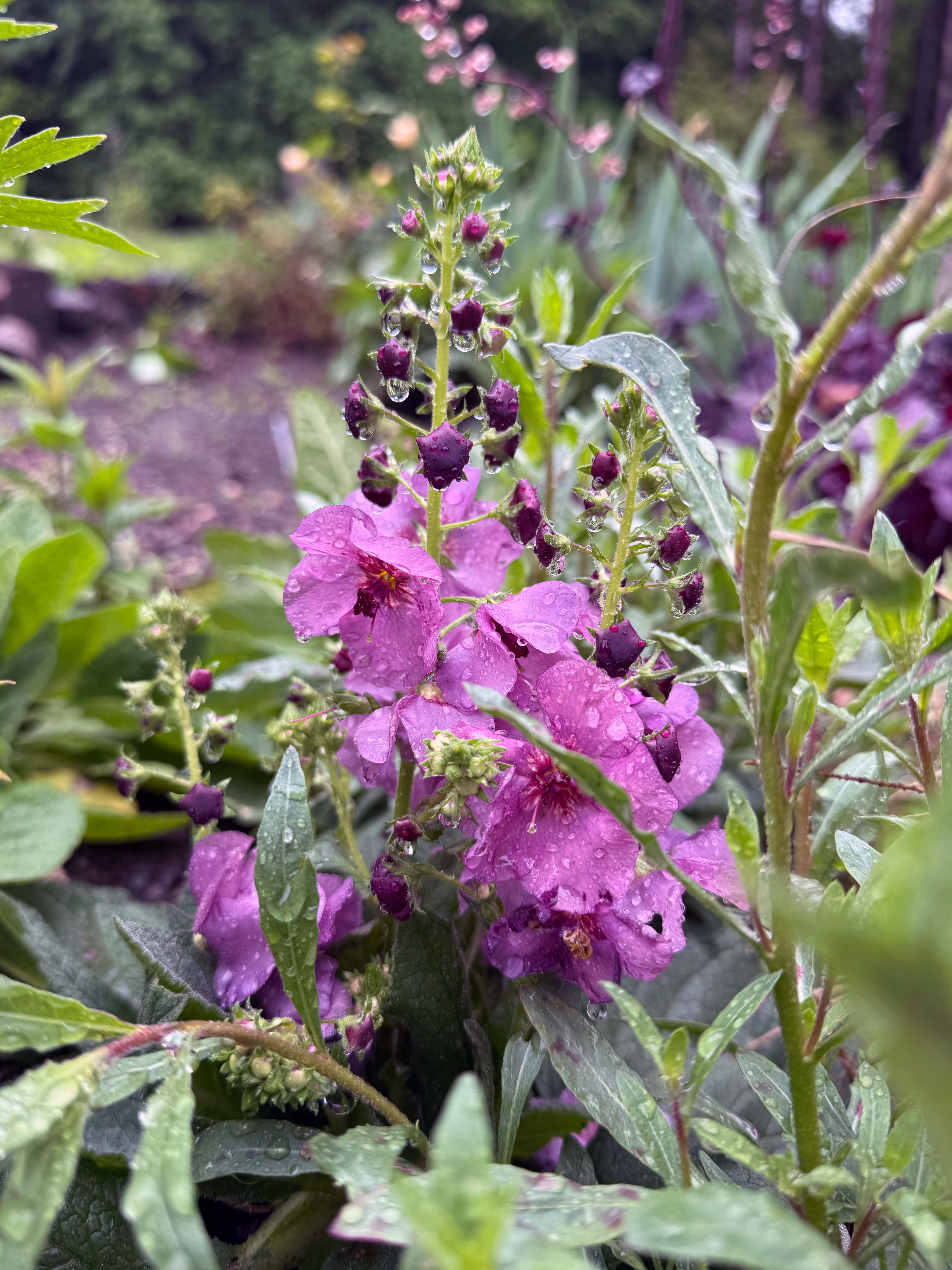
Verbascum gathering rainwater along every bud, making whole plant glow from within
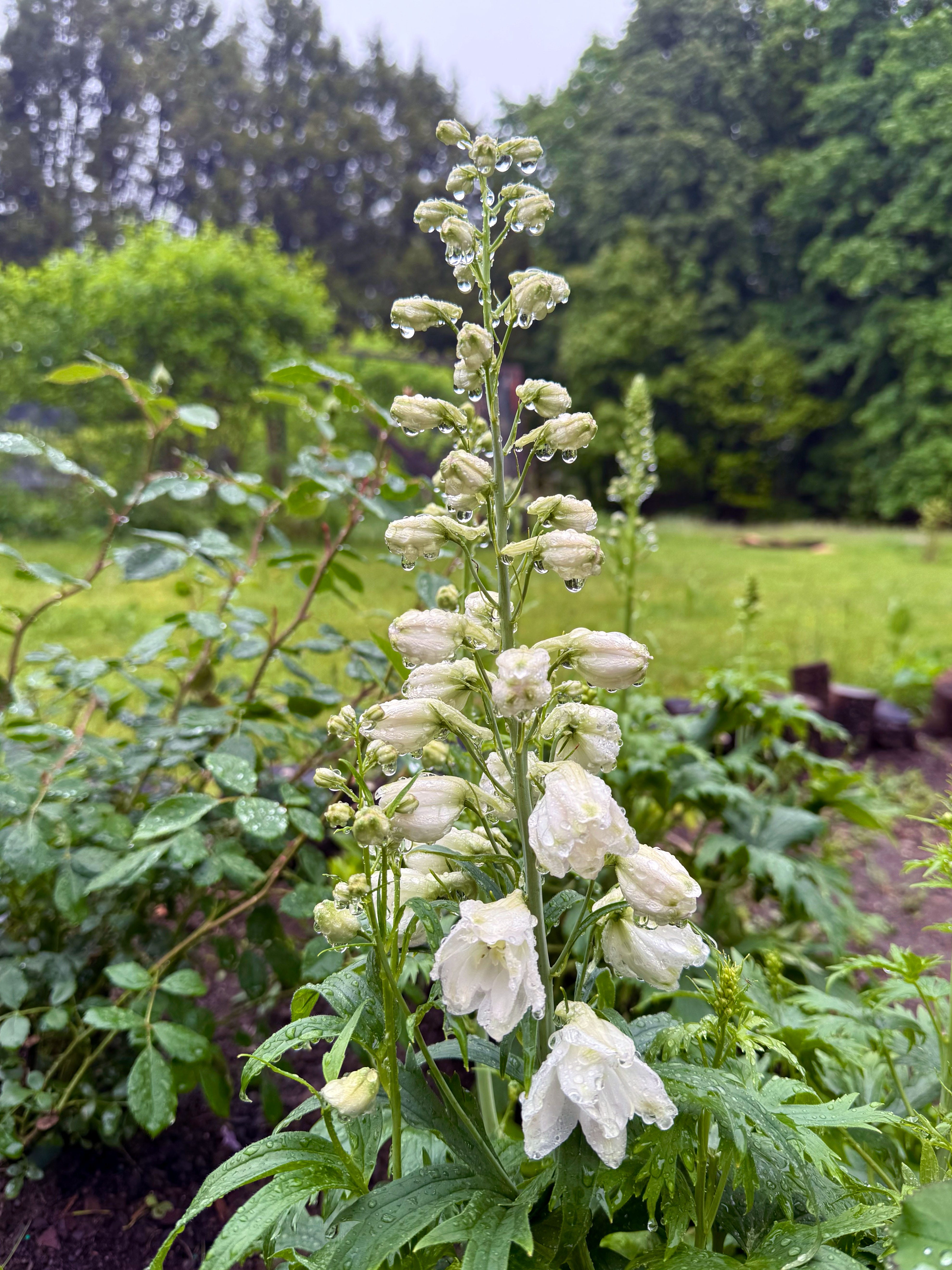
Delphiniums heavy with rain, still lifting themselves upward anyway
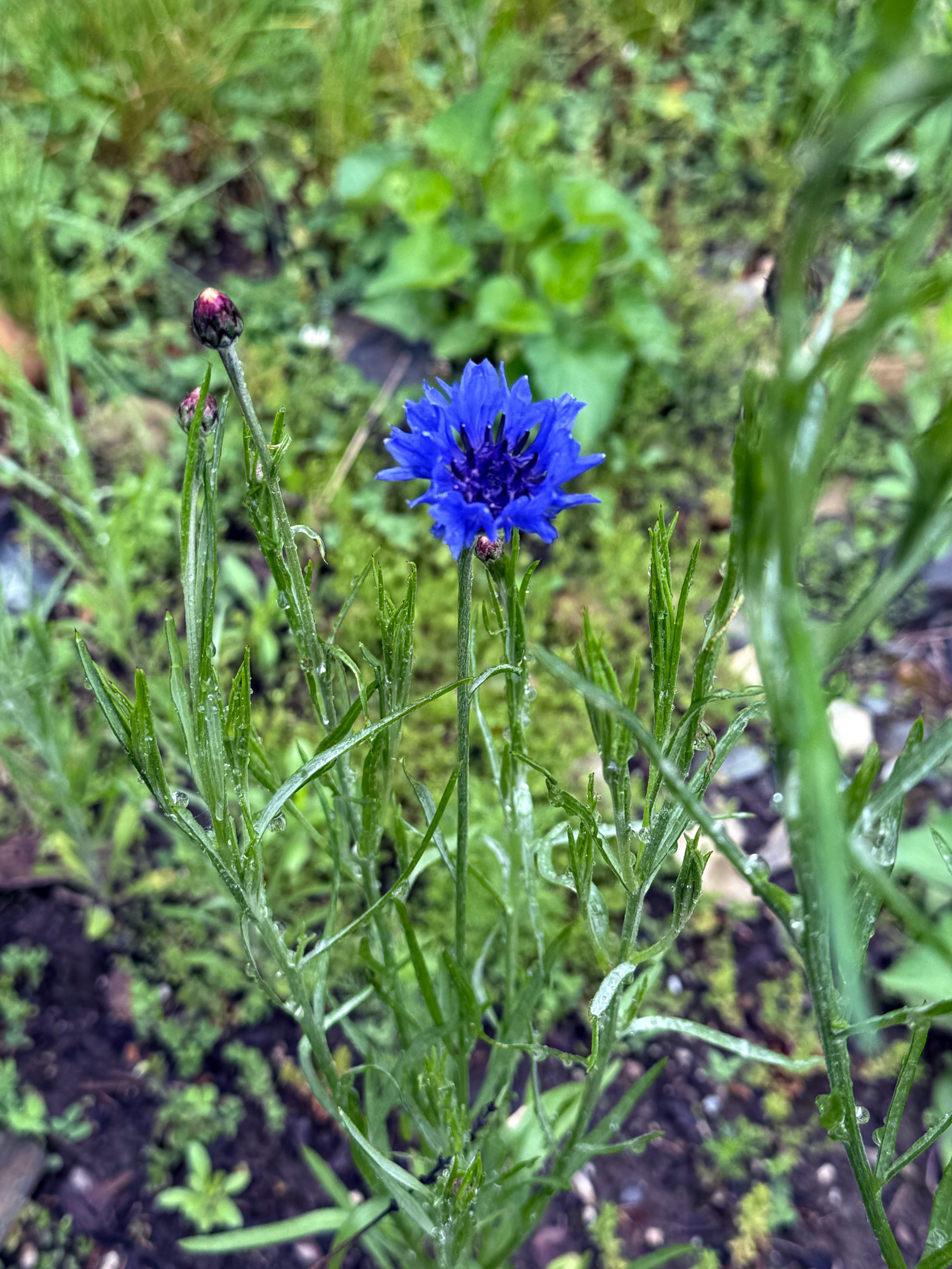
Cornflowers apparently self-seeding now, quietly naturalizing themselves in the garden
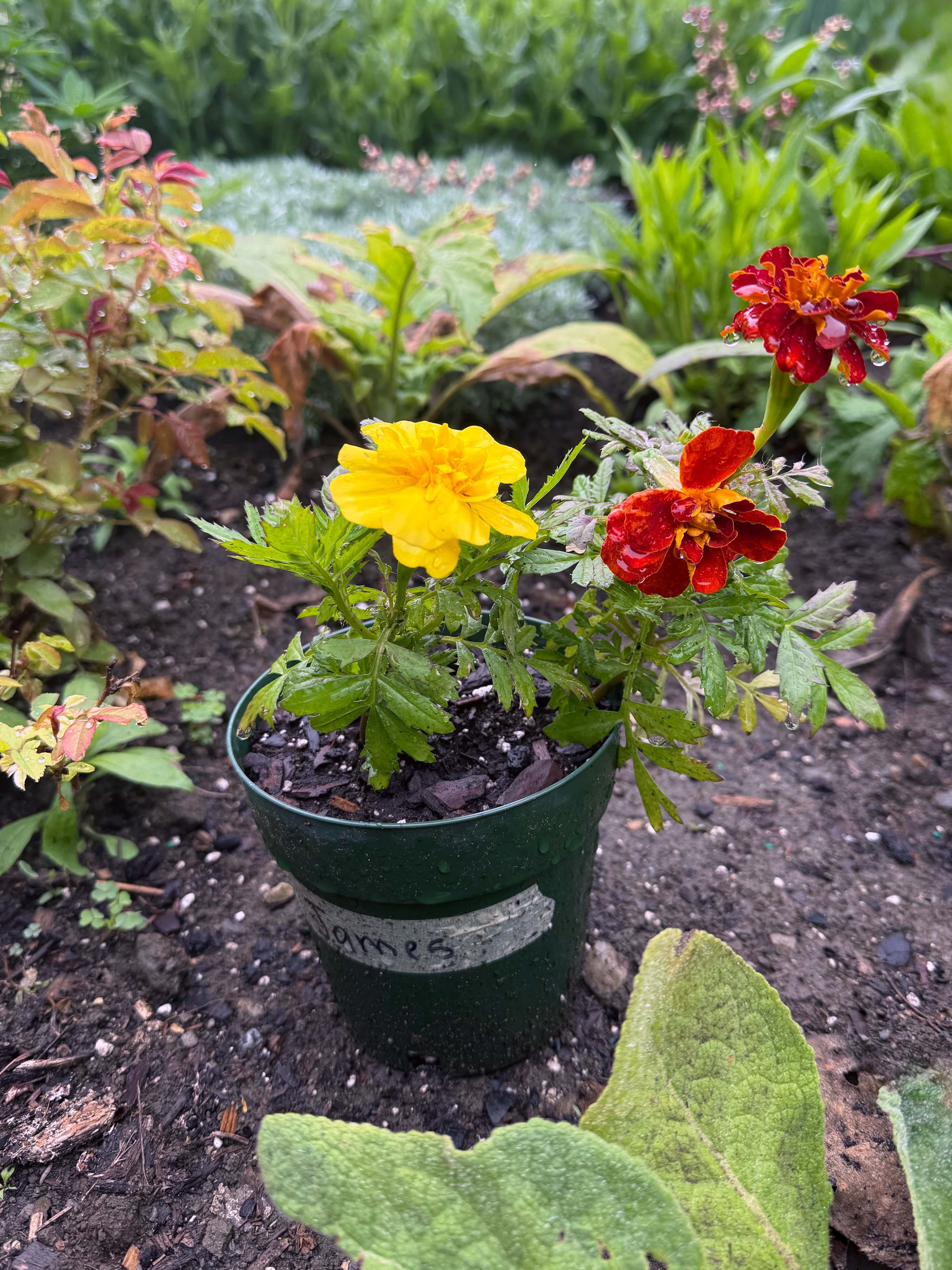
Marigolds James grew in the school greenhouse ready to be planted out
🌱 SOW WHAT NOW?
Beautiful Little Dirt Goblins
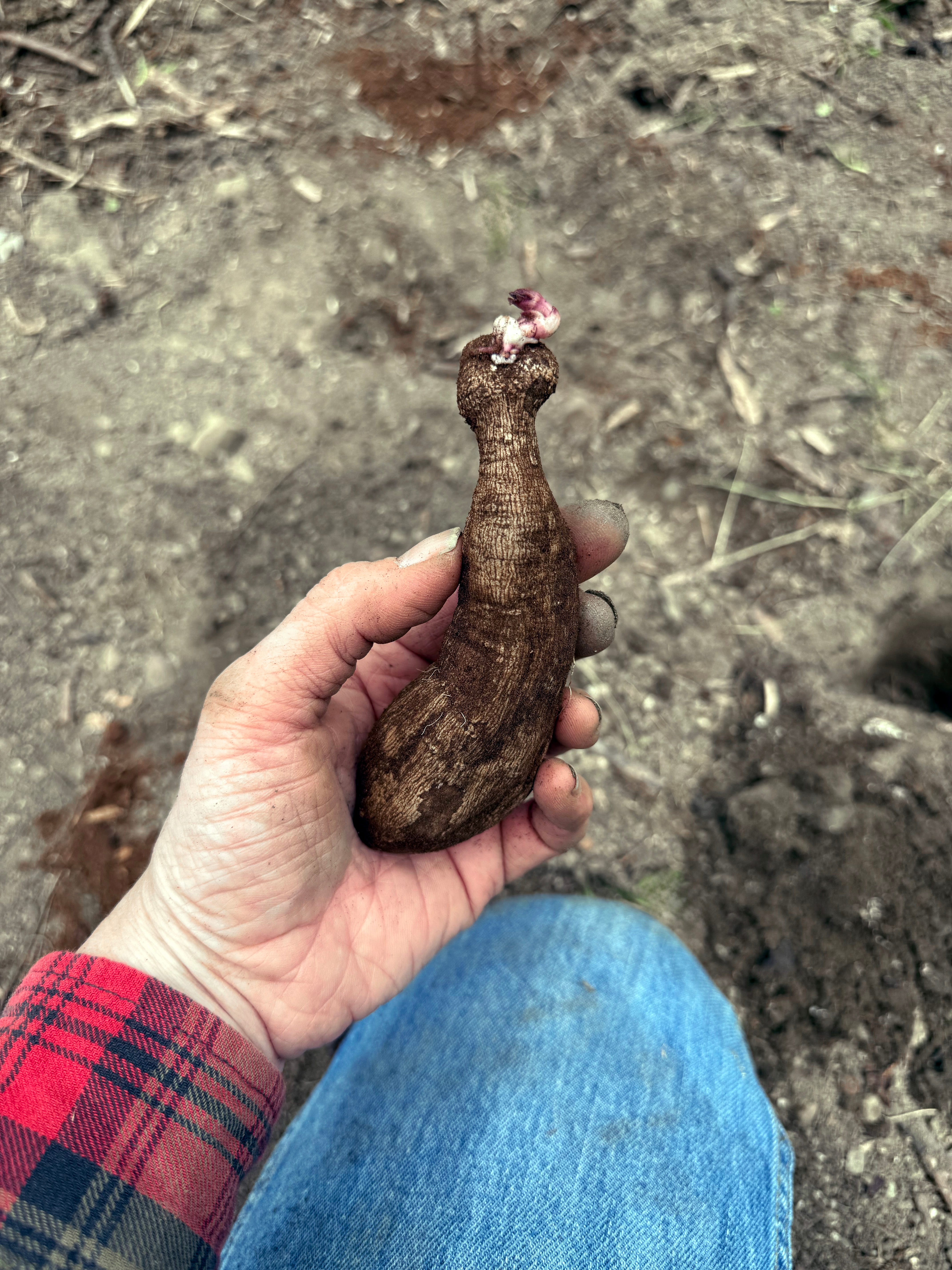
It’s dahlia planting season now, which means I have spent the last several days carrying around what look like haunted sweet potatoes while speaking about “tuber orientation” with increasing authority.
Three years ago I didn’t know what a tuber was. Now I’m outside rotating strange root clusters in my hands whispering: “Where’s your crown, sweetheart?”
This week, ten Mother’s Day dahlias entered the garden alongside one mystery tuber from the farmers market. I planted two of each variety, aside from the unnamed cryptid, because I firmly believe in abundance and the restorative power of growing too many flowers.
Step 1: Roll Call
If you’ve never encountered them before, dahlia tubers look less like flowers-in-waiting and more like something confiscated from a wizard at airport security. And yet from these curious little potato-octopi emerge some of the most beautiful flowers on earth.
The current ensemble:
Cornel Bronze: Pompom form, each bloom packed so precisely it barely looks real. Apricot shading into copper, warm and slightly melancholy—the floral equivalent of a good October afternoon.
Café au Lait: The queen of effortless beauty, despite requiring an enormous amount of infrastructure and attention. Can bloom up to 10”. Creamy blush deepening through peach to champagne—the color of antique silk.
Nicholas: Potentially European. Deep raspberry-red blooms with the emotional energy of a man leaning against a vintage motorcycle gesturing with his hands.
Gitts Crazy: Sounds like it was named during a minor emergency. Large white petals splattered with hot pink like somebody handed a peony caffeine and terrible news.
Mystery Tuber: No tag, no cultivar name, no guarantees. Purchased from a woman at the market with the confidence of someone selling either an extraordinary flower or a family curse. Potentially tiny. Potentially biblical.
Step 2: The Vibes Require Full Sun
Dahlias require good soil, steady support, and intervention before they become top-heavy and collapse dramatically, which feels familiar somehow.
Mine went into the flower bed that spent several years as a compost patch. Sunflowers have self-seeded around the edges. They’ll get full sun, rich soil, and, more importantly, ongoing psychological harassment from our rooster through the fence.
For now, though, they remain underground minding their business like good little sleeper cells.
Step 3: Dig Holes Like You Fucking Mean It
Dahlia planting instructions are all like “dig a hole 4-6 inches deep”—as though depth is the primary challenge here and not the fact that tubers themselves look like cursed little root creatures.
First, locate the crown: the small central nub from which the shoots emerge. This sounds straightforward until you are crouched in the dirt in midday sun rotating a tuber in your hand like you found it in a coat pocket and cannot remember why.
Eventually I figured it out. Probably.
Then each tuber went sideways into the soil, crown facing upward, because unlike bulbs, dahlias refuse the comforting simplicity of “pointy side up.” Complex women, all of them.
Step 4: Briefly Join the Army Corps of Engineers
The great lie dahlias tell gardeners is: “I’ll stay manageable!” They will not. By midsummer they become enormous floral ordeals requiring staking, intervention, and a highly optimistic twine situation.
This year I attempted maturity and installed supports before the plants became towering floral divas whipping around in August thunderstorms. Which is what you’re supposed to do.
The setup involves 6’ and 4’ garden stakes spaced around the row, twine running around them horizontally to create a little corral. Every few weeks I’ll add another row of twine as the plants gain height and momentum, attempting to guide them toward “supported” rather than “splayed horizontally across the flower bed after one emotionally significant weather event while I watched through the window holding tea.”
Will this system work? Unknown. But it currently gives the bed the atmosphere of a very chic tiny rodeo.
Step 5: Ignore the Audience Commentary
The chickens monitored me throughout the entire planting process. Every few minutes Feather Locklear strutted to the center of the run to scream into the air like a feathered town crier announcing:
THE WOMAN CONTINUES HER WORK
Emily Chickinson, meanwhile, wandered nearby making faint little sounds like a shoe squeaking on a gym floor very far away. The other hens contributed absolutely nothing operationally.
Epilogue: Bury the Goblins and Believe Anyway
And now they sleep underground—ten dahlia tubers and one tuber of unknown allegiance buried in late May beside the stakes that will eventually hold them upright once they become enormous and completely unreasonable.
By August they will unfurl into blooms of all sizes and complicated colors and the sort of flowers that make complete strangers slow down while walking past your yard.
I have done everything I can do. The rest is up to dirt and time and whatever a tuber knows that I don't.
Comments
Nothing yet. Say the first thing.
Sign in to join the conversation.