
I have expensive gardening tools and almost no practical skills.
Well, that’s not entirely true. I have some practical skills—enough to keep things alive, and enough to make the garden look intentional from several flattering angles. But there’s a gap between the tools I own and the way I wield them.
Most of my tools are Sneeboer, because at some point I became convinced that if I owned hand-forged Dutch gardening implements crafted with generations of expertise, I myself would become the sort of woman who kneels in a linen apron deadheading astrantia with quiet competence.
Instead, I remain a person who loses the same trowel three times in one afternoon. I wear leggings with compost on my ass and yell at my chickens about boundaries. I don’t even grow astrantia.
The tools themselves are beautiful—ash handles, stainless steel, elegant curves designed for precision in restrained European kitchen gardens where nobody is screaming “WHAT THE FUCK IS THIS VINE” before ripping it out barehanded.
Mine live a harder life.
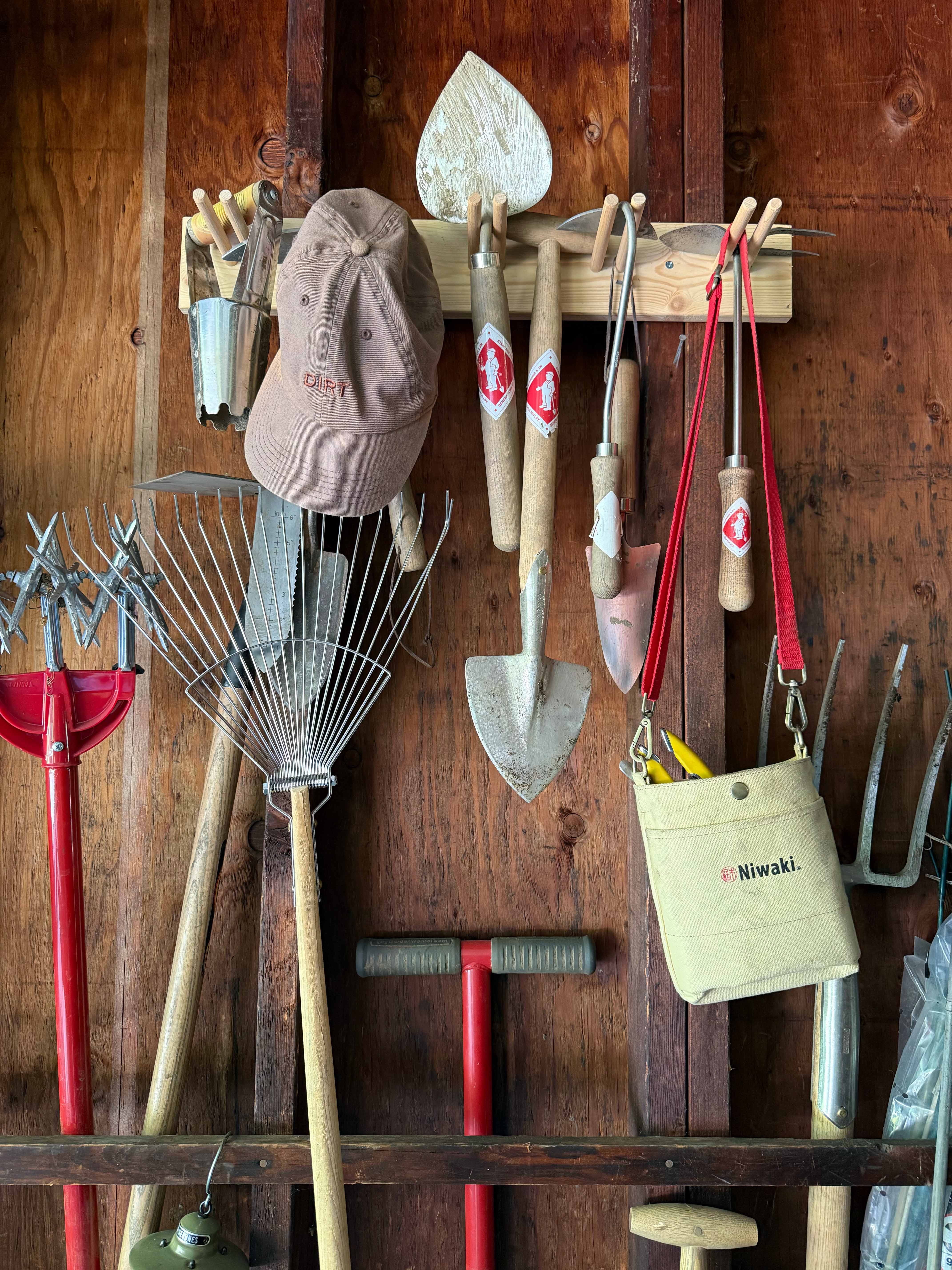
The border fork, for example, was presumably intended for thoughtful soil aeration. I mostly use it to stand motionless in the middle of the yard while processing my planting decisions and something someone said to me last Monday. The tines sink an inch or two into the ground under their own weight. My hands rest on the smooth wood handle. Sometimes I lean my chin against the top of it without realizing I’ve done it. It has the energy of a weary farm widow in a regional production of Oklahoma!, except instead of contemplating drought or the railroad I’m wondering whether moving the echinacea six inches left constituted an emotional overreaction.
The rake performs admirably as a rake, but also as an extension of my authority when Lady gets into the potato patch. To be clear, I do not hit her with it—but I do hold it horizontally and advance toward her with the energy of a medieval guard.
The hori hori, meanwhile, has become less a gardening tool and more a personal philosophy. Knife. Saw. Trowel. Weeder. Soil stabber. Root interrogator. I carry it in its holster around the yard the way cowboys in movies carry revolvers, which I’ve chosen not to examine too closely. I once used it to slice open a bag of mulch like a cartoon villain, divide a perennial, pry a rock out of the ground, and threaten a bittersweet vine with consequences, all within approximately four minutes.
I suspect this is not the refined Japanese precision technique originally envisioned.
Then there’s the lighter—not technically a gardening tool, and yet indispensable. It usually lives on my bench alongside bits of twine, unworn gardening gloves, old plant tags, and packets of seeds that expired during the Biden administration. I use it to cauterize the ends of poppies after cutting them so they don’t do their dramatic fainting-couch collapse in vases. The stem hisses softly when the flame touches it. The sap smells sharp and vegetal, almost medicinal. I’m standing in the garden at 8:30 in the morning holding a smoking flower stem as though this is a completely reasonable thing for a woman to be doing.
And yet—it works.
I think buying tools is partly an act of self-delusion. I buy not for who I am now, muddy and feral and swatting flies with a spade, but who I imagine I’m becoming.
The woman who owns Sneeboer tools is organized. She oils wooden handles in winter and sharpens her tools every March. She cleans soil from steel before putting things away. She has a system. None of her clothes smell like chicken feed.
I have, instead, a recurring situation in which I set tools down “somewhere safe” and then spend forty minutes searching for them while they lie fully visible in the grass five feet from where I had been working.
And still, I love them. The worn smooth handle of the trowel, the weight of the fork, the secateurs that fit perfectly into my hand (and jacket pocket, from which they often resurface at the grocery store). The rake permanently bent slightly from a battle neither it nor I were qualified for.
A garden changes your tools slowly. Or maybe the tools change your body. My grip settles into them. Certain tools become less objects than reflexes. The secateurs find the groove between thumb and palm. The trowel leaves a dark half-moon of soil against my wrist. By July, my hands know where the twine is before the rest of my brain has fully arrived.
The yard has become the place I go when I don’t want to circle the same thought indoors anymore. Sometimes I pick up a tool before I’ve fully decided what I’m going outside to do. My hand closes around it and the rest of me follows.
By midsummer, certain motions stop feeling chosen at all.
There are probably gardeners who use every tool correctly. I suspect they are very happy. I also suspect their chickens respect them.
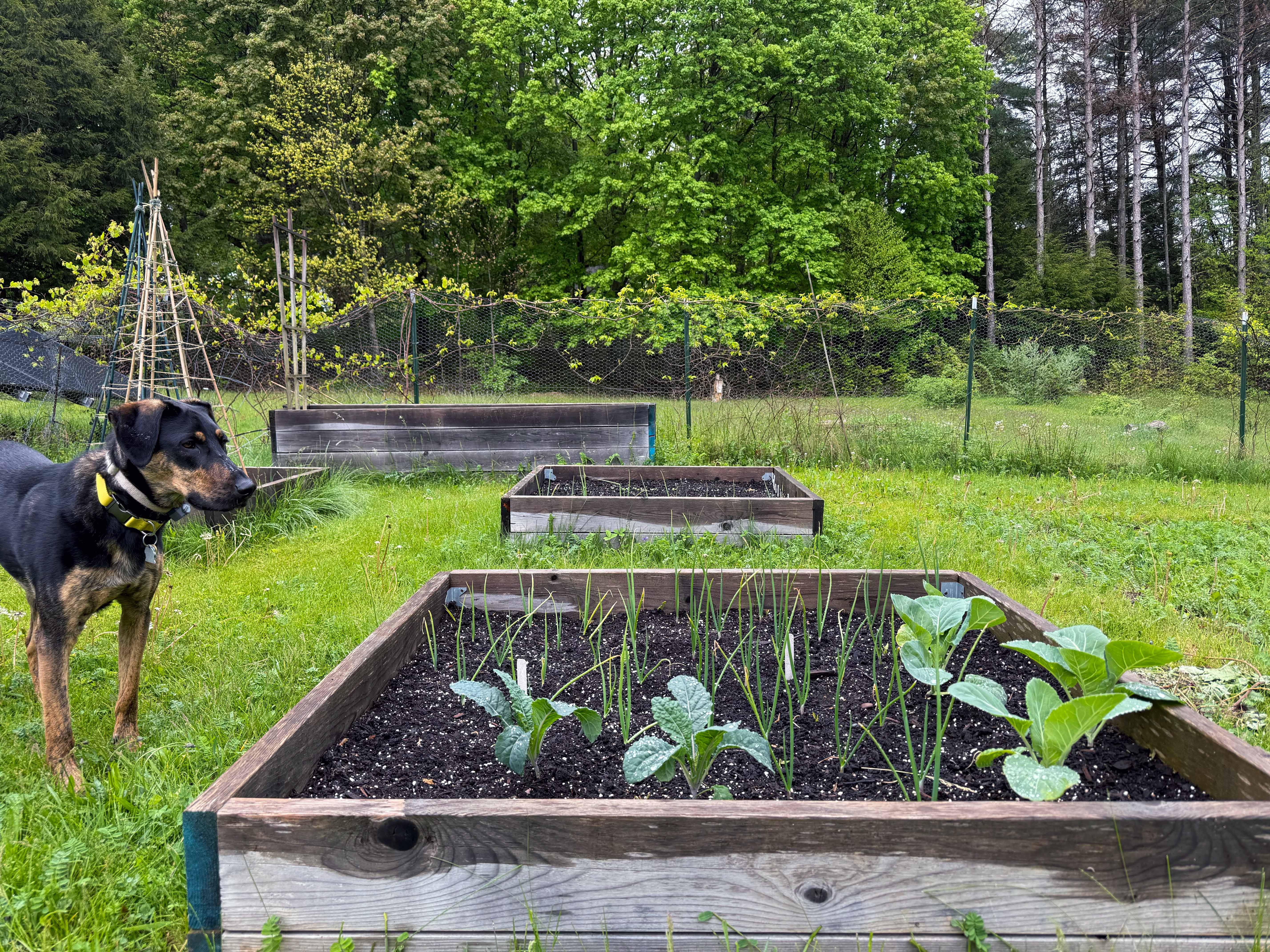
I was outside with James doing what I believed was a harmless little afternoon chicken check-in. The light had turned everything briefly pastoral: tulips moving in the breeze, one chicken dust-bathing in a patch of sun.
James was carrying a tiny rake he occasionally “showed” to the chickens, who considered it a credible threat to their existence. Every few minutes he would squat beside one of them and offer what I imagine were life updates in a low, serious voice while I wandered around trying to remember what I had come outside carrying.
It was peaceful. Suspiciously peaceful.
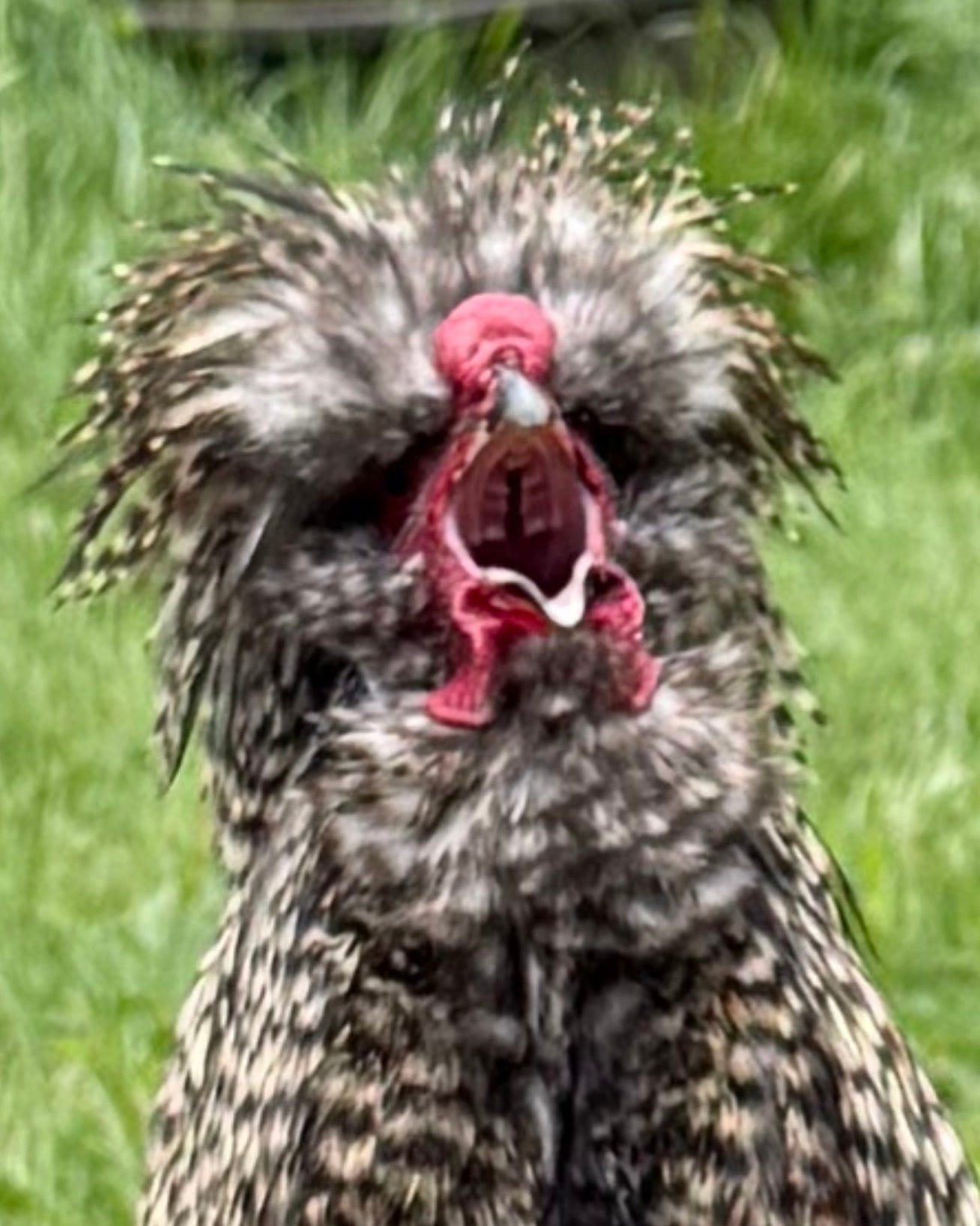
Then Feather Locklear saw Benechick Cumberbatch and her frankly distracting rear plumage across the yard and decided, with no concern for witnesses, that today was the day he became a problem in a new and educational way.
Now, I understand this is how chickens make more chickens. I’m not naive. I grew up on Earth. But nothing prepares you for the speed and intensity with which a rooster transforms from “slightly annoying man with lots of opinions” into “tiny feathered nightclub predator.”
One second Benechick was flopped in the dust like a hysterical Victorian woman being prescribed sea air, and the next, Feather dropped into the scene at a speed suggesting he had been monitoring her location for hours.
There was flapping and clucking. There was a level of pelvic commitment I frankly did not expect from something named Feather. There was a croak.
And there was James.
Watching.
Silently.
Processing.
“He’s standing on her,” he finally said.
Time stopped. Every parenting instinct left my body like startled birds. I looked briefly at the sky, as though the correct explanation might be written there.
“Well,” I said, buying time I did not deserve, “nature contains many beautiful mysteries.”
I was going to keep going—I had a whole thing about friendship. Unfortunately Feather chose this exact moment to intensify the situation with several athletic little thrusts that caused the entire explanation to collapse instantly.
James blinked.
Benechick escaped.
Feather strutted.
Meanwhile I stood there disassociating beside the pile of rotting kitchen scraps while my child absorbed one of the great truths of existence far earlier than intended: every beautiful spring day contains the potential for sudden obscenity.
Anyway. The peas are coming up nicely.
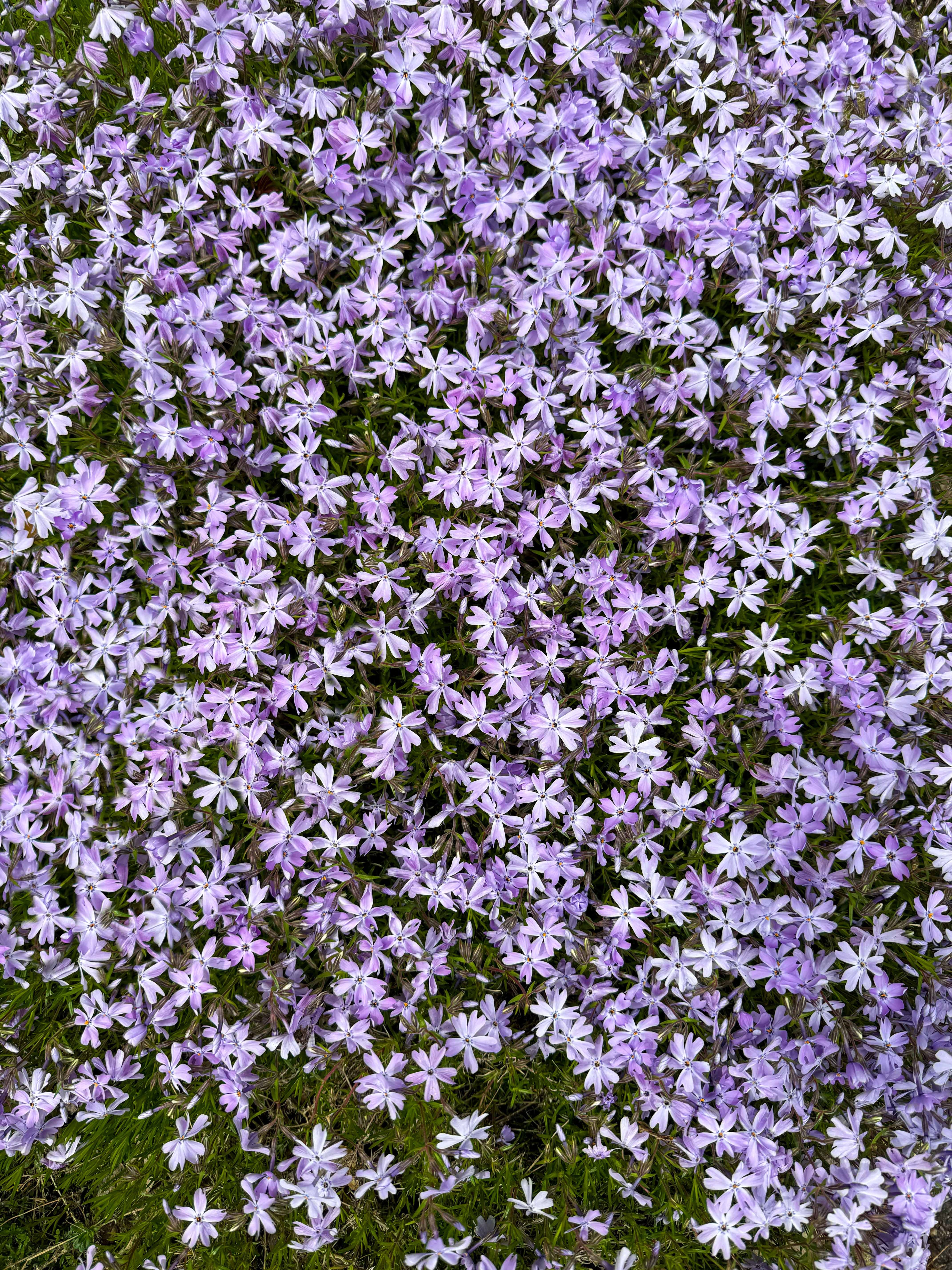
Creeping phlox turning the yard into an impressionist painting
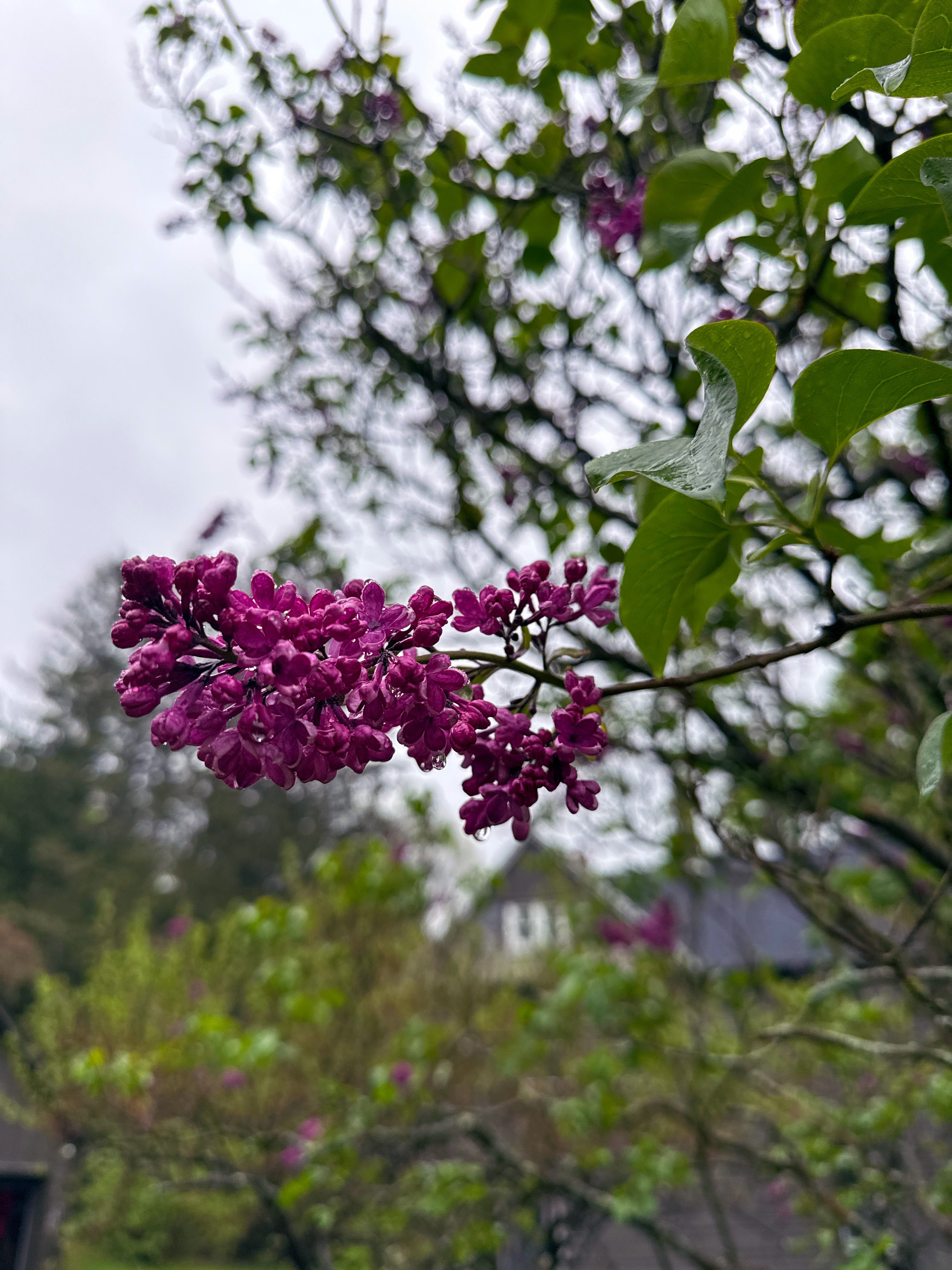
Lilac making the air feel borrowed from a better version of May
We have moved beyond sensible spring gardening and entered the phase I can only describe as “ornamental emotional support gardening.”
Packets have been torn open with increasing confidence and decreasing oversight. I’m no longer asking practical questions like “Do I have room for this?” and am instead operating on instinct, aesthetics, and whatever chemical process occurs in the brain after standing in front of a seed box for too long.
This week’s selections feel like the guest list for a commune with complicated interpersonal dynamics. Some are delicate, some are unhinged, and some sound like they would either hex a man or headline a folk band.
Naturally, I invited all of them in.
Persian Baby Cucumber ‘Green Fingers’: Crisp, elegant, dangerously easy to anthropomorphize.
Moonflower: Opens at night like it has secrets. The goth cousin of morning glory. Makes every fence look vaguely haunted in a beautiful way. My elusive paramour.
Linaria ‘Northern Lights’: Delicate little pastel thing with the emotional energy of someone quietly staring out a train window in a foreign film.
Bunny Tails: Exists almost exclusively to make people say “wait shut up” before touching them again.
Tithonia: Comes in hot like someone dramatically entering a party already sunburned and holding tequila.
Cosmos ‘Sea Shells’: The flower equivalent of antique lingerie.
Amaranth ‘Coral Fountain’: Less “flower,” more “historically expensive upholstery.”
Hyacinth Bean ‘Ruby Moon’: She’s the woman who sells handmade silver rings at a folk festival and changes your life slightly.
My Chaotic Sunflower Mix From Last Year: Genetic free-for-all. Volunteer army. No consistent height, color, or agenda. We support their independence.
Poppies begin strange and slightly animal. The buds arrive bent downward on stems covered in soft white fur, like nervous little creatures refusing eye contact.
They look less like flowers than thoughts still forming.
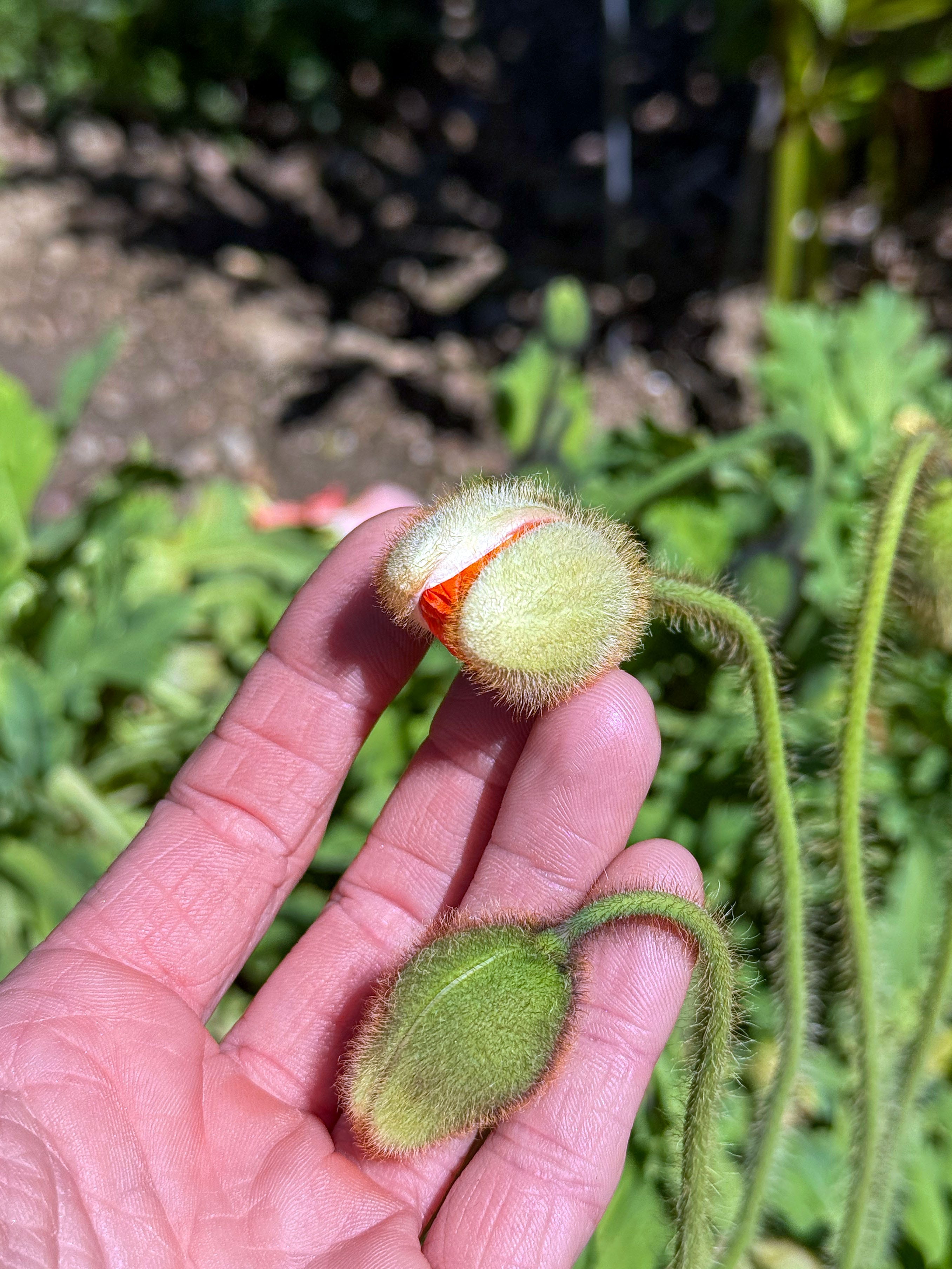
For days they hover there tightly closed, fuzzy-fisted and stubborn, while the rest of the garden carries on around them. Meanwhile the poppies remain curled inward, withholding themselves—as though they know something the others don’t.
Then—suddenly—they open.
One warm afternoon and the whole thing splits apart into crumpled silk and electric color, petals so thin the sun comes through them from behind. The orange ones look less planted than lit from within.
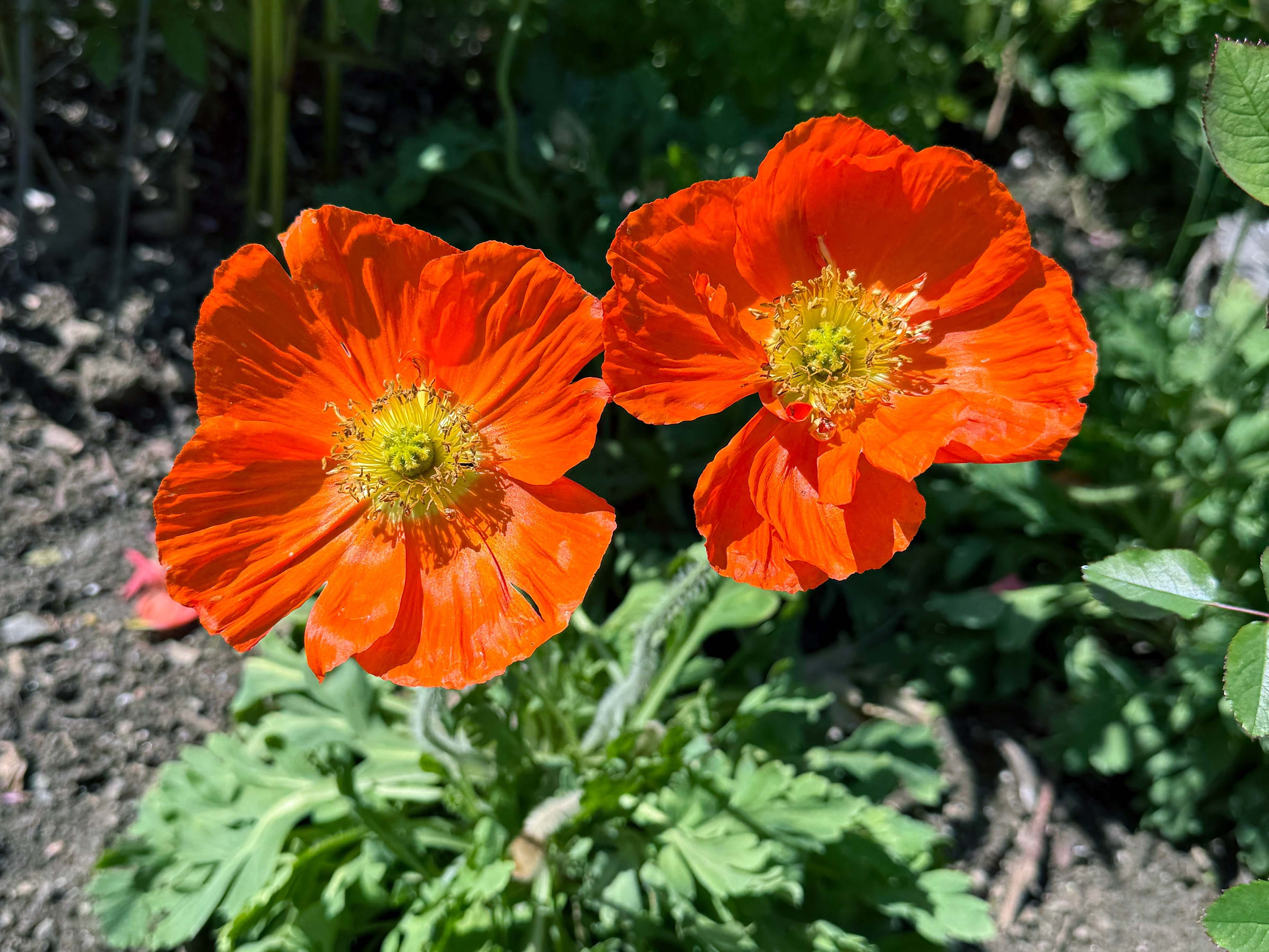
And what gets me every time is the contrast—the stems still wild and hairy and slightly prehistoric while the flowers themselves look impossibly delicate, like tissue paper left in someone’s pocket through the wash.
They never lose the feeling of motion. The petals crease and flutter constantly, catching light differently every few seconds. They look temporary in a way that makes you stare harder, as though attention itself might somehow keep them from collapsing.
I’m not sure it does—but I keep paying it anyway.
The buds are still there too, hanging low around the open flowers like small green punctuation marks, covered in fur, waiting their turn. I love them most at that exact moment—half-open, half-waiting, the whole plant suspended between restraint and complete collapse.
I need to file a report.
The Guido’s parking lot in Great Barrington has become ungovernable, and I believe the international community has a right to know.
For the uninitiated: Guido’s is a beloved local grocery store selling heritage tomatoes, $34 olive oil, and the promise that you are the kind of person who cares about where your cheese comes from. It is wonderful. I love it.
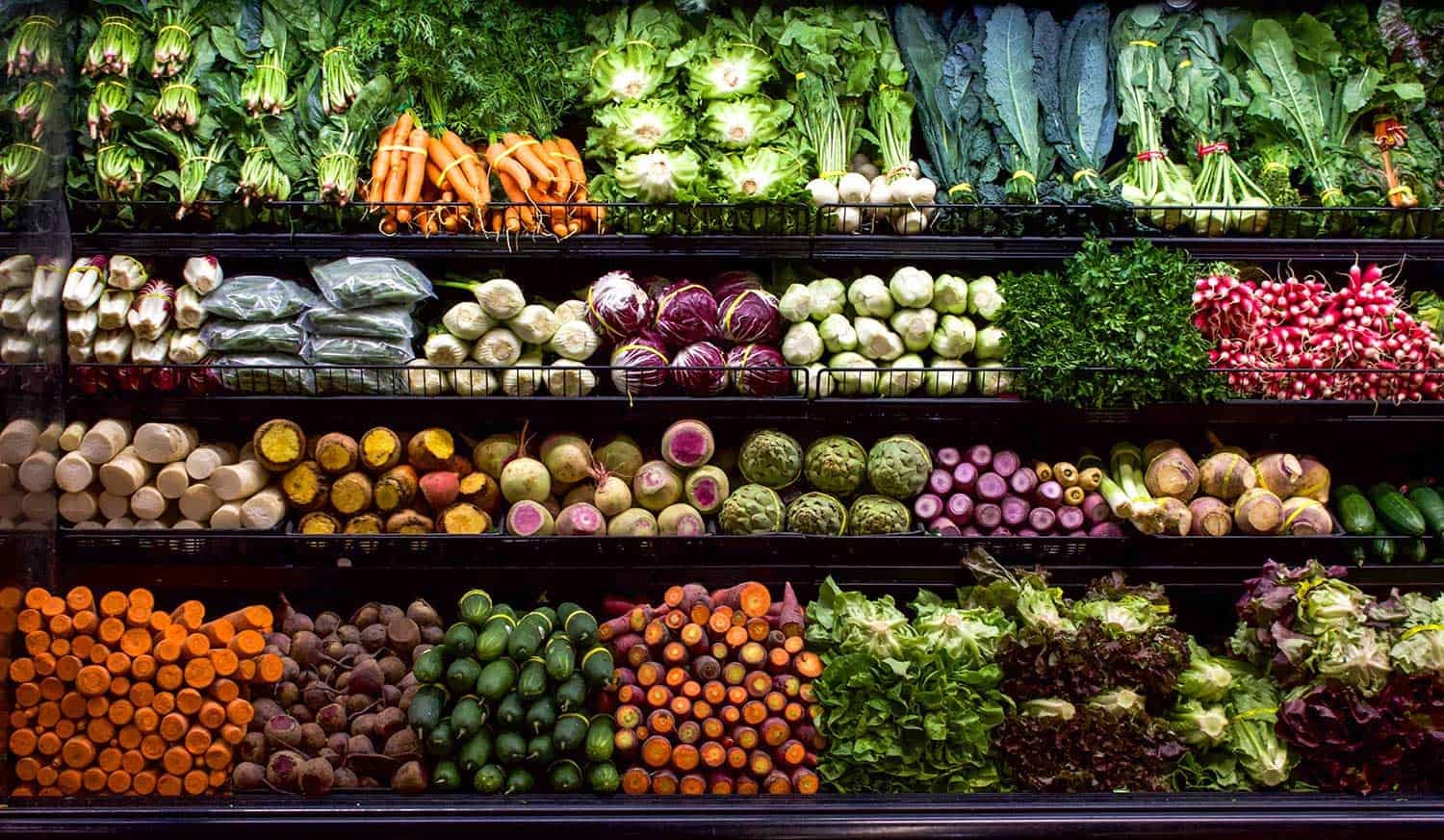
The parking lot, however, is a sovereign territory operating entirely outside the social contract.
We in the Volvo Caucus arrive with reusable bags from six different countries and take eleven minutes to park a car that has approximately forty-seven parking assist features. The Volvo knows where it wants to be. The driver does not. This is a philosophical crisis wearing sun-faded Patagonia.
The Range Rover Contingent does not park so much as occupy—two spaces, slight diagonal, engine running. The Range Rover Contingent has somewhere to be after this, somewhere far more important than here, and the geometry of their vehicle is a foreign policy statement.
There are the Couples Navigating Something. They move through the lot in total silence carrying reusable produce bags and one active disagreement. One person walks ten feet ahead. The other stops abruptly before the entrance for no perceivable reason whatsoever. Their Prius with a roof rack is parked in a way that suggests someone said “fine” three minutes ago and absolutely did not mean it.
Then there is The Man Who Has Been Waiting. You know him. He has been sitting with his blinker on for seven minutes indicating a spot that is not yet available and may never be available. He has achieved a stillness that goes beyond patience into something more spiritual, more alarming. He has been here before. He will be here again. The blinker is no longer a signal. It is a heartbeat.
Meanwhile, Someone in a Tesla has decided that the fire lane is a valet zone. The Tesla is silent, which makes it worse. At least a running engine communicates intent. The Tesla simply is, in the fire lane, without apology or explanation.
There is also always One Person Walking Directly Down the Center of the Driving Lane with Nothing to Prove, carrying a single cloth bag containing one beet. They will not move. They are not going to move. They have achieved a level of local grocery store enlightenment that puts them beyond the reach of social pressure or a slowly approaching Volvo.
Everyone in this parking lot recycles. They compost. They have opinions about regenerative agriculture and complex relationships with sourdough. And yet—I simply ask that we acknowledge what is happening out there, in the shadow of the Comté samples, where our better natures go to quietly idle in the wrong lane.
Mos Def—“Ms. Fat Booty”
For Benechick Cumberbatch.
Spring arrives in many forms.
Comments
Nothing yet. Say the first thing.
Sign in to join the conversation.