
I went out to clear last year’s growth. Dead stalks, flattened stems, whatever was left behind. The ground still looked like winter—matted, holding onto itself.
I pulled old stalks. I raked for a while. And then, at some point, I stopped. I was just crouched there, pushing aside the top layer with my hands, fingers slipping into the soil like I was checking for something—heat, maybe. Or proof.
It gave way more easily than I expected. Not soft, not summer-loose, but not frozen either. Something in between—a resistance that gives if you insist just a little.
This is the first week of April. April holds both the beginning and the end of her, bracketing a stretch of weeks I have to move through every year whether I’m ready or not.
The garden doesn’t know any of this. It just asks: are you coming back?
My hands know what to do. Break it apart. Turn it over. Feel for structure, for moisture, for life that isn’t visible yet but is there.
The soil worked its way under my nails and into the lines of my hands. Cold at first, then not—the kind of cold that doesn’t stay separate from you for long. I pressed my palm flat against the ground, like I was checking for a pulse.
Nothing dramatic happened. No sudden greening, no revelation. Just the recognition that this is where things begin again—not with seeds, not with plans, but with contact.
There was a tomato plant last summer I loved unreasonably. It came up on its own where the chickens used to live, from scraps we’d thrown there. It grew enormous, sideways. It ignored my trellis, my plans.
I let it.
By July it had taken over the far side of my garden. By August I was harvesting more than I could use. By September I was pressing tomatoes into the hands of people I barely knew.
That plant is long gone—I cleared it out in November. But I still catch myself looking for it. I’ll be walking the beds or bringing scraps out to the birds and my eyes go to that corner, and for a second there’s something like expecting. Then there isn’t.
My hands were in that same soil. Turning it over, breaking it apart, feeling the shape of it. It doesn’t hold the shape of what was there. It receives. It breaks things down. It makes something else possible.
The knees of my jeans were dark with soil, my hands darker. Daisy would have been out here with me. She would have had opinions about where things should go. She would have gotten completely filthy—hands, face, everything—and considered it a badge of honor.
The garden doesn’t hold any of that. It just holds the soil, and the roots, and whatever comes next.
But I put my hands in it anyway. I come outside. I get on my knees. I put my hands in the earth and feel it give way, just a little, and I stay there.
I’ll always be learning how to do this without her. But I keep coming back to the soil.
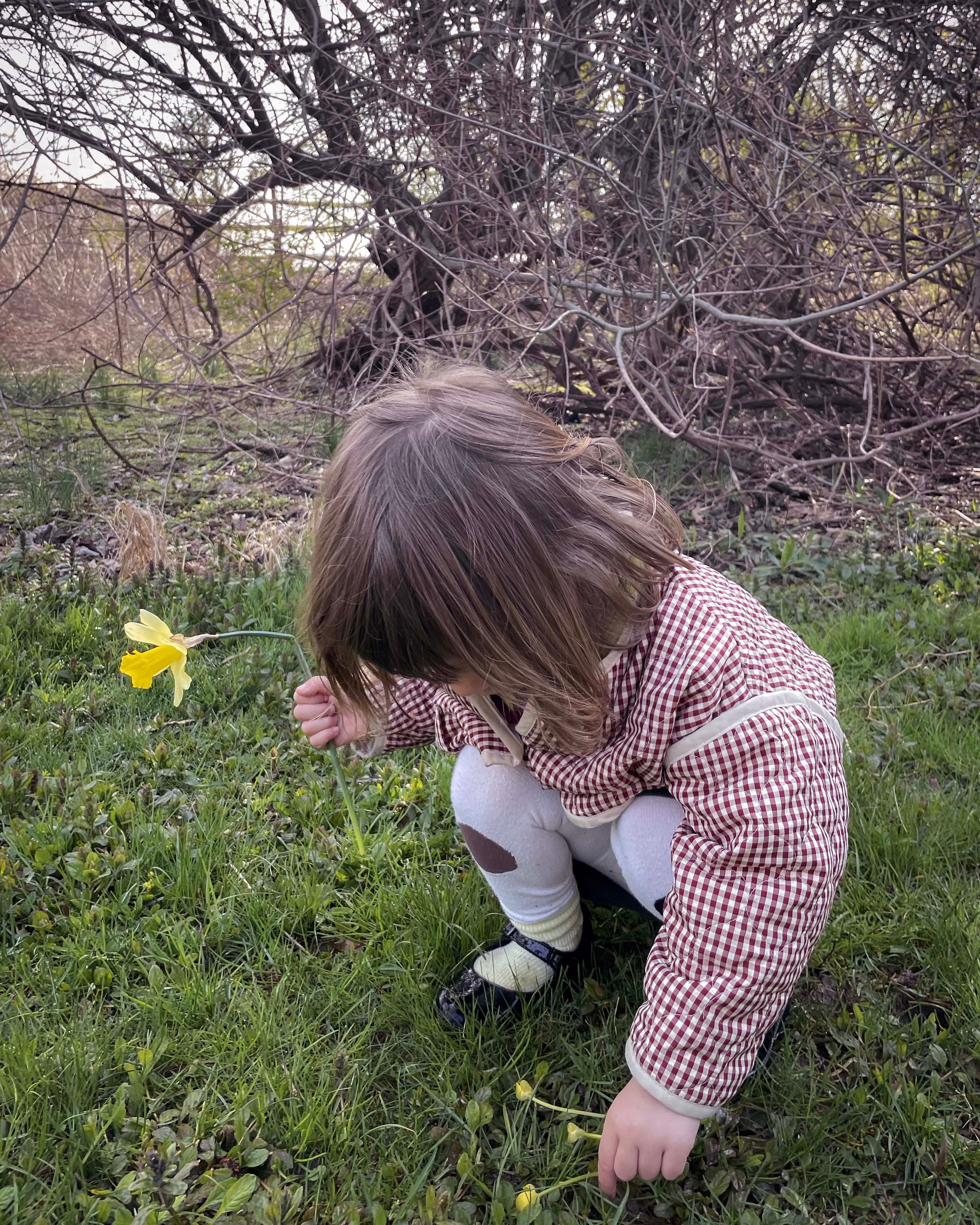
There’s a new hen in town.
Her name is Emily Chickinson, and within minutes of her arrival in a cardboard box it became clear that she is not built for this world—or at least not for this yard, which operates less like a pastoral idyll and more like a low-budget authoritarian state.
There was no gentle onboarding. She stepped in—softly, curiously, with the open expression of someone who still believes in shared resources—and was immediately confronted by Hen Affleck.
Hen saw her, assessed her, and launched. It was fast and technical. Feathers, angles, intent. At one point, Hen appeared to defy physics in a brief but committed Matrix sequence, which Emily experienced fully and without context.
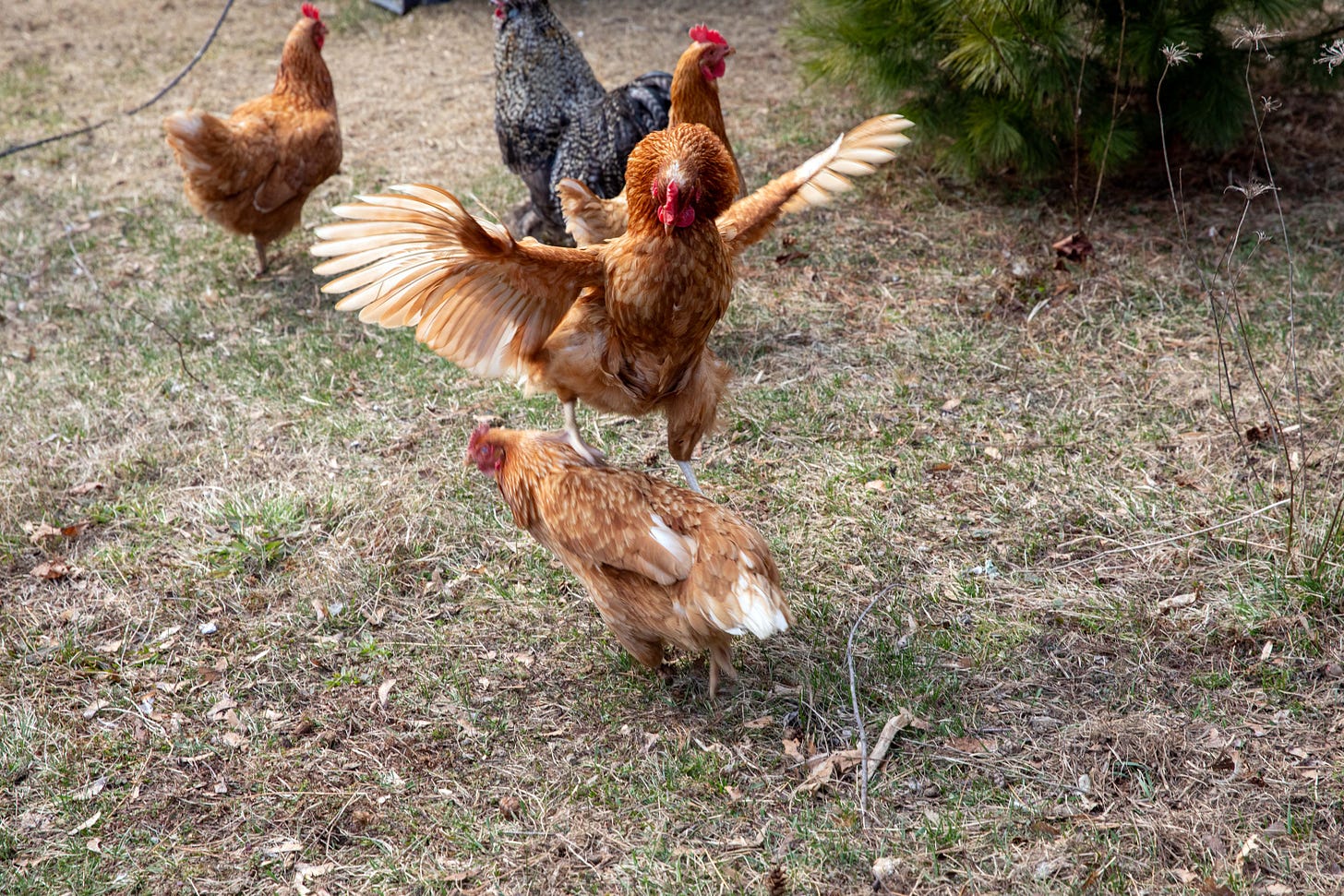
Feather Locklear entered the situation with his usual gift, which is circling, puffing up, and offering nothing but commentary and escalation, like a man explaining cryptocurrency at a dinner party you knew you shouldn’t have gone to but you’re already seated and he has made eye contact. Benechick Cumberbatch aligned herself immediately with power, like a scarf in a wind tunnel. Eggward Norton went so still she briefly left the mortal plane.
And just like that, it was settled. Emily Chickinson: bottom of the hierarchy.
The problem is, Emily does not behave like someone at the bottom of anything.
When she talks, it’s not the clipped, practical clucks of a chicken conducting business—no. Emily produces what can only be described as material. There is narrative structure. She sounds like a violin going through a divorce, a smoke detector with a dying battery going through a divorce, and a cat in heat that’s getting somewhere in couples therapy but still has a strong case.
When I bring scraps, she looks at me like I have done something profound—really looks, but only with one unblinking orange eye from the side because she’s a bird and their design is weird. There is a flicker of something like gratitude.
And reader—she comes close to me. Not for food, though I’m usually holding it. She approaches with intention and eye contact, like she’s checking whether I might be capable of a different kind of interaction.
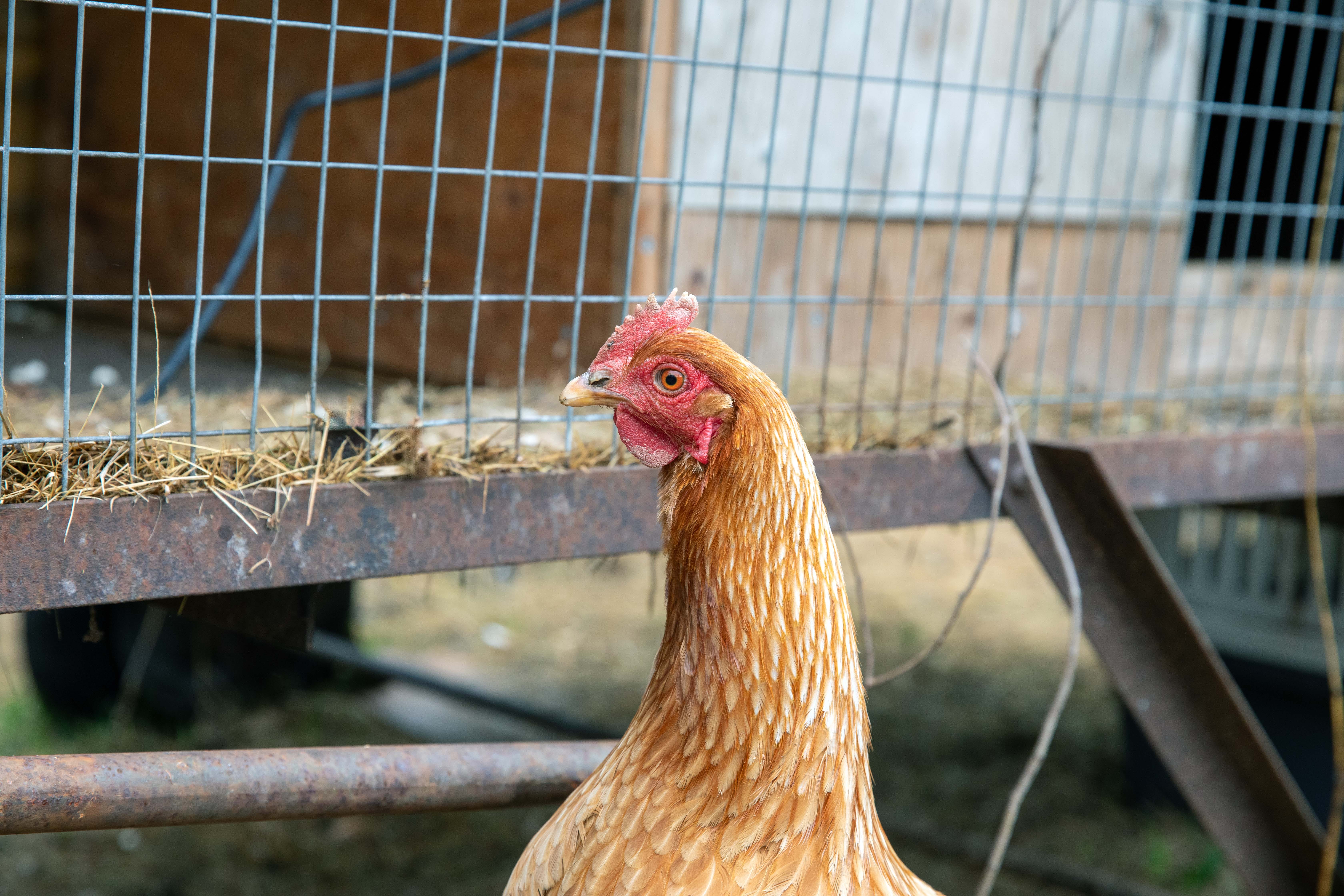
She looks at me like: you too?
Yes, Emily. I too. I’ve been haunting the perimeter.
Emily Chickinson goes to a party, finds the host’s dog immediately, and commits to it for the evening. If she had thumbs, she would get iced out of a group chat, say nothing, and then three days later publish something so precise and bloodless about the experience that the entire group would unravel within 48 hours and still invite her to things.
And I recognize her.
Not in a gauzy, “we’re all a little Emily” way. In a clinically concerning way. The overcommitment to sincerity as a strategy. The optimism that survives environments that have repeatedly indicated they don’t accept optimism as currency. The tendency to attach meaning to proximity. To stand slightly too close—emotionally, physically—and call it connection while also believing it might be something more rare.
She has been attacked by the world, but mostly by Hen Affleck. And still she shows up exactly as she is, which feels both brave and strategically questionable. Appropriate, though, for a bird with a genuine inner life and the spatial awareness of a decorative gourd.
Naturally, she is my favorite. Emily Chickinson is now the standard against which all other poultry will be judged, which will almost certainly make her life worse. The others feel it. Hen feels it most. Eggward continues to feel nothing at all, which honestly seems more and more like a viable path.
And Emily, who perhaps cannot read a room but can absolutely haunt one, continues to stand close to me, making eye contact like we have agreed on something.
We have not.
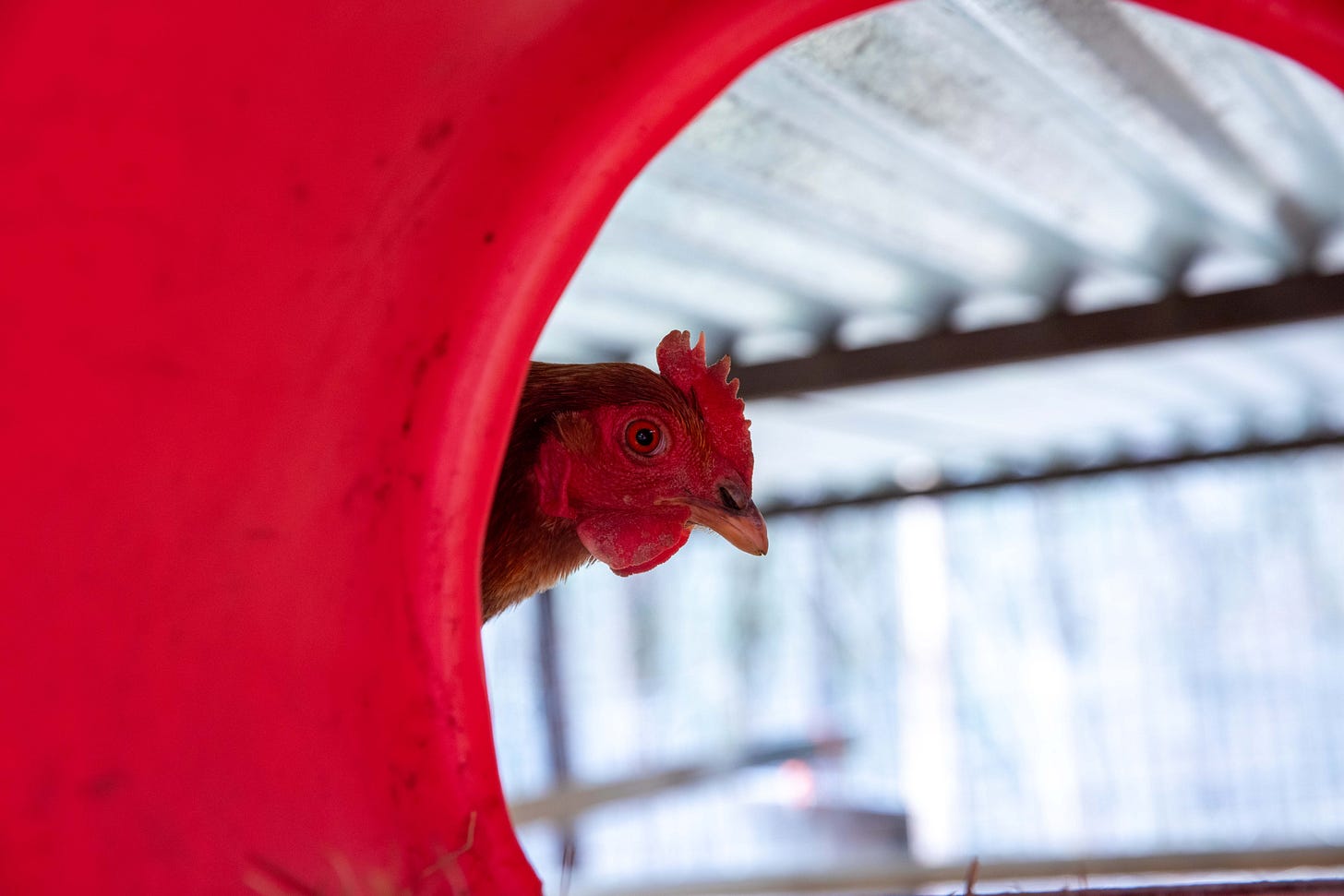
But she has decided we have.
This is a guide to planting potatoes.
It begins, as things often do, with a box of potatoes that look like they were recovered from a shipwreck. Not “farmers market heirloom,” but “left in a root cellar during a minor apocalypse.”
Dusty. Knuckled. Possibly sentient.
I’m planting ‘Red Norland’, an early red potato widely described as “very easy to grow”—which feels, frankly, like a personal challenge. I’m planting them along the southern fence line, in soil that was once occupied—and aggressively fertilized—by my chickens, the same stretch where that tomato plant self-seeded.
This is my first year growing potatoes, so what you’re witnessing here is a careful synthesis of several gardening books and Monty Don, loosely interpreted and applied with confidence that may or may not be deserved.
We proceed.
You are going to cut potatoes. And then you are not going to cook them. You are not going to eat them.
You are going to take perfectly good, fully edible potatoes, injure them, and place them into the ground like something you hope resolves itself.
Pause here if needed. Look out a window. Hydrate.
Then return, knife in hand, ready to proceed with agriculture, which is, at its core, burying things and hoping they become something else.
Each potato has small, knobby protrusions—eyes—which is unsettling but ultimately productive.
These are future plants. Witnesses.
Your job is to make sure every piece you plant has at least one or two good eyes. A many-eyed potato is not a problem—it’s an assembly.
For larger potatoes (you know the ones—thick, self-assured, taking up space), cut them into chunks.
Each piece should be about golf-ball sized, which I will be interpreting freely
Each piece should have 1–2 eyes
Do not reduce them to thin potato wafers of regret
Leave the smaller, golf-ball-sized potatoes whole. Let them live their full potato truth.
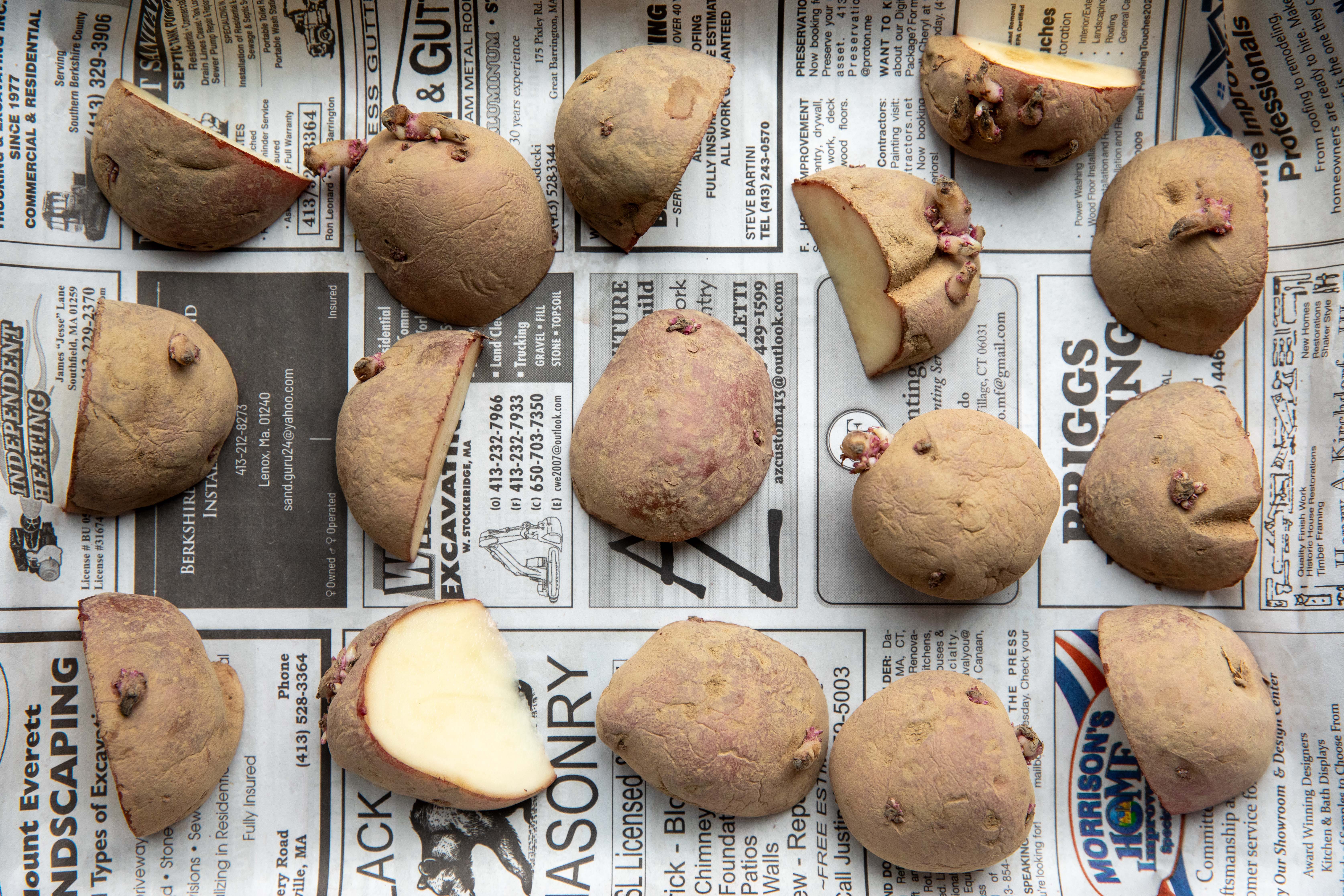
Spread the pieces out and walk away. Do not cover them. Do not fuss. Do not apologize for what you’ve done.
Let the cut sides dry and toughen. This is called “curing”—a very nice word for “we’re lettin’ ‘em scab.”
This is just what they look like now. It’s fine.
Dig a trench about 4–6 inches deep—just deep enough that it feels like a decision.
Place the pieces eyes up (again with the eyes, I know) and about a foot apart. Cover with soil.
They sprout. Green things emerge.
Now you must begin to bury them again. Mound soil up around the stems—not once, but repeatedly.
Each time, you are saying: No. Deeper. Become more potato.
This prevents greening (nobody wants a bitter potato), encourages more tubers, and creates a subtle psychological dynamic between you and the plant that no one discusses openly.
Keep the soil evenly “moist”—unfortunate word, necessary condition.
Then go.
For a while, it’s just leaves. A plant like any other. Fine. Sure.
You move on. You become someone else.
And then one day, the tops collapse, and you remember: There are potatoes in there.
When you dig them up—real, actual potatoes, multiplied from the ones you cut apart on a piece of newspaper while trying to picture a golf ball—you will feel like you got away with something. Because, in a way, this should not have worked.
And yet.
Four Tet—“Everything is Alright”
Back in the body. Not all at once, but enough to notice.
(& James)
Comments
Nothing yet. Say the first thing.
Sign in to join the conversation.