
There are likely three kinds of people reading this. Those who clicked immediately, those who looked around first to make sure no one was watching, and those who don’t want to know.
I’m 52 and in this territory myself. And so are most of my friends — in politics, out of politics, all of us somewhere on the perimenopause-to-menopause spectrum, comparing notes in the way women do when they finally stop pretending everything is fine. Their husbands are in it, too. Carefully. Trying to understand why the person they love is awake at 3 am, overheating, and not interested in being told to drink more water.
What I keep noticing in these conversations is that this transition isn’t just a women’s health story. It’s a leadership story. The things perimenopause and menopause make unavoidable — dealing with change honestly, carrying invisible load, needing real support, knowing what experience is actually worth — are the same things politics keeps getting wrong.
Here are four lessons. And a takeaway for each one.
Lesson 1: Lead inside the transition. Not around it.
Perimenopause doesn’t arrive on schedule. It doesn’t care about your calendar. I can tell you from where I’m standing: what worked at 38 is not always what works at 52. Pushing harder isn’t always the answer. Sometimes it’s the problem.
That sounds a lot like politics.
Too many leaders treat steadiness as the mark of strength — as if maturity meant looking exactly the same in every season. But that’s not leadership. Its performance. And performance cracks under pressure, precisely when you need it most. The partners of my friends know this, too. Watching someone they love navigate something real and significant, with no roadmap and little institutional support, has a way of clarifying what actual strength looks like. It’s not pretending nothing is happening.
The leaders who navigate transition best don’t grip the wheel harder and hope the road straightens. They lead through it honestly.
The takeaway: Design for transition. Build political systems and leadership cultures that face change openly rather than quietly work around it.
Lesson 2: If you can’t see the strain, that doesn’t mean it isn’t there.
Much of what menopause brings doesn’t show up from the outside. Sleep disruption, brain fog, anxiety — none of it comes with a visible marker. But it shapes judgment, energy, and decision-making, whether anyone can see it or not. NHS England found that three in five women employees with menopausal symptoms say it negatively affects their work, and we are long overdue to systematically address this.
I know this first-hand. So do my friends, many of whom are navigating this while running organizations, serving in office, or raising families. And the husbands I know who are paying attention are learning the same lesson up close: invisible doesn’t mean insignificant.
Politics runs on the same dynamic. Care burdens. Financial pressure. Threats. Online abuse. Grief. The daily exhaustion of staying publicly coherent while privately carrying a lot. Men in politics carry this too, often with even less permission to name it. The invisible strain of public life is universal — and almost entirely unmeasured.
That’s the gap the Better Politics Index 2025 was built to address. The first global index to ask how well political systems actually develop and support their leaders, across 10 countries, found that the answer is not nearly good enough. The strain is so pervasive and so invisible that the field can’t yet fully count it: there is still no global dataset on violence against politicians, no systematic measure of what public life costs the people living it.
Institutions that only respond once someone visibly breaks aren’t wise. They’re just slow and expensive.
The takeaway: Build systems that catch strain before it becomes a crisis. Measure what’s actually happening to the people doing the governing — not just what they’re producing.
Lesson 3: The best political leaders aren’t resilient. They’re anti-fragile.
There’s a conversation I keep having — with my girlfriends, with colleagues, with women in and out of politics who are somewhere in this same territory. It always lands on the same thing: Not what this menopausal period has taken from them. But what it has built.
They’re sharper. More decisive. Done with people-pleasing. No time for drama. This is what navigating menopause produced in them. Not despite it, because of it. I’m 52, and I feel it myself: more locked in than ever on what actually matters. The dramatics simply don’t fit anymore. That’s not a loss. That’s a filter.
In his 2012 book Antifragile, Nassim Nicholas Taleb made a distinction most institutions still haven’t absorbed. Resilience is the ability to bounce back to the same state. Anti-fragility is coming back stronger and better designed. So the true opposite of fragile isn’t brute toughness; it’s intelligent strength.
Menopause is a particularly complete test — biological disruption you can’t will away, institutional invisibility, and social stigma, all at once. To come through it clearer and sharper is to have passed a test most institutions don’t even know they’re setting.
The science backs this up. The Seattle Longitudinal Study — tracking cognitive abilities in thousands of adults since 1956 — found that midlife adults generally perform better on several cognitive tasks than they did as young adults. A Stanford psychology study found that as time horizons shorten with age, people naturally narrow their focus toward what is emotionally meaningful — fewer relationships, but more carefully chosen; less novelty-seeking, more depth. Their decade-long experience-sampling study found this produces measurably better emotional well-being and greater stability. Aging is less a story of decline than of refinement.
But these gains don’t emerge in a vacuum — they depend on the conditions people age within. Without the right support, older people don’t emerge wiser — they burn out, get pushed aside, or leave altogether. Menopausal women are one of the clearest examples of this. That’s not a personal failure. It’s a systemic one.
The takeaway: Invest in leaders through the hard transitions, not just at the point of entry. The distillation that comes from genuine testing is exactly what governance needs — but only if the person is still standing.
Lesson 4: Post-peak experience is an asset. Stop treating it like a liability.
Humans are among the few mammals with long post-reproductive lives. Killer whales (and other toothed whales) share this distinction. As female killer whales age, they become more closely related to their group. Instead of competing to reproduce, they take on a different role: supporting their offspring and grandchildren by sharing vital knowledge — where to find food, how to navigate, and which waters to avoid. Researchers believe this is an evolutionary adaptation. The wisdom becomes the point.
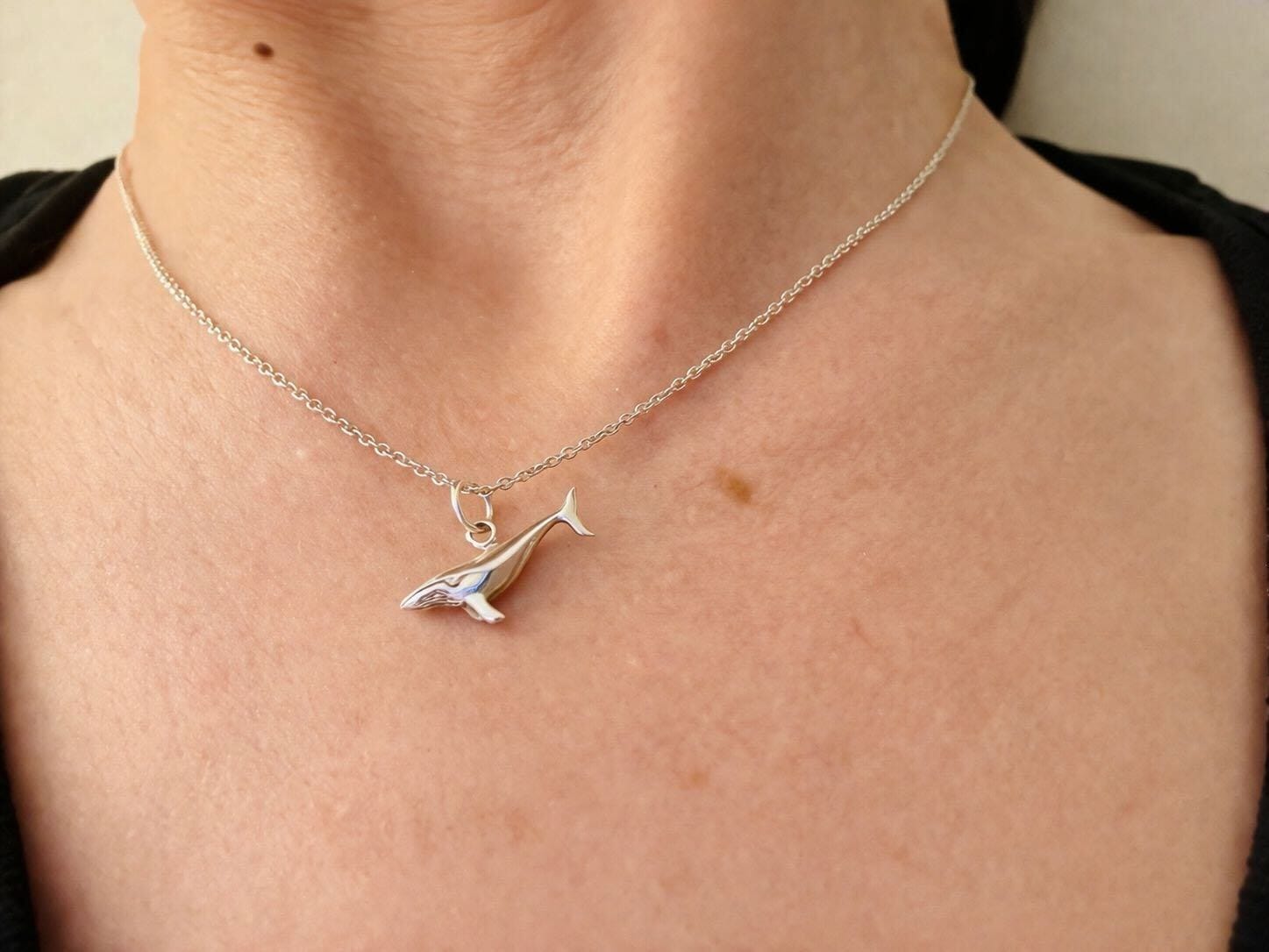
I wear a whale necklace from my beloved Pacific Northwest partly to remember this. My friends and I joke about it — we’re in the killer whale years. The years where what we know matters more than what we can perform. Where the experience of having actually been through things is the asset, not the liability.
Politics tends to treat midlife women as though their relevance is fading at exactly the moment their most useful capacities may be sharpening. It treats older men as though years alone confer judgment — without asking what it cost to get there. Both get it wrong. The shared mistake: confusing the performance of leadership for the thing itself.
The takeaway: Build systems that transfer knowledge, not just replace old bodies with newer ones. Stop discarding post-peak experience. It can’t be fast-tracked or replicated. Losing it isn’t strategic. It’s just wasteful.
So what’s the final lesson?
Transition deserves honest leadership.
Invisible strain counts.
Anti-fragility beats brittle performance.
And experience — real, hard-won, tested experience — is infrastructure, not a footnote.
I’m 52, in the middle of this, having these conversations constantly — with friends, with colleagues, with the husbands who are trying to understand what their partners are carrying. What strikes me every time is how universal the underlying lessons are.
This isn’t really a woman’s problem. It’s a human one. And it’s a political one.
You read the whole thing. Which means the topic wasn’t the problem.
It never was.
Warmly,
Lisa
Comments
Nothing yet. Say the first thing.
Sign in to join the conversation.