
Every year, I try to steal a week one-on-one with each of my boys. This spring was Otto’s turn.
He is 17, and this was his first time back in New York since we left when he was three. Fourteen years ago, we moved from Brooklyn to Berlin for what was supposed to be a one-year stint. We stayed. So this was not just a trip. It was a return. A city that had once held him, meeting him again in almost-grown form.
We biked through Central Park and down the West Side Highway. We saw the carousel in DUMBO. We took the ferry to Red Hook. We passed the places where he and his brother had learned to scooter on the Promenade in Brooklyn Heights. He met loads of people who had held him as a baby. Watching a nearly grown young man be greeted by people who still carry a toddler version of him in their heads does something to your sense of time.
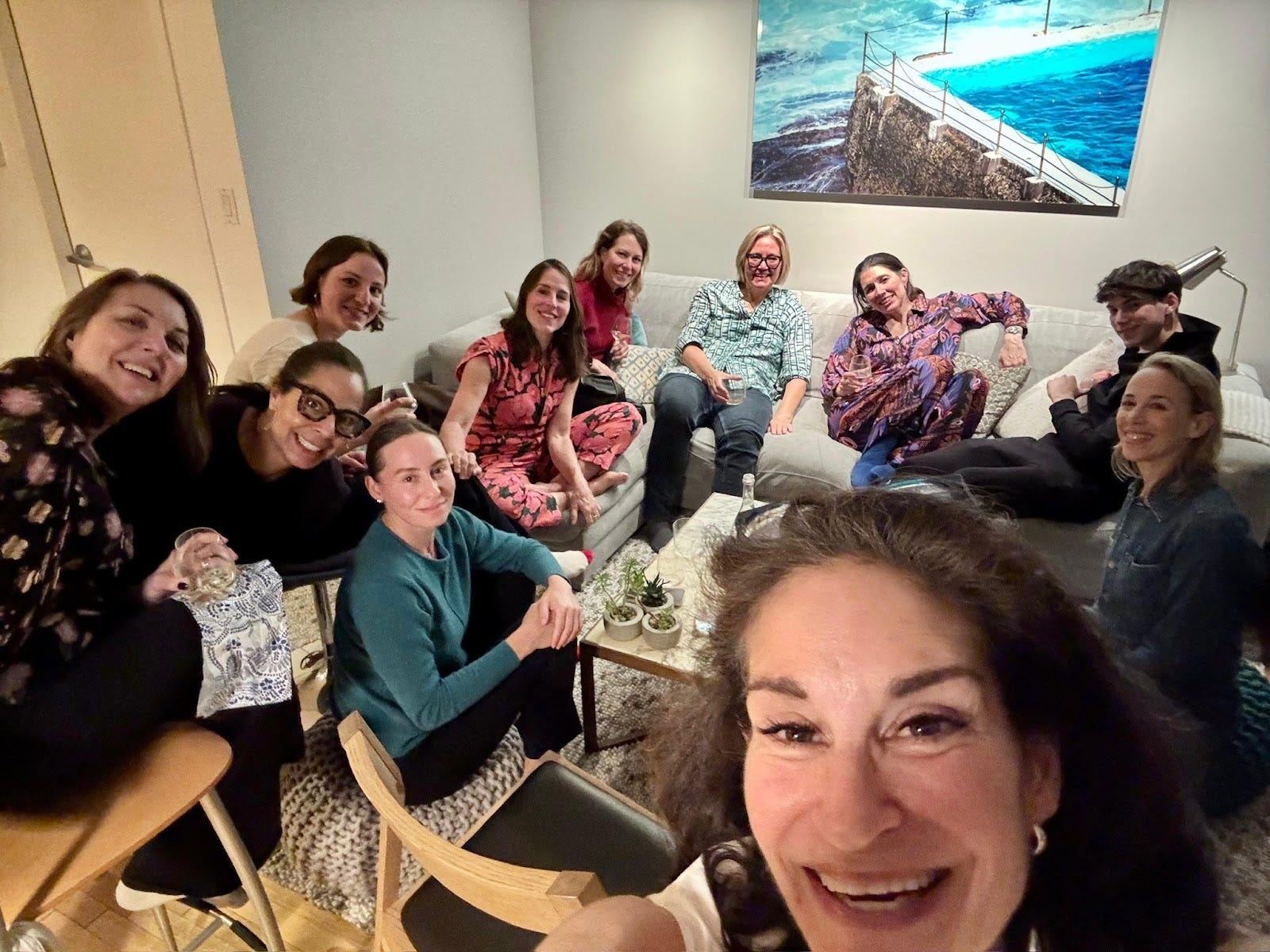
Then there were the dinner parties. Smart and chaotic, which is to say: very New York. Fast opinions. Fast laughter. Several conversations at once. Politics arriving at the table, whether invited or not.
At one point, I asked Otto how he would describe the city.
“Active, awake, chaotic, and loud,” he said.
Exactly. Duh. It is New York.
At some point during the week, I realized New York was helping me think about politics again (to be honest, I kind of always am).
Because politics now often feels exactly like Otto’s description of the city: active, awake, chaotic, and loud. Too many signals. Too much theater. Too much certainty. Too little stillness.
Over the course of the week, one political name kept coming up: Zohran Mamdani, now New York City’s mayor.
Let me be clear. This is not a political endorsement of Mamdani. Nor is that the point when I write about particular political figures. I am interested in the lessons. What citizens respond to. What earns trust and what lowers it. What helps a leader beat, rather than simply confirm, the story already attached to them.
And that was the interesting thing I kept hearing. Not that everyone agreed with him. Not that he is perfect. It was something smaller and more revealing than that: for someone that many people had initially coded as too young, too ideological, too online, too inexperienced, or too risky, a surprising number of New Yorkers kept landing in roughly the same place: “He seems steadier than I expected.”
That may not sound dramatic. But in politics, it is.
Because citizens do not meet leaders frequently. One of the most useful things brain science offers here is the reminder that the brain is constantly making predictions. We build expectations, compare reality against them, and update when the gap is large enough. Put simply, people are not encountering a political leader as a blank slate. They are encountering a running theory of that person already installed in their heads.
And here is the harder part: people like having their pre-existing theories confirmed. We do not just form stories about people. We get attached to them. That helps explain why low expectations in politics are so sticky. Once citizens expect politicians to posture, wobble, overpromise, and underdeliver, they do not neutrally observe the next leader. They are already primed to recognize the familiar pattern, and the brain does not treat all evidence equally. What confirms the old story passes through unchallenged. What contradicts it tends to get explained away. Preconceptions, in other words, are not just hard to shift — they are designed to resist opposing truths.
That is what makes Mamdani’s case so striking. He did not just have a good campaign. He managed to move the needle on something the brain is built to protect.
The example that kept coming up was snow shoveling. Numerous people said something like: Mamdani paid ordinary New Yorkers a living wage to clear snow. The more precise version is a little different. The city’s standard emergency shoveler pay was raised from around $19 to $30 an hour during the February 2026 blizzard, with overtime at $45 — a meaningful bump but not a living wage by any strict definition. But the imprecision is itself revealing. What Mamdani did was fast and concrete — a city problem, ordinary people hired, better pay, a visible result. People saw it. People could repeat it.
That is what I mean by evidence in politics. Not just what is technically true somewhere in a PDF, a policy memo, or a press release. Evidence, politically, is what is visible, legible, and repeated enough for citizens to update their expectations about politicians.
This matters even more in an age of polarization, permanent performance, and low trust. Citizens are not just skeptical — they are pre-loaded with disappointment. And it is why so many political leaders get expectation management wrong. They think it means message discipline: hype what you can, spin what you can’t, and quietly lower the bar when necessary.
But what actually moves the needle is simpler yet more demanding than any of that: Say less. Do something clear. Let people see it. Then do it again.
People do not only want confidence. They want calibrated confidence. They want a leader who knows when to project certainty, when to name uncertainty, and when to let the evidence speak louder than the performance. That is part of what I was getting at in my recent Better (Political) Leadership piece on why we so often mistake certainty for competence: the trick is not to crank confidence to maximum, but to dial it to fit the moment. People can feel the difference between grounded authority and someone free-styling under pressure.
Of course, beating expectations once is not the same as earning trust for the long haul. Weathering one storm does not prove greatness. One visible governing moment does not settle anything. But it is often how the door opens.
And that, I think, was the real current running under those New York dinners.
Not worship.
Not consensus.
Not ideological conversion.
Just a quieter, more politically consequential sentence: “he seems steadier than I expected”.
In the Big Apple, where the noise never stops and leadership expectations are often somewhere below street level, that is not a small thing. Beating the bar may be one of the most important things a political leader can do.
People are not hungry for flawless leaders. Most are hungry for reasons to revise their cynicism.
Maybe that is also why the week with Otto stayed with me the way it did. He was not meeting New York fresh. He was meeting a city that had already shaped him, and that other people still remembered for him.
Politics works like that too. A politician does not arrive as a blank slate, nor does the citizen standing before them. Both carry history. They arrive with memory, pattern, suspicion, and story.

The task of leadership, then, is not to change the story you tell about yourself. It is to change the story that other people tell about you. And that only happens one visible, concrete act at a time.
In politics, beating expectations is not a communications trick. It is what happens when reality arrives before the spin does.
Warmly,
Lisa
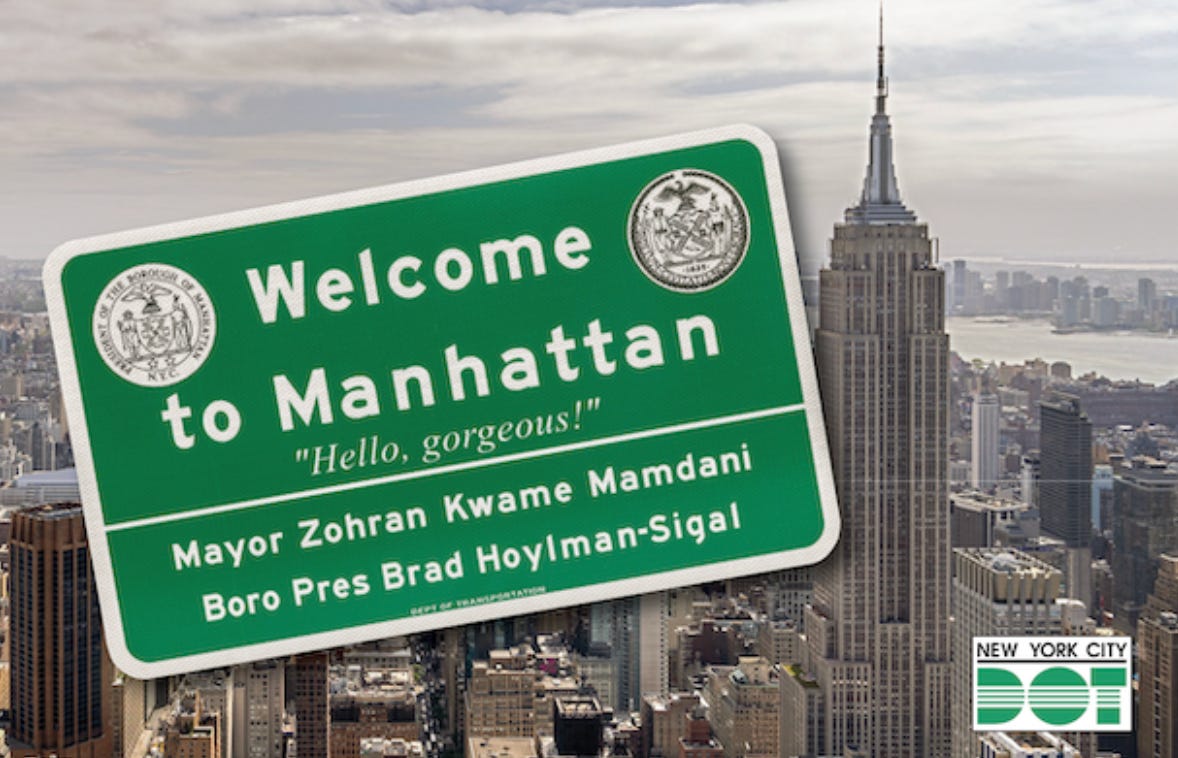
P.S. One of my favorite details from the trip: there is now a green “Welcome to Manhattan — Hello gorgeous” sign at the gateway to Manhattan. It is tiny. Cheap, in the scheme of city-making. But it changes the feeling of arrival. It makes the entrance clearer, safer, and more human — and it signals something about the city on the other side. Honestly, not a bad philosophy for governing. The big stuff matters. But so do the small touches that shape how people experience a place, a system, a leader. First impressions are where the prior gets set.
Comments
Nothing yet. Say the first thing.
Sign in to join the conversation.