
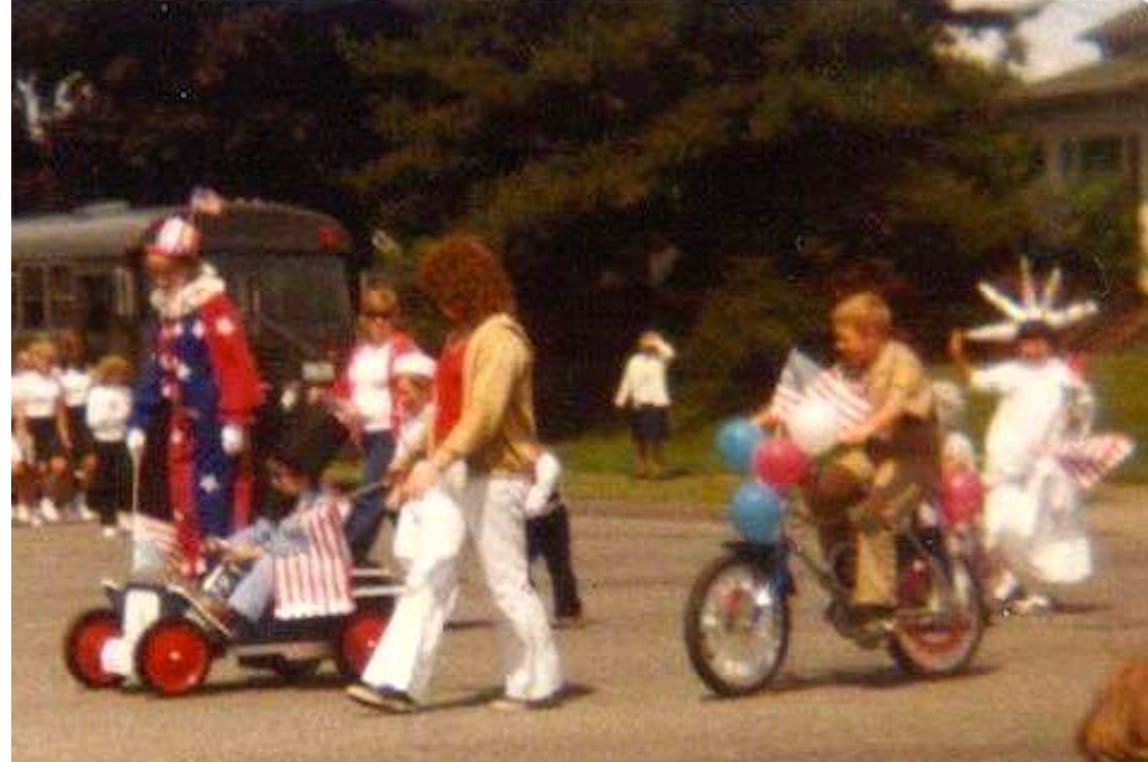
When I was a little girl in Everett, Washington, I was the Statue of Liberty.
I was just ten years old, wearing a white suit and holding a tin-foil torch as I walked down a street I’d traversed countless times before. Even with the whole town watching, it somehow felt like the most natural thing in the world. My cousins and brother made up the rest of the cast, dressed as Abraham Lincoln and Uncle Sam—a young girl’s vision of our nation’s founders. My mom walked beside us, while my aunt roller-skated along as a red, white, and blue clown.
Since this moment, I’ve thought a lot about why I wanted to be her.
Some of it was simple. She was a woman. When you’re a little girl looking at the list of characters a town hands out for the Fourth of July – the generals and the presidents and the founding fathers – you figure out pretty quickly that almost none of them look like you. But Lady Liberty did. She got to stand for something huge, and she got to do it as a she.
But it was more than that, even if I didn’t have the vocabulary to say so at the time. She meant light. She meant hope. She meant “welcome”, the warm kind, the kind that says the door is open and you’re expected and there’s a place for you here. What I didn’t know then is that this wasn’t close to the meaning she started with.
The most radical thing about the woman with the lamp
The Statue of Liberty was a gift from France, and the people who built her made no association with immigration at all. Her real name is Liberty Enlightening the World. She was a monument to republican ideals and to the friendship between two nations. The “welcome” we read into her now came later, and it came from a poem.
In 1883 a New York poet named Emma Lazarus was asked to write something to help raise money for the statue’s pedestal. Lazarus was a Jewish woman who, right at that moment, was working with refugees: Russian Jews fleeing the pogroms, arriving with nothing. She almost said no. A friend talked her into it by pointing out what the statue would mean to the people sailing into the harbor. So she wrote “The New Colossus,” and in fourteen lines she changed what the statue was for, and maybe what the country was for too.
The whole poem turns on a contrast. Lazarus set her “mighty woman with a torch” against the Colossus of Rhodes, the old warrior statue that stood for military might. But hers isn’t a giant of conquest, she said. As the Poetry Foundation puts it, Lazarus chose to honor not the courage to fight the enemy but the willingness to accept the stranger. From the statue’s hand, she wrote, “Glows world-wide welcome.”
Which means a little girl in Everett, reaching past the soldiers and the founders for the lady with the lamp, was making the same choice Lazarus made without having any idea she was doing it. Welcome over conquest. What you’re for, over what you’re against.
That’s the choice a parade makes, in every culture on earth. And I think we’ve seriously undervalued it.
The politics of “for”
Regular readers already know my bias here I’d rather talk about what I’m for than what I’m against. I even wrote a piece about picking awe over outrage. This piece is in that same direction.
Let me be careful here, because there’s a lazy version of this argument I don’t actually believe. The lazy version says that parades choose to be “for” so they are good, and debate is bad. That’s nonsense. Parades are not always “for”, and democracies need disagreement. They need the argument out in the open. That’s a feature, not a bug, and I’d fight anyone who tried to take it away.
My claim is smaller than that and harder to wave off. We have built endless infrastructure for the “against” and almost none for the “for”. We’ve got debate stages and op-ed pages and comment sections and entire platforms engineered to have you furious at a stranger by lunchtime. Yet, for the other thing, the experience of standing next to somebody unlike you and realizing you’re on the same side of something, we’ve built almost nothing. That muscle has gone soft from disuse.
Say “parade” and plenty of people don’t picture this. They picture Red Square, or Pyongyang, rows of soldiers goose-stepping past a reviewing stand, missiles on flatbeds, a leader’s portrait held up by people who didn’t get a say in whether they’d be there. That’s a parade too. It’s built the same way, technically: people in formation, moving together, watched by a crowd. But it exists to display obedience, not choose it. Nobody in that procession is there because they wanted to be, and that’s the entire design of it.
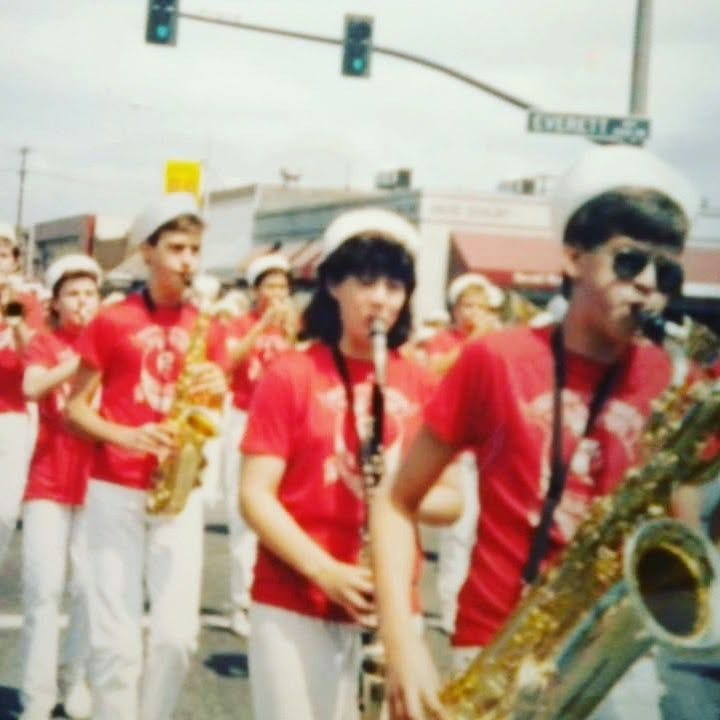
A community parade, the kind built around a local festival or theme, is what belonging looks like when the same tools (formation, procession, a crowd, a route) get used for the opposite purpose. Nobody wins. Nobody’s marching because they were ordered to or because their absence would be noticed and reported. A few thousand strangers agree, for an hour or two, to face the same way and move at the same pace and cheer for people they’ll never meet. That’s the whole difference between the two kinds of parade, and it’s not a small one. The marching band and the volunteer firefighters and the guy who’s been polishing his 1962 convertible for three weeks, and the tiny-tot dance troupe wobbling out of step and the clowns and the scouts and the dog club and the council member who’s actually walking the route, shaking hands the whole way. All of them in one procession, claimed by one crowd, on one morning, because they chose to be. Everybody belongs to the thing because everybody opted in.
A barometer hiding in plain sight
Here’s a claim, and I want to be honest that it’s a claim. It’s my idea, not a settled finding.
I went looking for research that treats a parade as a way to measure a community’s health, the way a doctor reads your blood pressure. I couldn’t find it. There’s good work on how festivals create social capital — how gathering to celebrate builds trust between people. And there’s a deep literature on why moving in time together bonds us, which I’ve written about before. But a parade is a reading you can take right there from the curb, and that’s the one I’m planting my flag on.
Two caveats first, because a skeptic deserves them. There’s no parade index. It’s a reading, not a metric, though doctors read plenty by eye before they reach for an instrument. A parade is a window, not an engine. It doesn’t make a community healthy. It lets you see what’s already true. So the next time you’re at a parade, anywhere, here are four things you can read.
Range. Who’s in it? Not how many, who. A healthy community can put startling variety into one line and not fly apart. The veteran and the new immigrant. The church group and the drag troupe. The banker and the union local. The wider the range a town can hold and still call it “us”, the healthier it is. And a parade with only one kind of person in it is telling you something too.
Generations. Look at the curb, not just the street. When people show up at dawn with lawn chairs and a hand-drawn map of the route, grandparents next to grandkids, you’re looking at something that got handed down on purpose. When only one generation turns out, the inheritance is breaking somewhere.
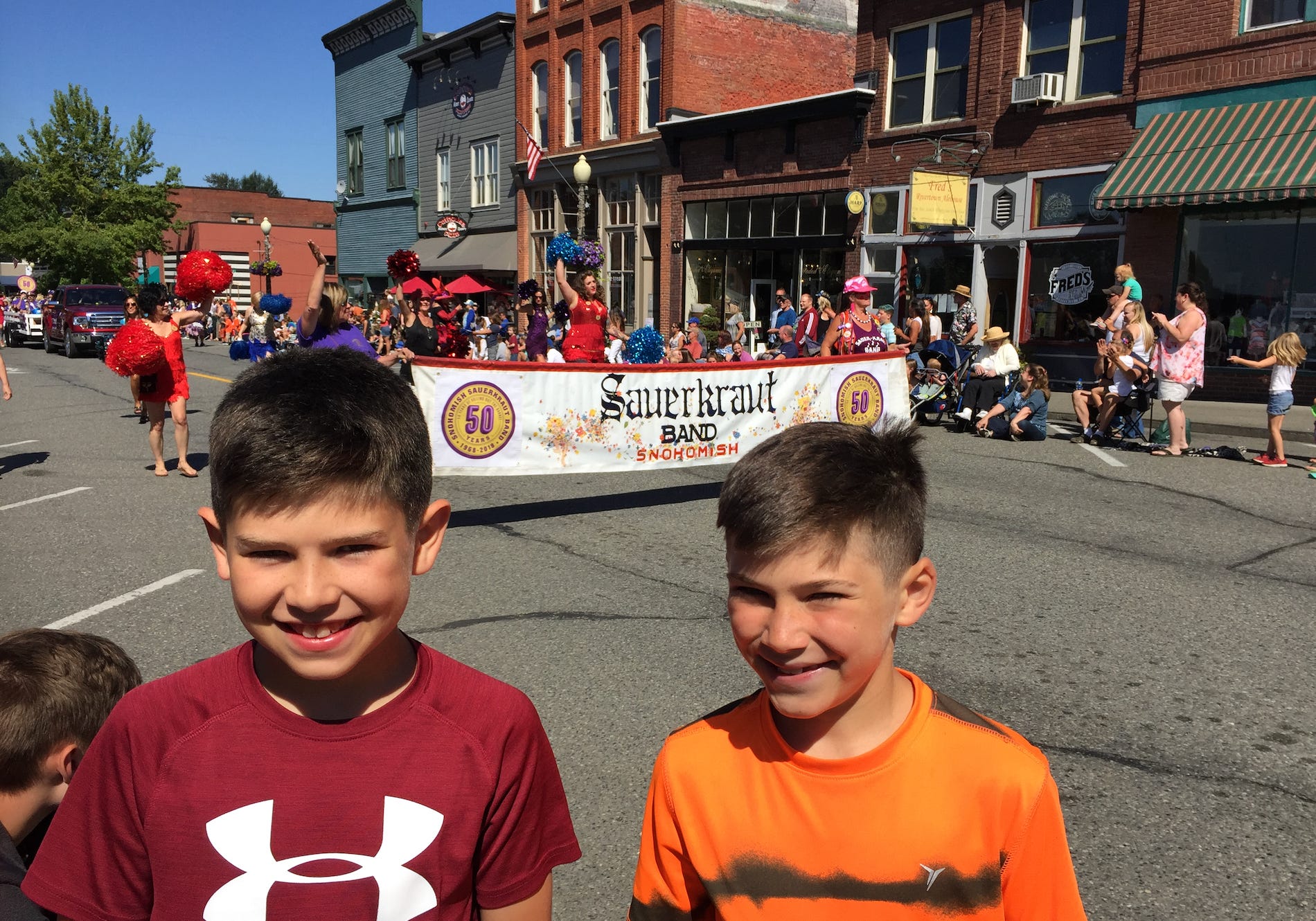
Solemnity and humor. The best parades hold both, minutes apart. There’s the quiet for the fallen, the veterans, the honor guard. The space left on purpose for the ones who didn’t come home. And then, almost right away, the guy dressed as a hot dog and the dog wearing sunglasses. A community that can be reverent and ridiculous in the same hour is in good emotional health. One that can only do solemn is brittle. One that can only do spectacle is hollow.
Smell, sound, and tongue. Close your eyes for a second. How many languages are in the air? How many kinds of food? In a healthy parade you can catch three cuisines from one spot on the curb, hear the announcer switch languages, watch faces from four continents go by, and none of it feels like a problem somebody has to manage. It just feels like the place.
My country turns 250 this weekend. Two and a half centuries later, and we still can’t agree on much—which, if you squint, is its own kind of tradition. We’re divided, we’re tired, and we’re not exactly sure what’s next. And yet, I love it. Not because it’s flawless, but because it’s still trying.
On Saturday morning, my hometown will do the one thing it’s never stopped doing, even through the worst of years. Everett will close a street. People will drag their lawn chairs out before the dew is even off the grass. Someone’s uncle will over-decorate a convertible. A dog will refuse to heel. And somewhere, a kid with a tin-foil torch will stand there, meaning something huge without even realizing it—just like I did on that same street, all those years ago.
I’ll be on the curb early, in the same downtown where I once marched as the woman with the lamp, taking the temperature of a 250-year-old patient that’s never been fully well, but hasn’t died either. I’ll be reading the street, counting the cuisines, and hoping the range is a little wider than last year. After that, because some traditions are sacred, I’m heading to a minor-league baseball game. The Everett AquaSox are kind enough to end the night with their own fireworks. Since the next day is my birthday, I’m going to pretend those fireworks are a day early—and call them mine.
Wherever you’re reading this—and I know many of you are in different countries—you’ve got your own version of this. A carnival, a procession, a saint’s day. A street that fills up once a year. Go stand on the curb. Read your own barometer. Then, ask yourself: what would it take to make the range of who gets to march a little wider?
Because a country, just like a parade, isn’t measured by whether everyone is moving in perfect step. God help us if we ever do. It’s measured by how many different people we can fit onto the same street, on the same morning, still willing to wave at strangers.
If you lead anything — a city, a party, a neighborhood, a company, a family — you have more power than you think to make these moments happen. Not as the leader up on the float, waving. The opposite of that. Your job isn’t to be the center — it’s to build the conditions where a whole mix of people can come together and discover they’re one thing, then step back and let them be the center of it. The best leaders I’ve met anywhere understand this in their bones. Belonging isn’t built in the debate hall. It’s built in the street.
That means, first, creating shared space. Belonging comes from proximity — same place, same time. Pick spaces where people gather, not stages where they watch.
It means giving people a role, not a seat. If everyone present is doing something, it becomes theirs. If most are watching, it stays only yours.
It means mixing people who wouldn’t otherwise mix. Belonging happens across difference. Left alone, people cluster with people like them — someone has to engineer the contact.
It means lowering the barrier to showing up. Free, informal, low-commitment. Check what’s quietly filtering people out: cost, timing, formality, language.
And it means stepping back at the key moment. Hand off the mic, skip the photo, let credit diffuse. Staying at the center pulls attention back to you instead of to each other.
None of it holds without protecting it afterward. One event isn’t belonging — repetition is. The ongoing job is unglamorous: keep funding it, keep it informal, defend it from being watered down.
We already know how to build the infrastructure for outrage. This is the harder, quieter work of building the infrastructure for belonging and it's worth it.
Warmly,
Lisa
P.S. If this one landed for you, send it to someone who’s drawn more to what they’re for than what they’re against. And tell me in the comments: what’s the parade or the festival that takes your community’s temperature? I want to hear about your street.
Comments
Nothing yet. Say the first thing.
Sign in to join the conversation.