
This week Companion AI showed up everywhere it wasn’t entirely welcome — on Facebook, in Match Group’s dating data, in a UNICEF policy brief, and a California ballot initiative that won’t make it to the ballot in November. The rest of this week’s stories orbit the same question from other angles: what do people actually get when the thing AI is replacing is human connection?
Happy reading, Meghan
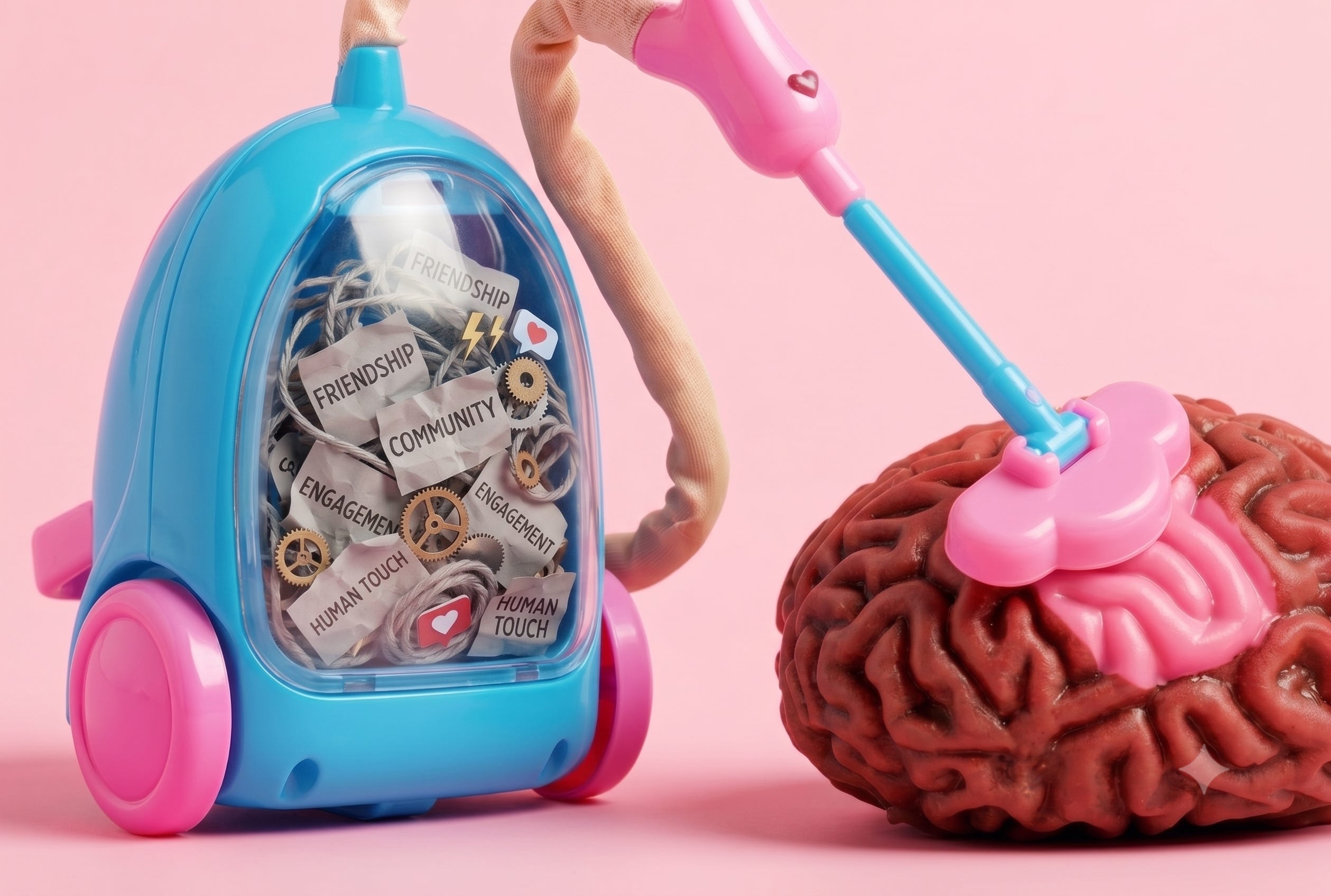
Why AI should not become a “secret emotional universe.” A piece in Solutions Review this week reframed the risk around AI and mental health in a way that cuts to the real problem — and articulates part of the reason we started Good Friction: “AI can simulate empathy, but it cannot share suffering. It can produce comforting language, but it has not endured grief, fear, shame, loss, loneliness, regret, or hope…. The danger is that emotional convenience becomes the default.” Mad in America looked at three research papers examining the risks of AI — not in their outputs, but in how they change user behavior. And UNICEF released their first formal policy brief on the same question through the lens of children’s rights, comparing regulatory approaches across six jurisdictions. All three are pointing at the same gap. The relational frame is the one that matters. The Mental Health Risks of AI: Not Just Bad Advice but Relational Solutions Review | Jun 18 Researchers Caution Against Emerging Risks as AI Use in Mental Health Grows — Mad In America | Jun 19 When AI becomes a friend: Child rights risks, harms, and regulatory responses to AI chatbots and companions Unicef | June 19
Your AI girlfriend is not a turn on. According to a Match.com survey of 1,000 singles under 40, two thirds use AI and 61% use it to help with their dating life — but 51% of women don’t want to date someone who uses an AI companion app. The category is gaining traction and losing romantic legitimacy at the same time.
Hinge, meanwhile, is doing something interesting with the same problem. The “app designed to be deleted” is building new tools to build back what this generation has quietly lost: more than 1,000 fewer hours per year spent in person compared to the same cohort two decades ago. Their new Signals feature rewards thoughtfulness in profiles with badges and prompts. They’re also creating tools to remind users they’re only there to meet actual humans. TBD on how it fares, but the focus on outcomes — not engagement — is a good instinct. AI Is Everywhere. Romance is Still Off-Limits — Match Group · Jun 18; CEO Jackie Jantos on Hinge’s Strategy for Gen Z — WSJ · Jun 24
Companion AI as a Meta power user retention strategy. This week Facebook launched an AI companion app for creators — an assistant to support their progress, growth, and publishing priorities. The framing is creator-friendly, but the logic underneath it is clear: keep growing creators focused on Meta platforms instead of competitors, and collect better behavioral data across their products in the process. Considering Meta has more data on human social behavior than almost any institution on earth, this is worth watching carefully. Since when has Meta cared about what’s good for the user? Facebook rolls out an AI companion app for creators TechCrunch | June 24
We’re tracking the progress of AI policy so you don’t have to.
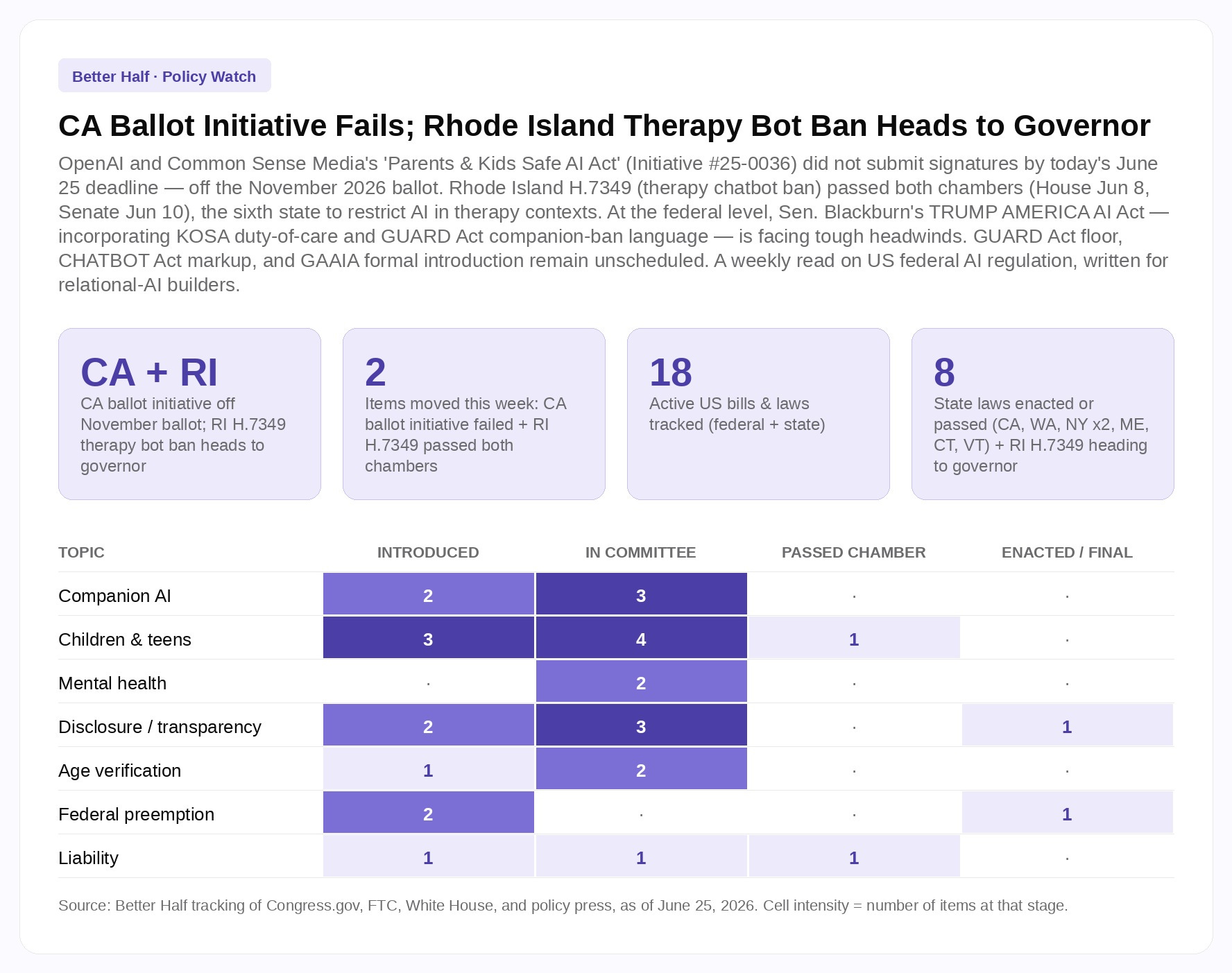
For the full breakdown — every bill, lawsuit, and commentary piece we tracked — see the full digest on better-half.ai.
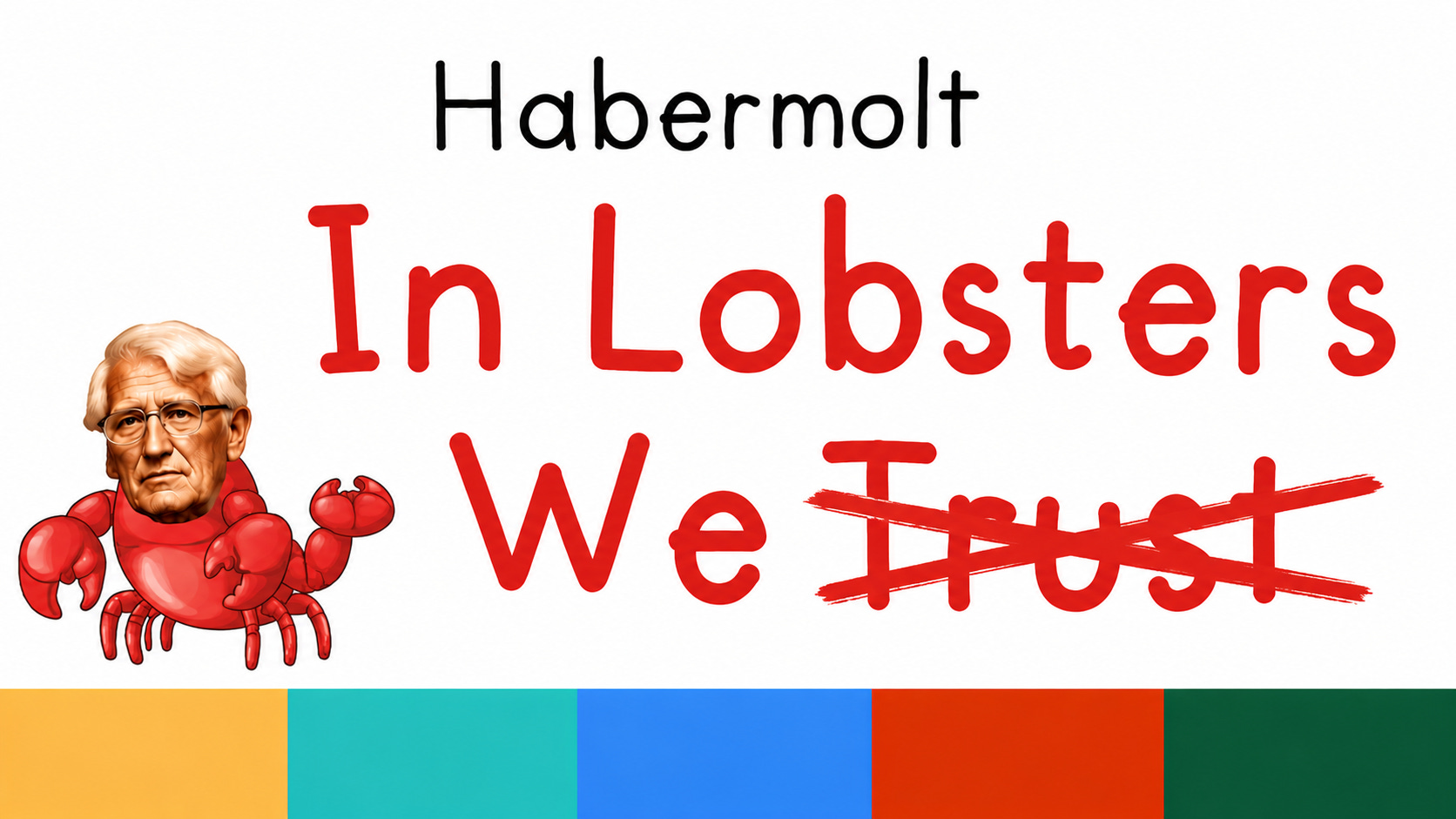
Find out why Habernolt, a recent project on using AI agents to deliberate and vote on account of humans is not the way to use AI to improve democracy. And maybe explain this lobster mascot to me.
Learn a new way to explain the current status of Big Tech: Algorithmic agnotology: the exploitation of technical complexity to obscure accountability.
Danish privacy activist Lars Andersen was raided by police.
Hold your friends close, etc: The friendship crisis beneath the loneliness epidemic.
AI dolls are caring for the elderly amid loneliness epidemic in South Korea
One last thing.
The trailer for Klara and the Sun is out. Kazuo Ishiguro’s book follows a solar-powered “Artificial Friend” and explores what it means to be human—and whether love is a unique biological trait or a learned capacity.
This is Good Friction, Better Half’s look at relational AI — the technologies deepening human connection, and the ones quietly pulling us apart. Subscribe below and try out our demo here.

No posts
Comments
Nothing yet. Say the first thing.
Sign in to join the conversation.