
Sometime between the bombing of Venezuela and the ICE murder of a Minneapolis woman, the e-mails began stacking up about a quieter unfolding tragedy. Like the other daily insults, the erosion of American healthcare is being puppet-mastered by our coin-operated president and his billionaire-aligned supporters.
Small-business owners in droves reached out to describe how the removal of Obamacare subsidies would upend their ability to go to the doctor and get the medicines they need. Many are preparing to go without health care at all.
A Salem, Va., couple recently learned their health insurance under the Affordable Care Act would soon quadruplefrom $444 a month to $1,672 a month, with an annual deductible of $17,000. She’s a mental health therapist who works primarily with foster-care kids, and he’s an architectural draftsman. Both are freelancers, part of the growing gig and small-business economy being slammed by the political football that has become health care in America.
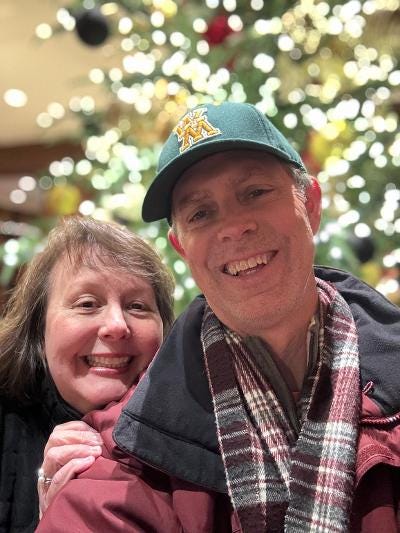
In the richest country in the world, in the year of our Lord 2026, a solo mental health practitioner and her freelance-designer husband—both on the higher side of middle age—would have to spend $20,000 just to access basic preventative care plus pay a sky-high deductible.
“At this time in my life, to be 56 and be uninsured is crazy,” explained Jennifer Thomas, who specializes in play therapy for traumatized children. Earlier in her life, she’d been uninsured for short periods “and I would say, ‘This is not a time to ride my rollerblades,’ but other than that I didn’t worry too much.”
Last month, when her 63-year-old husband, Mike Kummer, put the Christmas lights up on their house, she hollered at him, “Don’t put the lights up; we’re not going to have insurance in January!”

Thomas has a full practice treating 20 to 25 children a week, many of them living in foster care or with grandparents because their own parents are unable to care for them—some are dead of overdose, or in jail on addiction-related charges. She’s become an expert in battling insurers on behalf of her patients, but navigating her own family’s coverage has her stumped.
“I’m not making widgets here,” she said, adding that there’s no easy way for her to earn more money. “If I want to increase my income, it’s not like I can just add extra spots.”
Last year, roughly 22 million of the 24 million ACA marketplace enrollees received enhanced premium tax credits to lower their monthly premiums, including 335,876 Virginians—33,000 of them right here in my home Congressional district, the CD-6. Nationwide, 92.2 percent of Americans insured by ACA received the subsidies, which began in 2020 in response to the economic uncertainties of Covid-19.
Charlie Tarasidis, a New River Valley pharmacist and addiction treatment provider, says there’s no going back. “During Covid, the subsidies helped people who couldn’t work. But now, to take it away and expect to reset it back to 2020 when health-care prices have gone up so much, along with everything else—it’s crazy.”
In call after call, the fears were palpable. Lisa Archer cobbles together jobs at a local nonprofit, a local-food magazine and her small family-run business. She plans to keep her family’s insurance but will pivot to a cheaper plan that comparably covers very little.
Archer’s premiums are predicted to rise from $84.61 a month in 2025 to $610 in 2026, slightly less than her mortgage—and not counting the couple’s $6,400 deductible. She and her husband, Jesse Feldberg, operate Fermented Fire Hot Sauce and earn about $68,000 combined annually.
Feldberg was scheduled to have carpal tunnel surgery this year, but a last-minute cancellation by another patient allowed him to have it on New Year’s Eve, a cause for celebration because he would have had to pay more out of pocket under the 2026 plan.
Their new Anthem plan, purchased through the marketplace, doesn’t include dental, vision or mental-health services. “I’m giving up therapy for now until we see how things shake out,” Archer told me. “It sucks to have to choose between mental and physical care.”
“You often hear people are trying to cheat the system by going through the ACA or aren’t working enough, but the reality is that we work very hard,” Archer added.
The price of materials for their hot sauce has increased dramatically, including for shipping, cardboard packaging and glass bottles. “I was at the grocery this morning, and for the coffee we buy the price had gone up three dollars more per bag.” A report released recently by the Joint Economic Committee estimated that the average American family has already paid $1,200 more for goods since Trump enacted his tariffs.
Archer has friends who are forgoing their annual mammograms because they can no longer afford health coverage. “We’re not cheating the system; there just aren’t other options, other than having no health options,” she said.
For Roanoke’s Richard and Joy Taylor, premiums to cover three people in their family almost tripled. Lacking action from Congress, they’ll jump from $653 to $1,574, well above the average monthly mortgage in our region.
As of late Thursday, the House passed a three-year expansion, with nine Republicans crossing over to vote for it—but not our CD-6 Congressman Ben Cline, who was busy posting his thoughts on eliminating a $200 tax on gun suppressors, which he called “outdated.” (I am running for Congress to unseat Ben Cline.)
Politico reported Thursday that a Senate effort to restore the subsidies could be released early next week, possibly with a plan to transition from subsidies to health savings accounts during the second year. But there’s no guarantee that the Senate and House will resolve their differences—a longshot in an election year. And President Trump has said he’d “rather not” extend the subsidies, even though he has never offered a replacement alternative.
“It’s like we’re living in a state of disillusionment,” Richard Taylor, 52, said. “The idea that the government wants people to be healthy and wants to help, that’s just gone.”

Taylor is a decorative concrete contractor with one employee, and Joy Taylor works part-time at American Airlines. He hasn’t had a physical in four years because their plans haven’t covered preventive care. He pays out of pocket for chiropractic care every six weeks and has to see a dermatologist twice a year for skin-cancer screenings, visits that are also not covered.
In the United Kingdom, where Richard was born, “you don’t have to pay for anything. It’s national health care, and they talk about the long waits. Well, try and get a dermatologist appointment in Roanoke; you’ll wait six months, so are we really that much different?”
As the Venezuela story unfolded, another small-business owner threw up her hands. “How do we have money to take over a country and yet not pay for healthcare for American citizens? Where the hell is Congress?” said Kristine McCormick, who runs a Roanoke County bike shop.
A single mother of three, McCormick, 54, is still $9,500 in debt from a bike wreck she had last year. She can’t afford for her premiums to go from zero to $450 a month and has decided to forgo insurance altogether should the subsidies not get renewed.
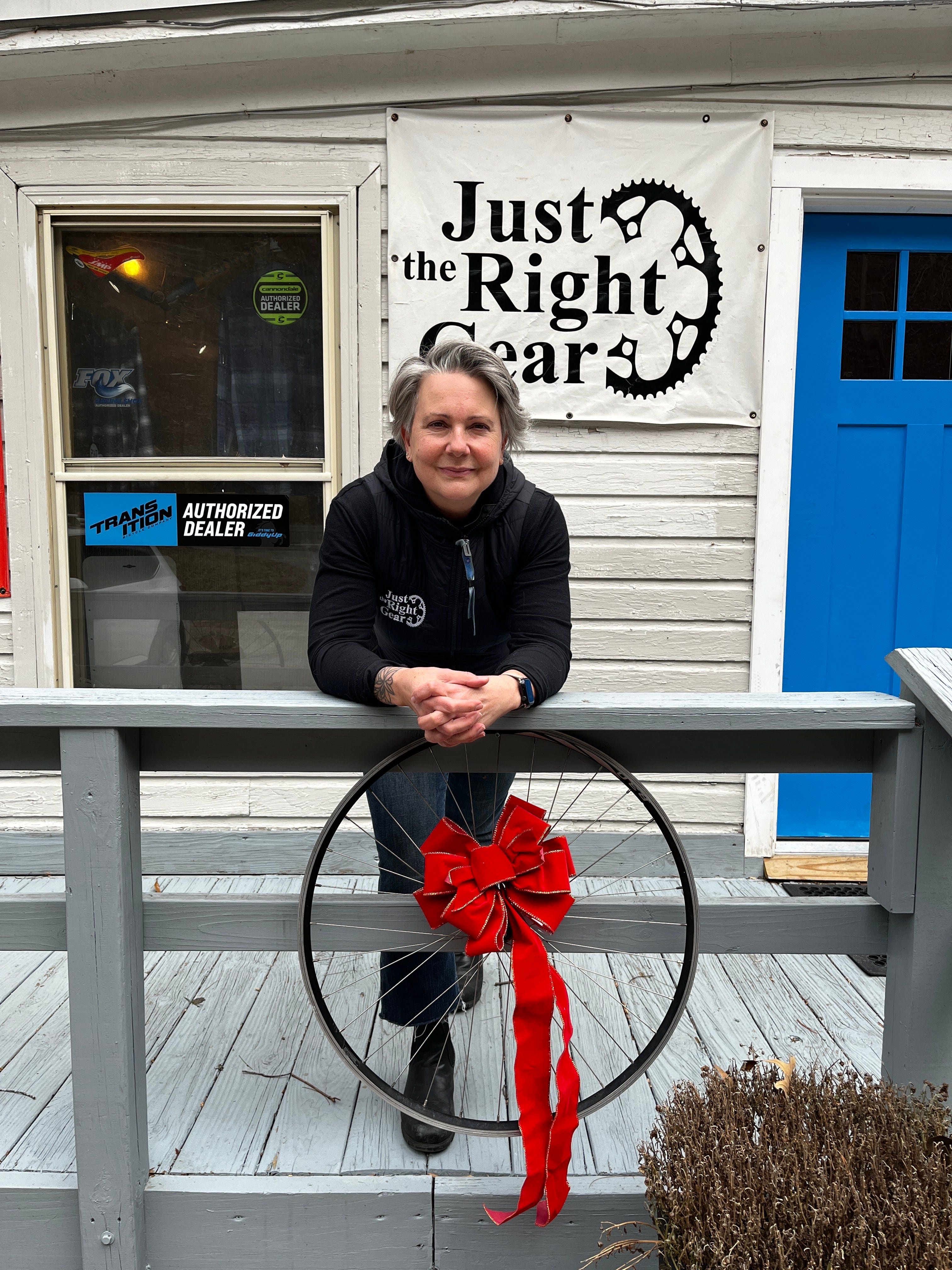
“I own a home, and I own a business, and yet I still can’t afford basic things for my family; it’s demoralizing,” she said. A Canadian bike part she needed for her shop arrived with an added $66 dollar tariff on an $80 part.
A short rib recipe she wanted to make for Christmas was going to cost $60, so she bought a turkey instead. “I’ve stopped buying red meat,” she said.
She lives in fear that the aging gas boiler in the basement of her Raleigh Court home will die. She takes turn paying her various utility bills, incurs regular late fees, frets that she’ll need to replace the tires on the 20-year-old Kia her daughters share. And, through it all, she worries about the toll it takes on everyone’s mental health.
Nonetheless, she volunteers as an officer of elections, teaches young kids to mountain bike, and helps maintain the trails at Carvins Cove. “The American dream is dead,” McCormick said.
The average age of the first-time homebuyer is now 40, the oldest it’s ever been. She blames Citizens United, the Supreme Court decision that gave corporations and billionaires unchecked power to manipulate our system under the guise of free speech.
“I’ve lived in five states and on both coasts. I’ve always told my kids there’s a big beautiful world out there that I want them to experience,” she added. “But now I think everything’s so expensive that maybe they should just stay home and live with me in a multigenerational household.”
For those in the region looking for sliding-scale or self-pay services as an alternative to having no insurance, New Horizons Healthcare, a federally qualified health center, offers dental, behavioral health, addiction treatment, pharmacy services, and medical care. Behavior-health director Patricia Spangler worries, though, about the clinic’s ability to cover low-income folks on Medicaid once the cuts from Trump’s OBBB hit and eligibility tightens—diabolically timed to hit after the midterm elections.
More than 350,000 Virginians are predicted to lose their Medicaid coverage at that time, partly to pay for the renewal of Trump’s 2017 tax cuts. Roughly half of New Horizon’s 10,000 patients are insured by Medicaid.
“It’s Maslow’s hierarchy of needs; many patients are so afraid,” Spangler said. “They’re worried about food, housing, healthcare. Now that overdose rates have finally gone really down, what happens if you take those people off their care? The overdose rates will go back up and not in a way that we can address. It’s unconscionable.”
No posts
Comments
Nothing yet. Say the first thing.
Sign in to join the conversation.