
One month into my candidacy for Congress, the most common question I get from friends is, “What’s surprised you the most?”
I’ve been running up and down Virginia’s current CD-6, stopping in small towns and cities throughout the Shenandoah and Roanoke valleys—asking for feedback, compulsively taking notes, trying to discern what Virginia’s families most want and need.
None of the voters’ feedback has been surprising: Tariffs are driving prices up, our Congressman Ben Cline only spits back what Trump and his toadies tell him to say, and long-held American ideas about taking care of veterans, needy kids, and small-business owners are being upended—all so that a trio of billionaires who own the equivalent of half of all Americans’ wealth can buy a fifth house on an island. Or the entire island. Or jettison into space.
But what has truly surprised me has been the unsolicited feedback I’ve gotten from men telling me I don’t know what the hell I’m doing in my bid to become Roanoke’s first Congresswoman:
Phone calls from people I haven’t heard from in years saying I’m hiring the wrong people for my campaign team. Moving too fast. Calling the wrong people for advice.
Dinner parties that run afoul by men googling things like the fact that the CD-6 is an R+12 district when—trust me, yes, my team and I have already googled that.
At the end of my November launch party, a local Democratic operative stuck around after hundreds of guests filed out to tell me: “One note. You need to smile more.”
At a recent fundraising dinner for a lecture series in Pittsburgh, a retired mortgage-company CEO mansplained political polarization to me, overlooking the fact that I’d just published an entire book on the topic. It’s why they’d invited me to speak!
When the guest to my left tried to defend me—and the financier proceeded to talk over the both of us—my neighbor said, “You’re interrupting us. We can’t even finish our points.” The advice was straight out of the interviews I’d conducted for Paper Girl, only my male dinner mate said it calmly and to great effect, something I’ve long struggled to do.
• • •
OK, Macy. Smile. It’s the holidays, time to exhibit grace and put churlishness aside. Here’s how I’ve attempted to cope with recent changes in my life. Some days it feels like I’ve emotionally gone from a bunny hill to a black diamond ski slope.
For the past several weeks I’ve been attending Loudon Avenue Christian Church because its leader will soon preach his last sermon, and I don’t want to miss a word. The Rev. Dr. Bill Lee and I have been friends for many years. I first wrote about how he helped launch Roanoke’s federally qualified health center, New Horizons, with a single nurse operating out of the basement of his church. In April, New Horizons celebrated its 25th anniversary and now serves 10,000 low-income patients in the Roanoke Valley with an annual budget of $15.5 million.
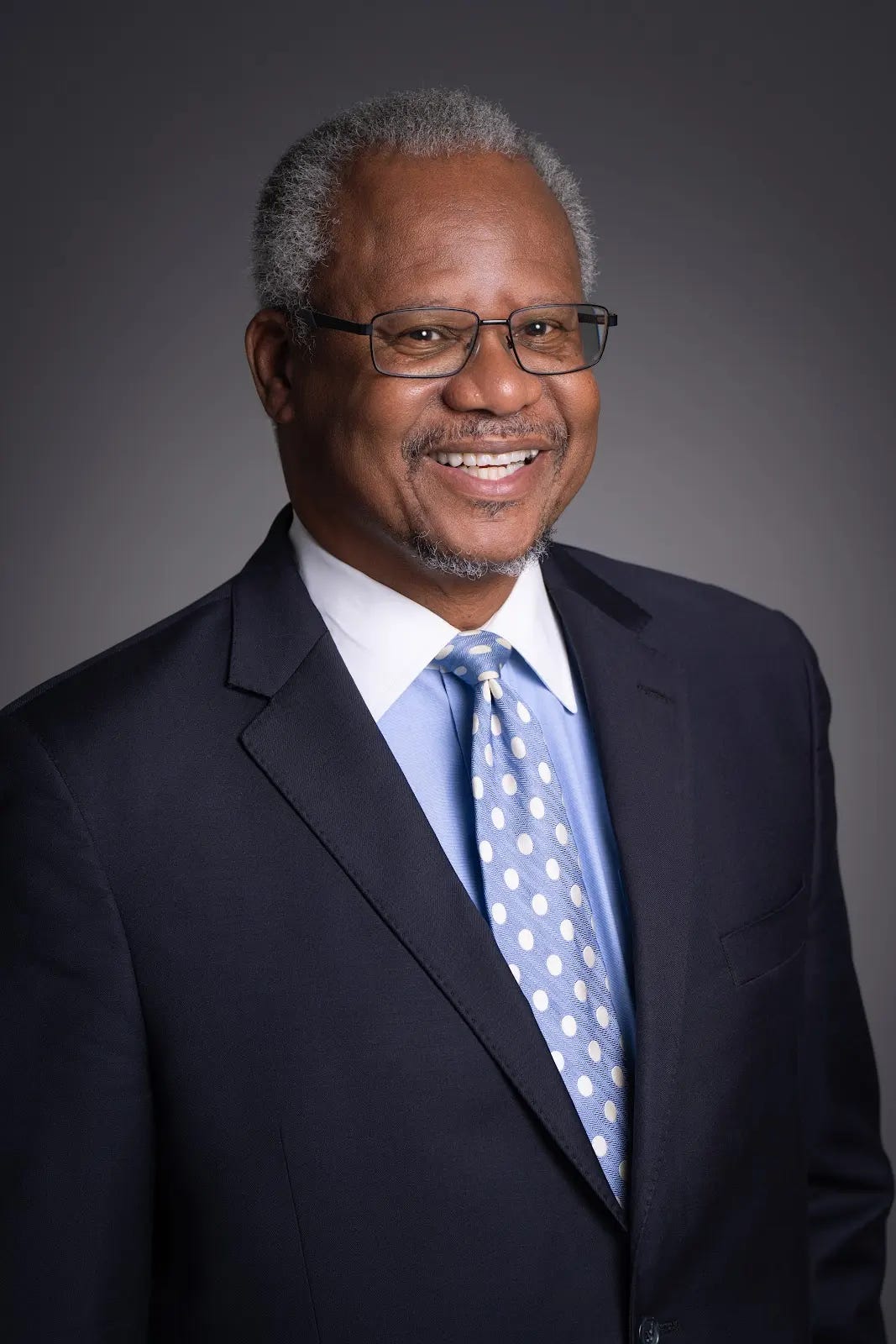
When one of Lee’s longtime members wanted to marry her wife—and people in the congregation whispered disapproval—Lee took his church back to the original Biblical text to point out the folly of using ancient Holiness Codes to cast aspersions on LGBTQ people. In 1988, when AIDS first began hammering Roanoke’s Black community, he publicly took an HIV during his Sunday sermon at a time when the city had the highest HIV rate in the state.
I interviewed Lee, 74, last week because I wanted to salute his 45-year tenure not just as a pastor but also to understand the essence of his leadership. How did he steer Loudon Avenue from a place where people worship on Sundays to a place that tends the needs of the community most days of the week?
It’s about relationships, of course, the connections he’s made in all quadrants of our very segregated city. He’s served on boards from Mill Mountain Theatre (where he’s presently the chair) to the local United Way, among many others. He’s planted and watered the seeds of such celebrated groups as the League of Older Americans’ Diners Clubs and the Northwest Neighborhood Environmental Organization, and supported a church Boy Scout troop that ended up producing six Eagle Scouts.
A native of Virginia’s Northern Neck, Lee first came to Roanoke in 1974 to interview for a personnel manager’s job at Appalachian Power Company. When he arrived, the secretary asked him repeatedly, “Are you sure you have an appointment?” The person who’d asked him to interview had no idea he was Black.
Lee became a teacher instead at a time when Roanoke’s schools were integrating. He got his master’s of divinity from Duke University, focusing on the Civil Rights movement and the tenets of Rev. Martin Luther King’s Poor People’s Campaign.
“I’m crazy enough to believe all things are possible,” he said. When he started preaching at Loudon Avenue in 1977, he told the congregation: “Trust me. I won’t embarrass anybody, but we will not just be the little church on the corner anymore.”
Then he set out to get himself named to the same boards as the city’s movers and shakers. He was very often the only Black person in the room. He came to the meetings prepared, personally wrote grants, and ended up praying with hospital patients ranging from the railroad president to the woman who did day work for him. Not just because it was good for Bill Lee but also so that, when a parishioner or nonprofit in his universe needed outside help, he knew exactly who to call.
Before I launched my campaign for Congress, I asked for his blessing with tears in my eyes. Reader, I was nervous as a long-tailed cat in a room full of rocking chairs (and maybe a few copperheads).
“What are you the most afraid of?” Lee asked, in his sonorous baritone.
“Failure, I guess,” I said, sniffling and wiping my eyes. “Being made a fool.”
He reminded me that I’d already taken similar fool-making risks. Like quitting my longtime job to become an author and my own boss. Like taking on lawyered-up corporations and CEOs from my grown kid’s former bedroom.
“Beth, you’ve said to us, ‘I can’t just keep interviewing people; I’ve got to do something,’ ” he said. “When you’re for the people, how can you lose?”
Real leadership is what Emerson called courage, the audacity to do the things people are happy to tell you can’t be done, especially new things. As Lee put it in a recent sermon, “The fear of the lord is the beginning of wisdom.”
He reminded me of his six-year-old granddaughter, Rebecca, who was born with cerebral palsy. Doctors told the family she would never walk. She now spends most after-school afternoons with Lee and his wife, Dana, and makes a practice of immediately running into her Papa’s arms when she walks in their door.
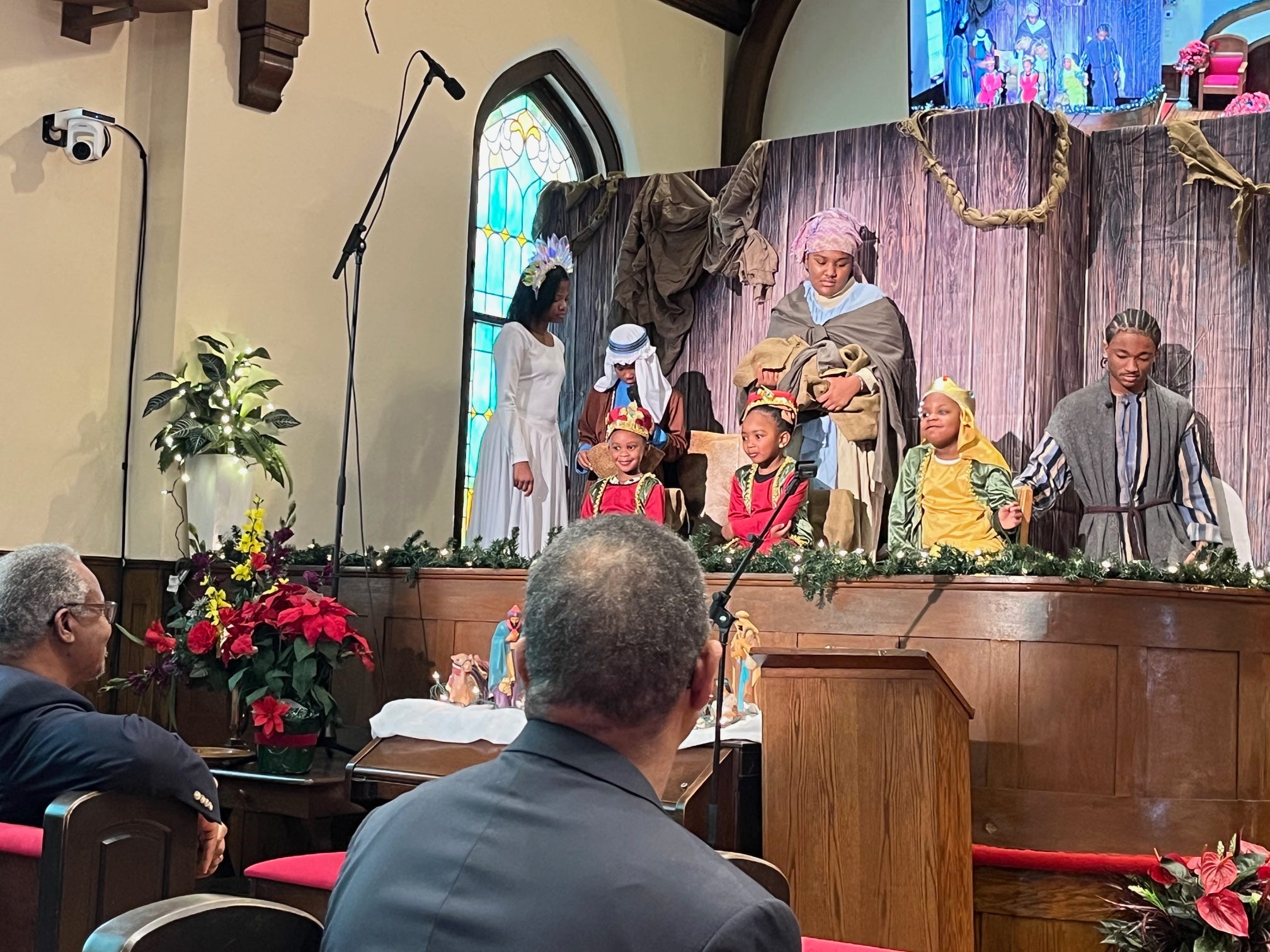
Roanoke-area friends: Join me for Rev. Lee’s final sermons on Dec. 28 at 10:15 a.m. and on New Years’ Eve at noon. If you sit by me, bring extra hankies.
ESSENTIAL READINGS OF 2025
Last week I was on the phone with a friend in Denver when news reached me via text that President Barack Obama had just put Paper Girl at the top of his list of the Best Books of 2025. I screamed so loudly that my husband, working upstairs, thought the new puppy had chewed my favorite boots, so shrilly that my Denver friend could have heard me even if we weren’t on the phone.
“He knows my name!” I shouted.
Also: Thanks, Obama!
To volunteer or donate to my campaign
For you last-minute shoppers, here are some of my favorite reads this year:
MOST INSPIRING BOOK: Bishop Mariann Edgar Budde’s How We Learn to Be Brave: Decisive Moments in Life and Faith. Out in 2023, I was late to the party on this one—until my dear friend Dotsy Clifton pressed her copy into my hands and said, “Read it, and don’t forget to give it back!” Reading after Dotsy is like discussing a book with your smartest friend, an asynchronous book club of the highest, most generative order. Like me, she annotates her books in pencil and leaves copious notes.
One of our favorite quotes from Budde: “Acceptance of the world’s suffering as our collective responsibility and responding with sacrificial love is our most authentic task. As individuals and as a species, we must rise to it.”
MOST UNPUTDOWNABLE BOOK: A debut, The Correspondent, by Virginia Evans, is an epistolary novel—told by an older woman narrator who is an exquisite letter-writer and such good company that I purposely savored it to make it last. A close second: Wally Lamb’s The River Is Waiting, a gripping novel that illuminates how the traumas of mass incarceration and addiction spare no one.
BEST INDIE BOOKSELLER REC: The True True Story of Raja the Gullible (And His Mother), by Rabih Alameddine, recommended to me by the great Christine Patrick of Winchester (Va.) Book Gallery. (Christine always has the best recs!) It’s a book about life during wartime in Beirut and a fraught but hilarious mother-son relationship. Christine first turned me onto Dear Edward by Ann Napolitano, another satisfying read.
NOVEL I’M MOST EXCITED TO FINISH: Town & Country by Brian Schaefer. This new novel kind of/sort of rhymes with Paper Girl. Centering on a clash of cultures, it braids together high-stakes storylines about politics and family, neighbors and friends.
BOOK THAT SETTLED INTO MY PORES: Novelist Geraldine Brooks’s Memorial Days can be read in a day. I know the two main characters, Geraldine and her late husband, Tony Horwitz, and her meditation on his sudden death in 2019 explores the fog of grief with precision, humor and stunning sentences that have much to teach about prioritizing relationships and health over work. Horwitz was a mensch of a man whose deadpan humor extended to the to-do list he left behind—fire the accountant, being one of my favorite lines—and I cherished getting to spend time with him again through her words.
MY FAVORITE ‘AMEN, SISTER,’ BOOK: Rebecca Solnit’s Men Explain Things to Me, her 2014 essay collection that began with a viral piece she wrote about one Very Important Man who also tried to explain her own book to her—even after she told him she had written it. When men talk over us, she writes, “It trains us in self-doubt and self-limitation just as it exercises men’s unsupported overconfidence. …
“Having the right to show up and speak are basic to survival, to dignity, and to liberty. I’m grateful that, after an early life of being silenced, sometimes violently, I grew up to have a voice, circumstances that will always bind me to the rights of the voiceless.”
No posts
Comments
Nothing yet. Say the first thing.
Sign in to join the conversation.