
As vice chair and resident commissioner of the Roanoke Redevelopment and Housing Authority, Debra Carter represents some 4,000 families in Roanoke. I met her at a recent meeting of Roanoke Indivisible, during which she praised the end of the painful government shutdown.
That was a minority view in the room of lefties who predominantly hail from the middle class. Most viewed Sen. Tim Kaine’s capitulation to end the government shutdown as throwing away the party’s best chit. The Dems’ goal during the shutdown, which lasted 43 days, was to force an extension of the Obamacare subsidies set to expire at the end of the year. (Last week, my Substack featured a hairdresser I know who’s about to see her premiums skyrocket from $198 a month to $1,200 unless the subsidies get extended.)
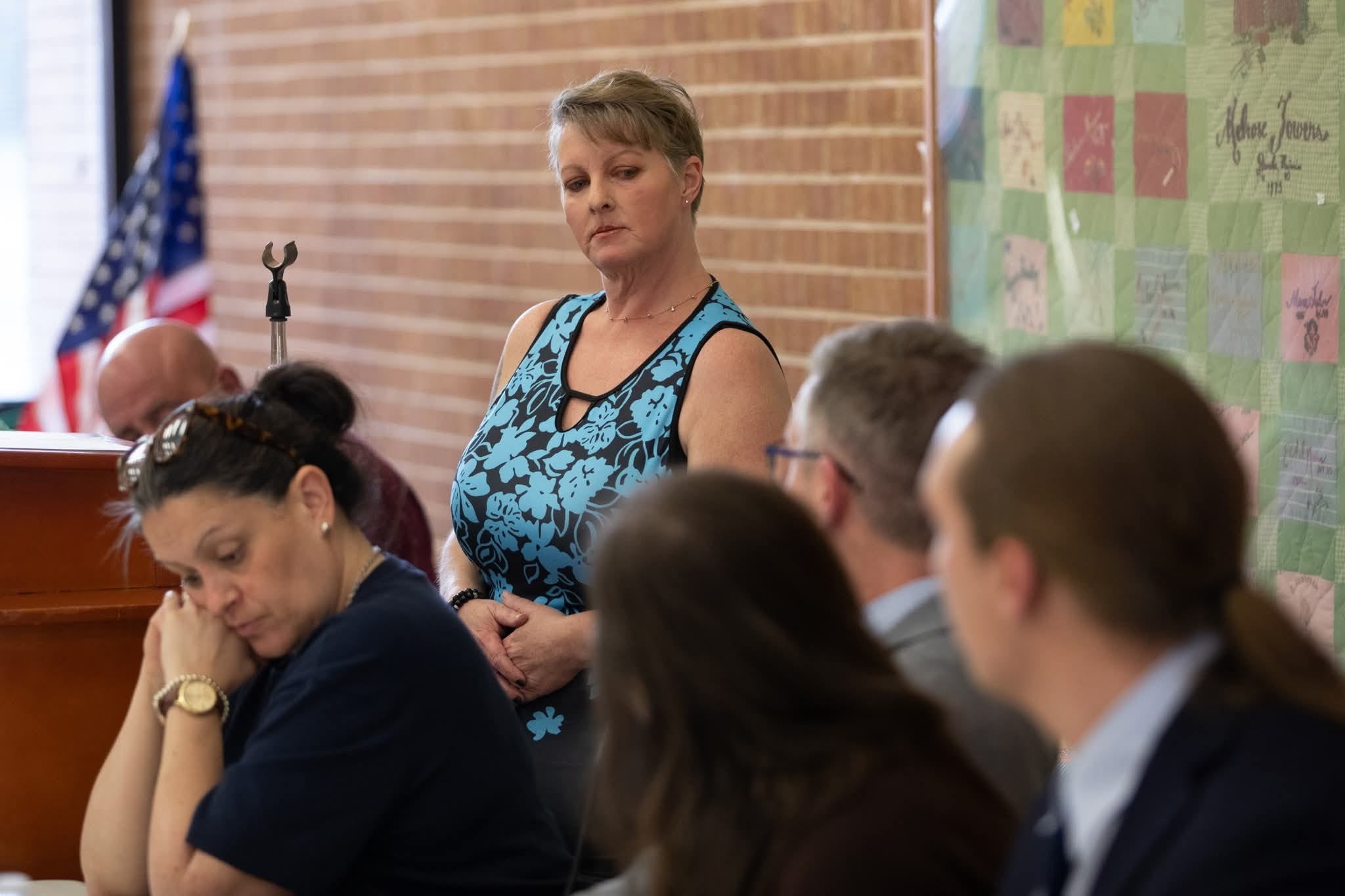
But Carter, 49, is dependent on SNAP, she told the group, and the meager $14 emergency surplus funding she received from the state was a week late and only a quarter of her normal allotment. When the federal SNAP benefits were restored with the shutdown’s end on Nov. 15, she worried the state would try to claw back the $14 in extra emergency benefits when most of her fellow residents at Melrose Towers had already spent them on Thanksgiving.
Carter and her fellow residents live in terror that the elimination of HUD funding, due to expire at the end of January if a Congressional continuing resolution budget isn’t passed, might make them homeless. Section 8 residents, of whom there are 3,000 in Roanoke, “have no control over these landlords” who rely on HUD funding to subsidize their rent; Section 8 residents pay 30 percent of their income for housing, with HUD paying the rest.
“I was feeling betrayed by people I know being pissed off at Tim Kaine,” she told me earlier this week. “I’m like, hello? I’m sorry about your ACA subsidy, but what good is health insurance if people don’t have food or a place to stay?” She blasted her message to Facebook with fact-checked data collated down to individual precincts in Roanoke.
“Suburban white Democrats vote for comfort,” she added. “But we vote for survival.”
Politicians dismissed public housing residents at their own peril, she believes. Recent vote tallies for Governor-Elect Abigail Spanberger showed the Forest Park precinct where Carter lives casting 992 votes (or 85 percent) for her, a precinct that’s home to 512 public housing units across Melrose Towers and Lansdowne.
As we spoke, RRHA maintenance workers struggled to patch a leaky pipe that was spewing water nearby all over a first-floor hallway. Carter showed me a letter she’d e-mailed to senators Kaine and Mark Warner and Congressman Ben Cline. (Only Kaine’s office responded.)
“You cannot claim fiscal discipline while manufacturing poverty. You cannot call this ‘shared sacrifice’ when only the poor are being sacrificed,” she wrote. “I live among people who don’t know yet how close the walls are closing in — but I do. I hear the briefings. I see the spreadsheets. And I also see the children riding their bikes in courtyards that might be emptied if this budget crisis continues.
“This is not abstract policy. This is collective punishment right before the holiday season begins.”
She urged officials to pass a budget that would protect HUD, Section 8, SNAP, ACA, and Medicaid. And to recognize that the “cycle of uncertainty is creating a mental health crisis in housing communities.”
“The people I represent shouldn’t have to wonder every 30 days if their home, their healthcare, or their groceries will disappear. This isn’t a political delay — it’s a slow dismantling of human dignity and stability.”
• • •
As our diminished press corps struggles to cover the fallout of what Carter calls Trump’s “big, beautiful bastard,” I’m buoyed by the growing number of “citizen journalist” activists I meet, people like Carter who consider it a calling to keep their micro communities informed. At a recent Waynesboro listening session for my brand-new Congressional campaign, I met another woman who is doing what my mentor-friend, the Pulitzer-winning journalist Mary Bishop, suggested newspapers at their best once did: “connecting people to people, if only for an instant.”
In Waynesboro, I was awed by the work of Olivia Hathaway, who by day is a University of Virginia fundraiser and by night a map-making aggregator of Virginia’s farms, farm stands, farm markets, and food pantries. In April she created her “Food Map of the Valley!” after noticing how scared people were about what Trump’s tariffs might do to spike food costs. As of August, prices had gone up 29 percent since February 2020.

.
“Initially, I thought, ‘who is producing flour in my backyard so if I couldn’t go anywhere else for flour where would I find it?’” she said. But the idea grew and morphed to highlight food pantries, and not just those in Augusta County where she lives but all across the state, garnering more than 130,000 page views.
“My ideas don’t leave my head unless I do them,” she told me. Hathaway, 25, said she was most surprised by the plethora of church-based food pantries (“The United Methodists are really blowing it out of the water”), as were local farm organizations like Roanoke’s LEAP, which accepts SNAP and offers Virginia Fresh Match benefits, doubling a person’s buying power for fresh fruits and vegetables.
A high-school debate team champion, Hathaway was first called to activism when her parents gave her a pocket-sized U.S. constitution, which she carried around with her for many years and quoted from frequently. When the Ukraine war broke out, she sold her artwork online, proceeds from which went to support a child who’d been orphaned by the war. A few years back, when her car was broken down, she couldn’t get to Black Lives Matter protests, but rather than do nothing she designed and ordered BLM T-shirts, which she then sold from her living room, donating the proceeds to the NAACP.
“The antidote to despair is action,” she said, quoting Joan Baez, adding that she considers members of Virginia Organizing and Blue Ridge Young Democrats her staunchest allies. She and the Young Dems gave out seedlings in a park last summer, including five-gallon buckets for tomato plants—and are holding an upcoming clothing repair session. “The idea is to give people the skills they need to weather economic times and to drive home the point that having your wits about you is not just a Republican thing. Republicans don’t get to just brand themselves as the country repair people.”
For those considering refreshing their activism skills, Hathaway recommends signing up for state and local newsletters, including those put out by social-service boards, and showing up to public meetings and posting what you learn. When the food stamp cuts landed November 1, being connected to those municipalities helped her leverage what she was already doing around food insecurity to inform her neighbors.
Asked what others could learn from her work, she encouraged likeminded volunteers to map out local resources for handicapped-accessible restaurants, mental health and addiction services. “The important thing to remember is that I’ve done all of this work from my couch” between her day-job shifts.
To mend the tears in our communal fabric, our communities need more Debra Carters and Olivia Hathaways—women who aren’t waiting around for a politician who won’t even meet with them to deliver solutions.
As Carter put it at a rally in February, during the dark days of DOGE: “Some days, I stare at my ceiling and feel the weight of knowing my own government sees me as disposable. It’s a special kind of hell, realizing the people sworn to protect you would rather see you vanish so they can pad their bank accounts. …
“When fury threatens to overwhelm me, I remember something powerful—[poor people in America] are 36.8 million strong. The entire U.S. military and law enforcement combined don’t even reach 2 million. Do the math. They can’t silence us all.”
• • •
Thanks to the 400-plus people who attended my campaign launch last week and the 2,000 donors who’ve helped me raise more than $400,000 so far (and, honest, for the umpteenth time: I am not and cannot self-finance this campaign). The donations and volunteer efforts are especially appreciated since, unlike my Republican opponent Ben Cline, I won’t be accepting corporate PAC money. See below: #Bethics!
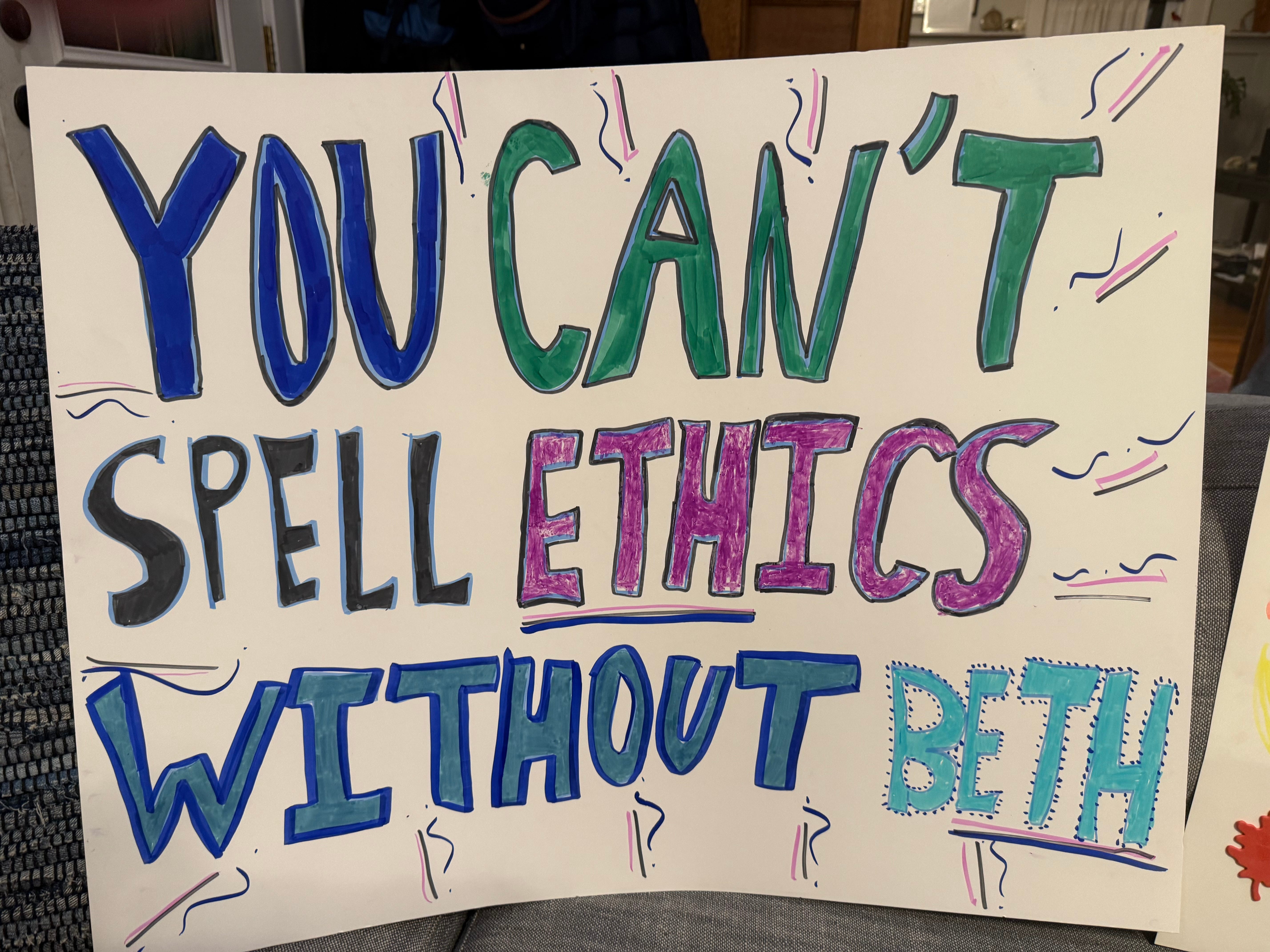
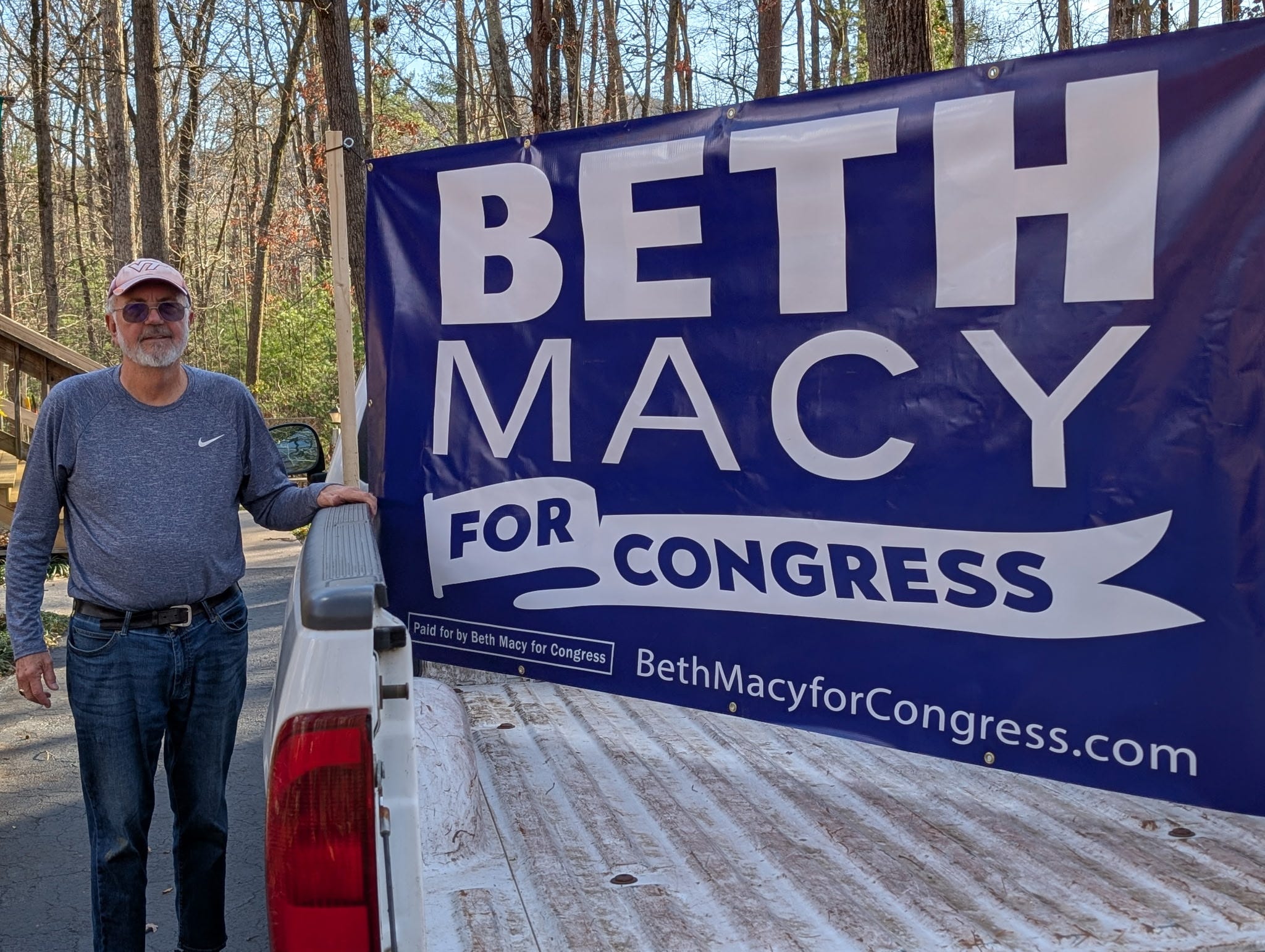
I’m buoyed by the sheer creativity of support, from Raleigh Court 6-year-olds making campaign posters to Steve McGraw, the former Roanoke County Circuit Court Clerk, who filled his truck bed with a sign he had printed.
Lastly, from the home front, here’s a pro tip from the Thanksgiving Starch-Lover Files: The NYT Cooking’s cheesy hasselback potato gratin really is worth all the endless potato slicing and ER-chancing. Our son-in-law Zack outdid himself again by spatchcocking a turkey, dried-rubbed with herbs after he’d worked a long double-shift the day before. My librarian-neighbor Holly donated a spare bag of frozen cherries for pie that she’d picked and pitted herself from another neighbor’s tree.
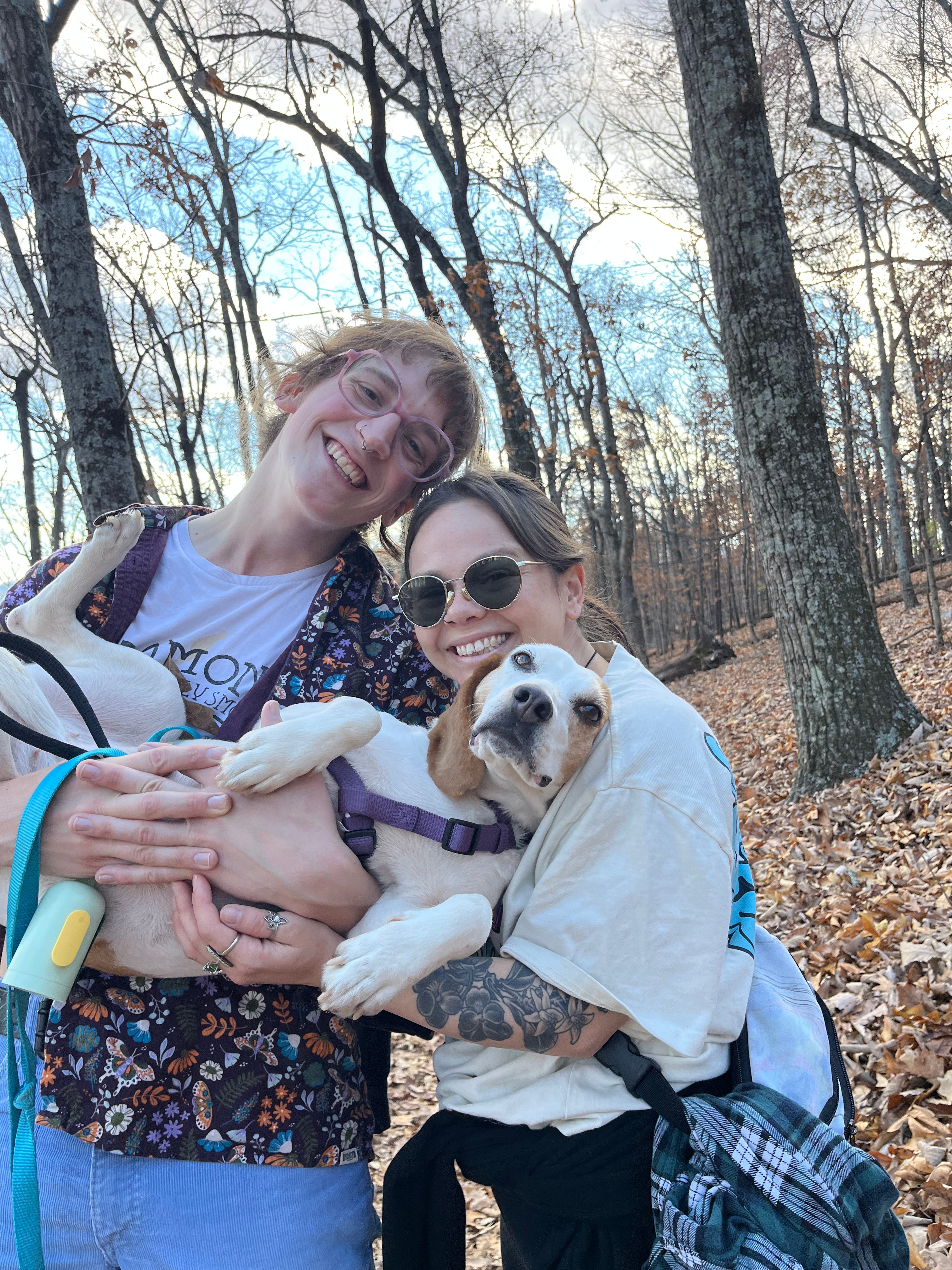
I hope everyone had a meaningful Thanksgiving brimming with love and starches. It has been great seeing our kids, and meeting the new grand-dog, Buttons, shown here while hiking (and being carried up!) Mill Mountain, our favorite place on the planet. Cousin Pippa (below, snuggled up to Buttons on kitchen couch) approves. I’m so grateful for y’all.

.
No posts
Comments
Nothing yet. Say the first thing.
Sign in to join the conversation.