
I have been writing this essay, and the ones that will follow it, for almost a year. In truth, the ideas behind them have been forming for much longer.
The irony as I hit publish is that we are living through a moment of dangerous escalation. The escalation and amnesia continues across the Gulf. Iran shows no signs of abating, while the United States and Israel continue to operate in a state of full psychosis. Mass evacuation orders have now been issued across southern Lebanon and Beirut’s southern suburbs. Military infrastructure across the region is being activated in ways that move far beyond isolated conflict.
These are the mechanics not only of a regional war, but of a global one. This is not clickbait. It is not abstraction. It is the reality unfolding around us.
And while many of us are quite literally running for our lives, it is precisely in moments like this that the stories societies tell themselves matter most.
In that sense, it is both the worst possible time to publish these reflections and, perhaps, the most necessary time.

This essay is dedicated to my late brother, Eli. He was a critical thinker with a deep commitment to law, politics, human rights, and to understanding Lebanon beyond its myths. His idea of “nationalism” was civic: a belief that people deserved rights, responsibility, accountability and rather than slogans. I write in conversation with him — to make sense of things, imagining the questions he would have pushed, the arguments he would have sharpened, the histories he would have chased with me.
A note on the text and length: Substack is complaining that this piece is too long for email. It all must be laid out. This is not a traditional essay; it is a series of interconnected thoughts and deeply layered movements. My ambition is to provide you with various foundational readings so that you may reach your own truth. If the text suddenly cuts mid-sentence, please click through to the website or app. I promise it’s worth it.
The Third Zone
I am what is often called a Third-culture kid. But even that label feels too neat for what was, in reality, a life lived in the in-between.
I grew up on the periphery- in a third zone that was always searching for its own vocabulary. A space defined not by geography or borders but by a persistent and overwhelming feeling of not fully belonging. Anywhere.
Born in the United States to an American1 mother of German-Irish lineage (and the privilege of a US passport) and to a Lebanese father who had left his homeland as a student during the Lebanese civil war. I was raised for the overwhelming majority of my life in Lebanon, jolted between two countries, two legal systems, two flags, and two competing definitions of “home”.
My mother believed, with a loud certainty of someone raised inside it, that the United States of America is the land of freedom, order, and democratic virtue. The “land of yes.” The civilised, humanist centre. The dream. The benchmark.
My father, by contrast, carried the fierce imprint of upheaval and the complex interplay of colonial oppression and impression. His compass pointed firmly toward his homeland, the land, his deep ancestry, and by the political anxieties, sovereignty struggles, and nationalist currents of civil war-era Lebanon. And to him, for as long as I can remember, America was no one’s friend. A corrupted nation where everyone is nothing but a number, enslaved to a system and war-waging doctrine.
No less absolute. Only differently framed. But one certainly resonates today. 2
As such, my existence was suspended between two powerful and often competing belief systems and a no-so-quiet tug-of-war between two parents, two different flags, two different definitions of "home", and which country is more sanctified. Between them, I was not simply moving between countries. I was being shaped by two different mythologies of what makes a place legitimate, liveable, even superior. Two atmospheres.
Global Nomad.
My unsettled existence did not end in childhood. It has followed me into adulthood. Into (various parts of) America again. Into (various parts of ) the United Kingdom. Into Dubai. Different flags. Different tones. Different performances of order and virtue. But the same underlying choreography. Each place convinced of its coherence. Each certain of its own stability. Each carrying its own version of exceptionalism.
I have lived a nomadic3 life. Perhaps that sounds enviable in modern days with the “global nomad” as a lifestyle brand. But I have also seen the other side of the unsettled. I have seen forced displacement, born of war and divorce in my younger years and then in my adulthood of the financial crisis, covid 19 and the Beirut Blast’s shattered glass. Even as I acknowledge my own privilege— an ecosystem of family to fall into, a beloved aunt and a safe home in Dubai to land that welcomed me with dignity when the ground in Beirut literally and economically dissolved beneath my feet. The feeling of grief, loss, disruption is indelible. The trauma engulfing. You can have a soft place to land and still suffocate. And also question it.
There is a vast, jagged difference between moving because the world is your oyster and moving because your world has been blown apart.
The modern world has created a hierarchy of wandering. We celebrate the global nomad while shaming the immigrant. We aestheticise movement for the few and criminalise it for the many.
It is this unsettled existence that has shaped my wrestling with a question that sits beneath everything we argue about: what do we really mean when we speak of belonging, identity, nationalism and sovereignty in West Asia and North Africa, and beyond? And crucially so today, as I write this, past the brink of a third World War.
The Atmosphere of Exceptionalism
We treat the nation-state as the ultimate prize. As if it were ancient. Fixed. Sanctified by soil and blood. What we rarely interrogate is the rhetoric that keeps that belief intact. Every nation, large or small, ‘democratic’ or autocratic, cultivates some form of exceptionalism. A narrative that reassures its citizens of their uniqueness, their stability, their moral clarity, their immunity from the failures of others.
In liberal empires, this appears as the language of freedom and democratic virtue. Elsewhere, it is expressed through institutional continuity, civilisational distinction, economic insulation or hyper-stability— sometimes accompanied by the suggestion that criticism itself is destabilising. The form differs. The mechanism does not.
Exceptionalism is seductive because it offers psychological shelter. It replaces nuance with certainty. It converts vulnerability into pride. But it is also precarious. It depends on repetition and reinforcement. On narrative choreography. On selective remembering and selective forgetting. And, in some environments, on the quiet discouragement of dissent.
History offers no shortage of examples. American exceptionalism frames the United States as uniquely virtuous and necessary for global order and human rights. The French mission civilisatrice cast empire as a moral duty to “civilise” others. Zionist narratives ground the legitimacy and expansion of their entirely illegal state of apartheid and ethnic cleaning in a singular historical destiny myth. In Lebanon, exceptionalism is often rooted in elusive Phoenicianism and the internalisation of French civilising discourse. In parts of the Gulf today, stability, safety, and prosperity are often framed as proof of exceptional governance insulated from the turbulence of the wider region, while the political and security bargains that underpin that stability remain largely unexamined. The form differs. The mechanism does not.
Unquestioned exceptionalism produces intellectual blind spots. A structure built on unexamined superiority depends on silence to remain upright.
Power, order, prosperity or prestige may indeed be tangible in the short term. But the promise of invulnerability is a myth, particularly when moral cost is backgrounded and bargains go unscrutinised — stability resting on unexamined fault lines.
When critique becomes risky, the narrative consolidates. Not because people lack intelligence, but because systems reward alignment and penalise disruption. Over time, repetition settles into common sense.
Once common sense shifts, reassurance delivered through image and performance begins to substitute for structural reckoning. Visible strength — military, economic, institutional or civilisational — is quietly mistaken for immunity.
This is how exceptionalism sustains itself — not as crude propaganda, but as atmosphere.
Atmosphere does not argue. It surrounds. That is not stupidity. It is comfort.
Comfort, when reinforced by atmosphere, can be more powerful than evidence.
Resistance narratives, particularly those forged under occupation, sanction, or siege, do not emerge from the same structural position as imperial exceptionalism. They are often grammars of survival rather than superiority. Yet even survival can sediment into sanctity. When resistance becomes untouchable, when critique is framed as betrayal, when the language of defence ossifies into permanent moral monopoly, the architecture can begin to resemble what it once opposed. The origin differs. The mechanism can converge. A narrative born to dismantle domination may, over time, internalise the very architecture of the nation-state it seeks to undo.
No narrative and no nation deserves immunity from interrogation.
I learned this not in theory, but in the space between many flags.
Navigating Nuance
In moments of crisis, we have a duty to interrogate our assumptions and challenge our absolutist beliefs; to choose every word with care and thought. In these times, nuance is essential. Because the one true constant is that reality is a collusion of chaos and order. And therefore navigating nuance is the antidote.
Cognitive dissonance is one of the most powerful forces shaping public discourse. Coined by psychologist Leon Festinger, the term describes the discomfort we feel when our core beliefs collide with reality. When that tension appears, we rarely abandon the belief. Instead, we weave a story that allows the contradiction to coexist. That is cognitive dissonance: it is not stupidity, but psychological self-protection.
But it has consequences. When societies refuse to confront contradictions, they construct narratives that require collective amnesia, lazy slogans, and tropes to survive.
Some dogma is easy to adopt because it arrives wrapped in glitz, glamour, and the aesthetic of the future. It doesn’t need to be intellectual; it just needs to look successful. It claims to be a new way of living, but it is often just ancient dogma draped in the empire’s cloak—and we are failing to see it. We mistake the shimmering facade for progress, and in our rush to belong to something that looks this good, we stop asking what lies beneath. We defend the ‘vision’ because we’ve fallen in love with the view.
There is a difference between appreciating your country and idolising it. No nation should ever be defended absolutely. Nations are political constructs built of institutions, interests, and shifting alliances; they are capable of great achievement and deep contradiction simultaneously. Gratitude for home and country is understandable; blind, absolutist defence is not. Because when loyalty becomes absolute, thinking stops. Criticism is rebranded as betrayal, and complexity is replaced by slogans. Dogma ensues.
Responsible citizenship—true patriotism, rather than nationalism—requires us to reject blind, absolutist defence. It invites accountability where nationalism shuts it down. It is the willingness to examine our own systems with clarity and nuance, even when the answers are uncomfortable. It is the courage to be open and honest about that discomfort.
You can admire and defend what a country has achieved and still question its alliances. Especially when you do so for other countries.
You can value stability while acknowledging the trade-offs or bargains that created it.
You can support a society without defending every action taken in its name.
A country can offer opportunity, comfort and belonging while still requiring our honesty. We must refuse the idea that gratitude requires a vow of silence, a forgetter of our conscience.
Respect for one’s country and its leadership does not require the suspension of thought.
That is not disloyalty. It is intellectual honesty. This is patriotism.
We have conflated what it means to be a citizen, to build a nation, and to be a patriot. We have forgotten that the highest form of loyalty is not a salute, a meme, a slogan, but a question.
And if it is dangerous to ask those questions, then ask yourself: What comfort, safety, and home are you truly defending?
Before the nation
And before the city… Badia; The “beginning” of everything…?
Bādiya (بادية) in Arabic refers to the open steppe and desert fringe beyond the cultivated zone, often associated with the “Syrian” steppe, Bādiat al-Shām. The term derives from the root b-d-w (بدو), a semantic field linked to openness, exposure, and life in the uncovered lands. It sits linguistically adjacent to bidāya (beginning) and is related to badā (to appear, to emerge). It is also the root of the English term Bedouin.
In the Arabic imagination, the bādiya is therefore not simply empty, uninhabitable desert or sahra’ صحراء but a zone of emergence. A frontier. A horizon. A liveable and lived space. A foundational and enduring mode of habitation characterised by mobility, fluidity, pastoralism, and seasonal movement that long predates the fixed territorial logic of the modern state.
By contrast, the ḥāḍira (حاضرة), from the root ḥ-ḍ-r (حضر) meaning to be present or settled, denotes the towns and cultivated zones: the world of enclosure(s), permanent architecture, formalised administration and the archive. In modern usage, the term’s derivative ḥaḍāra (civilisation) often carries an implicit aura of progress and refinement.
Yet classical Arabic sources frequently frame ahl al-bādiya and ahl al-ḥāḍira not as civilisational opposites but as coexisting ecological and social formations, bound together through trade, seasonal movement, and cultural exchange, despite both often tending to look down on each other (and which Ibn Khaldun crystallises later in his writings.) Here I will share excerpts from Jan Retsö, formidable book, The Arabs in Antiquity, chapter 4, p. 113, which he inturn excerpted from the Classical Arabic dictionary and Encyclopedia, Lisan al Arab.
“. al-Layth said: bādiya is the name of a land (ʔarḍ) where there are no settlers (ḥaḍar) and when people go out from the ḥaḍar to pasture grounds in the desert (ṣaḥārā), you say that they qad badaw. The noun is badw.
2. Abū Manṣūr said: bādiya is the opposite to ḥāḍira. The ḥāḍira are people who live by waters and put their camps at them in the summer heat. When the season becomes cold, they leave these waters and badaw, i.e. [begin] to look for pasture. The people are then bādiya after having been ḥāḍira … The places to which the bādūn go out are also called bādiya.
3. He (Ibn Manẓūr) said: the ʔaʕrāb, living in the bādiya, belong to the ʕarab who do not dwell in fortified towns (ʔamṣār) and only enter them for business.
He (Ibn Manẓūr) said: the ʕarab are the people of the fortified cities (ʔamṣār), and the ʔaʕrāb among them are especially the dwellers of the bādiya.
The Lisan further quotes the Hadith: He who badā, has escaped, run wild, i.e. settled in the bādiya and has acquired the uncivilized manners of the ʔaʕrāb.”
Other quotes taken from classical poetry and other works, listed on P. 17:
“She belongs to the baduw, she is not among the ḥḍiriyyah.”
The ḥaḍir, the people of the Mountain [of Shammar] remained but as for the badyih, they emigrated to Mesopotamia.”
My eyes shed their water; Ninety nights’ sleep did not delight them; I am looking for medicine for them among ḥaḍar and bidwān.”
I will further touch on this dynamic and the etymology and identity of “Arab” in a future post, but I want to really highlight this important and ancient dichotomy now and will likely revert back to it many times.
Ibn Khaldun and the Power of ʿAsabiyya
In the 14th century, the North African scholar Ibn Khaldun identified what he believed to be the true engine of human history. Not monuments, not the stone walls of cities, and certainly not borders. The force he identified was ʿasabiyya (عصبية).
Derived from the root aʿ-ṣ-b, meaning “to bind together,” ʿasabiyya describes the social cohesion that allows a group to organise, defend itself, and act collectively. It is the glue that turns individuals into a political force.
It is not ideology. It is not doctrine.
It is the living bond of the group. But what is exactly is that group?
In Ibn Khaldun’s framework, it is not a nation, an ethnicity, or a passport category. The group is formed through shared obligation and mutual dependence. It may begin as a tribe, a clan confederation, a religious movement, a military coalition, or even a political faction. What defines it is not territory but cohesion: the recognition that survival, power, and dignity depend on standing together.
Membership is therefore relational rather than bureaucratic. It grows through proximity, shared struggle, economic cooperation, and loyalty to a common cause. Outsiders can be absorbed; alliances can expand the circle. The boundary of the group is not drawn on a map but revealed in practice: who stands together when survival or power is at stake.
Khaldun observed that this cohesion was often strongest in societies living beyond the comforts of the city. Communities of the bādiya developed powerful internal bonds because survival depended on cooperation and mutual defence. He saw history as a cycle: the high-energy, raw Asabiyya of the Bādiya eventually flows and settles in the city, where it becomes “softened,” institutionalised, and eventually stagnant.
The city offers comfort and civilisation. But over time it erodes the very solidarity, the nerve, that built it.
The modern nation-state did not invent solidarity, but it captured and redirected the ancient human impulse toward collective belonging. What Ibn Khaldun described as ʿasabiyya — the living cohesion of communities bound by mutual dependence — was gradually reorganised by modern states into something more rigid and institutionalised: nationalism.
The modern nation-state represents the most complete administrative enclosure of this urban order. It did not invent belonging; it standardised and governed it. The electric, shifting pulse of the bādiya was compressed into the jagged geometry of borders. What had once been a living network of relationships across landscapes was reorganised into a frontier: a line on a map that now determines where you may move, belong, or exist.
Mobility became instability.
Layered identities became suspicious.
Fluid solidarities were forced into passports and categories.
In doing so, the state reclassified our mobility as instability and our layered soul and nuanced thoughts as a threat. It offered us the “safety” of the cage in exchange for a vow of silence. Our loyalty. It commodified belonging, into a subscription service.
But this so called "inhospitable" space the state tries to fence out has always been the source of our truest humanity: our hospitality to one another. In my work, The Jewelled Table, I observe how the communities of the bādiya developed a desert code of hospitality—karam—to protect a stranger, coming from near or far, a known enemy or not. Under this code, turning away a traveler was an act of hostility comparable to murder. The communities that settled around the oases were vital shelters for these wanderers, and so a desert code of hospitality evolved to protect both the households and the strangers. This wasn't a bureaucratic "right"; it was a survival-based loyalty that forms a much deeper social engine than the modern nation-state. Even today, the table remains "jewelled" and large enough for the unexpected guest, far and wide, because the bond it creates is more sacred than the border.
But when living solidarities are manipulated and narrowed, something else takes their place. The same root that produces ʿasabiyya also produces taʿaṣṣub (تعصّب)—blind factionalism and ideological fanaticism. Where genuine cohesion once emerged through shared responsibility, modern politics increasingly manufactures belonging through rigid identities, lines in the sand, and absolute loyalties.
We often imagine this dynamic only at the edges of political life—in the hardened dogmas of movements such as Zionism, Wahhabism, or evangelical fundamentalism. Yet the same logic operates far more quietly within the structures we consider normal.
In many ways, the modern nation-state can be understood as the institutionalisation of taʿaṣṣub. The living bonds that once tied communities together through shared obligation are redirected toward loyalty to a flag, a border, and a national myth. Wrapped in the language of prosperity, progress, modern success, so-called sovereignty. This narrowing of solidarity is celebrated as civilisation itself, appearing virtuous rather than dangerous.
The paradox of the modern world is that the deeper bonds that once held societies together have been weakened or captured, while louder and more aggressive forms of identity politics have multiplied.
The sorting machine of the modern world is beginning to glitch precisely because it attempted to confine and lobotomise ʿasabiyya. It mistook the glitz of the city for a benchmark of success, identity, and safety—confusing spectacle with stability and comfort with belonging.
To tell the truth about who we are beyond flags and marketing, we must step outside that machinery. Beyond the empire’s cloak.
Back into the badā—the open, unvarnished beginning where belonging was never confined to a border or reduced to a container of identity. A place where one could come and go, as needed, as dictated by the seasons.
Because the truth is not found in the archive of the state.
It is found in the living human bond that remains when the machinery finally breaks.
That is ʿasabiyya.
If ʿasabiyya reveals how humans bind themselves into communities, the next question is obvious: what political containers have historically organised that cohesion?
For most of human history, belonging did not flow through nations. It moved through a wide variety of political forms: tribes, city-states, caliphates, empires, confederations and trading networks. To understand how recent and contingent the nation-state really is, we need to travel back to the earliest experiments in organising power.
Gods, the Granary, and the City-State
Set the chronometer to dawn in the lands of Sumer and Akkad, between the Tigris and Euphrates. Here, we are usually told, the first small, stratified, tax-collecting city-states rise from the mudbrick plains, born of crop domestication and the management of surplus. The familiar story writes itself: farming produces the granary, the granary produces hierarchy, and hierarchy produces the state.
Or so the civilisational script insists.
Recent scholarship, most notably David Graeber and David Wengrow’s The Dawn of Everything, urges a more complicated reading. Large, seasonally dense settlements, complex trade networks, and sophisticated social differentiation appear in some regions long after the earliest domestication events, and in others, forms of hierarchy and administration seem to predate fully agricultural lifeways. The sequence is far less linear than the textbook ladder suggests.
Which raises the uncomfortable question: was farming the inevitable engine of political complexity, or something closer to a Faustian bargain that gradually locked certain societies into more rigid forms of extraction, taxation and control?
This is where our political vocabulary begins to betray our historical amnesia.
In classical Greece, the polis was the basic unit of life: a compact community of citizens, laws, shrines, marketplaces and quarrels, ringed by its fields and villages. It was a legal and ritual world, not a flag.4 From this word comes politics itself.
Later thinkers reached for a broader term: polity. A polity is any organised community with institutions, rules, and a capacity to act together collectively – whether a city-state to a sultanate, a caliphate, an empire or a federation.5 The modern nation-state is only one species within this far older and more diverse political ecosystem, not its inevitable culmination.
That matters. If we remember that humans have always lived inside many kinds of polities, the nation loses its aura of inevitability and perhaps exceptionalism. It becomes what it is: a recent experiment in organising loyalty, territory and bureaucracy, not the natural or perhaps even best container of identity and human belonging.6
To see this historical flexibility in practice—to see a sophisticated form of belonging that isn’t rooted in flags or birthright—we turn to the ultimate example of a state built on status, not natio: Rome.
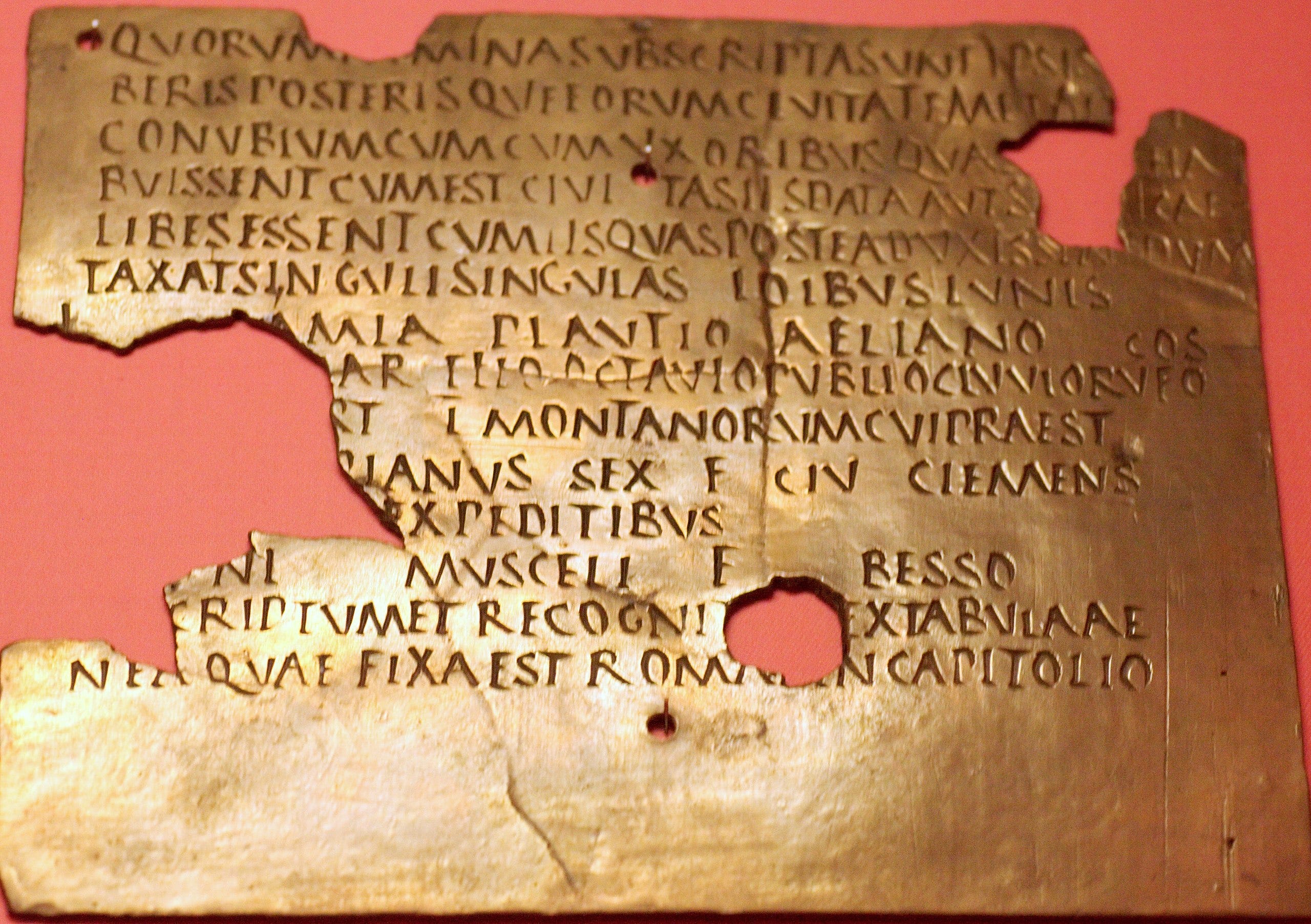
In Rome, You Were a Citizen, Not a Nationalist.
Let’s take a caravan ride back to Rome.
If you were a Roman, you were a civis7, a citizen. That title wasn’t just a label; it carried real weight: full legal rights, political privileges, and even a say in the assembly. In contrast, the vast majority of the empire’s population were peregrini8, free non-citizens. The word comes from peregrē; meaning “abroad,” literally “through the fields” or “across the lands”, and is the root of the English word pilgrim. Peregrini kept their local laws and customs but stood outside the full protections of cīvitās or Roman citizenship. It was a pragmatic system for managing a vast, multi-ethnic empire, but it left no doubt about the hierarchy: citizens above all; not all citizens equal.
Crucially, Romans thought in status9- the latin for “standing” and the ancestor of our word State with a capital S. (I will return to the word’s widening meaning later). Jurists sorted persons by liberty, citizenship, and family; your standing decided what you could do and what could be done to you.
Meanwhile, natio (pl. nationēs, from nascī “to be born”—ancestor of “nation”) named peoples/tribes: an ethnographic label, not a legal status like peregrinus. Writers often used it with a barb of foreignness, sometimes even barbarism. In practice, many peregrinī were described by a natio—“a peregrinus of the natio Syria10,” say- but the categories aren’t the same. Cicero sharpens the contrast with nationēs exterārum gentium (“foreign peoples”), drawing the line Romans loved: natio as otherness; civis as belonging. Over time, particularly as the Roman Empire declined, the word civitas came to refer to the physical urban center itself. This is the root of the English word “city” through Old French. 11
Over centuries, pathways opened: citizenship could be earned through military service, granted by favour, or decreed by the emperor. Eventually, Caracalla’s edict of 212 CE extended citizenship to nearly all free inhabitants of the empire, dissolving much of the old divide.
To become a civis was to change your legal status from peregrinus to citizen. Your natio-an ethnographic tag- might still be mentioned, but citizenship detached belonging from birthplace: a man from Hispania or Syria could be civis Romanus. The real divide was never strictly ethnic; it was legal.
Simply put, the civis was protected. The peregrinus was not.
Here’s the paradox. Rome built belonging without nationalism or even democracy as you’ll soon find out. This was not nationalism in the modern sense12. There was dominant culture and thick civic pride—romanitas, SPQR13, the imperial cult, the proud “civis Romanus sum”—but no sovereign Nation claiming the State.
Roman citizenship functioned as an imperial tool: extend privileges, co-opt elites, stabilise frontiers, keep the machine together. Power sat with rulers and institutions, not an abstract People. Separate empire from nation and the “ancient nationalism” line falls apart.
Ancient Rome built a scalable legal status that it could extend, grade, and eventually nearly universalise (212 CE).
That’s not nationalism. That’s Empire.
Despite this clear imperial structure based on legal status, modern narratives often mistakenly claim Rome as the origin point of our modern democracy or nationhood.
However, history tells us otherwise.
“DEMOCRACY” IS NOT A “WESTERN” INVENTION
Democracy is often invoked as the ultimate legitimising principle of modern political power, and frequently as proof of the moral and institutional superiority of “Western” political traditions.
The word itself derives from the Greek dēmokratia: dēmos (the people) and kratos (rule or power). In its simplest form, democracy refers to a system in which political authority ultimately derives from the collective body of citizens rather than from monarchy, aristocracy, or divine mandate.
Yet the historical reality behind this familiar origin story is far less tidy.
Even Rome, whose political vocabulary still shapes modern states through words like Senate and Republic, was never democratic in the modern sense. The Roman Republic functioned largely as an oligarchic system in which political influence remained concentrated among elite families and institutional offices.
The common narrative that democracy emerged uniquely in fifth-century BCE Athens also requires qualification. Classical Athenian democracy excluded women, enslaved people, and resident foreigners; political participation was limited to a relatively small portion of the population.
More importantly, the idea that collective governance began in Greece ignores earlier and parallel traditions of deliberative decision-making across the ancient world.
In Mesopotamia, literary and administrative sources describe assemblies of elders and councils of fighting men consulted by rulers during moments of political crisis. While historians debate the precise authority of these bodies, they nevertheless reveal traditions of collective deliberation long before classical Athens.
Across the Atlantic, the Haudenosaunee Confederacy developed sophisticated council systems through which multiple nations deliberated collectively on diplomacy and governance.
These examples do not suggest that democracy existed everywhere in its modern form. Rather, they reveal that participatory governance is a recurring human political experiment, not the exclusive inheritance of any single civilisation.
The desire for collective decision-making is far older—and far more geographically widespread—than the tidy civilisational narratives that often claim it.
Yet this raises a deeper question.
If human societies have repeatedly experimented with participatory governance, why do such systems struggle to endure at large scales?
The Limits of Scale
If the earliest of human societies have repeatedly experimented with participatory governance, a deeper question remains: why do such systems rarely survive at large scales?
Anthropologist Robin Dunbar offers one possible answer.
Dunbar’s research on primate social structures suggests that humans can maintain stable social relationships with roughly 150 people—a threshold now widely known as Dunbar’s Number. Beyond this scale, personal familiarity, trust, and reputation become increasingly difficult to sustain without formal institutions.
In small communities, cooperation can be maintained through direct relationships and social accountability. People know who contributes, who defects, and who can be trusted. Governance emerges organically through discussion, reputation, and shared obligation.
But once societies grow beyond that cognitive threshold, institutions must replace relationships. Bureaucracy replaces familiarity. Law replaces reputation. Administration replaces solidarity.
This tension exposes a deeper paradox at the heart of modern political systems. Democracy promises rule by the people, yet the scale of modern states makes direct participation by “the people” practically impossible. What emerges instead is a layered structure of representation, bureaucracy, and administration that governs in the name of the public rather than through its continuous participation.
The language and mechanics of popular rule survive, but in practice they become increasingly indirect. Decisions are filtered through institutions, political elites, and administrative systems that stand between citizens and power.
This distance and manipulation becomes most visible in moments of profound moral consequence—questions of war and peace, surveillance and privacy, migration and border control, sanctions, or humanitarian intervention—where public opinion often struggles to translate into meaningful restraint on state power.
In this sense, Dunbar’s insight echoes Ibn Khaldun’s theory of ʿasabiyya. The strong social cohesion that binds small communities together becomes increasingly difficult to sustain as political structures expand. Large and by their nature, settled states therefore rely less on living bonds and more on systems of administration, hierarchy, and ideology to maintain order.
And where those institutions are weak, fragmented, or captured, older forms of social cohesion often reassert themselves in different ways.
Lebanon offers a striking contemporary illustration of this dynamic. The country’s political system contains a dense constellation of sectarian parties, militias, patronage networks, and communal organisations, each sustained by its own internal solidarities. These factions function, in many respects, as parallel centres of loyalty and protection.
In Khaldunian terms, each possesses its own ʿasabiyya.
The result is not the absence of cohesion, but its fragmentation. Rather than consolidating into a single civic solidarity anchored in the state, social bonds remain distributed across multiple overlapping communities. The political order becomes a negotiation among competing solidarities rather than the expression of a unified public will. Under such conditions, the promise of large-scale democracy becomes structurally difficult to realise. The institutions of the state are expected to govern millions, while the deepest loyalties of citizens remain organised through much smaller networks of trust and obligation.
When these solidarities are manipulated or hardened into rigid identities, ʿasabiyya can mutate into taʿaṣṣub—narrow factional loyalty that prioritises the survival of the group over the stability of the polity itself.

From Natio to Nation(alism) and the Nation-State: How Enlightenment Europe turned “the people” into the sovereign.
Now, jump into the time machine and exit in Enlightenment Europe.
This is where nation stops naming outsiders and starts naming an insider collective with a claim to rule. The French Revolution blows the doors open, but the groundwork is broader: Scottish moralists, German historicists, and French republicans all help recast “the people” as the locus of sovereignty. No king, no divine right; the civic body claims the throne. The nation ceases to be a birth tribe and becomes a political we. This is less a reversal of Roman usage, so much as a radical repurposing; nation shifts from marking “foreign peoples” to the foundation of belonging, and the State (capital S) hardens from what Cicero called the status14 rei publicae (the “condition of the commonwealth”) into an impersonal sovereign “it”, not a human ruler. Let’s walk through that shift.
16th–17th centuries: theorising the State. Think Machiavelli’s lo stato / l’État rather becomes a political domain under a prince’s control rather than a king’s body. Jean Bodin (Six Books of the Commonwealth, 1576) codifies indivisible sovereignty; later Thomas Hobbes (Leviathan, 1651) casts the State as an artificial person. State moves from condition to a mechanism of rule.
1648—Westphalia15: the diplomatic habit. States recognise each other, police borders, and preach non-interference. Westphalia standardises the container; it does not yet fill it with a sovereign Nation.
18th century: people enthroned. Enlightenment arguments about rights and the general will relocate legitimacy to “the people”. American (1776) and French (1789) revolutions operationalise it: constitutions, citizens, and the nation in arms; flags, anthems, and rituals that train subjects into citizens.
19th century: sentiment becomes administration. The nation-state becomes the default container for freedom, liberty, democracy and sovereignty: territory gives the “we,” borders legitimise it, bureaucracy enforces it. The toolkit is administrative and universalising—press (print capitalism), maps, mass schooling, conscription, citizen armies, censuses, standardised languages, railways, museums, and national ceremonies.16 Rights are coupled to duty. Fly the flag, draw the map, write the anthem, brand the cuisine, wear the colours, and you are made a citizen of the nation-state.
And so what began as a Roman word for outsider—natio—becomes the cornerstone of modern belonging: nation. The outsider’s tag turns into the thing we are told to fight for, die for, and cook for. In Europe, The nation-state and modern nationalism1718 are born.
And here, I want to make an important distinction: Nationalism is not Patriotism.
Nationalism is an ideology, not just “love of country or homeland”. That’s patriotism; an attachment and affection to place and people that can still allow for criticism, reflection, and discourse.
Nationalism is something else entirely. It is a political project. It imagines a Nation, demands loyalty to it, and builds institutions, borders, and narratives to police who belongs and who does not.
It also polices loyalty itself. Within nationalist frameworks, even questioning can be treated as dissent; criticism is recast as disloyalty, ingratitude, or betrayal. The dissenter is no longer treated as a citizen participating in public life, but as someone whose loyalty is questioned and whose voice must be contained.
This dynamic is hardly confined to one place. It appears across many political systems. In some countries dissent can carry severe consequences, including imprisonment. In others, public life encourages a highly curated and performative patriotism where criticism of the state remains socially or legally constrained.
As Benedict Anderson famously argued, the nation is an “imagined community.” Hannah Arendt warned how easily such imagined communities can harden into exclusion. George Orwell captured the distinction bluntly: patriotism is defensive; nationalism is power-seeking19.
Nationalism demands unquestioning loyalty to the nation. Patriotism demands responsibility toward it and the freedom to question it.
And Then Nationalism Turned Combustible.
As Europe invented the modern nation-state in the eighteenth and nineteenth centuries, it also became the first laboratory of its dangers—though this does not mean conflict is unique to the nation-state.
Once political legitimacy became tied to the idea of a singular nation, borders became existential and identity became weaponised. Language, ethnicity, religion, exceptionalism, ta3assob and myth were mobilised to define who truly belonged and who deserved a life of dignity, or a life at all.
The spark came in 1914.
The assassination of Archduke Franz Ferdinand in Sarajevo triggered a regional crisis between Austria-Hungary and Serbia. But Europe had already become a dense web of competing nationalisms, imperial rivalries, and rigid alliances. Industrial capitalism had intensified the competition, fuelling arms production, economic expansion and imperial ambitions that made conflict increasingly combustible.
Once mobilisation began, diplomacy struggled to keep pace with the machinery of war.
Within weeks, a conflict that began in the Balkans engulfed much of the world.
The twentieth century revealed the full volatility of this system.
Two world wars—driven by rival nationalisms, imperial competition, and industrial power—nearly destroyed the continent that had produced the ideology in the first place. Entire populations were displaced, and genocides unfolded under the banner of national purification and civilisational struggle.
And yet the model endured.
Europe invented it. Nearly destroyed itself with it. And then exported it anyway.
The nation-state became the dominant political container of the modern world, replicated across continents and legitimised through the language of “sovereignty.” That language promised order, stability, prosperity and self-determination. Yet “sovereignty” has often functioned as something else: a shield behind which power operates, and a flag under which violence can be justified.
Today we are witnessing, in real time, the most documented and expanding genocide in history—the ultimate culmination of the nation-state’s violent logic. But this horror reveals a deeper deception: true sovereignty is largely an illusion. We are trapped instead within a modern system of empire, a global capitalist project fronted by the United States and Israel, where the ‘nation-state’ is merely a mask for imperial management.
Nationalism has effectively disoriented our reality. It has convinced us that freedom, liberation and prosperity can only exist within the narrow, rigid confines of the state. In doing so, it has forced a devastating trade-off: we justify politics over morals, and “national security” over ethics. We have been conned into choosing the short-term survival of a political unit over the actual survival of our species.
In our desperate reach for stability and the colonial projection of prosperity we flirt with the devil. We build walls against the “other.” We vilify and marginalise the oppressed.
We have lost sight of the forces that engineered the instability we live in and continue to fear. It is an ingrained structural feature of the system we have internalised, leaving those same powers free to shape our futures with the flick of a switch.
And so, we cling to a model that offers a false sense of safety while driving us toward collective ruin. We are choosing the icons of nationalism over the deeper civic responsibility we owe one another, trading our humanity for a flag, and our future for borders the empire has already redrawn.
The evidence is uncomfortable. Nationalism does not only organise belonging. It engineers annihilation. The nation-state did not invent belonging. It confined it.
Our layered histories, languages, foodways, lineages and long-established trade networks remember something wider.
The question is whether we will allow ourselves to remember it too.
The next essay will examine how nationalism—and the borders that sustain it—were exported into West Asia, reshaping the region in ways whose consequences we are still living through today.
This Substack is reader-supported. To receive new posts and support my work, consider becoming a free or paid subscriber.
The term “America” originally referred to the entire continent. The United States’ appropriation of the term reflects broader patterns of linguistic and geopolitical centrality.
The one absolutist comment I will make is that Israel is the greatest danger to the world and must be dismantled.
One of the most formidable books I have ever read is Nomads: The Wanderers Who Shaped Our World by Anthony Sattin (London: John Murray, 2022). Sattin argues that history is largely a narrative of the “settled,” which has resulted in a profound erasure of nomadic peoples who acted as “prime agents of social renewal”. Drawing on Ibn Khaldun ’s 14th-century work, The Muqaddimah, Sattin explores how nomadic vitality inevitably declines into sedentary decay once the “temptation to settle” leads to a loss of mobility and ecological awareness. He critiques modern institutions, such as museums, as Western constructs that attempt to “fix” movement-based cultures into a linear “highway of history,” revealing a deep-seated civilisational longing for our wandering roots. Notably, Sattin even frames ADHD as a residual “nomadic strain,” positioning restlessness not as a disorder, but as an evolutionary link to our mobile past. I recommend this as the ultimate accompaniment reading to this piece.
Civis / cīvitās are the roots of “civic” and “civil”: civis = citizen (pl. civēs); cīvitās (pl. cīvitātēs) = the citizen body or civic community, often translated “polity” or “commonwealth”. Here “commonwealth” means the public weal of a civic community, not a “nation”.
Peregrinus comes from per “through/across” + ager “field/land” via peregrē “abroad” (source of “pilgrim”).
Status < Lat. status “standing” (from stāre, “to stand”) = legal standing/condition, not a reified “State”, the different, much later abstract sense. Hierarchy inside cīvitās: plebeians and patricians were both citizens, but privileges differed; under Augustus, ordines(senatorial/equestrian) formalised rank; by the 2nd c. CE, honestiores/humiliores faced graded penalties; freedmen were citizens without magistracies; women citizens without political rights. My contrast here is citizens (civēs) vs non-citizens (peregrīnī), not a denial of intra-citizen stratification.
Syria (likely from Greek Syria, probably a shortening of Assyria; ancient usage sometimes blurred the two) was a Roman administrative province from 64 BCE, centred on Antioch. At its height it covered most of present-day Syria and Lebanon, plus parts of southern Turkey (notably Hatay and adjacent districts). Judaea (later renamed Syria Palaestina in 135 CE) and Arabia Petraea (created 106 CE) were separate provinces. Under Septimius Severus (193–211), Syria itself was split into Syria Coele and Syria Phoenice; late-imperial reforms later carved out Euphratensis and Osroene. That is a governor’s jurisdiction, not a legal status. Authors could still speak ethnographically of “Syrians” (e.g., natio Syria / natio Syriaca) alongside more specific labels (Tyrians, Palmyrenes, Judaeans, Phoenicians). Because Syria was Rome’s main eastern frontier against Parthia and then the Sasanians, it hosted multiple legions and one of the senior governorships—a heavyweight frontier province, among the most powerful in the empire.
After the 7th-century Arab conquest, the local regional name Bilād al-Shām (“the lands to the north/left [of the Ḥijāz]”) predominated; under the Ottomans the area was organised into eyalets and later vilayets. The name “Syria/Suriyya” fell into disuse only be revived in the 19th century (see Nahda/Tanzimat) to denote roughly the old Bilād al-Shām region, then narrowed and fixed by mandate borders after the First World War. Today’s Syria, Lebanon, Jordan, and Palestine/Israel sit inside that older regional frame. I’m pointing to a continuity of geography and administrative framing, not a straight line of nationalism.
https://www.medicinanarrativa.eu/a-word-in-four-hundred-words-civilta-civilisation#:~:text=The%20word%20civiltà%20(civilisation)%20derives,spiritual%20life%20of%20a%20people.
Some scholars read Rome through an “ancient nationalism” lens (broadly Primordialists e.g., Hirschi; see also Roberts). I don’t. I use “nationalism” for the modern doctrine that the nation ought to be sovereign in a nation-state (print publics, mass schooling, popular sovereignty). Rome shows civic incorporation inside empire—law, cult, administration—not a nation claiming the state. What I’m separating is not just empire from nation, but empire from nation + true sovereignty. Empire incorporates by status and governs from above; the nation, in modern usage, claims to be an imagined “we”; true sovereignty is when that “we” actually rules—popular sovereignty institutionalised through constitutions, representation, equal citizenship, and accountability. Rome managed belonging inside empire—law, cult, administration—without a Nation claiming the State and without sovereignty residing in the people. That’s the difference I’m guarding. Empire sorts subjects; nationalism imagines a people by shared identity; true sovereignty makes that people the source of rule. Rome had the first, not the latter two.
SPQR is an abbreviation for the Latin phrase Senatus Populusque Romanus, meaning “The Senate and People of Rome”.
Raymond Williams, Keywords (entry “State”): Lat. status → OF estat/estate → Eng. estate/state. “Estate” keeps the sense of rank/order (the estates of the realm, later property/class); “state” shifts from condition to the system of rule—an abstract, impersonal sovereign. Pair with Emmanuel-Joseph Sieyès, Qu’est-ce que le Tiers-État? (Jan 1789): the Third Estate is “everything,” has been “nothing,” and demands to become “something” — the Nation. In short: estate → nation; status → State. That’s the hinge from Roman description to modern sovereignty.
What 1648 actually did (and didn’t). Peace of Westphalia regularised territorial authority and treaty diplomacy; it curtailed transnational clerical claims in the Empire. It didn’t birth modern nation-states or absolute non-interference. See Stephen D. Krasner, Sovereignty: Organized Hypocrisy; Andreas Osiander, “Sovereignty … and the Westphalian Myth”; Daniel Philpott, Revolutions in Sovereignty; Benno Teschke, The Myth of 1648.
Indigenous sovereignty. Inherent, pre-colonial orders of law and governance; relational, land-centred authority; often expressed through treaty and plurinational frameworks that contest the monopoly claim of the Westphalian state. Useful overviews: Audra Simpson, Mohawk Interruptus; Glen *Coulthard, Red Skin, White Masks; John Borrows, Recovering Canada: The Resurgence of Indigenous Law.
Benedict Anderson, Imagined Communities (1983; rev. ed. 1991). Nations are modern “imagined” formations made possible by print-capitalism, shared vernaculars, calendrical time, and administrative routines. For complementary modernist accounts: Ernest Gellner, Nations and Nationalism (1983) on mass schooling as the homogeniser, and Eric Hobsbawm, Nations and Nationalism since 1780 (1990) on how states manufacture tradition (flags, anthems, ceremonies) to bind citizens.
Again, The genesis or better yet origins of nationalism are contested. Scholars sketch four broad positions: primordialists (Shils, Geertz) see nations as ancient kinship-, language- and faith-based communities; perennialists (Grosby, Gat; Hastings on medieval England) argue long pre-modern lineages; modernists (Anderson, Gellner, Hobsbawm, Hroch) locate nations in eighteenth–nineteenth-century modernity—print, literacy, capitalism, revolution; ethnosymbolists (Anthony D. Smith) bridge the two, claiming modern nations mobilise older ethnies of myth, memory and symbol. Much of the dispute is definitional: if “nationalism” means felt peoplehood, roots can look ancient; if it means the doctrine that the nation should be sovereign in a nation-state, it is modern.
Nationalism comes in many forms- civic, ethnic, liberal, religious, cultural, economic, irredentist/expansionist, and post-colonial. Civic ties belonging to citizenship and law (“citizens by consent”); ethnic grounds it in ancestry and language; religious fuses faith and nation; cultural revives language/arts as a prelude to politics; economic asserts domestic control; irredentist seeks to gather a perceived people within one territory; liberal tries to square sovereignty with liberal-democratic rights; post-colonial mobilises against empire to found states. Examples span the French revolutionary ideal, Hindutva, Zionism as realised in Israel, pan-Arab and “Greater Serbia” projects, the Gaelic revival, Arab socialist programmes, and cases like Canada or post-apartheid South Africa. No country is purely one type; most mix forms over time.
The spectrum of nationalism—from everyday political rhetoric to more aggressive forms of ultra-nationalism—often reveals itself in ordinary policy and public discourse.
Lebanon offers a familiar illustration. The xenophobic refrain that “we cannot take any more Syrians” coexists with an economy that quietly depends on Syrian labour across construction, agriculture, cleaning, delivery, and kitchens. Rather than investing in legal pathways, labour protections, or municipal integration, the system often oscillates between exploitation and enforcement: extraction on Monday, scapegoating by Friday.
The United States offers a different variation. “Love of country” frequently becomes a sorting mechanism: national security rhetoric, travel bans, restrictive immigration quotas, family separation policies at the border, and rituals of loyalty around flag, anthem, and language. In moments of political anxiety, these mechanisms often converge with cultural narratives about demographic threat or “replacement.”
In its most extreme forms, nationalism can harden into projects of demographic engineering and territorial expansion. The Israeli state’s occupation, settlement expansion, siege policies, and legal differentiation between populations have led many scholars and human rights organisations to characterise the situation as apartheid, ethnic cleansing and genocide.
None of this is simple affection for home. It is nationalism dressed as virtue—drawing borders around belonging and using bureaucracy to decide whose life counts within them.
Comments
Nothing yet. Say the first thing.
Sign in to join the conversation.