

A little interlude from the series because it is near impossible to concentrate with a grieving and enraged soul as feral as mine right now.
I want to start with something Valerie Kaur wrote in See No Stranger- because she said it so perfectly, and because it is the spine of everything that follows:
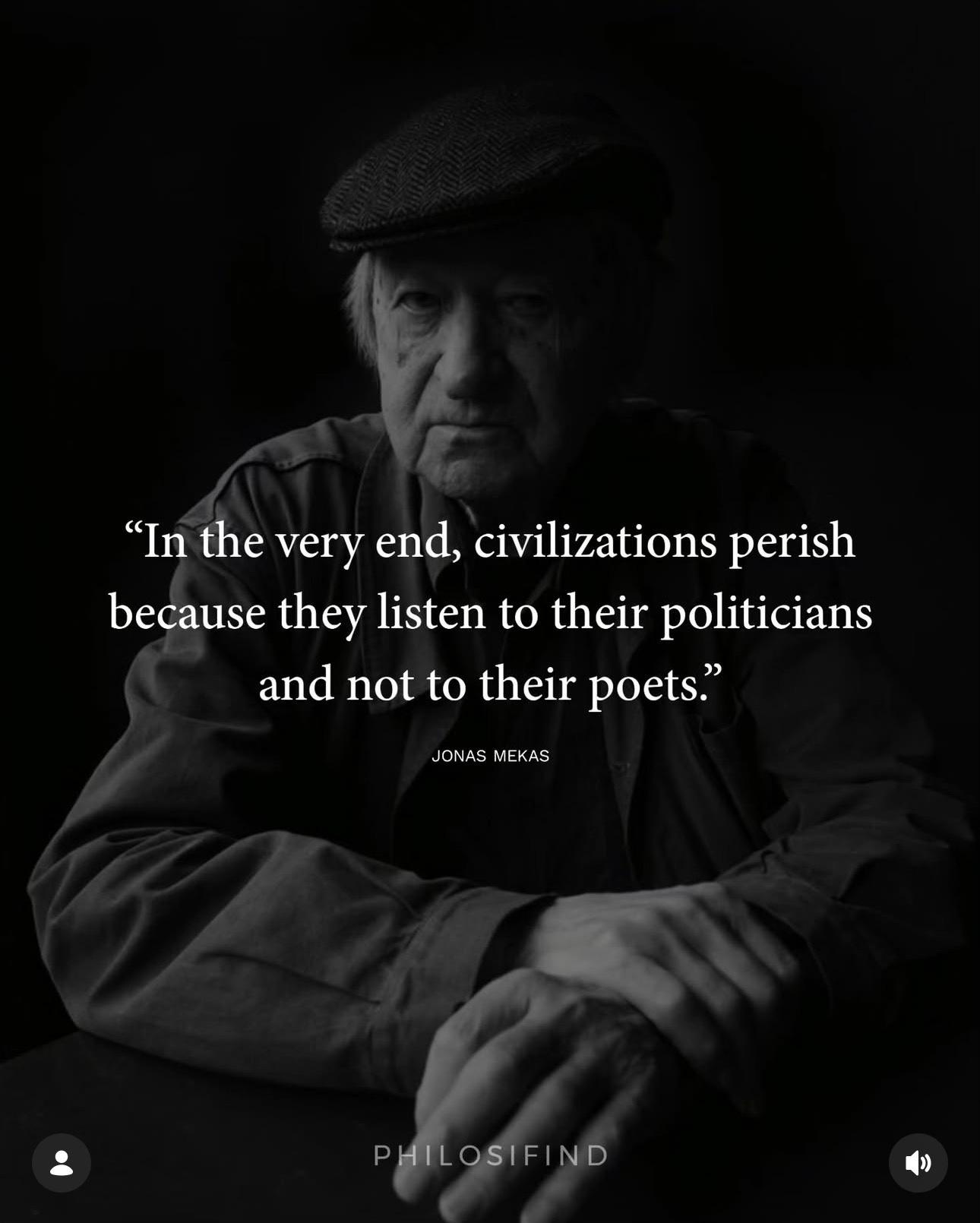
“Joy is the gift of love. Grief is the price of love. Anger is the force that protects that which is loved. We cannot access the depth of loving ourselves, or others, without our rage. “
Love, grief, joy, rage. Not opposing forces. Not a hierarchy. A wheel of emotions. And the wheel is supposed to turn.
Now ask yourself: When did you last let it?
Because here is what I believe- and what Eric Fromm spent his life trying to tell us- we are not living in a sane society that has developed some troubling pathologies. We are living in a pathological society that has learned to perform sanity extraordinarily well.
In The Sane Society, Fromm agued that modern capitalism doesn’t just shape our economics. It shapes our interiority. it reaches inside and reorganises what we feel, what we permit ourselves to feel, and most devastatingly, what we learn to stop feeling altogether. Our society is built to reward consumption, not connection. Performance over presence. It takes the feeling wheel, and one trend at a time, one product at a time, one numbing escape or business at a time, quietly brings it to a stop. And it sells a replacement- coloured water, shiny, feels good, tastes like connection. And we take it gratefully.
And we drink it down. Again and again. And wonder why we grow thirstier.
This is the dehydration mechanism at the centre of everything. We are a society that has been sold coloured water for so long, we have forgotten what real, unadulterated water tastes like. What a real connection to life, to reality, to our planet, to each other, actually feels like.
We consume and consume: content, convenience, the curated performance of a meaningful and successful life, confined safety… But the thirst deepens. We don’t realise it because often times, we’re just drinking and drinking the coloured water, at the expense of others.
And when someone points at the thirst- when someone names it, when someone’s rage breaks through the surface of that carefully curated facade- we pathologise them.
They’re too emotional. Too much. Too angry. Too crazy.
We have confused the symptom for the disease.
The disease is the stillness of the wheel. The disease is the daily frictionless, administrative choosing to stop feeling. To not quite see. To settle into the comfort of dissonance. To embrace indifference.
And indifference, let me be very precise about this, is not only the opposite of love. It is love’s corpse.
I recently watched a video of a Lebanese woman recounting a story. She is driving through Beirut, the car in front of her keeps stalling. Again and again. She honks. Aggressively. She is irritated, impatient, and already constructing a story about the person in front of her.
Incompetent. Careless. Inconsiderate.
Finally, the car pulls over and a young woman steps out. Shaken. Apologetic.
“I’m sorry. I don’t know where I am.”
She had driven up from the South of Lebanon. She had just been brutally displaced from her home.
In that instant, reality shatters. The irritation dissolves into violent tears. For the women recounting the story. For me.
I want to stay here for a moment. Because obviously this story is not an anecdote about being nicer in traffic. This story is about the entire architecture about how we got here.
The woman honking is not a villain. She is us. But notice what we permit her. We permit her rage at the inconvenience. We understand it. We’ve all been there. A very relatable human moment. What we do not permit, what we pathologies and dismiss and call too much, is the rage at the system that created the displacement in the first place. One rage is civilised frustration. The other is hysteria. One gets a nod of recognition. The other gets excluded from the dinner table.
This is not accidental. This is the curation of feeling. This is the coloured water conditioning you which feeling is acceptable.
Which brings me to the banality of niceness.
Hannah Arendt gave us the language for this. The banality of evil. The way ordinary people become participants in extraordinary harm not through monstrousness but through the simple , daily, decision to stop seeing. To be indifferent. To be preoccupied. To be busy. The ease with which we dismiss, minimise and look away.
In our frictionless composure. In our ordinariness.
But I want to go a little deeper here. Because the people I am thinking about are not the bureaucrats processing weaponry paperwork in a regime. I mean, these people are actually amongst us, we’ve dined with them. They are people I know. You know. Educated, warm, funny, cosmopolitan, hard working, successful, generous with their table, devoted to their children. To their parents. To their siblings. To their friends. People who would be genuinely offended- hurt even, to be included in any conversation about their complicity.
And yet.
Watch what happens when you put the evidence in front of them. Not just facts, but consuming, undeniable, overwhelming evidence. Watch them not quite see it. Watch them retreat into “it’s complicated.” “We don’t deserve this… shu khasna's.” The nationalism over humanity bargaining. The invoking of nuance as a shield. Watch how seamlessly their niceness becomes a processing mechanism- a way of engaging just enough to feel exonerated, without engaging enough to be changed or effectuate any change.
Fromm understood this. The comfortable person is not just failing a moral test. They are the end product of a system that has spent decades replacing their capacity for genuine feeling with the performance of it. Their niceness is not hypocrisy. Or better yet, it is not only hypocrisy. It is the natural output of a dehydrated soul. They have been drinking coloured water for so long they have lost the ability to recognise honest nourishment. Lost ability to let grief in. Lost the ability to let rage clean house.
This is how ordinary people become sleeping architects of extraordinary harm.
Monsters are not born fully formed. They are cultivated. Through humiliation. Through feat. Through propaganda. Through comfort. Through niceness. Through systems that reward consumption and impressionism rather than connection.
And so when the wheel should be turning- when the only natural response to reality should be grief and rage, when love itself is demanding to be felt, some instead reach for composure. For neutrality. For civility. For balance. For niceness. All the things a sick society rewards and calls virtue.
Do not mistake your niceness for kindness.
Kindness requires seeing. It requires disruption. It requires being willing to let the wheel turn even when it turns towards grief, towards rage, towards the shattering of your very own comforts.
Niceness is what you perform when you have confused your comfort and luck for merit, rather that seeing it for what it is- the numb contentment of a dehydrated soul drinking coloured water that is bought at the cost of someone else.
And in that confusion- in that daily, well-mannered, cosmopolitan confusion- genocide inches closer and closer. Not because the nice people wanted it. But because enough of them, for long enough, chose to drink the coloured water. Chose to stay locked in numbness of the feeling wheel. Chose the emotions and stories that cost them nothing…
Or so they think.
Here is what I need you to understand.
You are already paying.
Not abstractly. Not eventually. Right now.
You are paying in the anxiety that no productivity hack can resolve. In the numbness that absorbs you after enough scrolling. In the persistent, low-grade, impossible- to- name feeling that something is profoundly wrong, that the life you have carefully constructed and dreamt up, is somehow completely starving you. You are paying in your children’s mental health. In the epidemic of loneliness inside the most connected society in human history. In your own body. In the cancers that grow in the silence of suppressed grief.
This is what dehydration of the soul does. It does not announce itself. It creeps in. And it makes you reach for more of the very thing making you thirsty.
Meanwhile, the circle widens. The war that pauses combusts again. Closer. Broader. louder. That madness is inching in more and more. That displaced woman in the car becomes a statistic, becomes an abstraction, becomes a scroll, becomes a reel between dinner and dessert.
And here is what the dehydrated soul whispers from behind its comfortable door…
But why? What did we do to deserve this?
You keep drinking the coloured water. You chose the stories that “cost you nothing.” You do not look at what your comfort protects, what your niceness is built on.
But the cost is knocking at your door. You don’t need to open it to let it in. At some point, it will simply take the door down.
So take back your permission.
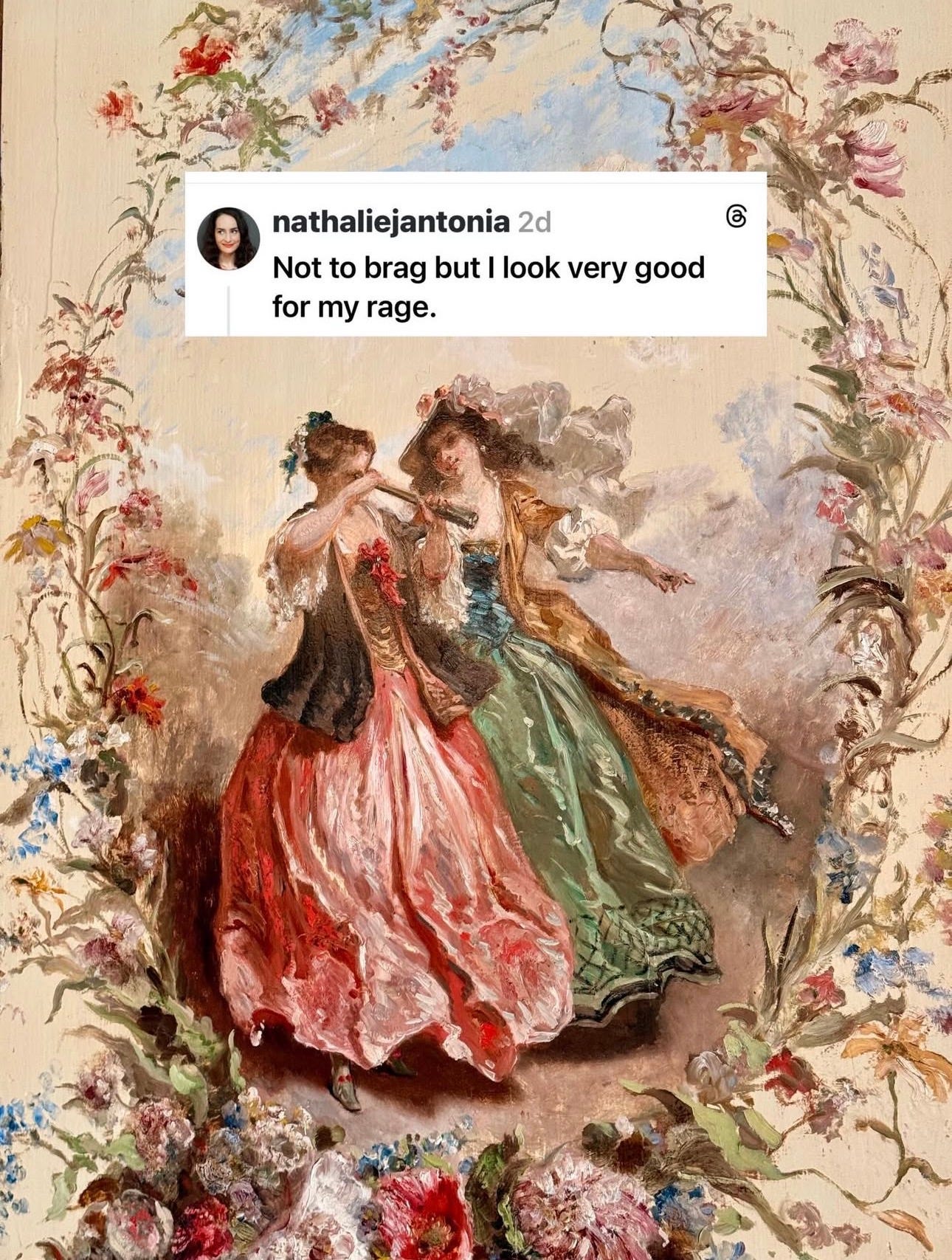
Your grief is not weakness. It is the price of love. Your rage- this arresting, feral, all-consuming rage at what is being done, at what is being enabled, at the coloured water being sold as civilisation- it is not instability. It is not excess. It is not something to manage or moderate or balance with niceness and civility. It is the force that protects what is loved.
The truly heartbroken will rage. The people brave enough to stop drinking the coloured water long enough to sit with their grief and let rage clean house will rage. These are the people that are going to help steer this world to a safer place. It’s not the nice people. It’s not the composed. It’s not the people keeping the “peace.” Because on the other side of grief and rage is not breakdown. It is repair.
The rage of nations going to war- met with flags and anthems.
The rage of leaders ordering strikes- called strength, called resolve, called leadership.
The rage of markets, of borders, of military machinery- institutionalised, funded, celebrated.
But the rage of the person watching it? The rage of the displaced woman who doesn’t know where she is? The rage of the ones who loved what was destroyed?
Hysterical. Crazy. Too much. Too political. Too emotional.
This is not accidental either. The machine needs your wheel still. It needs you drinking the coloured water. It needs your grief sedated and your rage pathologised because a world of people whose wheels are turning - who are grieving and raging in full, disciplined, loving fury - is the only thing it actually cannot survive.
So yes. Rage. Rage. Rage against the murderous machine.
Not enough people are raging. And the ones who are- who have put down the coloured water long enough to feel the full weight of what is happening - are being told they are the problem.
They are not the problem. They are the only solution. EN MASSE.
And I want to be clear- I am not writing this from the other side of it. I struggle with this too. I reach for the coloured water. I go numb. I doom scroll when I should be present. I perform composure when I should be feeling. I let the rage paralyse me. I let the rage consume me. This is not a prescription from someone who has it figured out. This is a note from someone feeling completely helpless. From someone in the middle of it, trying to find the discipline, trying to keep the wheel turning, trying to choose the harder and more honest thing on the days when the coloured water is right there and it would be so easy to just drink.
Rage, like love, requires discipline. Not to tame it. Not to make it quiet. Not to make it comfortable, or safe or palatable to for the dinner table. But to make it directional. Dangerous in the right way.
It is loud and messy and inconvenient and necessary.
It is the discipline of holding conflicting and opposing truths at once, and refusing to let that complexity collapse into the relief of a simpler story.
The discipline of rage is the most loving thing you can bring to a world on fire.
It asks: what am I protecting? What needs to change? What am I going to do about it?
And the answer is always smaller and more immediate than we expect.
It begins with the person in front of you. With the story you choose to tell about them. About this world you are inhabiting. With the conversation you stop avoiding. With the money you redirect. With how you use your platform. With the silence you refuse to perform. With the decision to no longer mistake your composure for virtue.
Disciplined rage is not a revolution you join. It is a practice you begin. Today. In your choices. In the moment you put down the coloured water and feel, fully, what is actually happening. That is where it starts.
Disciplined rage is not nice. But it is kind.
Remember. The price of keeping the wheel still is not paid once. It is paid daily. In the numbers. In the loneliness. In the business and misplaced priorities. In the quiet, persistent feeling that you are living adjacent to your own life rather than inside it. And it is paid collectively. In the widening circle. In the war that keeps combusting closer. In the world that we are handing our children.
The price of love is grief. But the price of indifference is everything.
The wheel was always supposed to turn.
Let it.
It’s the only thing that will tear this system down.
The antidote to this madness is love. And love, right now, looks like rage.
Ma’ esalama (with peace) مَع السَلامة ,
Bethanyx
No posts
Comments
Nothing yet. Say the first thing.
Sign in to join the conversation.