
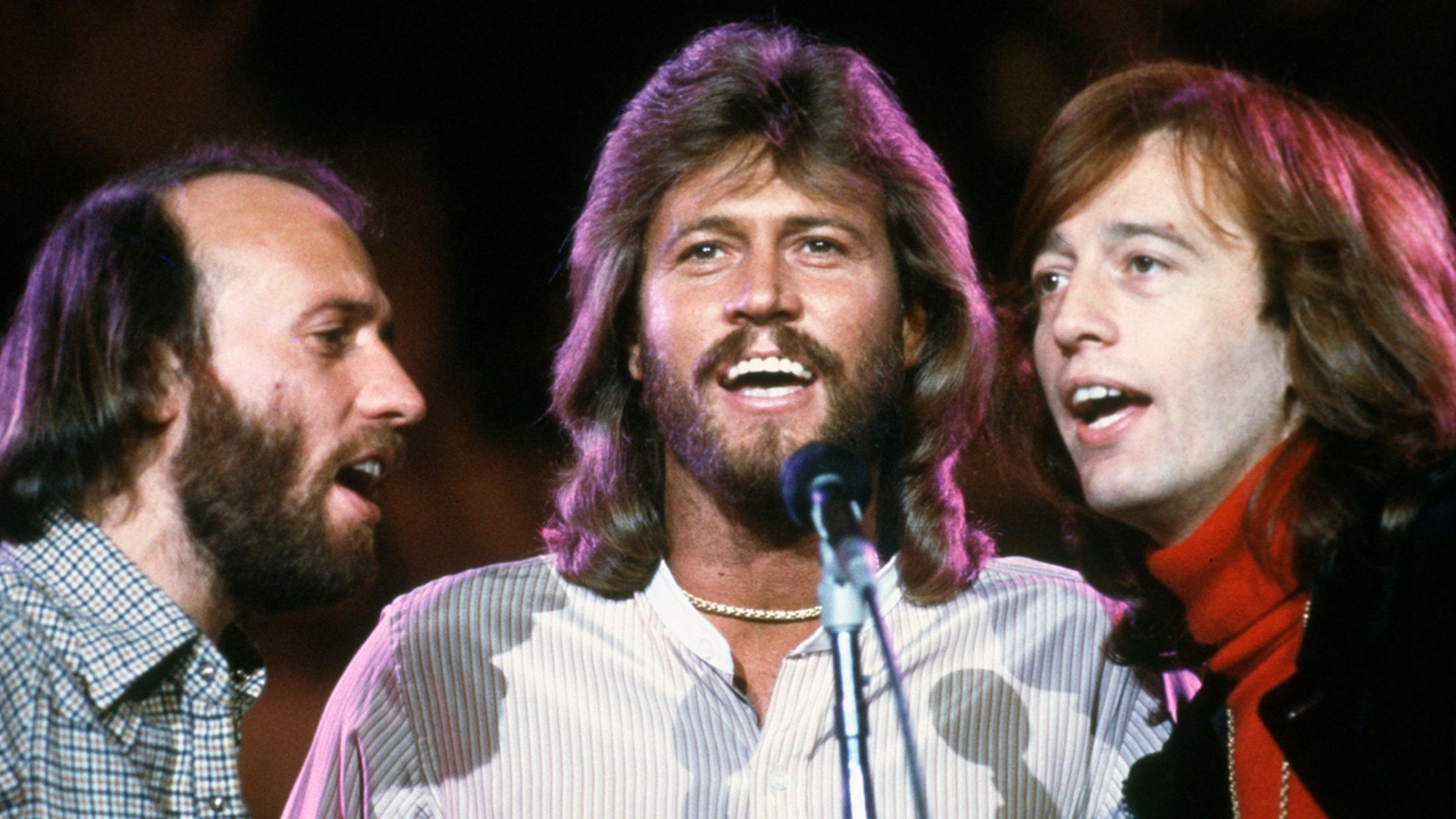
The Bee Gees occupy a very strange place in pop history.
For many years a mention of their name was synonymous with the white suits, falsettos and the disco era success that saw them go stratospheric. It’s an image that’s impossible to separate from their legacy, even becoming a diss, as tastes changed and backlashes to disco made noise in the USA in particular.
Then came their AOR sounds of ‘80s - mom balladeering and retrospectively more appreciated yacht rock. However, these only obscure one of the richest and most varied catalogues in popular music. Whether you’re into their pop classics or the epic ballads, the hits and curiosities run throughout every era of their career, long before they became the defining sound of disco.
Brothers Barry, Robin and Maurice Gibb were crafting ornate, baroque pop, melancholy tunes and psychedelic oddities that stood comfortably alongside the best pop of the late ‘60s and then finely crafted ‘80s hitmaking. Through constant reinvention they survived the British beat boom and psychedelia. Weathering trends, despite falling from favour for long periods, they just kept going, as arguably the biggest pop group in the world since The Beatles, not only for themselves but also hugely successful songwriters and producers for other artists, they’ve left their fingerprints all over pop music.
With more than twenty studio albums then, do you begin with the lush orchestral records of the late ‘60s? Dive straight into the disco classics? Or explore the sophisticated pop records that came after? As with any band whose career stretches across decades, there isn’t one definitive answer, but for me, these three albums offer the clearest route into understanding why the Bee Gees remain far more than the soundtrack to a mirrorball.
Every great reinvention has a starting point, and for the Bee Gees that moment came with Main Course. It marks the bridge between the thoughtful pop craftsmen they were in the ‘60s - when “New York Mining Disaster 1941”, “To Love Somebody”, “Holiday” and “Massachusetts” brought the Gibb’s huge international fame, but they were diamonds scattered amongst a lot of, at best, fair material on their accompanying albums - to their embracing of the dancefloor.
Main Course is where the brothers’ different identities begin to merge into something unmistakably Bee Gees and hinted at the superstardom right around the corner. The headline attraction here is Barry Gibb’s newly developed falsetto, heard to thrilling effect on “Nights on Broadway”. Of course, the trio didn’t just arrive as fully formed as disco icons out of nowhere, the Bee Gees eased in by way of funk, soul and R&B. They created grooves that still retained the melodic sophistication they’d honed on earlier records like Trafalgar and Mr. Natural but curated something unique in the production that they could lay their own personalities over.
The standout song on the album is “Jive Talkin’”, of course. It was massive, but it’s only part of the story, because elsewhere the songs “Fanny (Be Tender with My Love)” and “Edge of the Universe” demonstrate how naturally the brothers adapted to a warmer, more rhythmic sound.
It was their thirteenth studio album, and even for the fast-paced schedule of the time, they were now veterans despite starting out at such a young age. Music from the ‘70s in the style the Bee Gees made wasn’t loved by ‘the kids’ who had glam rock, Slade, Bowie, Bolan and punk, and while the remaining songs from the album are very good, there’s no exceptional standouts. I do have a fondness for “Edge of The Universe” though, which has a Carpenters vibe, for good or ill.
Other albums and songs made their names going forward but Main Course feels more complete as an introduction, because you can hear the transition happening in real time. The traces of earlier songwriting brilliance point directly towards the extraordinary commercial peak that followed.
Let’s address this right out of the gate. Saturday Night Fever is not a Bee Gees album. But it is a soundtrack predominantly made up of their material. This isn’t a purist tier list so I’m vetoing any naysayers on this one. The Miami years saw Bee Gees at their creative and commercial peak, so much so that when most people think of them this is inevitably the album they have in their heads.
By 1977, with the groundwork already laid by Main Course (1975) and refined further on Children of the World (1976) - “You Should Be Dancing” anyone? The group’s songwriting crystallised into an astonishing run of hits by anyone’s standards. “Stayin’ Alive”, “Night Fever”, “How Deep Is Your Love”, “More Than a Woman” and “If I Can’t Have You” are so deeply woven into popular culture that it’s easy to forget they all emerged from the same creative burst.
It wasn’t just that they so easily captured the mood of the late ‘70s or the disco sound, they’re stories sung to hypnotic beats and are littered with nuanced pieces of cultural interest. Even greater than that, they’ve completely stood the test of time and gave the film and its soundtrack a level of consistency few could achieve. There’s a reason it was the bestselling album until Michael Jackson released Thriller.
For anyone still smarting that the album I should have chosen is Odessa (1969) - the divisive double concept album that resulted in Robin Gibb leaving the group for a few years - I hear you, it has ambitious songwriting and huge orchestral scope, but it doesn’t capture the essence of the Bee Gees at the precise point where everything aligned to genuinely change pop music forever.
Even the Bee Gees’ less celebrated records usually contain moments of inspired songwriting, except Life in a Tin Can.
Released in 1973, following Robin’s split, solo albums and the reuniting of all three brothers in the studio for a series of other mediocre offerings, the album documents an awkward period when the band were struggling to find a new direction. They settled, for reasons known only to themselves, on country-tinged Americana and soft rock and the result is an album that definitely feels caught between identities and lacking personality.
“Saw a New Morning” has an undeniable charm and the brothers’ harmonies remain pristine throughout. The main problem is the missing momentum rather than quality. The performances are stagnant and completely fail to catch fire. Listen to “South Dakota Morning” and tell me it’s not a dreary, shadowy cliché, not stillborn, but barely breathing. Or “My Life Has Been A Song” where Robin warbles (struggles) over funereal piano to the point where a listener would welcome their own death.
Production-wise, always key to the band, the album is understated to a fault and the result is very meek, with the trio sounding like they’re on automatic pilot most of the time.
Interestingly the same criticisms apply to the albums Living Eyes (1981) and High Civilization (1991) as both also tried to reinvent the bands’ sound and resulted in weaker efforts. Those albums, however, have undergone something of a critical reappraisal in recent years. Life in a Tin Can remains the hardest Bee Gees album to make a compelling case for simply because it lacks the distinctive personality that defines almost every other phase of their remarkable career.
No posts
Comments
Nothing yet. Say the first thing.
Sign in to join the conversation.