

Laura Veirs is learning to trust in human imperfection
For four years, Laura Veirs thought she might never write another song. After more than three decades of songwriting and thirteen solo albums, Veirs found herself slowly accepting that perhaps this part of her life had quietly come to an end. Yet, speaking to her now, there is remarkably little sense of mourning. During those years she painted, taught songwriting workshops, began writing a book, navigated divorce, remarriage, and the complexities of blending two families – all while building the very studio that her next album, Temple Songs, would be brought to life in.
Looking back, while music had a brief eclipse, creativity never left her. “I think I’m always creative,” she reflects. “I’ve always been creating things... but it is a mystery. Creativity is a mystery, and I don’t really understand it. I don’t understand where songs come from.” Even after thirty years of songwriting, Veirs resists the temptation to explain creativity as something she can consciously access.
She laughs when recounting one of the questions she’s asked most often: “’Where do you get your ideas?’ I’m like, ‘I don’t know. They’re just there’.” That uncertainty became unsettling during the four years she stopped writing songs altogether. “There was a sadness because I was like, I guess I’m not writing songs anymore,” she recalls. “It felt like my identity had shifted.” For someone who has spent most of her life making music, losing songwriting felt like losing part of herself. It wasn’t a breakthrough that Veirs brought back into making music though, no forcing another record into existence.The return came from accepting what was, and rethinking what creativity actually meant, whether or not it involved writing songs.
That revelation came while teaching at a creative retreat in Mexico. In a hot tub, explaining her frustrations to another teacher, Veirs described herself as being “in a void.” The response was immediate: “You’re not in a void. You’re in a gathering phase.” Years later, Veirs still returns to that conversation because it completely reframed those seemingly quiet years.
Rather than measuring creativity by output, she began recognising everything she had been absorbing instead: travelling, painting, writing prose, teaching, listening, rebuilding family life and simply experiencing the world differently. “There are phases in our life where we are not outputting; we are bringing in,” she says. Those years weren’t empty after all. They became, in her words, “the fruits of the lyrics and the approach to the new album.” It’s an idea that feels quietly radical in a culture that often mistakes constant productivity for creativity itself.
Not only did her perspective shift, it also changed how Veirs approached making Temple Songs. For the first time in her career, she produced, arranged and recorded the album entirely herself, making almost every creative decision alone. Having spent years collaborating with producers she deeply respected, she realised she’d gradually stopped trusting her own instincts. “I felt that I was giving away too much of my creative decision-making to others,” she recalls. “At this age and at this time in life, it was important for me to make those decisions and lean into my own authority and my own taste.”
It sounds deceptively simple, but Veirs admits the process forced her to confront an unexpectedly difficult question: “What is my taste?” Without someone else to validate each decision, she had to become that voice herself. And in that way Temple Songs asserts itself as a reclamation more so than a reinvention of any kind.
“I really like limitations,” she tells me. Speaking about being faced with the “option anxiety” of digital recording, Veirs deliberately narrowed her options. Inspired by her background working with four track recordings, she decided on a smaller palette of instruments and a recording process built around complete performances instead of endless revision. “If you think of the painter’s palette of colors, it’s very limited. So setting those limitations, both in terms of the instruments and then also the approach to recording, like not using the click or headphones, allowed me to very quickly get into a flow and I really enjoyed the process.”
– Alex Dewing
THE LINE of BEST FIT is a completely independent publication. To receive new posts and support our work, consider becoming a free or paid subscriber and help us create a future where music writing can thrive
It’s a week of strong returns with Brooklyn-based experimental artist Taja Cheek back this week with her fourth long player Fata Morgana (and it might be her best yet) while Austin indie duo Hovvy have their sixth Big World. Massive Champion marks a new record from whimsical Minhead sprechgesang duo Getdown Services, husky Aussie singer/songwriter Grace Cummings drops Bloodhorse!. and Boston artpunks Sweeping Promises kick back with the taut You Say I Romanticize. Debuting – and ten years in the making – The Womack Sisters carry on their family legacy with a quite incredible record of quality R&B and soul bangers, and there’s Seoul punk Sailor Honeymoon’s first record – wonderfully titled The Worst of Sailor Honeymoon.

Phoebe Bridgers’ Lost Weekend is a stellar study of grief, grudge and devotion
A patient uncoiling of her turbulent past, Phoebe Bridgers’ third album Lost Weekend – released today – will surprise you in impossible ways. Despite soaring performances, most tracks feel more grounded than those on 2020’s Punisher. You can hear crystallised guitar strums amidst angelic harmonies, fervent drums colliding with sharp viola. By the time “Bobby” comes on, you may have settled on the fact that Lost Weekend is Bridgers at her most expressionist self, and it’s the best she’s ever sounded. Hardly any instrument is muted like before. Each piece builds up and explodes into a supernova of monolithic feelings, particularly grief, grudge and devotion. This newfound magic in her music – extroverted, snappy, outdoorsy and at times celestial when need be – is an excellent vehicle for violent emotional landscapes in which words are rendered hopelessly futile.
When “Lost Boys” came out, some people shielded their disappointment behind its gorgeous astral finish. On the album, it’s a necessary song of reconciliation, albeit one of the weakest of the whole bunch, to the relief of many. A characteristic from it persists, however: the tendency towards unstructured lyricism that sometimes lacks the gut punch of Punisher’s most cutting couplets and metaphors. “Haunted”, a British-weather track full of harmonica and pump organ, outlines heartbreak in plain, face-down terms. “I’m gonna put myself together,” she sings with Julien Baker. “You can go or you can stay.” The catharsis that sprouts from this diaristic, uncomplicated approach makes up for its occasionally painful simplicity nonetheless, à la “that thing in a box I don’t fuck anymore” from “Bobby”.
Scenes, on the other hand, are still painted with utmost care and precision. On “Still Standing”, Bridgers brings to light one with her parents, possibly from her childhood years: “I found her bleeding over the sink / But when you said sorry, you were looking at me / I can’t remember what I said.” Such specificity elevates the holistic experience of Lost Weekend, a record dedicated to her deceased father, whom she had a constrained relationship with. We can grasp the impact of this unwieldy familial connection even on her love songs. “Why don’t you sing me to sleep?” she croons on “The Governor’s Waltz”, “I was too happy to feel at home”. “Other Plans”, the album’s spaciest track, details her regret from subconscious restraint: “I should not have driven home / I was gonna show you colours you had never seen / And leave you alone”.
But nothing on this record can rival Bridgers’ stellar sound design. From the carefree whistling that begins the besotted “Liberty Tree” to father’s haunting voicemail that concludes “Never Going Back!”, every sonic element on Lost Weekend successfully lulls you into the galactic afterlife realm and raises an existential question: what does it take to live a truly fulfilled life amidst these sorrows?
– Tanatat Khuttapan
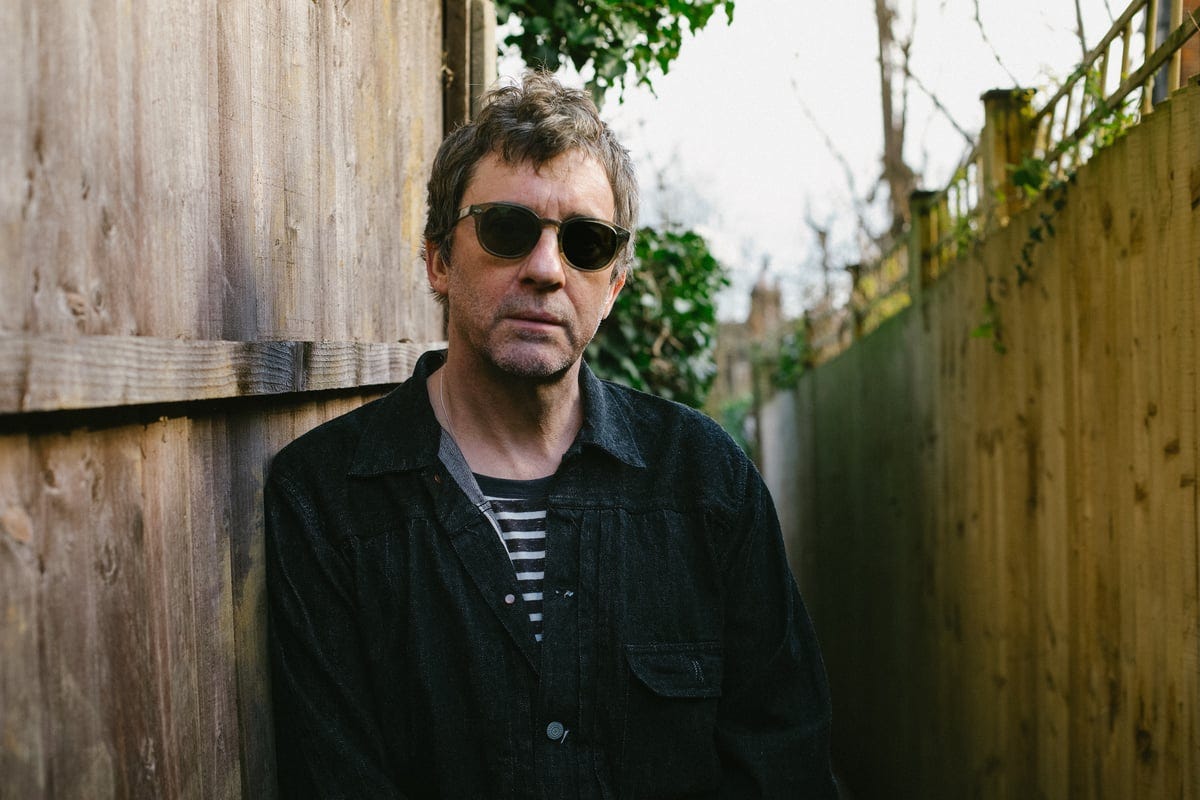
Graham Coxon on Steely Dan
I was driving out to Ramsgate quite a lot in 2017 - quite recently - and I was like, “Oh, this bloody Steely Dan stuff, I should really listen to this.” I got a Best Of and started listening to it all the way through and realised I recognised a lot of it - “Dirty Work” and “Reelin’ in the Years” - but when it got to songs like “The Boston Rag”, “Bodhisattva”, and “Any Major Dude Will Tell You”, suddenly I was like “Woah”, and it really hit me heavy how fucking amazing it was.
Then before I knew it, I moved to Santa Monica in 2019, I was going to the NAMM Show and I had to get across Los Angeles. I hired this car, I’d never driven in America before and I had to drive right across Los Angeles to Anaheim, where Disneyland is, and I was like “Man, this is just ridiculous. I’m like bouncing down a huge freeway listening to Steely Dan, this makes so much sense.”
I instantly found “Black Cow” incredible. I love the wit, and I don’t always understand the private jokes that I suppose only witty New Yorkers appreciate a lot of the humour in. But the caustic wit of that song is flipping great. It has some really excellent, harsh, harsh sentiments. And just the way it sounds - the girls singing the backing vocals and the production is absolutely perfect.
I don’t know whether I would have got into Steely Dan as much if I hadn’t started to appreciate production. I’d always appreciated production on a surface level, which is why I like Talk Talk, Gong and stuff like that, but when I started to make recordings at home, then Steely Dan suddenly made sense. I’d just be saying “Cor!” at how things are produced, and “Black Cow” is perfect for me because it has that incredible horn arrangement, a bit of sax going on, and it’s got that mean sentiment - very resentful. And I love how Fagan delivers that wit - no one does it like that.
Obviously, you’re never going to get anywhere near it, but you can try. And at least you’re in control of whether you want something to sound mega professional, and you can look on YouTube for a tutorial on how to make the bass sound like Steely Dan. Or you can make something sound really weird, like Jockstrap, where suddenly there’s a little section that sounds like it was recorded in the bathroom, and then it’ll go back to a fuller sound.
That stuff really does it for me - half of a verse sounding like someone’s singing it while they’re washing up. Or Steely Dan will have this little bit of absolute mischievousness, or these beautiful backing vocals by Michael McDonald, to do these mad close harmonies.
I watched the documentary about the making of Aja, and God, it’s hard work. I can’t help thinking what I would have done if I’d have gone in to have a go on the solo of “Peg”? Maybe they’d say, “This idiot can’t even play!” The solo in “Peg” isn’t technically insane, it has moments where it gets a bit like that, but their original guitar player, who did the solo on “Bodhisattva” - I love that, because that’s the kind of sax playing that I like. I hadn’t heard a bebop guitar player until I listened to Steely Dan.
The solo they ended up with isn’t exactly mega technical, but it’s just got the vibe, and that’s what my job as a guitar player has always been - it’s not to play 100 notes, it’s to channel the drive of the song and do something that’s appropriate.
Graham Coxon will play a career-spanning headline show at London’s O2 Forum Kentish Town on 28 November, his first full-band live performance in more than a decade.
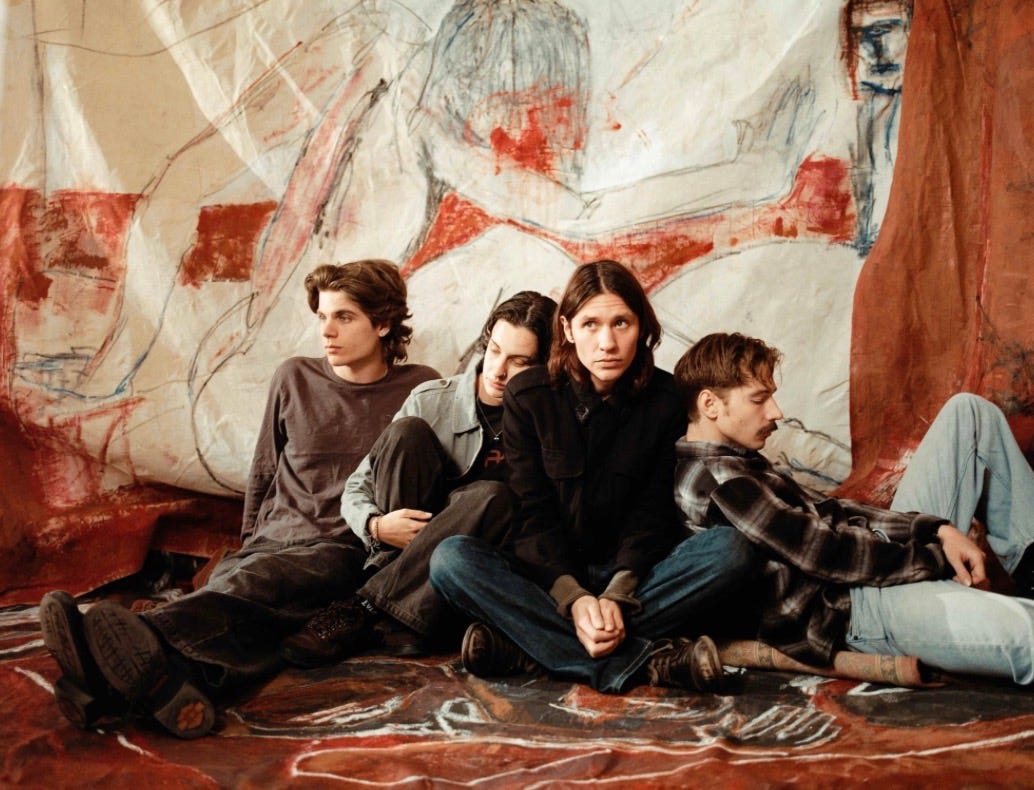
The introduction: Tough Cookie
Slacker meets scuzz in the sound of East London’s Tough Cookie. Led by August Tse, the Dalston-based four piece put our their debut “Emory” at the start of 2025 and a mixtape back in the autumn. Their new single “Mercy!” dropped earlier this month.
Our sound is... Existential 90s art grunge with lots of wailing.
We started making music when... Dan and August met whilst studying in Leeds and have been making music together for over 10 years, moved to London around 2019 and asked both Jess and Gavin to join on a previous project. It was the first time we all felt at home in a rehearsal room and on the stage. Starting this band felt like the most natural next step.
A visual artist everyone needs to know is... Esme Keenleyside, an incredible painter who’s just spent a year as a TKE resident. Also Lorenzo Amos who hugely inspired the Mercy! cover art.
The book that’s had the biggest impact on me is... Devotion by Patti Smith or Junky by William Burroughs. Can’t decide.
The best London DIY band right now is... Mary In The Junkyard. Both visually and musically stunning.
Watch Truthpaste cover Stephen Sondheim live in session for Best Fit
Avant folk five piece Truthpaste take on Stephen Sondheim’s “Losing My Mind” - from the musical Follies – our latest studio session recorded at Crouch End Studios. The Sondheim-penned song was written for the character of former showgirl Sally Durant Plummer in the 1971 musical, which Truthpaste guitarist Theo Murchie went to see during his schooldays: “he slept through the whole thing except for this song,” the band tells Best Fit. Murchie later wrote a guitar part for it and brought it to lead vocalist and sax player Esmé Lark.
“I loved it as soon as I heard it,” Lark recalls, “especially the version that Sondheim sings himself. The lyrics are so heartbreaking especially when the song is stripped back in the way Theo imagined it. I had many visions of performing it with Theo and many years later here we are.” The song’s known to most for the Pet Shop Boys-produced version sung by Liza Minelli back in 1989, which the duo later released with a Neil Tennant vocal and performed as part of their 2022 tour.
Crouch End Studios has hosted sessions for NPR, The Late Show and Amazon and is partnered with Best Fit for an ongoing sessions series that’s seen the likes of Crack Cloud, Laufey, Lambrini Girls and Hot Wax turn in some incredible performances.

Listen to the week in new music by following our Discovery playlist
Dropping at midnight every Thursday, follow our playlist for a taste of the best new music from the most exciting breaking artists. Leading the selection this week are new tracks from Glisten Trick, tg.blk, Serge Volant, IMVN, green star, Shock Corridoor, Starcleaner Reunion, and coverstars Kierrr.
“The most powerful love songs always turn on the discrepancy between the act of declaring love and the knowledge that the ostensible addressee is no longer there, was never there, and could never be there.” – Mark Fisher
Comments
Nothing yet. Say the first thing.
Sign in to join the conversation.