
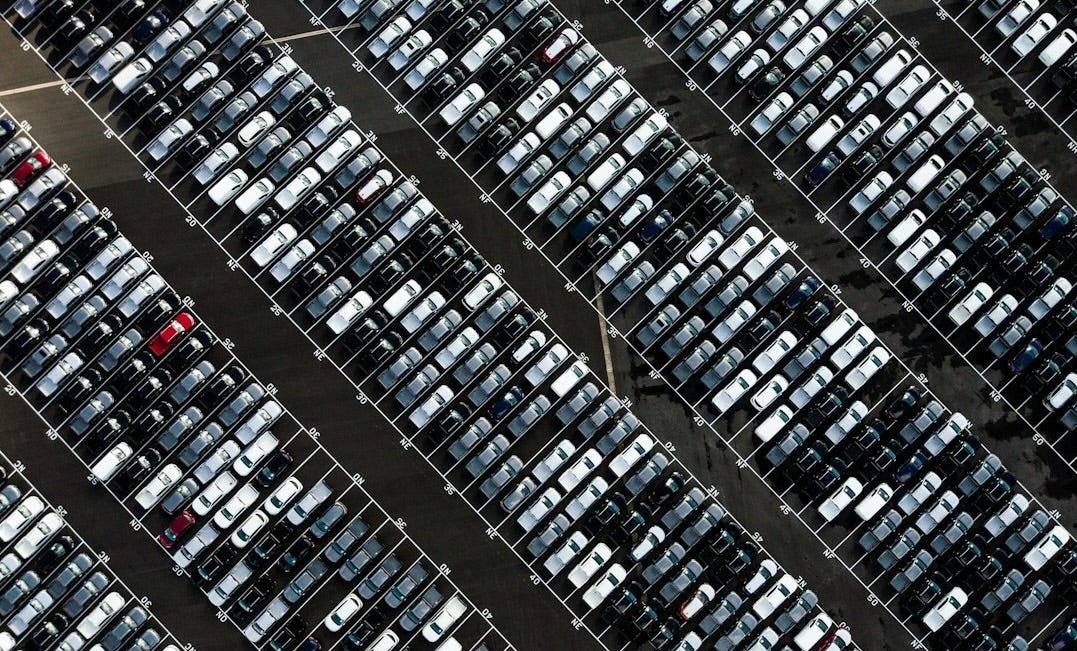
All the cars in the car park were white, grey or black.
All of them. Every single one.
I wondered why. And then a few weeks later an article popped up about how the world is getting less colourful, how there’s been a steady convergence on muted (and profitable) shades: the same whites, greys and blacks that had filled that car park.
There is something painfully sad about this, something that goes beyond aesthetics, but it took me a while to figure out what. The more I thought about it, the more I realised: the objects we make are a mirror for our collective psyche.
Those cars are a symptom of our retreat from our animal nature. The living world is lit up with colour – never just grey. Even in the dark, things glow and pulse. That grey car park points to a much deeper problem that threatens us all - the taming of the human spirit, and a resulting global crisis of imagination.
Subscribe to get a new post every few weeks
Why the future relies on imagination
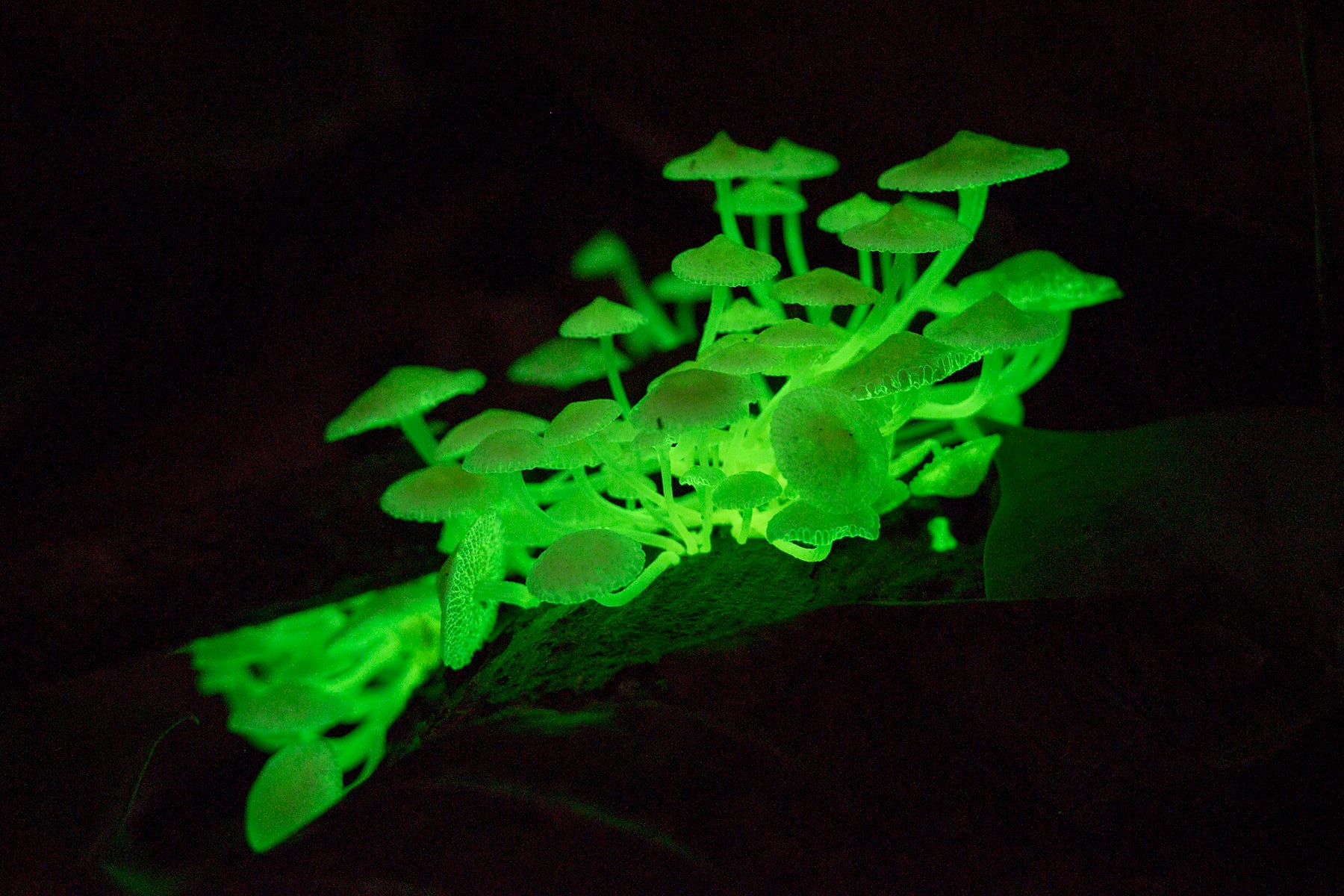
Imagination is the miraculous ability of the mind to see things that do not exist. It is the wellspring of human creativity, the source of every human-made object, every story, every tool we’ve ever made.
Without imagination, we are trapped in the cage of the status quo. Nothing new can come.
But we desperately need the new right now. New politics, new economics, new culture. Given the challenges we’re facing, you might think we’d be basking in a golden age of imagination; a multi-chromatic riot of ideas for the world to come and our place in it.
But it doesn’t seem to be like that. Imagination has been captured by the status quo. The public conversation about the future is dominated by sterile techno-fantasies of artificial super-intelligence, or coal-grey doomster collapse narratives.
Where’s the inspiration? The sense of wild possibility? Where have all the colours gone?
The erosion of imagination
The writer and theorist Mark Fisher famously said it was easier to imagine the end of the world than the end of capitalism. As the world loses its colours, and the crisis of imagination deepens, conceiving of a thriving future might be getting harder still.
A 2023 study published in Nature found that modern scientific work is increasingly less likely to “break with the past” and push technology in new directions. Another study found that while the number of patents has tripled in 30 years, the creativity in them has halved. Still more show children becoming less creative, even as IQ scores increase.
We have become less original and more deferential to existing knowledge, less willing or able to think outside the box. And when remaining in the box means the destruction of large parts of the living Earth and the likely collapse of civilisation, that is a big problem.
Stolen boredom

Researchers looking into the cause of this decline in creativity point to our relationship to technology. Of course, there’s nothing inherently anti-imaginative in technology. It can augment our thinking. Whether or not it does is decided by how we use it. And the truth is, we don’t decide how we use it. By manipulating human psychology for profit, the tech giants decide for us. And they’ve decided technology should be used to monopolise our attention so we can be targeted by as many adverts as possible.
This has had many unintended consequences. But one of the most significant is that it has stolen our boredom. The world of always-on entertainment, an endless stream of notifications vying for our attention, leaves us almost no time to do nothing. And doing nothing matters. Boredom is a critical part of the creative process. When we’re bored, the default mode network in the brain - the stream of consciousnesses, or ‘train of thought’ - activates. We set out on journeys of imagination. If we’re constantly distracted, the train never leaves the station.
And so, ironically, the crisis of imagination has its roots in the ever more imaginative ways tech companies colonise our time and attention. When we live on a constant diet of content-driven dopamine hits, we trade the technicolour vistas of the mind for a five-inch screen, filling the mental space where the future is supposed to grow with breaking news and cat videos.
The tyranny of now
This colonisation of time has happened on many levels. But a good place to start is with a set of global trends that emerged in the 20th century that have become known as the Great Acceleration. We’ve all seen the graphs: exploding resource use, exploding population, exploding greenhouse gas emissions. All this has a felt sense: the feeling of everything speeding up.
For tens of thousands of years, humans woke up to the village. It took days, weeks, months for news from far-flung places to reach us. It might have been boring, but this is what our minds are evolved for - slower inputs, smaller worlds.
Today, we watch real-time live-streams of events from anywhere — even, and perhaps especially, horrific ones. We might intellectually know these things are happening on the other side of the planet, but our nervous systems don’t. And it just keeps coming. It’s what Trump henchman Steve Bannon calls “muzzle velocity” - a deliberate strategy of overwhelm, designed to keep us so distracted with what’s happening right now, we can’t imagine an alternative.
The whole structure of the economic system we live under subjects us to a form of muzzle velocity. Too many of us live precarious lives, living paycheck to paycheck, hustling to pay the bills. When the pressure of the present gets too much, the future is literally a problem for another day. It’s hard to worry about the end of the world when you can’t see past the end of the month.
Shelter from the storm
And so here we are, in urgent need of transformative long-term political change, but distracted by the daily assaults on our mental space from a world spinning ever faster. Just hanging on feels like an achievement.
This, I think, is part of the reason why the current crop of ‘progressive’ political leaders seem intent on defending a crumbling status quo, even as the world transforms around them. It’s not that they don’t want to think about the future, it’s that the present demands so much management that they never get to it. The muzzle velocity is too high.
And the same is true when our movements end up locked in tactical resistance to what is, rather than rooted in deeper dreams of what might be.
If we could just take a breath, lift up our eyes for a minute, unleash our imaginations in service of what might be, we’ll find there are countless beautiful, colourful, messy ideas for how we might live differently, from which we might create a technicolour vision of a thriving future – one that could inspire the change we need. But for that, we need shelter from the deepening storm.
Imagination as a revolutionary act

Recently, I’ve seen the Italian Marxist philosopher Antonio Gramsci quoted a lot, especially his line about being caught between an old world that is dying and a new world struggling to be born. In such moments, he says, “every act, even the smallest, may acquire decisive weight.”
Our choice of colours may be the sort of small act he meant. Not because they matter on their own (though they do). But because in a world of grey time-theft, where what it means to be human is being called into question, colour is a sort of proxy for imagination and independence.
In this context, exercising our imagination is more than indulgence - it becomes a revolutionary act because it requires unplugging from the machine, facing down the productivity demons and allowing ourselves to get bored, to ponder, and wonder, and to dream.
We can start small, reclaiming our boredom, and our humanness, through art, literature, nature or community. We can choose the weird over the functional. We can wear something bright. We can dream something big.
But the ‘imaginapocalypse’ is collective, and our response must be too. We must build a collective infrastructure of imagination, where we pool our wildest dreams and draft the blueprint of the world to come. There is no political force on Earth more powerful than shared vision and collective purpose.
Most of all, we must remember this: our imagination is our resistance to the grey. It is our refusal to be tamed. We must not give it up. We must not let it be paved over.
Imagination is where the future grows.
Until next time…
Bert
Thanks for reading The Other Side of the End of the World! This post is public so feel free to share it.
Comments
Nothing yet. Say the first thing.
Sign in to join the conversation.