
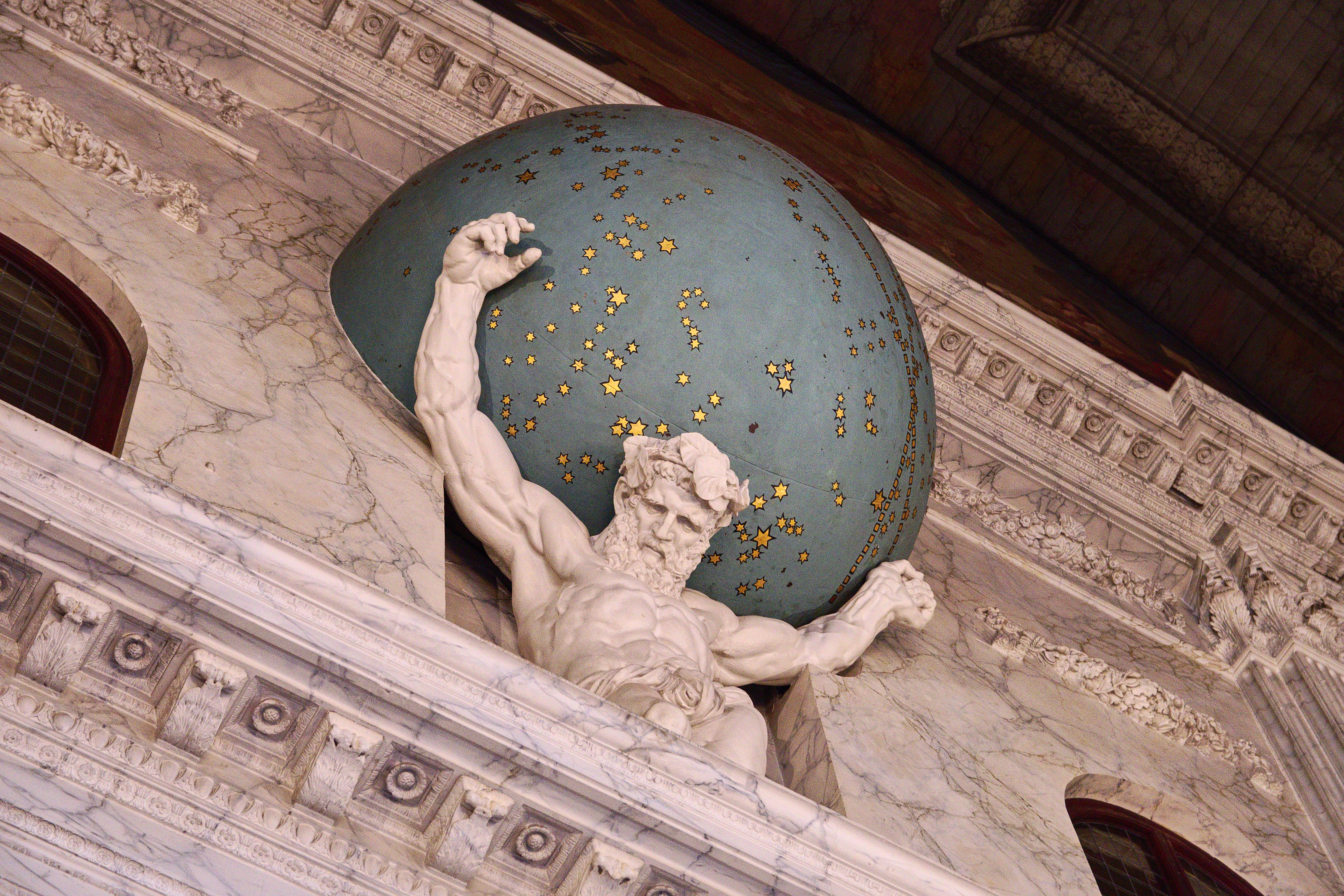
I’ve stopped trying to save the world.
There. I said it. Feels like a good way to start the year.
You might think that is an odd resolution for someone in my line of work. Heretical even. After all, aren’t we facing a climate catastrophe? An extinction crisis? Political meltdown? A potential AI apocalypse? A possible civilisational collapse?
Isn’t it my job to do something about all this?
Yep. All of the above.
The world is too big to carry
But I’ve realised recently that carrying the weight of the whole world - by which I mean taking personal responsibility for the state of it - is too big a burden to carry. It’s making me less effective, not more.
I still believe Margaret Mead’s dictum that a group of thoughtful, committed citizens can change the world. But what if that group fails to change the world in the way they hoped? What if the world takes a different turn? Is it their fault?
Of course not. Mead was laying out how agency works, not providing a magic formula for controlling the future. There are countless variables, luck included, that decide whether any given change effort works. And the truth is almost all of them are beyond our control.
I know this, and yet on some deep, barely conscious level, I realise I blame myself for the climate crisis, for Trump, for the horror of the wars raging around the world, for the rise of the far-right. I feel guilty about it, even ashamed. It’s happening on our watch. If only we were better at strategy!
I know what you are thinking. Treating the state of the world as personal failure is impossibly grandiose. Who do I think I am? But there it is. My embarrassing secret. I desperately wish the world were different. But it’s not. And some irrational part of myself, a part undoubtedly borne of our hyper-individualistic culture, thinks that if I’d done a better job, it might be.
Of Hyperobjects and Spirit Vessels
The problem with ‘saving the world’ is that it implies a degree of control that we just don’t have. The world is something too big for any individual mind to fully conceive, let alone control. It’s a classic example of what philosopher Timothy Morton calls a “hyperobject”. Hyperobjects are objects so big they exceed human perception, making them impossible to grasp in their totality. They are by their nature vast, wild beasts. They do not bend to our will.
The futility of trying to control the uncontrollable is not a new insight. In fact, it’s a core message of many of our oldest spiritual and philosophical traditions. The Tao Te Ching says: “The world is a spirit vessel/ Which cannot be acted upon.” Stoic philosopher Epictetus tells us that the beginning of all wisdom is distinguishing between what is “up to us” (our own thoughts, intentions, and actions) and what is “not up to us” (everything else).
The Bhagavad Gita draws a similar distinction. Krishna tells the warrior Arjuna: “You have a right to your actions, but never to the fruits of your actions.” In other words, you can do your best, but you don’t control the outcome. And if you don’t control the outcome, you can’t be responsible for it.
Across centuries and traditions, the context is different but the message is the same: meaningful action is born from the moment we stop trying to control the uncontrollable and focus on what is ours to hold.
So this year, I’m putting the world down. But I’m still showing up.
Doing our Best and No More
There’s a phrase that’s been rattling around my head as I think about this focus on action, not outcome. Doing our best and no more.
That means we still act with purpose, vision and efficacy. But means letting go of the controlling impulse, recognising that success or failure will be determined by many things we can’t know, let alone control. It simply doesn’t all hang on me, or you, or even us. There are deep, powerful currents at work in the world. We succeed when we catch them – or when they catch us. As the poet Gary Snyder said: “Knowing that nothing need be done, is where we begin to move from”.
This is not giving in. It’s the opposite. It’s giving out, without expectation of anything in return.
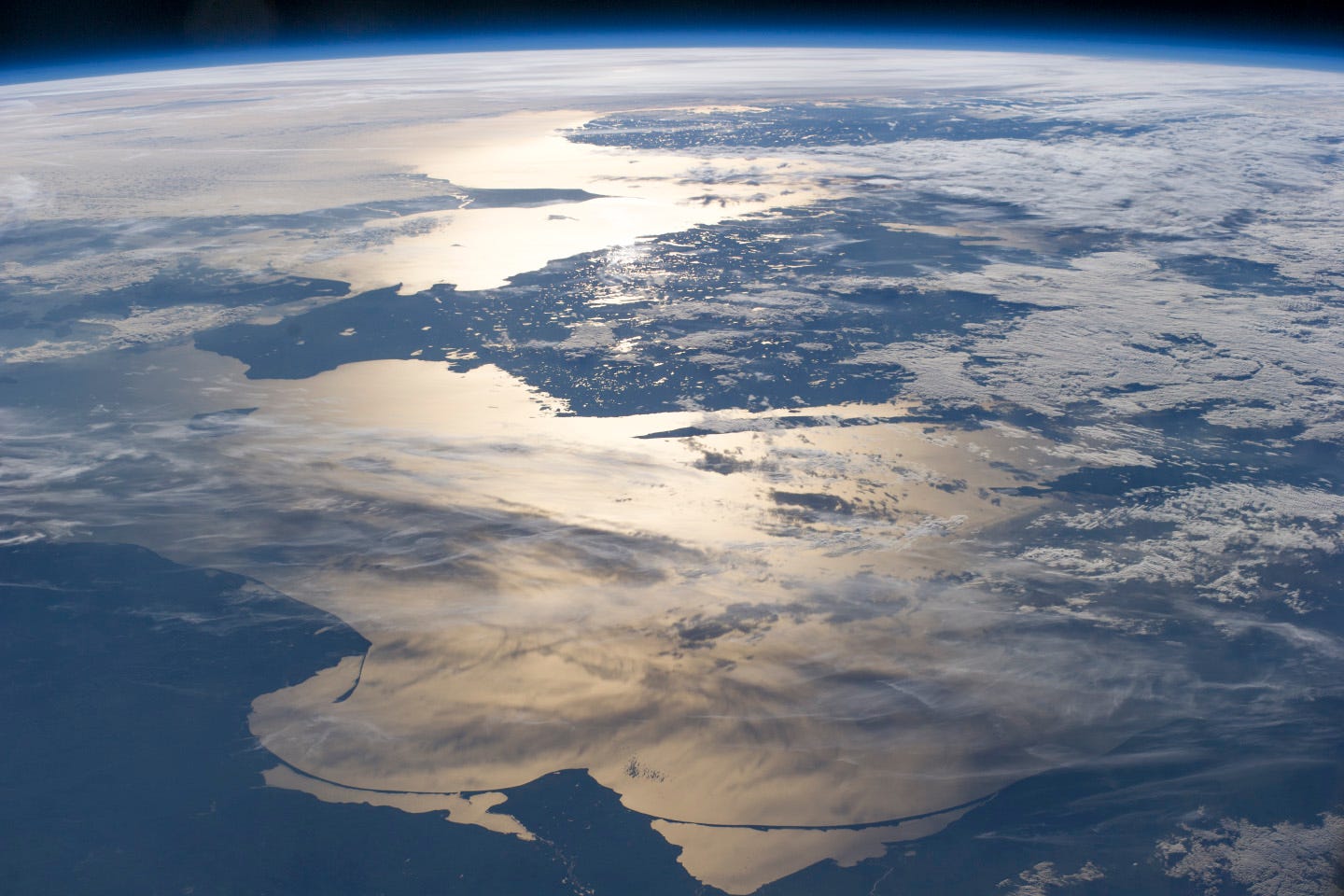
Doing our best and no more is facing the truth that the world is vast and complex, and works in ways we cannot comprehend, and ultimately we’re just tiny threads of life in a tapestry too big to ever see. From the perspective of the Earth, our time will pass in an instant. We’re talking about an entity that is just over four and a half billion years old. Four and a half billion! That number is almost impossible to conceive. But let’s try.
Four and a half billion years is 100,000 years, repeated 45 thousand times. Over that vast expanse of time, the Earth has been struck by asteroids (including, possibly, one the size of a planet whose impact created the moon), seen life rise and fall in five mass extinctions, been a giant snowball, a raging inferno, and produced countless lifeforms adapted to conditions unthinkable to us.
Meanwhile, human ‘civilisation’ began a mere ten thousand years ago, with the dawn of agriculture. Our lifespans capped, if we are lucky, at one percent of that time. Or put another way, if we live to 100, our time on this Earth is 0.0000022% of the total age of the planet.
It’s dizzying, this deep time perspective. It puts us in our place. This gnarled and venerable old planet does not need saving from us. We need saving from ourselves.
Principles for the Year Ahead
Because I don’t want doing my best and no more to go the way my usual new year resolutions, and because I want to stay sane in a world that feels increasingly volatile and uncontrollable, I have tried to think through what it would actually mean to make this change.
Doing my best and no more means:
Recognising that no-one can be personally responsible for the state of the world. We can only ever be temporary stewards of a small piece of it.
Doing what is right because it is right, rather than constantly calculating if that contribution is ‘enough’ to ‘win’. We cannot know.
Remembering that each of us are one cell in a global immune system. A single immune cell doesn’t “save” the body. But the system doesn’t work without the cells. Our job is to be healthy cells and play our part as well as we can.
Knowing that whatever we do, when it is set against the awesome scale of the world, will be small and its outcome uncertain. It has to be. And that’s okay!
We can be sure that 2026 will be another heavy year. Hell, it already has been and we’re not even halfway through January. We’re certain to face more instability, more weirdness, more shocks. A lot of beauty too, for sure. Maybe even a smattering of magic.
As we face it, my wish for myself, and I think for all of us, is that we don’t try to hold it all. That we recognise we can’t hold it all, not because we are weak, or foolish, or lazy, but because we are human, with all the finitude and limitation that implies.
I wish that we can give ourselves, and each other, permission to put the weight down. And that without it on our shoulders, we can stand a little taller, feel a little braver, and move with a little more purpose and a little less pressure through a world that never has been and never will be under our control, a world that doesn’t need to be saved, but served.
If we can do our best and no more, who knows what is possible.
Happy new year to you all. See you next time.
Bert
Thanks for reading The Other Side of the End of the World! This post is public so feel free to share it.
No posts
Comments
Nothing yet. Say the first thing.
Sign in to join the conversation.