
The day before our flight, it snowed in New York City. From our window, we watched kids rush up the small slope in the park, their sleds dragging behind them, already eager for the ride down. Snow kept falling through the night, and by morning the Manhattan skyline had softened, partially swallowed by flurries. The city felt quieter than usual, paused.
That calm didn’t last. At LaGuardia, half the departure board glowed with CANCELED or DELAYED notices, red letters blinking overhead. Travelers lingered beneath the screens, resigned, impatient, hopeful. Somehow, among all that red, our flight still showed as on time—headed to Northwest Arkansas Regional Airport, XNA. I didn’t trust it yet, but I let myself feel cautiously relieved.
While boarding, Jaime and I examined the small CRJ900 plane in a way we never had before. Did the bathroom have a changing table? (It did.) Could they install a bassinet in the front row? (They couldn’t.) Would a diaper bag fit in the overhead bins? (Probably not a big one.) We were only halfway through the pregnancy, but already everything seemed to point forward. If all went well, in early June we’d be boarding this same plane again—this time with a two-week-old in our arms.
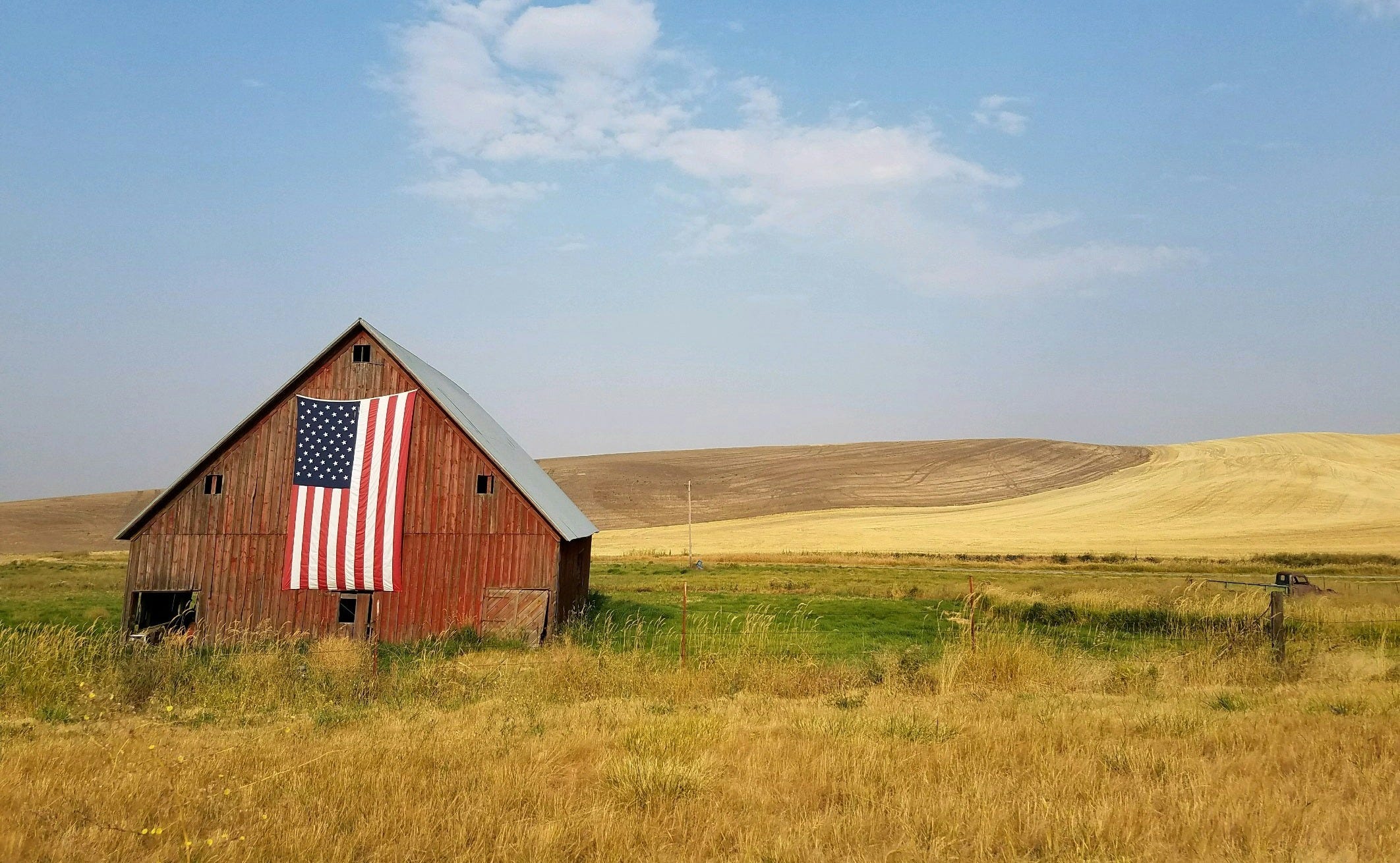
The flight was rougher than I’d hoped. After a bumpy takeoff, headwinds pushed hard against us for most of the three hours. When we finally landed, Arkansas spread out beneath us in long, open stretches. From the window, I saw plains covered in dry hay, a few barns and houses scattered in the distance. No skyline. No center. Just space. It was nothing like the city we’d left behind—not even like the outer boroughs. In the tarmac, a big sign: “Welcome to XNA, the North of the South.”
At the rental counter, Jaime proudly handed over his brand-new driver’s license —after nine years of living in New York, he had finally found an excuse to get an NY Driver’s License—and received the keys to an SUV. As we waited for our bags, a familiar unease crept in. I wasn’t sure how to exist here. In New York, Jaime and I didn’t think twice about being ourselves. We held hands. We kissed. We moved through the city without negotiation. Here, questions surfaced almost automatically. Would people stare if we stood too close? Would a kiss feel like a risk? And what if they heard us speaking Spanish? With national politics growing louder and harsher, I wondered what would register first—our queerness or our ethnicity.
I took in the airport more carefully. Trucker hats. Army T-shirts. Goatees and full beards everywhere. Signs posted along the walls reminded passengers that firearms were not allowed past security checkpoints. Outside, pickup trucks filled the parking lot. My stomach tightened. This was the South, all right.
We loaded the car and headed toward Fayetteville, the road winding through farmland. Dilapidated barns leaned into time, corrals held clusters of cattle, ranch houses sat low against wide fields of dry brush and bare trees. I found myself scanning for political flags, but saw none. About half an hour later, we pulled into a small Courtyard by Marriott. At the front desk, I watched closely as the woman confirmed that the two of us would be staying in a one-bed room. She didn’t hesitate. I exhaled.
We texted Marina to let her know we’d arrived. “Yay! Welcome to Northwest Arkansas,” she replied, saying she was getting dinner ready and that we should come over whenever we wanted.
Before heading there, Jaime and I drove around a bit. Part curiosity, part practicality. We were already imagining ourselves back here with a newborn, trying to function. Where would we buy diapers in a pinch? Formula, if we needed it? Fayetteville is just minutes from Bentonville, home to Walmart’s headquarters and the site of Sam Walton’s first store, opened in 1950. Unsurprisingly, Walmarts were everywhere. Seeing shelves stocked with baby supplies was oddly reassuring.
Fayetteville itself felt like a city in transition. Older houses stood beside shiny, cookie-cutter condos, and construction seemed constant. It’s the second-largest city in Arkansas, after Little Rock, yet its population barely tops 100,000. Still, it’s growing fast—nearly 10 percent in the past five years, compared with 3.7 percent in Austin, Texas. The pace of change was tangible on every street corner.
“Are you ready?” I asked Jaime as we turned toward Marina’s house.
“I’m hungry,” he said. “What else do I need to be ready for?”
“I don’t know,” I said. “Do you think they’re religious? What if they ask you to say grace?”
“We’ll figure something out if they do,” he said, reaching for my hand. “Let’s just enjoy tonight.”
After a few turns, we entered a quieter neighborhood. Marina’s house sat at the end of a cul-de-sac—a beautiful brick home with an oversized lawn and a large oak tree anchoring the yard.
“Welcome!” Marina said as we parked. “Come on in.” She’d been sending us photos for weeks, proudly documenting her growing bump, but seeing her in person felt different. She looked radiant.
Before we could step inside, I reached into the car and pulled out a large, sealed plastic bag we’d brought from New York. Six of Marina’s favorite egg-everything bagels, packed carefully to survive the trip. The moment we opened it, a wave of garlic and onion hit us, escaping even from the tight seal.
“A little something for you,” I said, handing her the bag.
Her eyes lit up. She grabbed a bagel, inhaled dramatically, and gave me a fist bump. “Yes! I’m not sharing these,” she declared, grinning.
Inside, I noticed a small wooden sign near the entrance. A pride flag. All are welcome here. I smiled, touched, and wondered if she’d put it there for us.
“I got that in Cherry Grove with some friends a few years ago,” Marina said, as if answering my unspoken question. Before I could reply, someone nearly tackled us with a hug.
“Hiiiii, you guys!” Hayley said. “It’s so good to see you again!” She was exactly as I remembered—unapologetic and full of energy.
“I have to tell you about this new painting I’m working on,” she continued. “It’s a split universe—one side fire and volcanoes, the other snow and ice. There’s someone in the middle, stepping through a portal into another dimension. It’s so cool!”
“Leave them alone, Hayley,” Marina laughed. “There are snacks out, and here’s some wine.”
The house filled up quickly. One of the dogs trotted past us, then another, then the third, each weaving through legs like it was their job. At the same time, Marina’s daughter—now three—darted from one room to the next, sneakers flashing, curls flying.
“Where are you going now?” Marina called out, not really expecting an answer.
Her daughter replied with something joyful and completely unintelligible—half syllables, half song—already disappearing down the hall. Marina smiled like she understood every word.
When she came back running, we knelt to hand her the small backpack we’d brought—a beaver-shaped souvenir from Victoria we’d imagined she might love.
“What’s this?” Marina asked, crouching down with us.
“For you,” Jaime said.
The toddler took it, examined it briefly, then dropped it on the floor and ran off again, babbling happily as she went. Jaime and I laughed.
“Fair,” I said. “We tried.”
In the kitchen, a man in a flannel shirt was arranging a plate of snacks.
“Hey, I’m Preston,” he said, offering his hand. “Where are you guys staying?”
“Over by the Courtyard,” Jaime said.
Preston nodded slowly, considering it. As the toddler zipped past him again, he crouched, responding to her rapid-fire gibberish with laughter and small playful gestures. It was clear he understood her in a way that made everything flow—the words, the energy, even the moods—a private language of connection.
He slid a plate closer to us, with sweets. “These are homemade. Help yourselves.”
A woman leaning against the counter turned toward us. “I’m Amy,” she said warmly. “I’ve heard so much about you two.”
“Only good things, we hope,” I said.
“Oh, definitely,” Hayley cut in. “They’re legends already.”
Amy laughed. “See? No pressure.”
Conversation moved in loose waves—where we were staying, how long we’d be in town, whether we’d driven past the old water tower yet. Hayley drifted in and out, crouching to pet a dog or reappearing with a glass of wine, while the toddler climbed into her chair, unstoppable and gleeful.
Before dinner, Marina waved us toward the back of the house.
“Come see the porch,” she said. “It’s my favorite part.”
We stepped outside just as the sun was starting to dip. The backyard opened into a small garden, the vast horizon behind it. The light stretched long and golden, settling behind the trees at the edge of the yard. For a moment, everything felt still.
“This is really beautiful,” Jaime said.
Marina smiled, one hand resting instinctively on her belly. “This is what you can’t get in New York.”
“Well, the light is too perfect not to do a selfie,” I said.
The three of us leaned in, the porch and garden behind us, the sun slipping away in the background. I held the phone out and clicked.
“Yay!” Marina said. “Now let’s go get some food.”
She set the braciole on the table, a family recipe that she had perfected over the years. It was rich and fragrant. Hayley followed with a tray of baked ziti.
“I made this,” Hayley said proudly.
“She supervised,” Marina corrected.
“I spiritually supported with cheese,” Hayley said.
People grabbed plates and found spots wherever they fit, no seats assigned, no formality. No one asked anyone to say grace. Just the sound of forks, conversation picking up, dogs circling hopefully underneath.
Jaime leaned toward me. “This is nice,” he said quietly.
I nodded. It was. Not polished or performative—just warm. For the first time since we’d landed, my shoulders dropped. We weren’t being sized up or explained. We were simply there, eating dinner, already folded into the evening.
As we drove back to the hotel that night, the streets dimly lit and quiet, Jaime and I sat in companionable silence. The day stretched behind us like a map of first impressions—our fears, our anxieties, the “what ifs” we’d carried with us. So much of it, we realized, had existed only in our heads. The world had been warmer, more welcoming, more ordinary than we’d imagined.
Tomorrow, we’d be at the hospital for the anatomy scan—the first time we’d see our baby on a screen, moving, existing, truly ours. My chest tightened with awe and excitement. Jaime’s hand found mine, and his grin said everything words couldn’t. The highway stretched ahead, dark and quiet, but inside the car, our anticipation was bright and alive.
Continue reading…
Comments
Nothing yet. Say the first thing.
Sign in to join the conversation.