
Welcome to the Dyer’s Almanac—a monthly log and exploration of natural dyes set in a seasonal and ecological context. Each month I share a new Almanac (“the calendar”) exploring a different theme, partly inspired by engagement with my home ecosystem, yet with plant stories, ecology, natural dye recipes, and inspiration for anyone inclined to creatively engage with natural cycles and the land where they live.
Paid subscribers receive full access to this month’s Almanac and all past entries. I appreciate your support of this project, and I hope you enjoy!
The Dyer's Almanac: Coffeeberry & Buckthorn
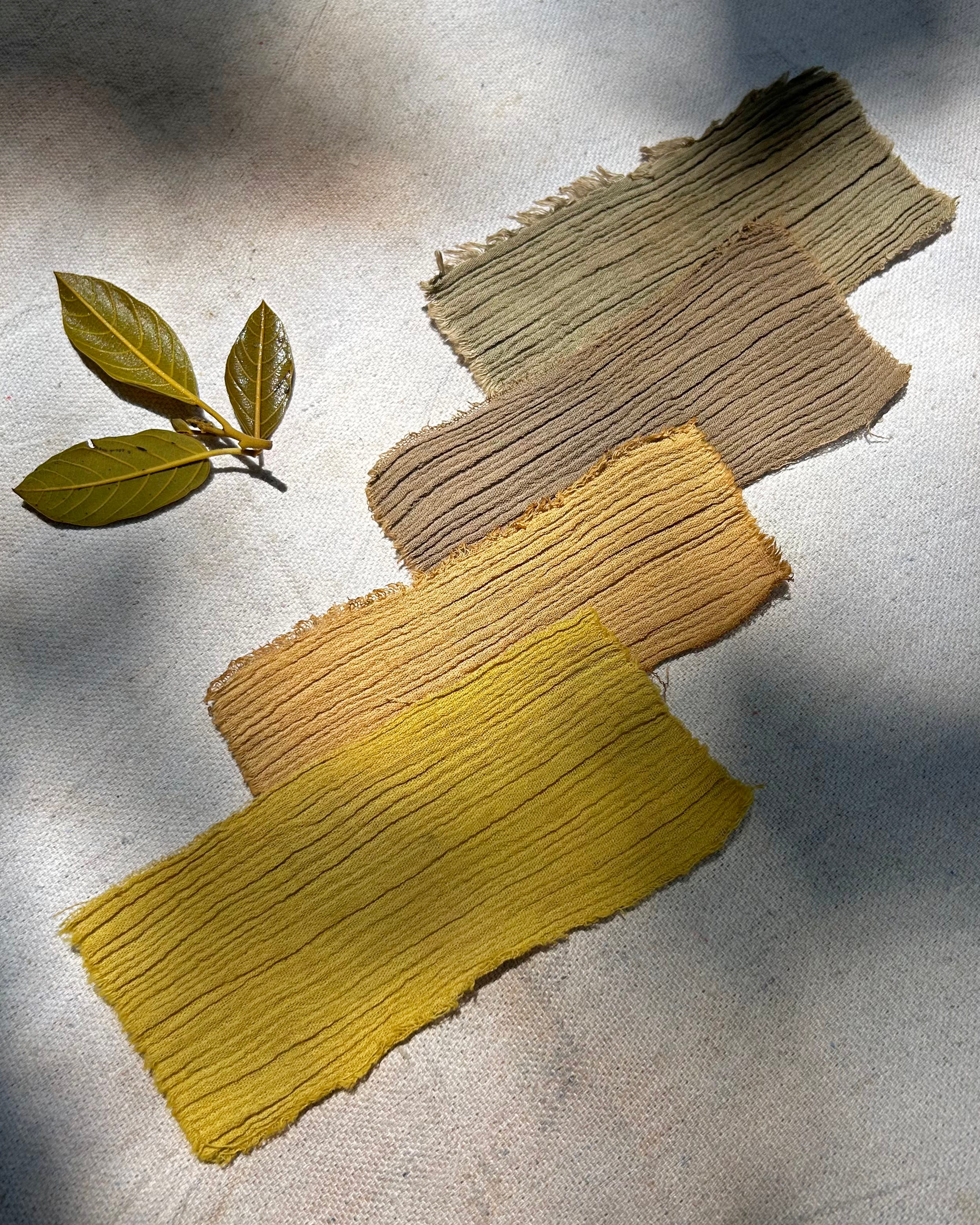
The way the wind blows through the canyon, you’d think it carved the way itself. Seeking the land’s lowest points like a river, singing its breathy song down the dry gorge for ages, it must have shaped it. If you stand on the high banks of the wind river, on the edges of the canyon, the steady breeze plays gently at the ends of your hair, the hem of your shirt. Stand in the full stream, risk being whisked in a gust downriver.
Where the land warps in toward the canyon’s mouth, the road follows, skirting some deep geologic memory. I pull over in the dirt at the curve. Up canyon, a dry waterfall. Down canyon, a steep cliff above the valley where the real river runs, counter to the wind, creating its own world down there, where the many leaves of the cottonwoods are calm. Up here, a wizened shrub—ancient, many-limbed, defiant—stands midstream in the wind’s channel, its leaves vibrating like a thousand bees.
Highwaythorn
It’s an old coffeeberry shrub—a tree, really—whose limbs I’ve stopped to prune. They are leggy and thick, strong as whips in the wind, and they are blocking a few feet of the road, so I know it’s only a matter of time before they meet the Forest Service chainsaw. I stand at the edge of the wind river and wait for a moment of calm. Check the road for cars, though I haven’t seen anyone for hours. The wind settles for a second. I’m next to the shrub, then inside it, enfolded. The wind whistles urgently through its branches, and I prune.
I collect an armful of cut stems—deep burgundy with smooth, dark leaves; ovate and curled back along the edges—and set the bundle in the backseat while I go on foot to follow a pair of brilliant yellow dogface butterflies down into the valley, toward the water. When I return hours later, the car is full of a familiar smell; acrid and earthy. Plant phenols breaking down—oxidizing, exhaling into the container of hot car air.
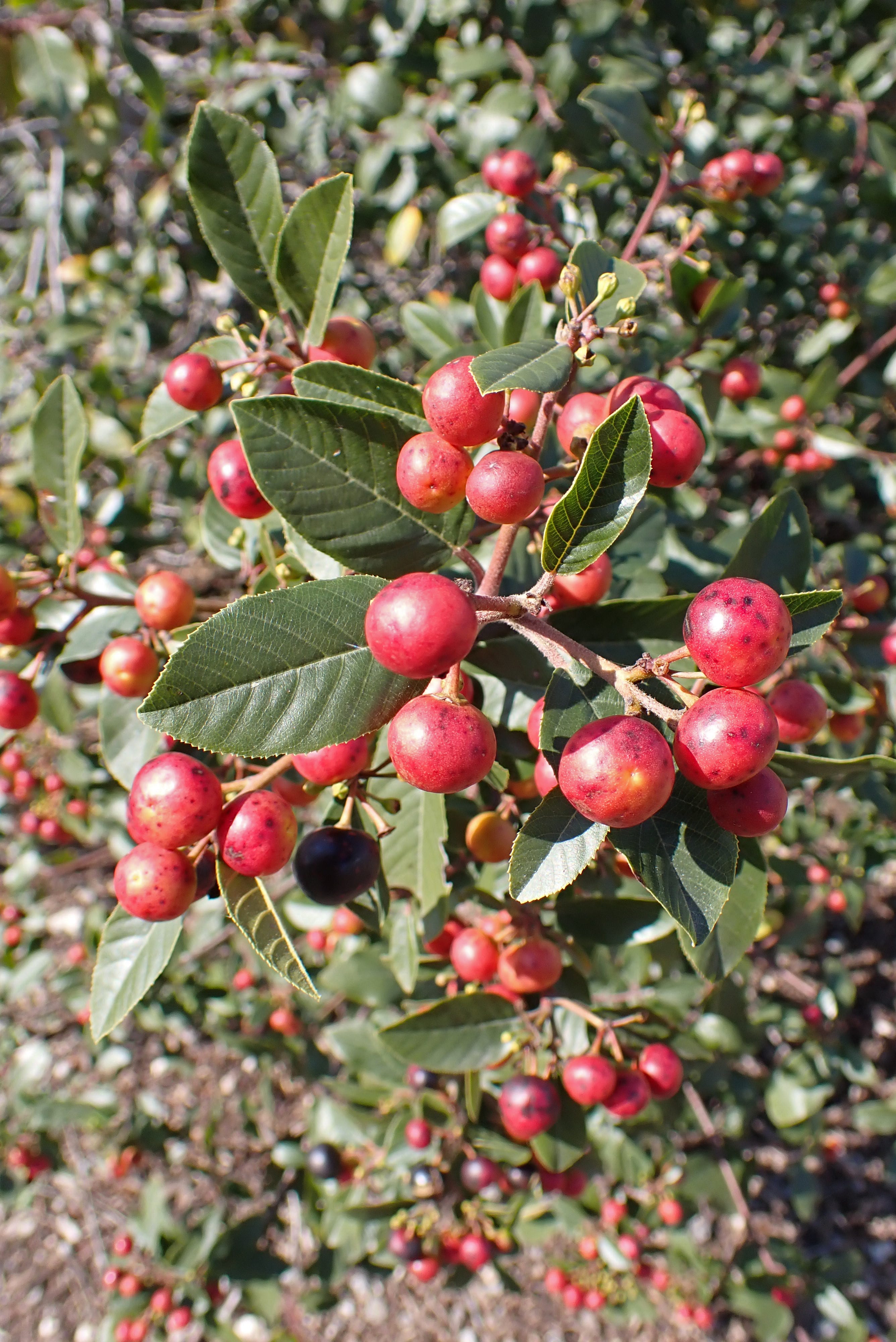
Coffeeberry, Frangula californica, has a chemical mix entirely its own, though similar to its fellow western North American kin Frangula purshiana, the plant whose bark has made its way around the world as the medicine known as cascara sagrada—sacred bark.1 The active compound in cascara sagrada is emodin, which is also the source of the plants’ potent natural color. Emodin is an anthraquinone compound2 with a rich, true golden-yellow hue.
Like California’s coffeeberry and cascara buckthorns, true buckthorns (Rhamnus species) are rich in emodin. Common buckthorn (Rhamnus cathartica)—so common it’s earned the name highwaythorn, or waythorn, for its tendency to grow along roadsides—is native from Europe to northwest Africa and West Asia, and has been introduced elsewhere, including across North America.
In its native range, the plant has a well-documented history of use as a powerful purgative,3 and has been cultivated since before Roman times for its natural color, used variously as a textile dye, pigment, map and paper stain, early house paint, and more.
Comments
Nothing yet. Say the first thing.
Sign in to join the conversation.