
The spring is ten miles down a dirt road, which is fifty miles up the forest road. Over half a dozen dry washes, past canyons with creeks and cottonwoods spilling out of them, through corridors of manzanitas with the berries picked clean. Past where the grass is flat, where the bears sleep. Beyond the confluence of two streams, where suddenly the burgundy berries are everywhere, only they’re in big piles of fresh scat on the ground. Arctostaphylos—“bear grapes” in Greek. I clap and sing loudly as I walk toward the spring.
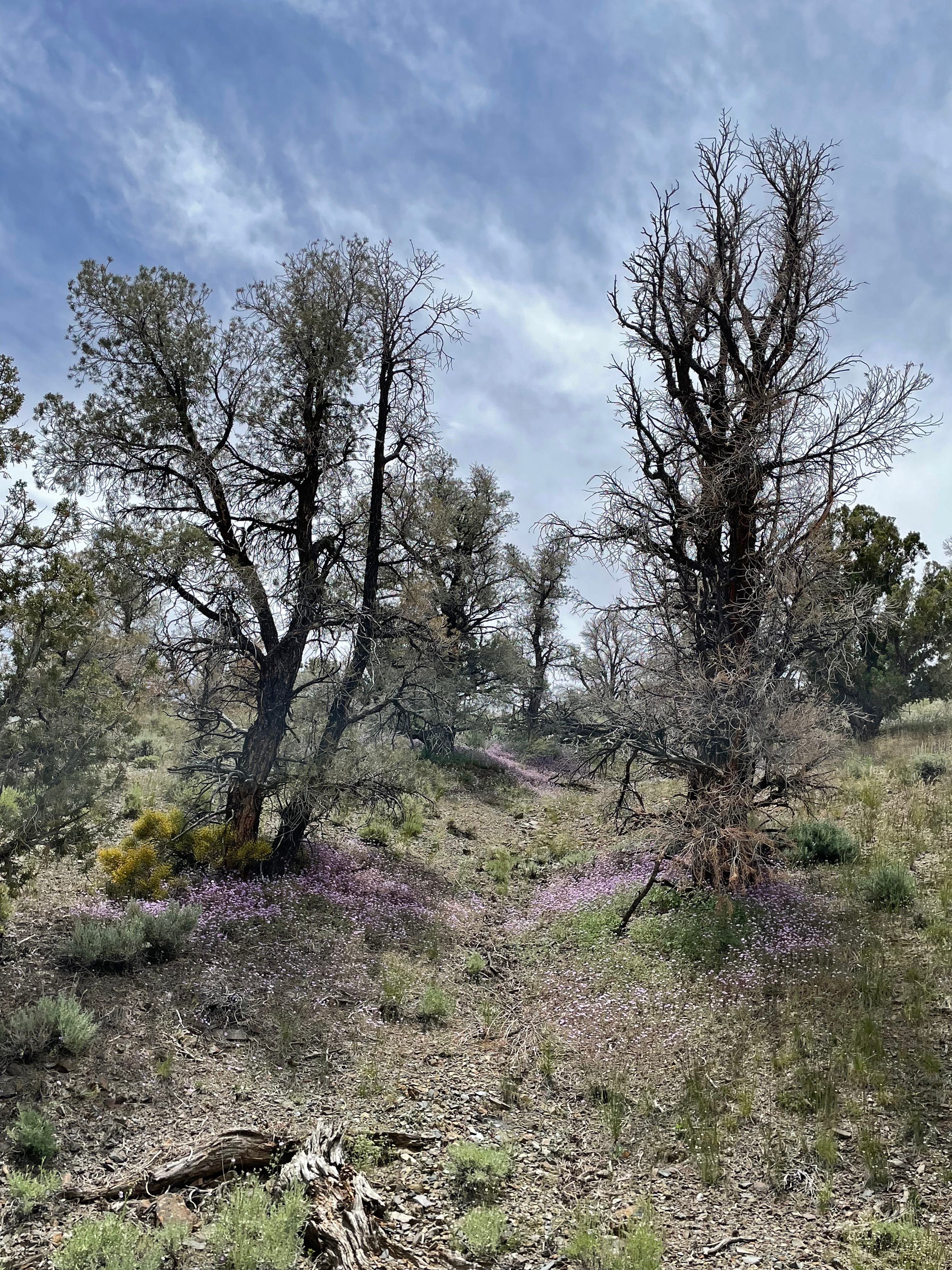
To get there we must pass through the burn scar. A world of monochrome gray and black, like when the sun slips behind a cloud and the shade momentarily mutes the brilliance of everything. Only there are no clouds; the sky is clear and blue, and the ground is charred and black. The ancient pinyons are dead, their limbs frozen in expression like figures at Pompeii. All leafless, some still holding onto old cones.
I scan the ground for pinyon seedlings; see none. The oaks might take over here. Above ground all their great charred trunks look dead, but there are stirrings in the underworld. A few fountains of green spring from the ashen earth in the distance. Wands tipped with spiny leaves emerge around some of the blackened trunks—oaks performing their resurrection magic.
The charred cones littering the ground may have been made by pinyons more than a hundred years old. They start producing cones around age forty, but good seed crops begin in earnest around a century in. They grow in no hurry; maybe a foot per decade. Many of these trees were easily a few hundred years old. When fire came through this canyon, it smoldered for eight days before crews contained it on the last day of July, 2024. Fifteen hundred acres of ancient gnarled pine forest burned. The cause of the fire remains unknown.
I move slowly through the hollow forest. Every step disintegrates more of the pines’ stored time, sending it back to the soil. The air, the dirt; everything smells of burned wood and roasted pinyon nuts. Like when we heated them over a fire in the cast iron—fat crackling lightly in the pan, hot and melting fast on my tongue. Seeds a hundred years in the making. While we ate, the first spark of fire was just catching in the mountains.
But back to the spring. We’re heading the right way—I can see the bright green up there. The water seeps from a crevice in the hill covered in vining clematis. Where it pours forth, ferns and flowers gather like sycophants, bowing and nodding yes, yes, yes.
The water makes everything around it grow wild and age strangely. Ask the elderberry which fruits and flowers all year. Ask the mugwort, simultaneously seeding and sprouting. Here time swirls like an eddy in a stream, age retracing its steps to youth and back around, and around, and around. Water stretches out the arc of the spiral, makes leaves spontaneously sprout from it. The evergreen willow, its shoots ranging from days to eons old, nods in accord.
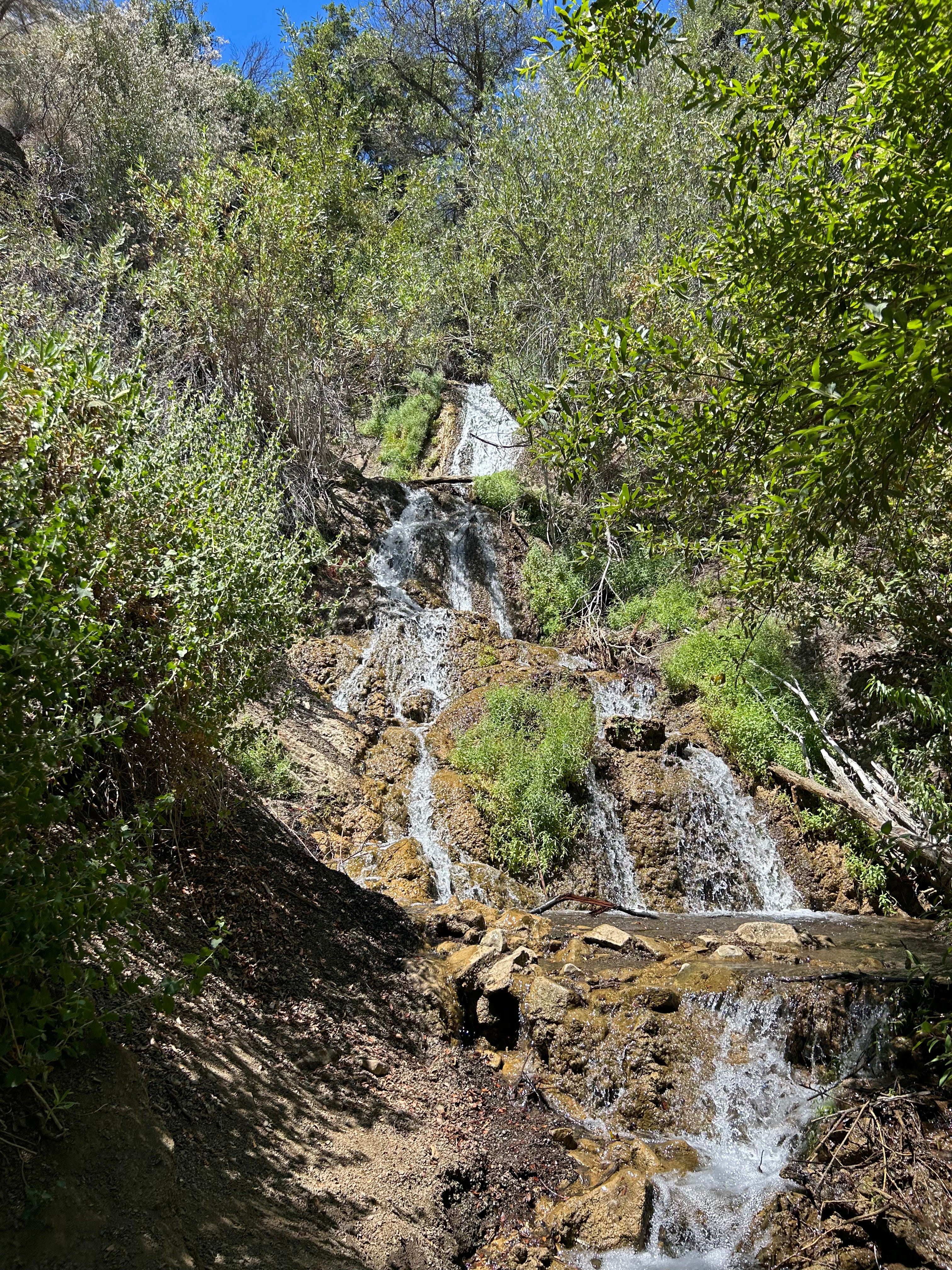
At its source the spring flows like an open faucet. I fill up all my vessels, then grasp out of habit for an invisible handle, eager to close the valve and stem the precious stream. There’s no valve, of course; just the crack in the earth found by the water which knows only one function: flow.
And it does. Water dampens the whole hill, sends little rivulets like fingers down and around its sides. Outside the green oasis the land is endless sandstone, miles and miles of fine dust blowing down with every dry wind. The spring sings between the split rock it flows through. The hill is covered in a hundred shades of green. I wonder what it was like here when the fire came.
Some creatures must have sought refuge by the streams, beneath arching vines protecting cool, wet soil while fire feasted around them throughout the canyon. Plants, animals, roads, homes—the fire ate indiscriminately. But where water had fed the earth, drawn up life with deep roots and slow transpiration, the fire was less hungry. The sea of burning red lapped at its edges, but the oasis remained unwaveringly green.
Where the dirt road ends, where the sandstone hills ripple into mountains, into wilderness, there’s an arc of gnarled green pinyons gathered along a spring-fed stream. Their kin are crowded behind them to the east, where the sun is rising and where the fire hasn’t touched, not yet—not for a hundred years or more.
Comments
Nothing yet. Say the first thing.
Sign in to join the conversation.