
Hello team,
This is a free issue of How I Cook, to receive all of the weekly posts as well as everything from the archives, consider becoming a (very chic) paid member.
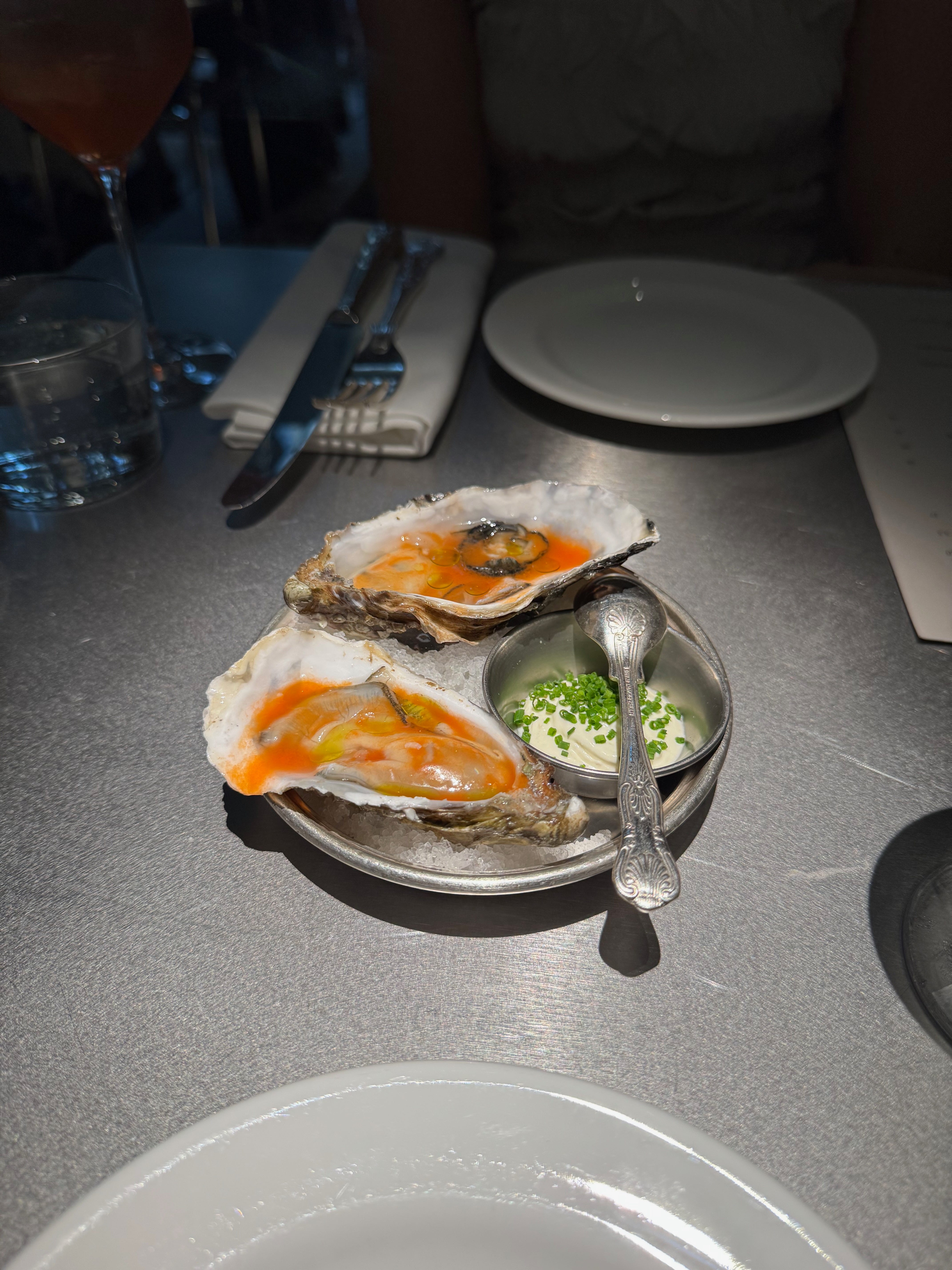
To welcome in our brand new 101 series, I’m going to lift the lid on buying, storing, opening and eating oysters at home. We’re kicking off with some basics here as well a a bulletproof mignonette recipe. I’ve furnished this article with pictures of some of my favourite oysters through the years.
Enjoy, go and buy some oysters and as always, thanks for reading,
B x
How I Cook is a reader-supported publication. To receive new posts and support my work, consider becoming a free or paid subscriber.
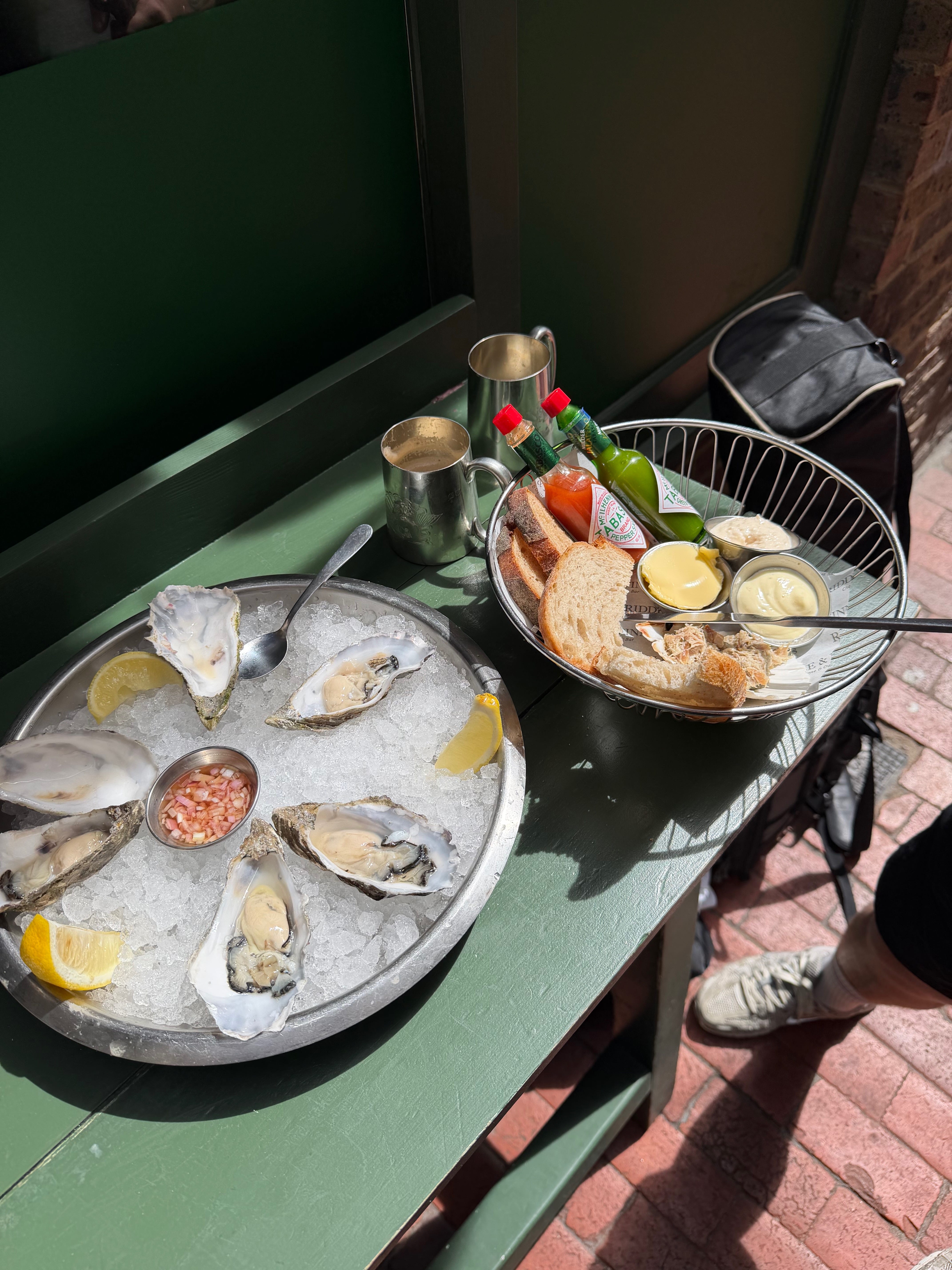
Buying oysters can feel, to the uninitiated, pretty intimidating. Off the shelf they look, at best, like something you’ve found under a seaweed-crusted pier, covered in barnacles occasionally mud, and there’s a vague sense that if you get one teeny thing thing wrong you’ll be spending the foreseeable hugging the toilet. In reality, however, buying oysters is pretty simple and is not something that should be reserved only for restaurants or when you go to borough market on a hangover. If anything, buying oysters yourself gives you more control, you know exactly what’s happened to them all the way up until you slide ‘em in (sorry). I think probably the number one thing to remember is that, until you shuck them, they’re alive. Treat them like that and you’re most of the way there.
HOW TO BUY OYSTERS
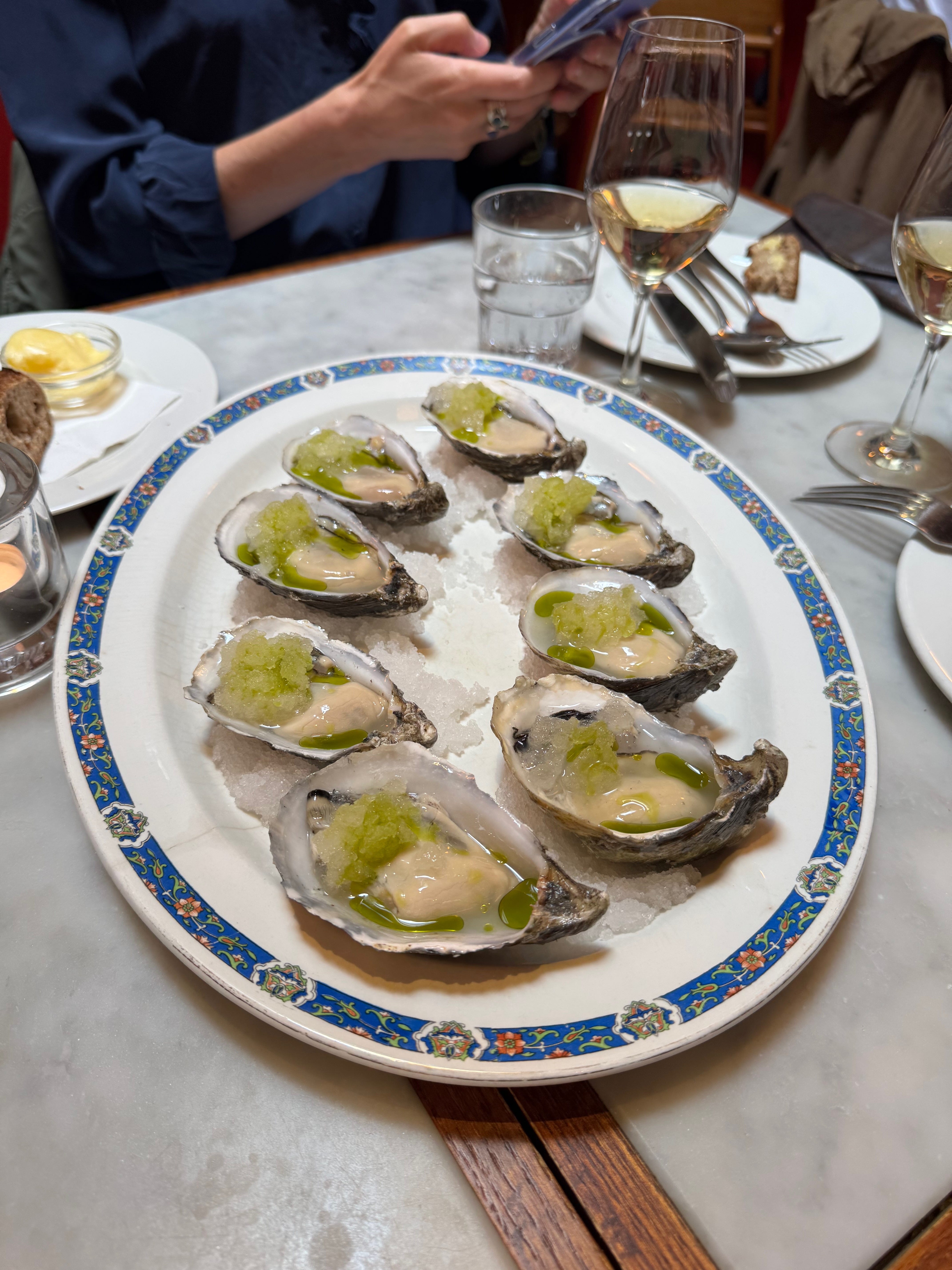
For the most part, the oysters you’ll buy in Britain are Pacific oysters, to the nerds, Crassostrea gigas. They’re the standard-issue British oyster: widely farmed, readily available and generally, plump with a bright, clean flavour and meaty texture. Then there are native oysters, Ostrea edulis, which are flatter, rounder, a little harder to come and usually more expensive. They’re a bit more delicate and mineral-forward, and if you see them on a good fish counter, they’re worth trying.
You’ll probably also hear the old rule about only eating oysters in months with an ‘R’. September to April, I’ve had a few comments on the 101 video about it in fact. It’s a nice bit of folklore, but really it is just folklore and as far as I can tell, isn’t really a good representation of how modern oyster farming works. Farmed oysters are available throughout the year, and the most important things are where they came from, how they’ve been handled and how they’ve been stored.
The best place to buy oysters is without a doubt a good fishmonger. Not because fishmongers possess some mystical oyster knowledge, but crucially, because they should be able to tell you what you’re buying. When you’re buying them, pick a few up and feel for the weight. They should feel heavy and a little dense for their size. That weight is mostly the briny, delicious filtered seawater they’re holding onto inside the shell, and a heavy oyster is generally a happier proposition than one that feels like an empty box. The shells themselves should be intact and tightly closed.
Ask questions! Where are they from? When were they packed? When did you get them? What size are they? What do they taste like? If the person standing behind the counter stares at you like you’ve just asked them to identify a pebble, or in any way looks unsure, it’s probably time to go somewhere else.
HOW TO STORE OYSTERS
Once you’ve bought them, take them home, right away. This sounds obvious, but a big box of oysters isn’t really something you ought to carry around with you while you pop into three other shops and have a coffee. Manage your schedule so they’re the last thing you pick up and keep them cold on the journey back home A cool bag or box with a bag or two of ice is ideal.
When you’ve arrived home home, put them in a shallow tray or container with the deep, cupped side facing down. This is important because you want them to retain their liquor. Cover them loosely with a clean, damp cloth and put them in the fridge. The fridge should be 5°C or below. You can also keep them in a good quality cooler (I use a Yeti) on a bed of ice, the ambient temp will sit at around 3-4°C. Don’t put the oysters in a bowl of water, don’t chuck them into a bucket of melted ice and don’t seal them into an airtight plastic bag. Freshwater kills oysters, they need salty or brackish water to survive. Again, they’re alive, remember, like you and me, they need the right surrounds and the ability to breathe.
My general rule is to eat them as soon as possible. Properly handled oysters can stay alive for several days, but there’s really no prize for keeping them until the following weekend. If you’re having oysters on Saturday, buying them on the day is ideal, but Friday is acceptable.
HOW TO OPEN OYSTERS
Right, it’s time to eat. Watch the video above for a step by step on how to open an oyster.
When you’re ready to eat them, give each one a quick sniff-check. A good oyster should smell like the sea, that is; clean, salty, mineral, maybe slightly cucumber-y. It shouldn’t smell sour, rotten or aggressively fishy in any way at all. If it smells like something has died inside it, or even 1% of your brain has suspicion, there’s a fairly good chance that something has died inside it. Bin it, walk away, move on. Sometimes you’ll get a bad oyster in a batch of perfectly good delicious ones, just because one is bad doesn’t mean the whole box is spoiled.
That said, smell isn’t a guarantee of safety (soz). This is the slightly less romantic bit about oysters. Because they’re filter feeders, they can accumulate bacteria and viruses from the water around them. Commercial oyster beds are monitored and classified for this reason, but raw oysters are never completely risk-free, there’s always a little jeopardy. Norovirus is a particular concern, and lemon juice, vinegar, Tabasco or a good slug of Champagne do not magically sterilise an oyster. If you want to reduce the risk from pathogens, cook them. I’ll be covering cooking oysters in the coming weeks, they’re delicious!
Assuming everything looks good, shuck them as close to serving as possible. There’s no advantage to opening 24 oysters at lunchtime and leaving them sitting in the fridge until dinner. The whole point is to get them from shell-to-gob while they’re at their best. A good opened oyster should be plump and sitting in plenty of clean liquor. Don’t panic if the liquor is slightly cloudy; that isn’t necessarily a sign that anything is wrong. What you’re after is a healthy-looking oyster with a fresh smell. Oh, and try not to spill the liquor. That salty little puddle is arguably one of the best bits!!
DRESSING OYSTERS + GARNISH THEORY
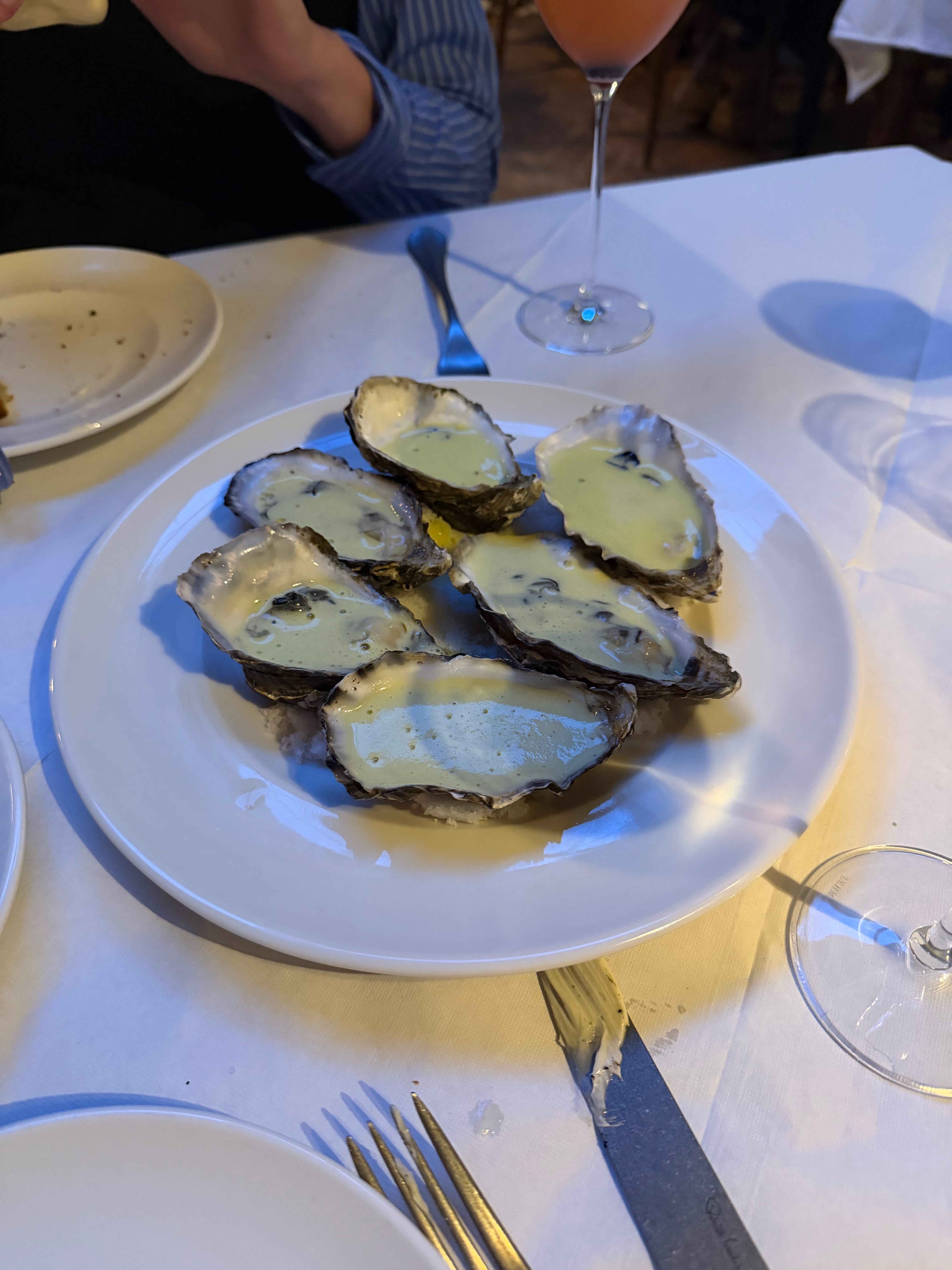
To be completely honest, oysters don’t really need too much doing to them. I think it’s worth mentioning because it’s very easy to get carried away with garnishes. You’ve gone to the trouble of buying good oysters, you’ve kept them cold, you’ve carefully opened and shucked them without losing all the liquor, and then suddenly you’re standing over them with six different vinegars, three types of chilli and a microplane wondering how far you can push this briny boat out.
A good oyster already has plenty going on. It can be salty, sweet, creamy, mineral, cucumbery, briny and slightly metallic, sometimes all within the same mouthful. The garnish should make those things more obvious, not turn the oyster into a tiny, busy-as-fuck canapé. Here’s a handful of garnishes and some accompanying theory…
Lemon is the obvious starting point. Its acidity cuts through the richness of the oyster and makes all that salty, mineral flavour feel brighter. But go easy, a delicate squeeze is good; drowning the thing in lemon juice until it tastes like a regret-drenched tequila shot is less good.
Mignonette is probably the classic garnish I come back to most. Finely chopped shallot, vinegar and black pepper. That’s basically it, (recipe below!) Red wine vinegar is traditional, but cider vinegar, white wine, sherry vinegar or Champagne vinegar are all be excellent. The shallot gives you a little sweetness and crunch, the vinegar brings acidity and the pepper adds a bit of warmth. It’s all about amplifying the flavour of the oyster my dudes. Oysters also love chilli. Fresh red chilli, fermented chilli, chilli oil or a few drops of Tabasco all make sense because you’re adding heat and acidity to something that is naturally sweet and saline. Just don’t confuse ‘more chilli’ with ‘better oyster’. If you’re sweating after eating it, you’ve probably missed the point.
Cucumber is another brilliant match. Oysters and cucumber share that cool, watery, green quality, so finely diced cucumber with cider vinegar and a little dill feels almost inevitable. Green apple works for the same reason. Its sharpness and sweetness play nicely with the oyster, particularly with a clean, crisp oyster that isn’t hugely creamy.
Once you start going in an Asian direction, things get even more interesting. Ponzu, ginger, spring onion and chilli are all excellent, although soy sauce needs a little caution. Oysters are already extremely salty, and adding soy can take you from ‘beautifully briny’ to ‘I have just licked the bottom of the Atlantic’. A little ponzu and finely grated ginger is often enough.
Fruit can work surprisingly well too. Grapefruit, green grape, pear, watermelon and even passion fruit can all make sense because you’re playing with the natural sweetness of the oyster. The key is keeping everything tiny and fresh. You don’t want a fruit salad sitting on top of your shellfish.
Herbs are similar. Dill, chervil, chive, tarragon and coriander can all work, but they’re supporting actors. A little finely chopped chive is lovely; a handful of coriander turns the whole thing into a coriander dish with an oyster underneath it.
Crème fraîche and horseradish is another good combination, particularly with larger oysters that can stand up to something richer. The cold creaminess works with the oyster while the horseradish brings a clean, nasal heat. It’s a bit more substantial than a squeeze of lemon, but still makes sense.
A good approch is serving several garnishes rather than putting everything on every oyster. A dozen oysters with lemon, mignonette, cucumber and chilli gives everyone the opportunity to work out what they like. You can also eat one completely naked in between, which is useful because otherwise you can quickly forget what the oyster actually tastes like.
And that, really, is the test. If you’ve put something on an oyster and the first thing you taste is the garnish, you’ve likely gone too far. The best oyster garnishes aren’t there to show off. They’re there to make you want to eat another oyster.
There you have it…. and as far as the basics go, that’s really all you need to know. Buy from somewhere reputable, ask where they came from and when they were packed, choose oysters that feel heavy and alive, get them home quickly and keep them cold, cupped-side down and covered with a damp cloth. Don’t drown them, don’t seal them up and don’t leave them knocking around in the fridge for a week.
Most importantly, don’t be scared of them. Oysters look complicated because nature has packaged them in a rock. Once you get past that, they’re one of the simplest things you can eat: open, check, add something tasty, if you like, and get it into your mouth. Yum.


Panic Shack by Panic Shack
On Sunday, we held our latest Pears For Lunch event with the mighty Tiernans from F.K.A.B.A.M at The George Tavern in Shadwell. It was an absolute blast and Lou and I want to say a huge thank you to everyone who came along, smashed a kebab and watched the fire lineup we had playing. Panic Shack headlined, and they crushed. This is their first record, give it a spin.
Album Highlights: Tit School, Lazy, Thelma & Louise
Thanks for reading, catch you next time.
B x
Comments
Nothing yet. Say the first thing.
Sign in to join the conversation.