
Hi folks,
Welcome back to How I Cook+, happy saturday.
On the menu today: a fantastic new substack from Joel Golby, two brilliant oyster garnishes and a new record from Overmono.
I’m aware that making granita and hollandaise at home is in danger feel almost overwhelmingly cheffy but, as is often the case, are easy to put together with a little know-how. Hollandaise is hot, buttery mayo and granita is basically just tasty seasoned frozen juice (easy!). I’ve broken down a handful of potential hurdles, tips, tricks and ideas for you below. I’ve put them on oysters today, but as standalone recipes they’re very delicious and can be made, eaten and enjoyed with myriad other foods.
Thanks for reading,
B x
How I Cook is a reader-supported publication. To receive new posts and support my work, consider becoming a free or paid subscriber.

ME THANKY by Joel Golby
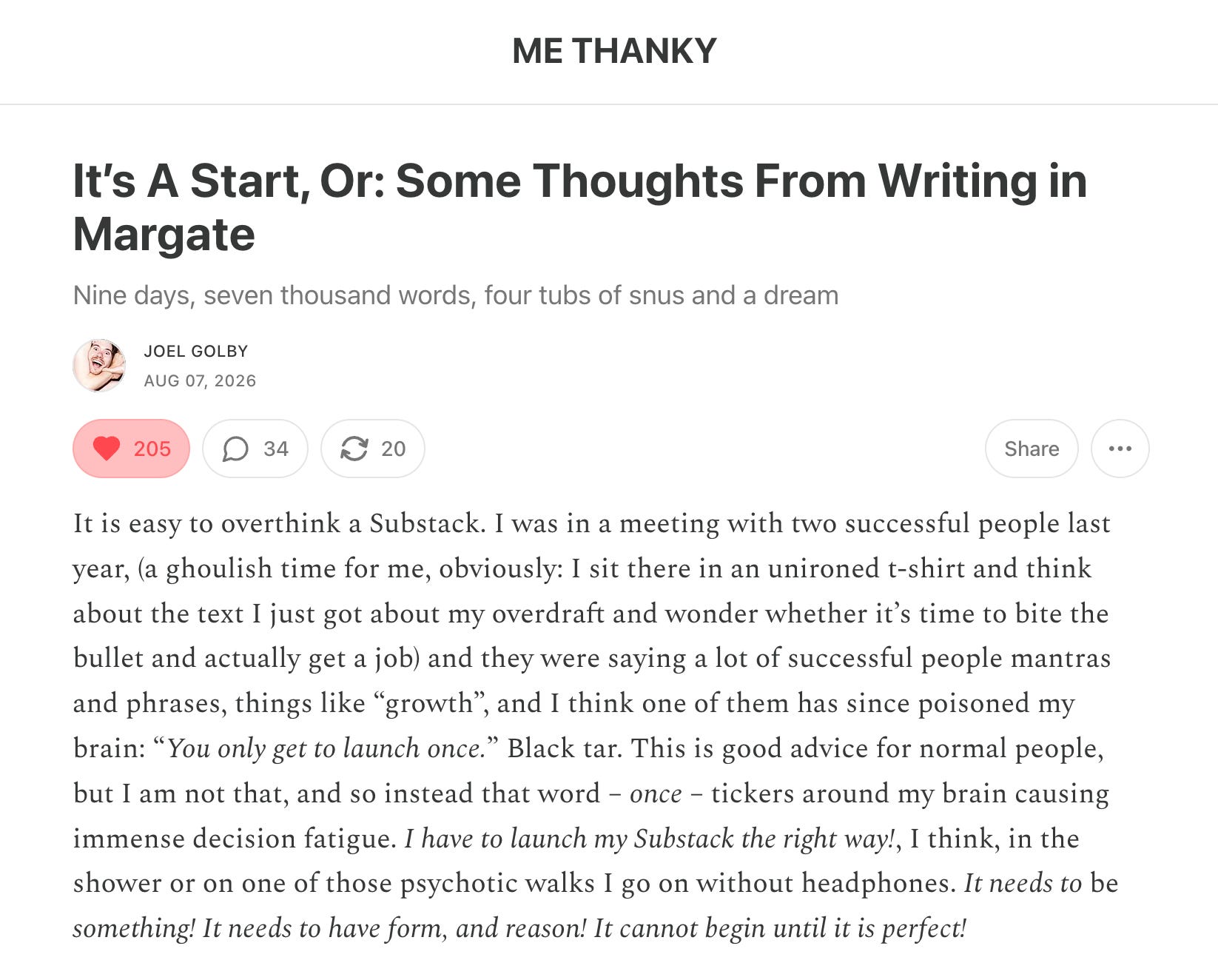
Starting with words this week. I urge you to go and chew on this piece of writing.
They say in order to improve at something, you should surround yourself with people who are far better at said thing than you are. Outside of endlessly cooking and talking to various cameras, I spend a good chunk of time writing to an, at best, good level. A healthy slice of my close friends are very good writers and by way of osmosis, I do believe they’ve made me better.
I met Joel at the birthday celebration of another frustratingly good, apparently-effortlessly talented writer, Shaad D’Souza. Both these people (and Lucas Oakeley) push me, which is at once brilliant and annoying. It’s annoying because writing, like a begrudged jog, is hard and long and gross and sometimes I really, really hate it. But, alas, it’s one of the best things you can do for yourself and your brain. The brilliant part is that staring down the barrel of a blank page and a looming word count is much, much easier when you can turn to people close to you for inspiration! Or a bagel! Or a pint!
So, if you like great writing, yourself want to become a better writer, or want to be inspired to try for the first (or fiftieth?) time, go and read Joel’s new substack! The first outing for “ME THANKY” (a phrase he uses in real life, in public, no less) is a play-by-play of a man (Joel) slipping a little too far into his own mind palace in Margate, as he attempts to write a novel. It’s charming, funny and a great example of his best super power, wielding a tone of voice that is so completely unique, you know who owns the words in front of you without needing a byline.
Click here to read ME THANKY
GRAPEFRUIT HOLLANDAISE
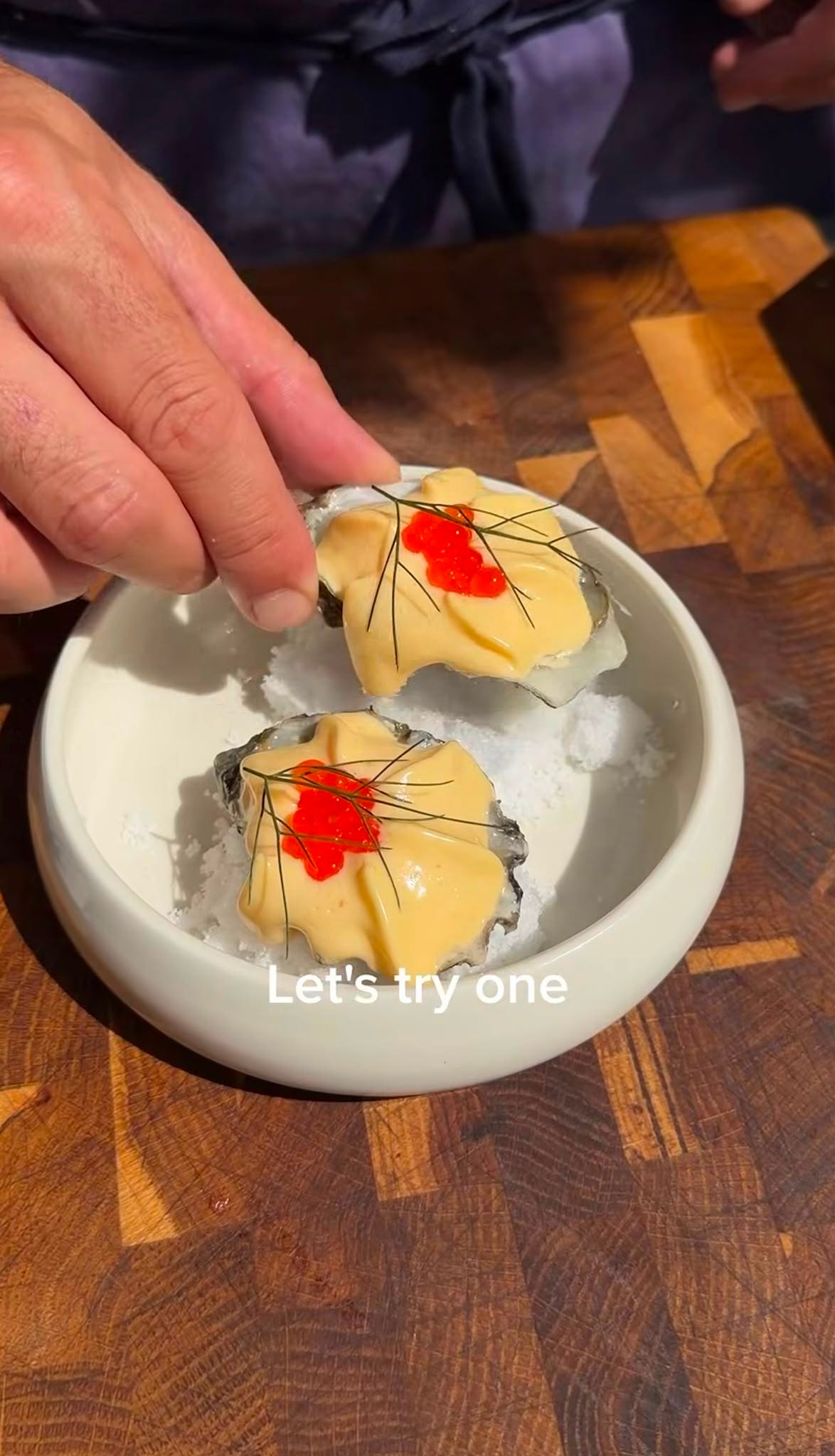
Hollandaise isn’t just for oysters folks. A steak with bernaise sauce or a piece of baked cod with a blanket of anchovy hollandaise are a complete delight.
I imagine if you’ve opened a newsletter about oyster garnished, you’ve made mayonnaise before? Forgive my assumption but if you’ve been reading this newsletter for a while, the chances are that you’ve given an emuslision a whirl. Hollandaise is in the same ballpark, so you’re already halfway there. The principal difference when building a hollandaise is that your ingredients are warm. To put it simply, combine yolks with acid, in our case, grapefruit juice, and cook them over a double boiler to “ribbon stage” before whisking in warm butter to form a rich, thick sauce. It is, in essence, that easy, but of course there a few booby traps along the way. Why grapefruit? A subtle bitterness in food is a welcome addition, and when deployed carefully can be one of the sneaky flavour profiles that elevates a plate of food. You can play with the acid used, be it vinegar, citrus or wine, each bring a different underlying flavour to the emulsion.
To cooking, then. Combine the egg yolks with acid, it’s time to start whisking over a pan of hot water. This technique is how you make zabaglione or any sabayon “egg foam”. The goal is to gently cook and thicken the eggs. They will then yield a slightly more stable and much thicker sauce. I find this process takes only between 1-2 minutes with the quantity we’re cooking today. Keep an eye on it, keep whisking until your mixture has roughly doubled in volume and is very thick. If it is lumpy or looks scrambled, try again, you’ve gone a little too far. It’s best to lean towards undercooked rather than overcooked. If things are a little too hot or moving too fast, whip the bowl off for a second!
You can make hollandaise using an immersion blender or jug blender but I find the texture is much harder to control. Invariably, the “cheats” examples in Serious Eats and chefsteps are too runny for me. As someone who often makes pasta dough in a blender and loves an oven chip, for once I prefer the classic method here.
Understanding the cook on the eggs and controlling the amount of butter you add, bit by bit, affords you a better understanding of the emulsification process and ultimately, more control. Control is king, king.
Oh and use unsalted butter, always. You can add salt later, control, king.
Clarifying the butter isn’t entirely necessary. The flavour is a little cleaner at the other end, and the pure butter fat is far easier to emulsify into the eggs. Clarifying butter is painfully easy. You simply slowly melt butter, wait for a little raft of white milk solids to form on top, and scoop it off with a spoon. That. Is. It. Browning butter for hollandaise is a lovely way to add a very rich, nutty, rounded character to your sauce. To do this, don’t skim off that white raft, stir it back into the butter and cook until it’s golden brown and smells like hazelnuts. You can now make your sauce using this, but be careful not to whisk into the egg base while it’s scorching hot or you’ll have scrambled eggs. You want the butter to be just above blood temperature, hovering around 40°C.
If you let your hollandaise cool, the butter will set, the fats crystallising and the sauce will split. I pop a tea towel over a pan of simmering water, remove it from the heat and sit the bowl on top. This keeps the sauce warm, the gentle steam just kissing the bottom of the bowl. Be sure to give the sauce a good stir now and then, and you’re laughing.
WATERMELON GRANITA
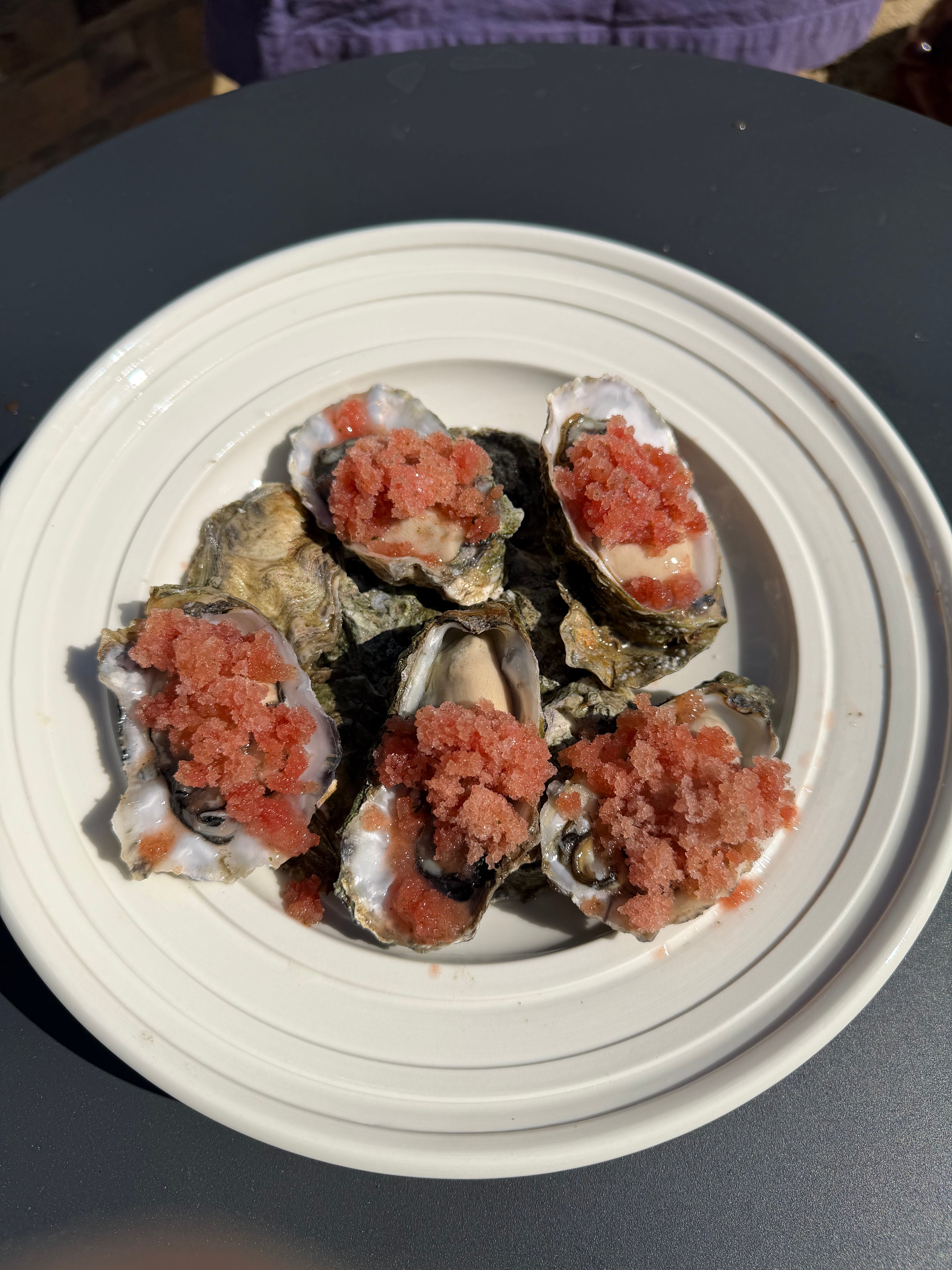
Watermelon granita, it sounds refreshing, cool (both vibe and temp), icy, chic, delicious. It is all of these things and more and best of all, it take about 10 minutes to make.
Granita, in its simplest form, is just tasty frozen juice. Well, 99 times out of 100, it’s fruit juice, but you can also make it with almond milk, alcohol, liquors, syrups and all sorts. If it’s your first crack at making grania then fruit juice is an easy jumping off point. As you’ll see in the recipe below, it is as simple as blending, seasoning, freezing and scraping, however, with a few tricks up your sleeve your granita will be even cooler, chicer, icier and more delicious.
The most important consideration when making granita is the sugar content is very important. Sugar, like salt, is a flavour amplifying seasoning, it can breathe life into vanilla or lift a lacklustre strawberry, but add too much sugar to a granita the freezing point of the liquid will plummet. What does this mean? Well, you’ll essentially have a liquid that’ll never really granita it’ll just be a sort of slushy mess, something closer to sorbet, lacking the icy delicacy we’re shooting for. If making granita with ingredients with naturally low sugar content like celery, cucumbers, almond milk etc, you can add sugar syrup to dial in the right ratio, but like us today, we’re using watermelon and apple, sugar-rich fruits, you only need to add a touch to bring things into the right ballpark.
Another consideration is amping up the level of seasoning in your fruit juice. You want this to be punchy, acidic, sweet, salty and sour. Flavours are subdued a little when served frozen, so turn things up a little more than you would normally.
Once frozen, simply scrape with a fork and a spoon, into fluffy, icy crystals and then transfer to a new container. This granita will maintain this texture for a good few weeks, but you’ll likely eat it first.
What else can you put this on? Raw fish would be very delicious with this granita, spooned over a chopped fruit salad would be excellent or piled on top of panna cotta or ice cream (watch the brain freeze, mind). The great thing about granita is that it is endlessly forgiving, if the texture isn’t right, or it needs more acidity or salt, you can simply melt it down, adjust, re freeze it and scrape again. Nice.

Comments
Nothing yet. Say the first thing.
Sign in to join the conversation.