
Hey folks, how’s it going?
I learnt a new word this week. My wife, who hails from the Northern city of Hull detailed the world “maftin'“ to me. To feel “hot and sticky” is to feel “pure maftin”. It’s good stuff, ain’t it? It’s been pure maftin all week here in London, and I’d rather be anywhere than indoors, so I took my little electric stove to the patio and made myself (and yourselves) an alfresco plate of pasta.
It’s a seafood pasta, buy not as you might not. I find being presented with a giant bowl of spaghetti AND shells to be awkward, frustrating and distracting to eat. For the most part, I can’t hold a decent conversation while scooping shells out of a bowl of food I didn’t plan to eat with my hands, whilst also avoiding any shirt-destroying-sauce-splashes, eating the actual pasta before it goes cold, getting food all over the cutlery and trying to enjoy it. Listen, hyperbole or not, eating a bowl of vongole with the shells in isn’t romantic, it’s f**king annoying. Scooping up sauce with a tiny clam shell and slurping it isn’t hot, either so just ask for a spoon. Embodying this spirit, I’m abandoning shells and posturing in favour of the easy life.
We’ve also got a great record from Michael Nau and a book from the mighty Patrick Radden Keefe.
Cheers,
B x
SEAFOOD PASTA AL FRESCO
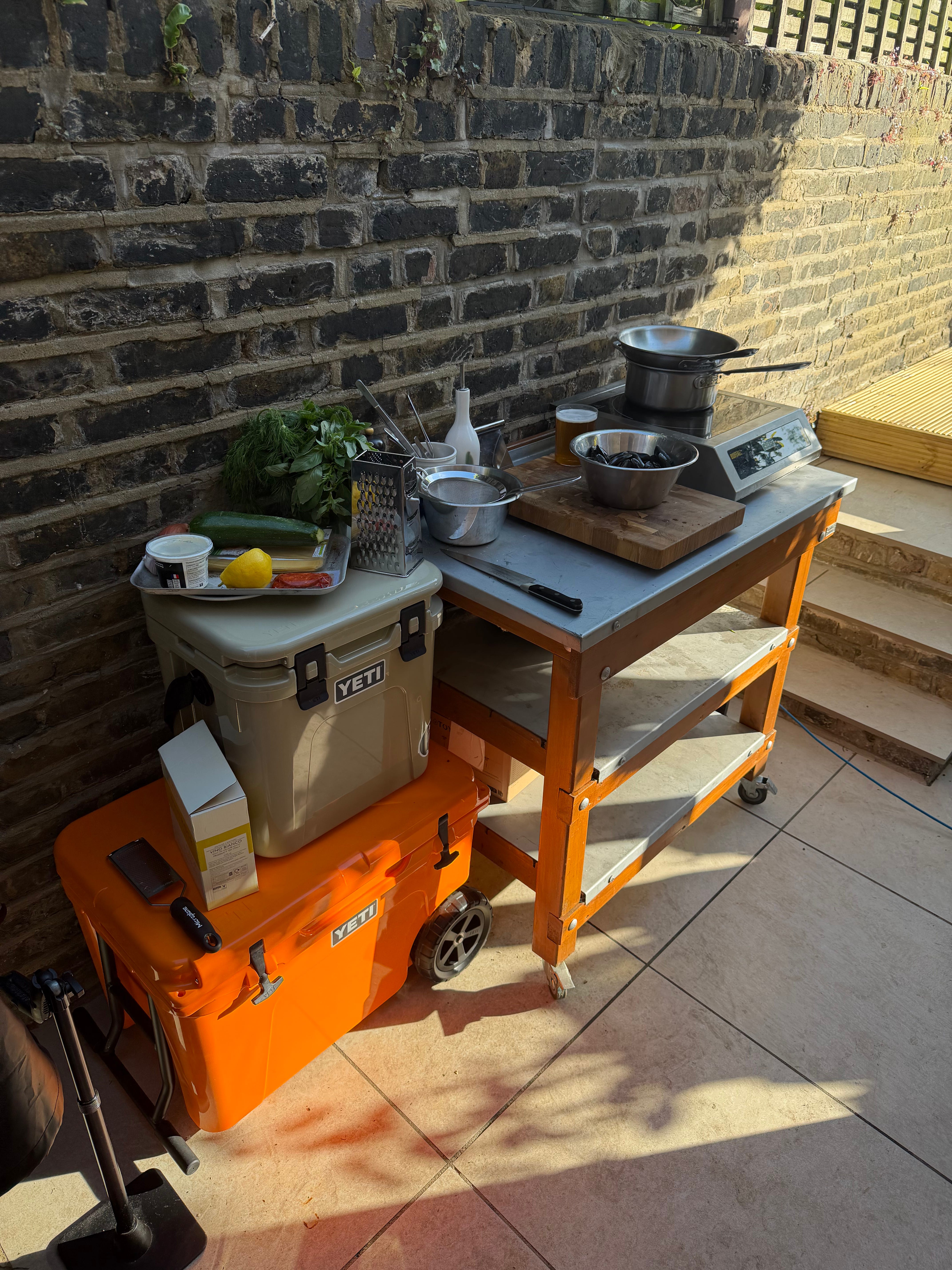
Such joy to be found in cooking outdoors and it’s not all for the grill. Buy yourself a little induction hob and go make pasta in the garden, or the park, or wherever you can. It’s pure maftin in here and you can toss and toss and toss, splashing sauce everywhere and you don’t really have to clean up. I’d be lying if I said that cleaning my stove after some vigorous pasta agitation wasn’t on my mind as I pick up the pan and half heartedly swirl it together. I’ve been known to actually cook a recipe to the point of the pasta-toss and go out the backdoor to do it to save myself the intricate task of gas hob polishing. Cooking smart, not hard? TBC. In the warmer months, at any opportunity I will be outdoors and cooking, please do try it, it’s magic.
So, to today’s recipe…
BUYING, CLEANING, COOKING & CHOPPING MUSSELS

Mussels! They’re about to be out of season, really, but there’s still a few weeks left so go and buy a net. Did you know that they’re stored in a net, and not a bag, because they’re alive when you buy them? if you stick them in a tupperware in the fridge, sealed up, they will die, so keep the air moving around them. Ideally, cook them the same day you scoop them up. Try to avoid those vacuum packed guys from the supermarkets if you can. They’re cooked already, overcooked to be honest, and usually come with pretty middle of the road sauce, too. So head to fishmonger, ask for a kilo net of live mussels “the good ones, yeh?” and have at ‘em.
To clean the mussels, you’ll want to give them a thorough rinse with a few rounds of clean, cold water. This washes away exterior grit and grime. You also want to de-beard the mussels, more info on that below in the recipe.
Time to open the mussels. I use the term “open” here as I literally just want to open and barely cook the mussels, the final cooking will happen in the sauce. Use wine to open them in a screaming hot pan. Any that don’t open are naff and might make you hurl, so bin ‘em. Even with a thorough cleaning, mussels can be a little gritty, so I always pass the cooking liquid through a fine sieve before using.
Despite what world famous rock star, Eddie “Shreddie” Green, might tell you, the shells are not in fact “fun”, especially when they’re tangled up in pasta and ‘nduja and all our other delicious things. Pick the mussels and be done with the shells.
We’ve spoken before about contrast on this newsletter, in fact, I bang on about it constantly. I like to chop some of the mussels to create this contrast of texture between the whole and the minced. With the two different textures, it’s not only more interesting to eat and look at, but you’re more likely to have a little bit of mussel in every bite. Cook smart, not hard. This one confirmed.
THE ROLE OF REDUCTION
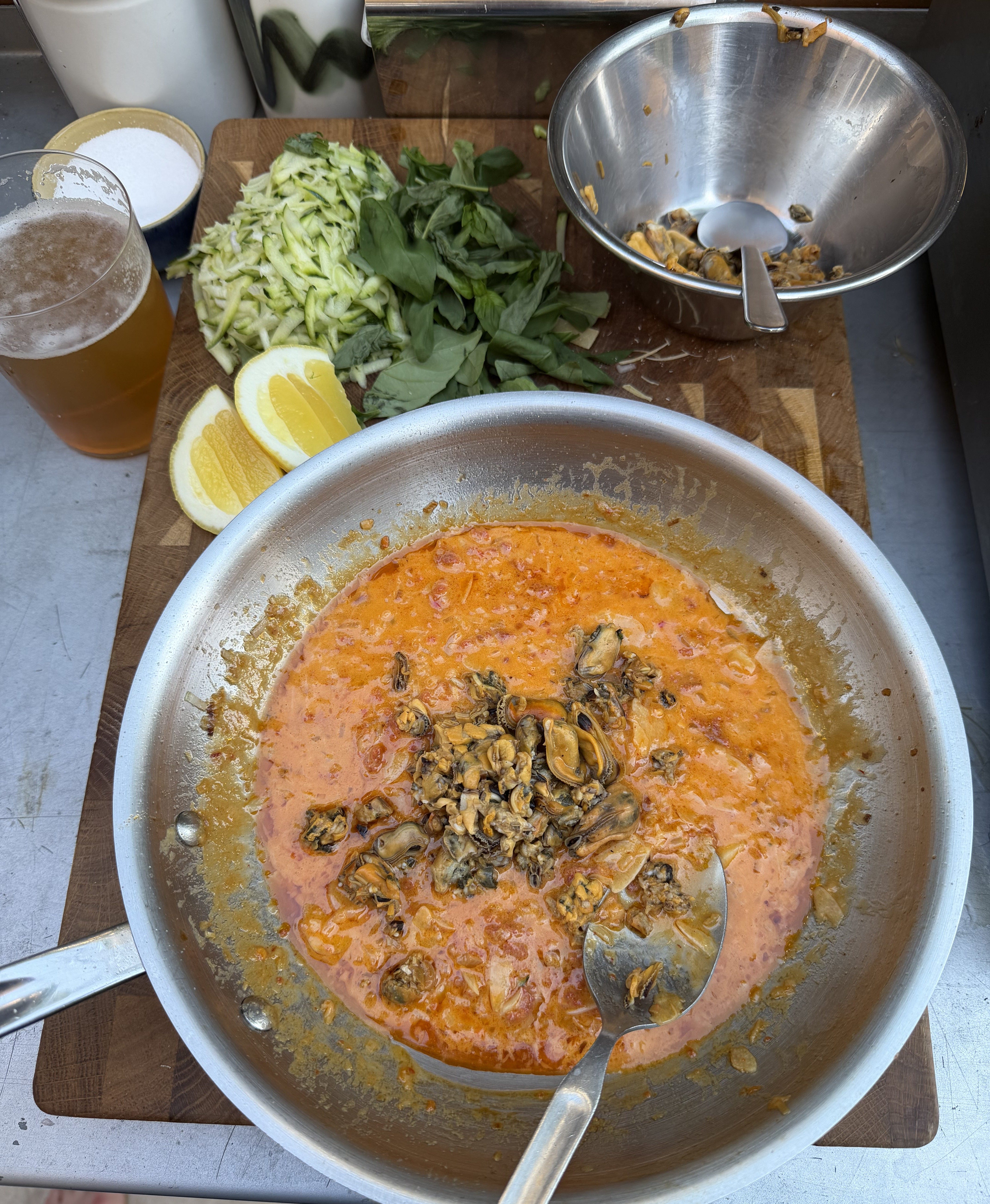
If you look at the sauce in the picture above, you’ll see a sauce that is thick, rich and a deep, sunset orange colour. You can see the reduction, the flavour, it looks delicious. I’m going to ask you to reduce in this recipe a total of three times. It might seem like a lot, but every single one is necessary to building a sauce that looks and tastes like the one pictured above. But what is reduction? Reduction in its simplest form is letting a liquid boil or simmer and allowing a portion of the water content to evaporate, leaving the flavor stronger, richer, and in some cases, slightly thicker.
In the recipe, you’ll cook and “open” the mussels with white wine. After removing the mussels, you pass any grit or sand out of the liquor and then return it to a clean pan, bring it back to the boil and let it bubble gently. As it reduces, the briny mussel juice and sharp wine flavour become more concentrated and balanced. The resulting sauce will evolve from thin and watery to thicker, darker and far more intense in flavour. Now you can round it out with creme fraiche and continue building a sauce.
I’m often asked if you could do all of your reduction at once, i.e. chuck in all of the mussel stock and white wine, the ‘nduja, the creme fraiche, the vegetables, all in at once and just boil it down to a paste. I mean, you could, but it wouldn’t have any nuance or balance. The purpose of separating these steps out is to ultimately wield more control over your sauce making. If you reduce everything to taste in stages, you can balance the sauce properly, add a little squeeze of lemon here, some more creme fraiche. Once you’ve dumped it all in and reduced to consistency, it’s very hard to adjust and lean into nuances.
THE GARNISH
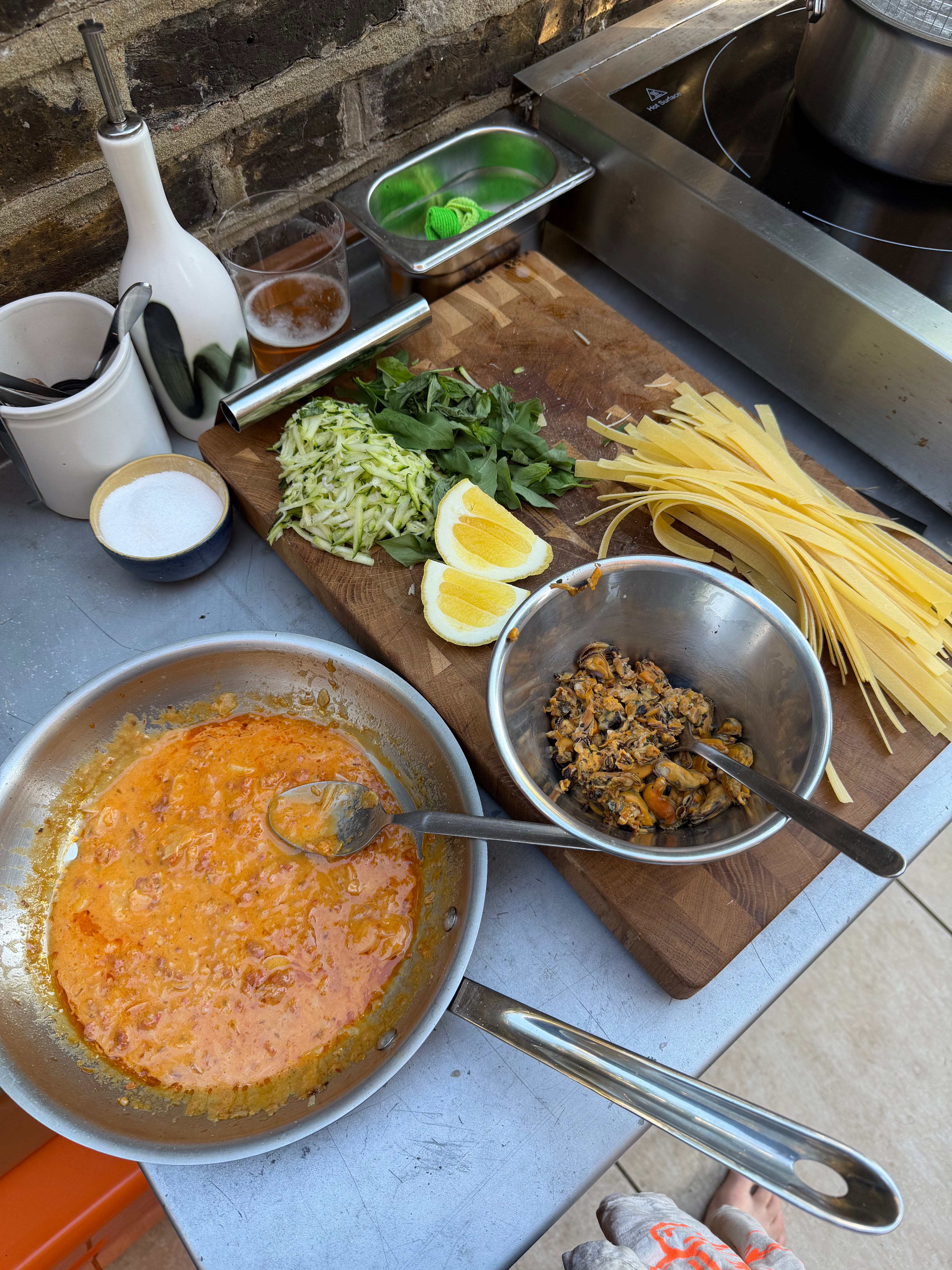
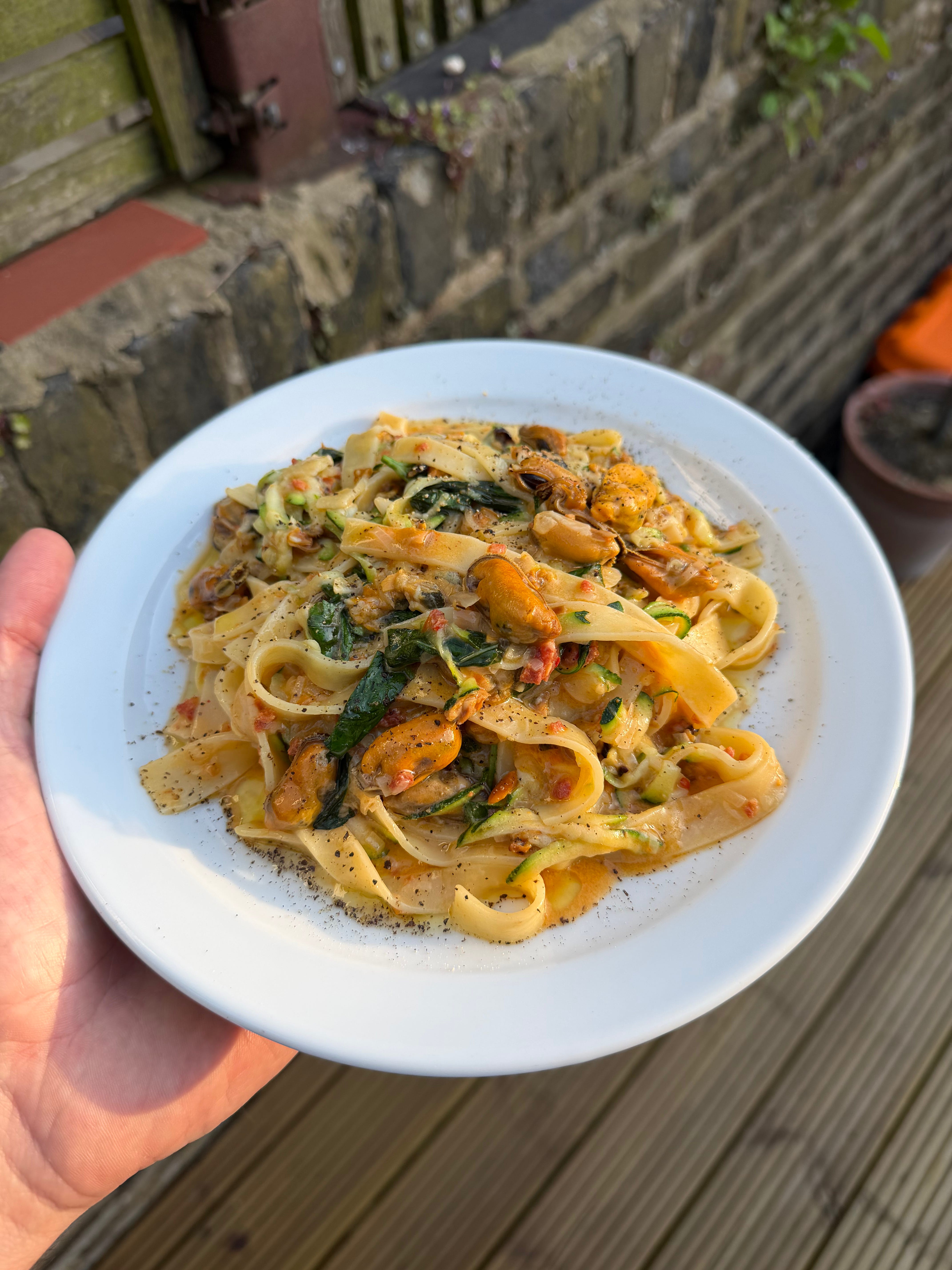
You can go as complex or as simple as you like with a pasta like this. A little butter, lemon juice, basil and the mussels with their liquor would make a very, very good sauce. If, like me, you’d like to lean into a surf and turf vibe as well as using the funky acidity of creme fraiche and the clean, juicy texture of a raw courgette then do as I do and lob them in, too.
If you’re a pescatarian but still want some heat, swap the ‘nduja out for some calabrian chili paste or a half tsp of good quality harissa paste. For dairy free, replace the creme fraiche with a little more olive oil and use some more pasta water to emulsify that sauce, baby.

Comments
Nothing yet. Say the first thing.
Sign in to join the conversation.