
Featured by: US Chess
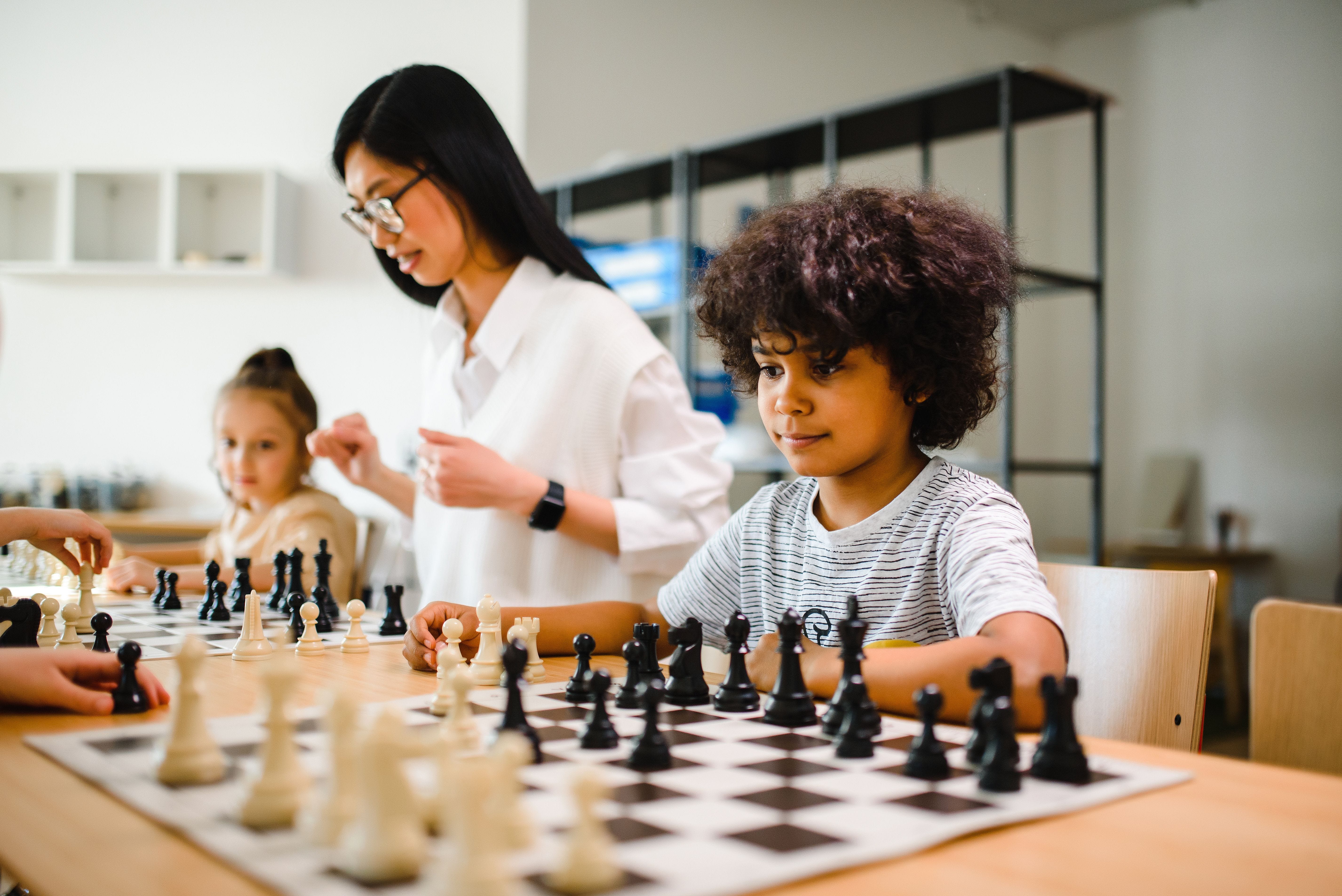
Through every move, mistake, and strategy, students discover strength...
To many people, chess looks like a game of quiet concentration. Two players sit across from one another, carefully moving pieces across sixty-four squares. There are no flashing lights, loud crowds, or fast-paced action. Yet beneath every move is a world of calculation, creativity, and decision-making.
For centuries, chess has challenged players to think several steps ahead, recognize patterns, solve problems, and adapt when plans change. The same habits that help someone become a stronger chess player often support learning far beyond the board.
This Belouga experience invites students to discover how one game can develop mathematical thinking, confidence, resilience, and the courage to keep learning, even after making mistakes.
This is where the learning begins.
The Core Experience
In this experience, students hear directly from young chess players who share not only how the game works, but why they continue playing it. They explain openings, strategies, tactics, and the excitement of thinking through each position. More importantly, they describe what chess has taught them about themselves.
Some speak about overcoming nervousness before tournaments. Others reflect on losing games, learning from mistakes, and returning stronger the next time. Throughout the conversation, chess becomes less about competition and more about growth. Winning is rewarding, but improvement comes from practice, patience, and the willingness to keep thinking through difficult challenges.
By the end of the experience, learners recognize that every move represents a decision, every game becomes an opportunity to learn, and every setback creates another chance to improve.
Why This Matters Right Now
Students today are growing up in a world that rewards quick answers and instant feedback. Yet many of life’s most important skills develop slowly through persistence, reflection, and repeated practice.
Chess offers a different kind of learning environment, encouraging students to pause before acting, evaluate multiple possibilities, anticipate consequences, and adjust their thinking when circumstances change. These habits extend far beyond the chessboard, supporting mathematical reasoning, executive functioning, problem-solving, and emotional regulation. Perhaps most importantly, chess teaches that mistakes are not evidence of failure, they are essential parts of learning.
Thinking Before Moving
Strong thinking rarely happens by accident. It develops through practice, reflection, and curiosity. Chess challenges students to strengthen three important habits of mind:
Planning: considering multiple possibilities before making a decision rather than reacting impulsively.
Pattern Recognition: identifying relationships, sequences, and structures that help solve increasingly complex problems.
Resilience: learning to recover from mistakes, adjust strategies, and continue improving after setbacks.
Every game becomes an opportunity to strengthen these habits, one thoughtful move at a time.
The Human Connection Lens
This experience is built around three interconnected learning dimensions:
Strategic thinking: Students explore how planning ahead, evaluating choices, and adapting strategies strengthen decision-making in both games and everyday life.
Mathematical reasoning: Learners recognize how patterns, logic, probability, sequencing, and spatial thinking naturally emerge through chess.
Growth through challenge: Students discover that confidence is built not by avoiding mistakes, but by learning from them and continuing to improve.
This is the deeper architecture behind the learning.
Stay curious with Belouga! Subscribe for free to get new projects, ideas, and inspiration for your learners, delivered straight to your inbox.
Learning Alignment
Core Subject Areas: Mathematics, Social Emotional Learning, Computer Science, Language Arts, Critical Thinking
Sustainable Development Goals: Goal 3. Good Health and Well-being, Goal 4. Quality Education
Age Bands
Elementary (8–11): strategy, focus, pattern recognition, sportsmanship
Middle School (12–14): logical reasoning, perseverance, mathematical thinking
High School (15–18): decision-making, cognitive flexibility, strategic planning
Skill Development Focus: Critical thinking, Executive functioning, Mathematical reasoning, Resilience, Concentration, Decision-making, and Self-reflection
Classroom Translation
This experience often begins with a simple question of “What happens in your brain before you make a decision?” Some students immediately connect chess to winning games, while others quickly realize the lessons extend much further. Younger learners often notice the importance of patience, focus, and learning the rules. Older students begin exploring concepts such as probability, planning, risk, and how mathematical thinking influences every move.
Across every age group, a shared understanding emerges, which is that success in chess rarely comes from moving quickly, but rather from thinking carefully, learning continuously, and embracing mistakes as opportunities to grow.
Continue the Experience
This week’s Belouga Human Stories experience also includes downloadable educator and student resources designed to bring conversations about strategic thinking, mathematical reasoning, perseverance, and lifelong learning into classrooms, enrichment programs, and after-school learning environments. These resources help educators facilitate meaningful discussions while encouraging students to explore decision-making, resilience, logical reasoning, and the habits that support success both on and beyond the chessboard.
Continue into the full educator guide and student experience pack below.
Comments
Nothing yet. Say the first thing.
Sign in to join the conversation.