
Introduction
By Adrian Ma
Nearly everyone’s had a relationship to gossip—whether as a subject, a participant, or a witness. Like many of its subjects, gossip has something of a mixed reputation, appearing to many as an idle activity marked by an undue concern with petty affairs and a dubious respect for the truth, and enjoyed by nosy, judgmental people who somehow have no better way to spend their finite time on earth. But what, exactly, is gossip? At our latest Curiosity Café, moderated by Kate Morgan and Sophia Whicher, we engaged in two hours of juicy philosophical conversation about the nature, function, and value of gossip. (Kate also introduced some of the key themes of the event in an interview on CBC’s Metro Morning; unfortunately, her segment was not made available online.) But first:
Featured Content:
Curiosity Café Recap: Gossip
Community Survey
Upcoming Events
Our Next Café: Unrequited Love (February 17)
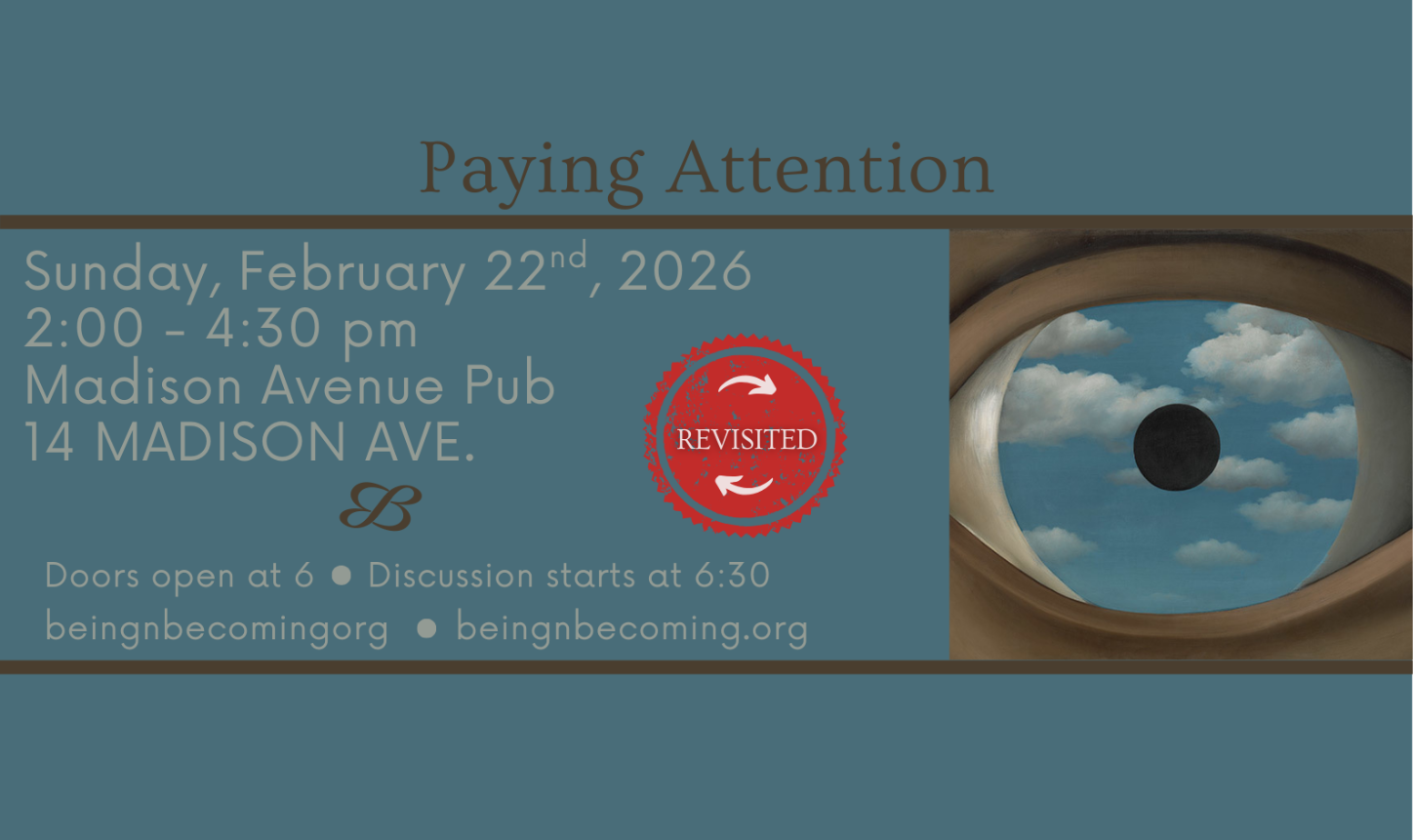
Curiosity Café REVISITED: Paying Attention (February 22)
Save the Date! What is Justice? Theory and Practice | A Panel Discussion on February 26th @7pm with Philosophers for Humanity
Recommended Listening from Sophia
Curiosity Café Recap: Gossip
By Adrian Ma
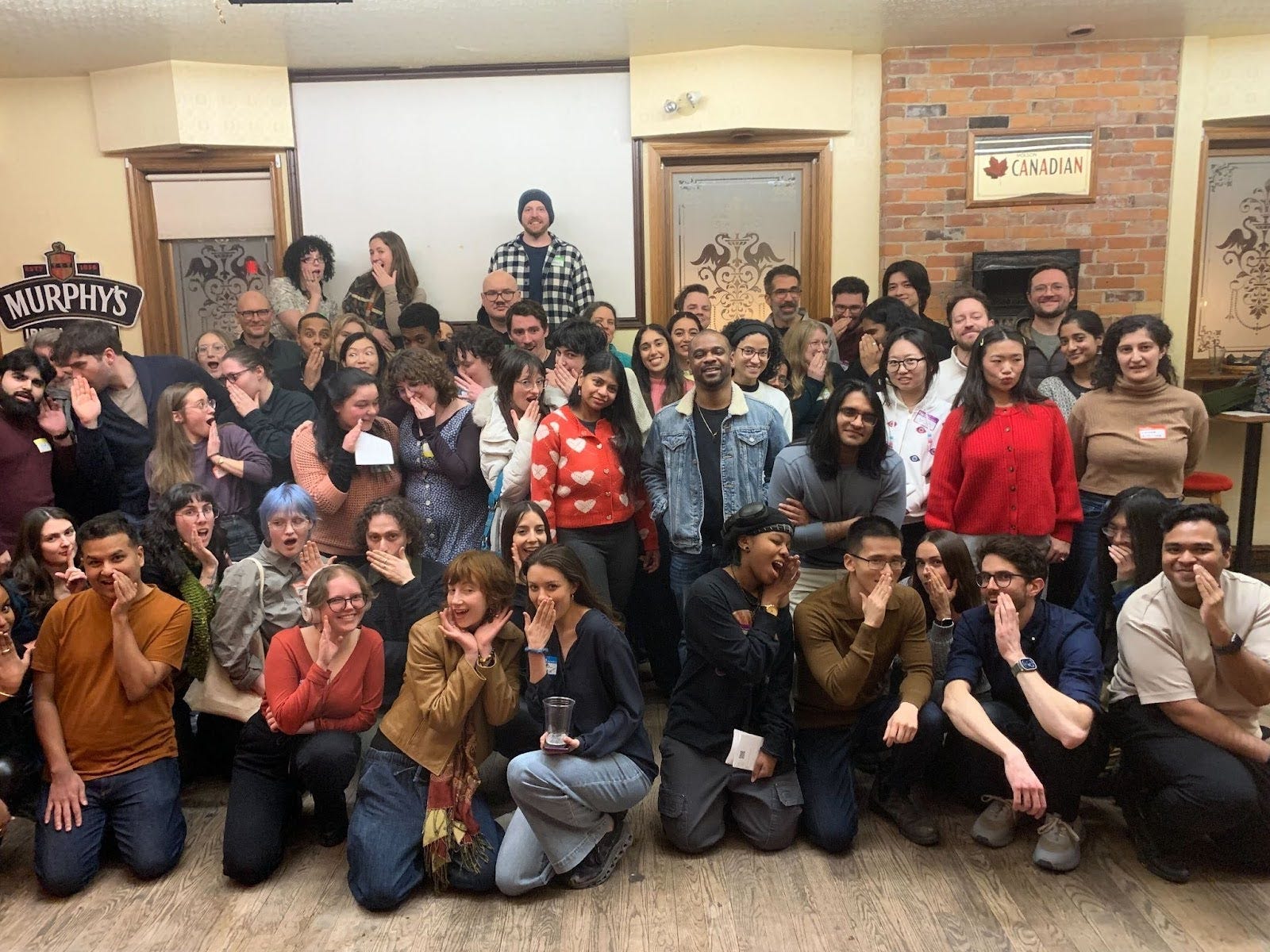
Our latest Curiosity Café, moderated by Kate Morgan and Sophia Whicher, began with our attempt to pin down what we’re talking about when we’re talking about gossip. We asked ourselves:
Think of a time that you shared a piece of gossip, heard a piece of gossip, or were gossiped about.
When you think of people gossiping, what image comes to mind?
Who are they?
What are they talking about?
Is this gossip? Why/why not?
Politics: Danielle, an intelligence agent, is sent to collect information from a foreign government in order to uncover and report their intentions that might affect her government. Without their knowledge, Danielle reports on discussions held in private between other politicians, and confirms rumours about their intentions and behaviour.
Workplace: On her first day of work, Maria makes friends with two other junior colleagues. Maria has been hired temporarily for now, but there’s a possibility she will receive a permanent contract in a while. Upon finding this out, her colleagues tell her about some of management’s past unprofessional behaviour.
Relationships: Martin and Ray are playing pool, and spot Harry–someone Ray’s partner used to date. Ray then tells Martin stories about Harry that his partner had told him, and the two gawk over Harry’s past relationship with Ray’s current partner.
Venting: Fatima and Leah, two friends from school, move in together as roommates. After a few months of living together, Leah, speaking to a third friend from school, talks extensively about some of Fatima’s undesirable living habits, and how they’ve been affecting her relationship with Fatima.
What is the difference (if there is one) between gossip and…
Venting?
Spreading rumours?
Good banter?
Spreading information?
Given what you have discussed, how does your group define gossip?
Is there anything you would add or take away from the following preliminary definition? Gossip is when two or more parties are talking about another person or party behind their backs in an unsavoury manner.
Here’s what a few of you had to say:
Gossip is characterized by the exchange of second-hand knowledge, about things in which the gossipers are not directly involved.
Gossip typically involves the circulation of unsubstantiated stories or speculations. Although these may turn out to be true, they are not—maybe cannot be—known to be true when the gossip is taking place.
We tend to think of gossip as revolving around petty affairs, like celebrity news or teenage drama. But gossip itself is not always inconsequential: it can dramatically impact the reputation, self-esteem and self-perception of those gossiped about.
Gossip is defined by an element of triviality: even when the subject matter is not itself trivial, the attitude of the gossipers tends to be light and detached. Serious subjects considered through a less-than-serious lens often provide material for gossip.
For an instance of unsavoury talk about an absent party to qualify as gossip, it must be done for its own sake (for the fun of it, so to speak) rather than as a means to something else. This is why we hesitate to apply the label to Politics and Workplace: in Politics, Danielle carries out her duties for the sake of her government or country, or at least out of professional obligation; in Workplace, Maria’s colleagues reveal damning information to warn her about management’s unreliability. The same argument can, arguably, be extended to Venting: what Leah seeks in revealing Fatima’s living habits and their impact on their relationship is emotional release, rather than the fun of gossip itself.
But is it the case that gossip must be indulged in for its own sake? It appears that gossip often does have a purpose external to itself, conscious or otherwise, such as trust-building or social bonding through the formation of in-groups (the gossipers) and out-groups (those being gossiped about).
The behaviours in Politics and Workplace don’t quite constitute gossip because they appear to be driven by good intentions—to serve one’s government or country in the first case, to warn a colleague about potential vulnerabilities in the second. Gossip, in contrast, tends to be motivated by less noble intentions, and often displays a degree of contempt, condescension, or malice towards the subject (an element implied in Relationships).
The preliminary definition of gossip above is largely correct, but requires one amendment: gossip is when two or more parties talk about another person or party behind their backs in an unsavoury manner, unless there is an intent to prevent harm.
Must gossip be unsavoury? Can’t we think of examples of gossip where nice things are said about the subject?
Gossip is more about dissecting others’ experiences behind their backs than talking badly about them. Gossip itself is morally neutral, and a natural part of the human social experience. Unsavoury gossip is but one kind.
After the break, our conversation shifted from the definition of gossip to its value. Does gossip contribute anything of value, despite its (ironically) questionable reputation? We asked:
Why do we gossip?
Do you gossip? Why/why not?
How does gossiping make you feel?
How has gossiping affected your relationships? Why do you think that is?
What kinds of value might gossiping hold? (Social, moral, aesthetic, etc…)
Consider the following examples. Under what circumstances is gossiping:
Morally permissible?
Morally required?
Immoral?
Therapist: Tess is a therapist, and had a hard session with her client Amal. Afterwards, Tess goes to get herself some coffee, and the barista asks her how her day is going. Tess rants for a while about Amal, without naming him, of course. However, the details she reveals make it clear who Amal is; little does she know, Amal used to work at this coffee shop, and remains friends with several of the baristas.
We keep us safe: A group of women in a close-knit community spread rumours about a bachelor, who had briefly dated one of them, having less-than-desirable traits and habits in a relationship.
Outing: Three friends are having a sleepover, and they exchange stories about their classmates. One of them, Eve, recently found out that another classmate, Belle, is gay, but she acts like she only likes boys because she isn’t ready to come out yet. Eve reveals this to her friends, framing it as “juicy gossip.” The two friends who hear the news tell others, and soon, the whole school knows about Belle’s sexuality.
Community > State: Upon discovering a rumour that a raid on a neighbourhood is about to be performed by military agents, neighbours begin to secretly spread the word amongst themselves, alerting relevant channels and ensuring that the news is disseminated.
What is the relationship between gossip and power?
How might gossip be used by those with more social power?
How might gossip be used by those with less social power?
Here’s a small selection of your responses:
Gossiping often feels good in the moment, but tends to breed feelings of insecurity and mistrust in the long term. After all, if gossiping about others comes so naturally to those in my circle, how can I be certain they do not also gossip about me? Membership in a group in which gossiping is the norm often comes at the expense of authenticity, because it puts pressure on us to self-police the things we share or express.
It’s hard to imagine gossip consisting wholly of positive talk about the subject. There must be some element of negativity, or at least deprecation or mockery—someone must at least be the butt of a joke, even if only a loving, good-natured one. It doesn’t follow, however, that gossip is necessarily corrosive to relationships; indeed, the ability to speak in such a manner about someone in their absence can be a confirmation of intimacy and affection.
There might be an evolutionary explanation for why gossiping feels so natural to us. Maybe the origins of gossip lie in information-sharing practices that our ancestors, perhaps gathered around a fire, used to identify potential threats or warn fellow tribe members about them. From there, we developed habits of assembling in groups and sharing information or engaging in speculation, a form of which became what we now call gossip.
Maybe gossip first emerged as a means of enforcing social norms without the use of force: word of a violation would circulate among the community, arousing judgment and suspicion, and the transgressor would be shamed or ostracized as a result.
But would this not have been an oddly circuitous means of ensuring conformity? Wouldn’t the enforcement mechanism have been more effective if the transgressor were addressed directly, if they were themselves involved in conversations in which their behaviour was scrutinized and condemned?
Perhaps the rewards of gossip stem from the intimacy it helps cultivate between gossipers and the vulnerability entailed by participating in it. By taking part in gossip, you are agreeing, either implicitly or explicitly, to keep its contents and the other gossipers’ involvement a secret, and trusting them to do the same.
Gossip can be valuable in that it makes room for collective reflection and mental experimentation. Engaging in gossip can help us think through, in collaboration with others, what we believe about a certain situation and what we would do in similar situations ourselves.
By inviting us to vocalize our thoughts about a concrete situation, gossip can help us conceptualize and clarify our values, intuitions, and beliefs, of which we may otherwise have only a tenuous grasp.
Gossip can be validating, by demonstrating that other people share my views on a given situation or share the values that inform those views.
Our attitudes toward gossip show parallels with absurdism, the philosophical theory whereby human beings live as meaning-seeking creatures in a universe without meaning. Absurdists propose that we accept, even embrace, this very absurdity, this collision between our deep-seated desire for meaning and objective, meaningless reality; likewise, those who partake in gossip do so in full awareness of the meaninglessness of this activity, but find value and joy in that very meaninglessness.
Although gossip can be morally permissible in some cases and immoral in others, it’s hard to imagine when it would be morally required; when a disclosure is made out of moral obligation, it is not gossip, but a public service announcement.
It often feels good—and morally justified—to “punch up” through gossip, to gather with other exploited or marginalized individuals and speak critically about those who occupy higher rungs on the ladder of power. This could also lead to socially progressive developments, like the formation of unions!
The power and pitfalls of gossip are reflected in laws against defamation, which are based on the recognition that false and misleading statements can do serious damage to someone’s reputation and, by extension, their life and livelihood.
The word on the street is that some of you have been reading this newsletter without taking our community survey (linked below). If you would like to avoid becoming the subject of unsavoury talk within our team and community, please take that survey now. Thanks for reading.
Community Survey
For those who’ve attended our Curiosity Cafés, please consider taking our brief community survey. We are conducting this survey to gather feedback on our events, and it should only take a few minutes to complete. Your responses are completely anonymous and will be invaluable in helping us improve our offerings. Thank you in advance!
Upcoming Events
Curiosity Café: Bi-weekly on Tuesdays, tickets below!
*hey community! Sophia here, Director of Community Programming. We ask that you consider that our ideal recommended amount for a ticket is now $15, and as you choose what to donate within the bounds of your own financial means, we ask that you keep in mind that your donation will go directly towards compensating those involved in making Curiosity Cafés happen so that we can keep doing this for you.
We will host our next Curiosity Café on Tuesday, February 17, from 6:00 to 8:30 p.m. at the Madison Avenue Pub (14 Madison Ave, Toronto, ON M5R 2S1). Come and hang out with us, grab food, and read through our handout from 6:00 to 6:30 p.m. Our structured discussion will run from 6:30 to 8:30 p.m. with a 10-minute break in the middle!
The topic of our next café is: Unrequited Love
Missing the event description? Head over to our Eventbrite page! We’re trying to make the length of our newsletters a little less overwhelming.

You can find information on accessibility and ticket cost in the announcement of the next Curiosity Café below.
Curiosity Café REVISITED: Back and Better than Ever, People!
Every four(ish) weeks, we revisit a previous Café. In this series, we will be repeating topics, sometimes with a slight twist, sometimes with the same questions (but rest assured, even if you went to the first iteration and the questions were exactly the same, the discussion will change based on who is in attendance. Maybe you’ve even changed too…).
The topic of our next revisited café is: Paying Attention. Happening on Sunday, February 22nd!
Missing the event description? Head over to our Eventbrite page! We’re trying to make the length of our newsletters a little less overwhelming.
If you have accessibility-related concerns, please visit our Eventbrite page—in the event description, you will find some accessibility-related information about the venue and the event.
We still have five free tickets available for our attendees. If paying anything at all is not financially feasible for you or our ticketing system presents some other barrier, please contact our Director of Community Programming, Sophia, at sophia@beingnbecoming.org. These tickets will be given away on a first-come, first-served basis, no questions asked! You can expect to hear back from her within 72 hours.
Save the Date: What is Justice? Theory and Practice
On FEBRUARY 26TH, in collaboration with Philosophers for Humanity, we will be holding a panel discussion with experts called “What is Justice? Theory and Practice.” This will involve hearing from experts, and engaging in small group discussions on the topic with other attendees as well. Look out for more about this event on our website and Instagram!
Recommended Listening from Sophia
Normal Gossip Podcast. One of my faves. Here’s their description: “Normal Gossip delivers juicy, strange, funny, and utterly banal gossip about people you’ll never know and never meet. Host Rachelle Hampton discusses reader-submitted comedic gossip with guests, diving into the lives and decisions of complete strangers. The second-hand truth really is stranger than fiction.”
Featured Quote
[S]candal is gossip made tedious by morality.
- Oscar Wilde
Our mission is to present a diversity of perspectives and views. The views and opinions expressed in this newsletter are solely those of the individual authors and do not necessarily reflect the views or opinions of Being and Becoming. Being and Becoming disclaims any responsibility for the content and opinions presented in the newsletter, as they are the exclusive responsibility of the respective authors. If you disagree with any of those presented herein, and you feel so inclined, we recommend reaching out to the original author and asking them how they came to hold that opinion. It’s a great conversation starter.
Comments
Nothing yet. Say the first thing.
Sign in to join the conversation.