
Welcome to Being Animal. This newsletter explores the intricacies of human-animal relationships. Through personal stories, commentary on current events, and thought-provoking debates, I hope to challenge your assumptions and deepen your understanding of how animals are treated in our society. How we treat animals matters— for our own health, for our planet, and for our sense of morality and humanity.
I want to make the world a better place for animals. To do this, we have to change how we think about animals.
This weekend, the Iditarod dog sled race in Alaska starts again. I write about this event in my new book, Forget the Camel: The Madcap World of Animal Festivals and What They Say About Being Human. Today I’m sharing an overview of the race and why it matters to all of us.
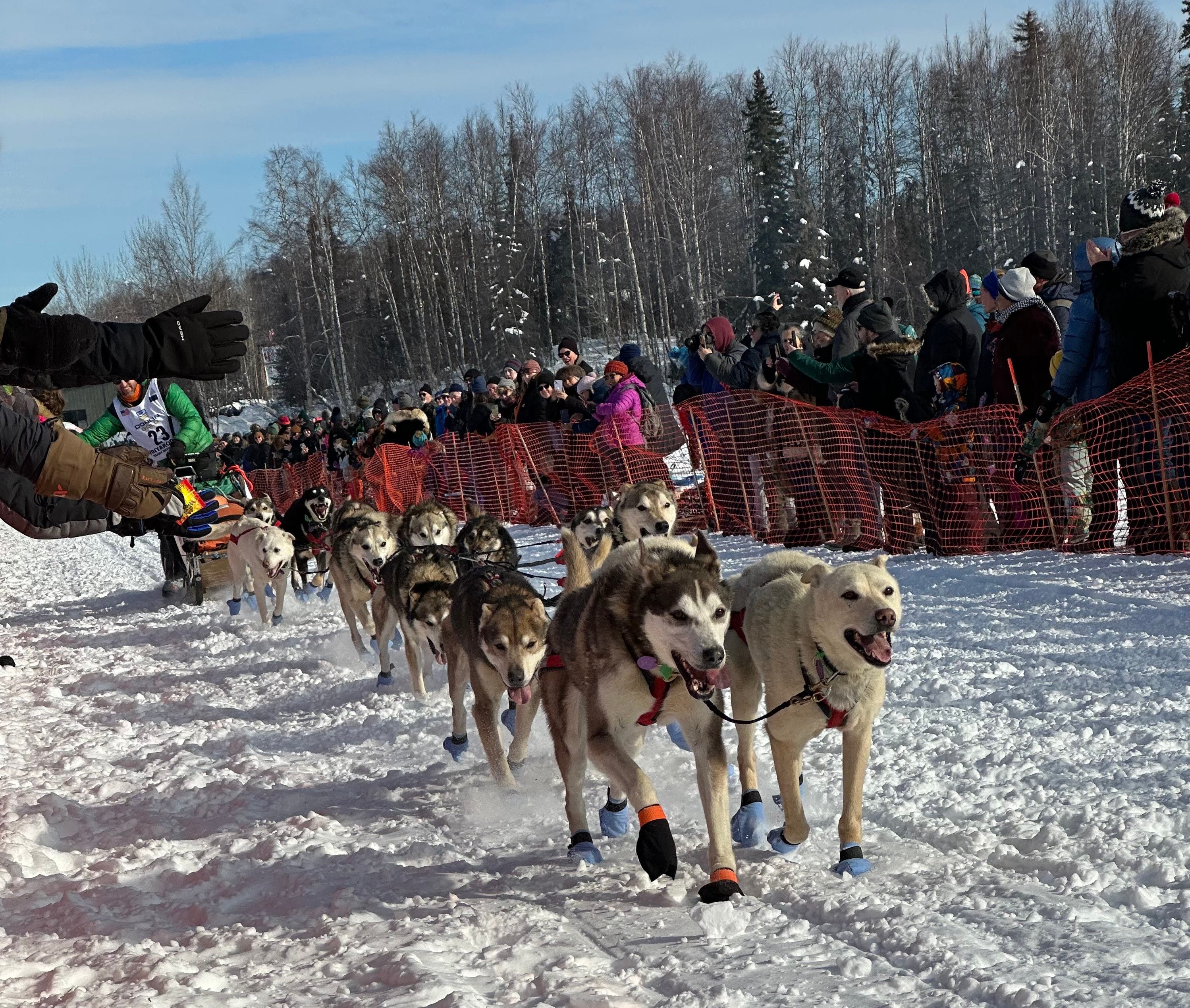
The first time I saw sled dogs barrel down a racetrack, I was surprised at how small the animals were. Just twelve dogs pulled a sled and a bundled-up musher. They were starting a nearly thousand-mile journey through rural Alaska for the annual Iditarod Trail Dog Sled Race. As each team rounded the bend out of sight, there was something undeniably idyllic about it: the sled gliding through the snow, the tight bond between musher and team, and the enormous effort of endurance it would take all involved—human and animal alike—to cross the thousand miles to Nome.
But the scene was also somber. Many, if not all, of those dogs would certainly suffer over the next week of running: cracked paws, stomach ulcers, lung issues, and more. Some might even die; in the 2024 race alone, three dogs died on the trail. The Iditarod has long sparked controversy because of this negative and sometimes deadly impact on dogs.
This begs the question: Can a distance race like this ever be humane for the animals involved?
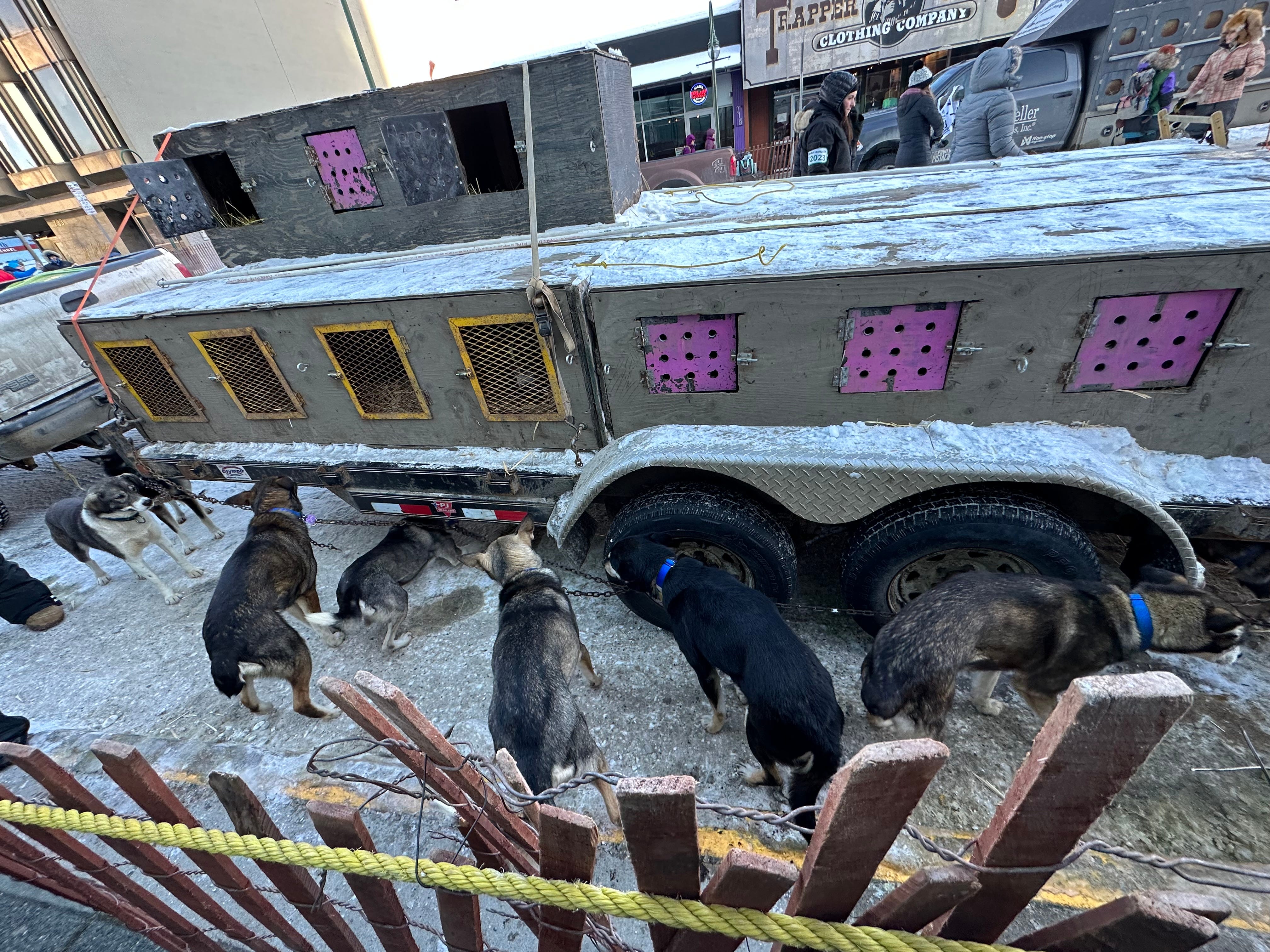
I would call the Iditarod an animal festival. And it’s just one of dozens that happen around the country every year. People host frog jumping contests, rattlesnake roundups, butterfly parades, and more. People praise a clairvoyant groundhog named Phil in the spring and race woolly worms in the fall to better predict the winter’s forecast. And every March, hundreds of dogs undertake a journey of staggering length while tourists and locals alike cheer them on.
Humans use animals to tell stories at these events. We invoke the past, celebrate our traditions, and play out a ritual to carry our history into the present and future. The Iditarod, for example, hearkens back to 1925, when a relay of dog teams brought lifesaving medication to residents suffering a diphtheria epidemic in the isolated town of Nome. That nugget of history has turned into a foundational story encapsulating Alaskan grit and ingenuity, and the Iditarod race today tries to summon that same sentiment.
But a lot has changed in the last hundred years. Dogs aren’t asked to run to save children’s lives anymore; now, the race is undertaken purely as sport. We know more about animals’ sentience, capacity to suffer, and emotional intelligence than ever before, a knowledge which demands new responsibility for how we relate to these creatures. We have a more interconnected world now, with the internet providing endless entertainment and storytelling opportunities that don’t involve risking harm to live animals.
So why do we still force dogs to run? And why do we still use animals—in every month of the year, all across the country—to celebrate our stories at countless festivals and events like this one?
Animals are part of our human history. From the earliest cave drawings to this very morning, almost all of us interact with animals every day. Most people eat animals or animal products, wear leather, wool, or silk, have pets, or encounter wildlife and pests in their neighborhoods. Figuring out who we are as people means juxtaposing ourselves with animals, because they are our closest relatives in ways both spiritual and biological.
It’s no wonder we turn to animals in times of celebration, too. Our history is wrapped up with theirs. So too is our future, as cohabitants of this unlikely and remarkable planet.
But animal festivals sharpen the boundary between humans and animals.
During the Iditarod race, for example, mushers can make strategic choices about when to rest and even when to “scratch,” or forfeit participation in the race. When mushers dismount their sleds at the end, they can celebrate or commiserate and recover from the exertion. The mushers are at the helm of the sled, both literally and figuratively.
But for the dogs, the race is entirely different. During the race, their health and wellbeing is in the hands of the musher. Whether they get “dropped” at a checkpoint for safety reasons at the first sign of distress or get pushed beyond their bodies’ limits is not up to them. And when the dogs are untied from their harnesses at the race’s end, they are still subject to the same logic of exploitation that has determined the shape of their entire lives.
Animal festivals like the Iditarod are important for what they normalize. Animal festivals often reinforce paradigms and assumptions of human superiority. They show attendees (and, today, social media audiences) that animals are tools and props for our entertainment. They show that pushing dogs to the point of injury and death is okay, even good, if we tell a compelling story while doing it.
That’s what’s at stake at animal festivals: the persistent message that animals are ours to use as we please, even if the only purpose is for fun. The ramifications of this message can be felt throughout our relationships to animals more generally. Animals are exploited on a massive scale every day, for food, clothing, research, entertainment, and more. Festivals are only a tiny piece of that, it’s true—but at these events, this logic is front and center. Festivals are a good place to start raising questions and examining our own instincts and assumptions about animals.
It’s time we start thinking about the victims of these interspecies festivals, even if this means restructuring a beloved tradition.
Retelling our stories is not worth another species’ pain.
To learn more about animal festivals, check out my new book Forget the Camel, which is available to order now and will be released April 8, 2025!
Comments
Nothing yet. Say the first thing.
Sign in to join the conversation.