
Welcome to Being Animal. This newsletter explores the intricacies of human-animal relationships. Through personal stories, commentary on current events, and thought-provoking debates, I hope to challenge your assumptions and deepen your understanding of how animals are treated in our society. How we treat animals matters— for our own health, for our planet, and for our sense of morality and humanity.
I want to make the world a better place for animals. To do this, we have to change how we think about animals.
It’s been a big weekend for animals. I’ll explain why below, and offer a simple trick to help you help animals.
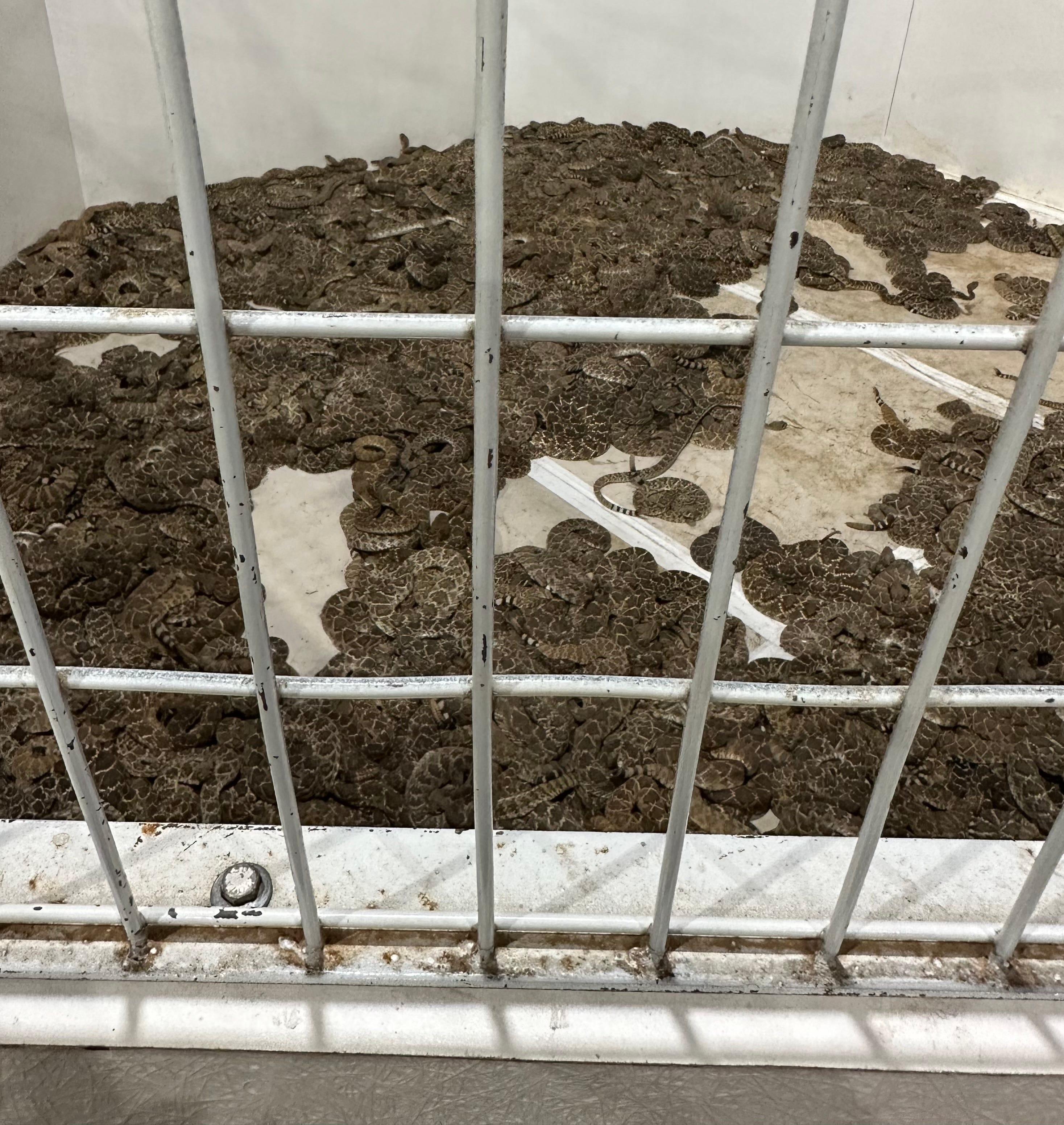
Have you ever heard of a rattlesnake roundup?
The World’s Largest Rattlesnake Roundup is taking place right now in Sweetwater, Texas. In the weeks leading up to this event, hunters use gasoline to force rattlesnakes out of their dens, capture them, and bring them to a central pit in an arena in town. During the Roundup weekend, the snakes are beheaded one by one with a machete, skinned, and deep fried while tourists watch, take photos, and chomp on the tough flesh. Some visitors even pay a fee to skin a snake themselves, pulling organs out from the freshly killed body while blood drips into a bucket below.
This event is grisly. When I attended two years ago while researching my new book, Forget the Camel: The Madcap World of Animal Festivals and What They Say About Being Human, I watched as clumps of blood and offal stuck to a volunteer’s shoes when she left the skinning pit. I saw people catch blood in their hands and make handprints on the wall of the pit. And I witnessed countless snakes rattle furiously in the moments before the knife hit their necks, desperately trying to avoid their fate.
Whenever I tell people about this event, they are almost always horrified. It’s truly shocking to many people that a killing festival like this still exists so openly in our modern world. “How is it legal?” they ask. “Why do they do this?”
Even people who don’t like snakes seem to agree: there’s no reason to torture and kill them like this.
This weekend, I’m not at the Roundup. I am at a conference focusing on rescuing farmed animals. It’s been a wonderful opportunity to connect with other animal activists, to learn about ongoing work in the field, and to brainstorm about ways I might get involved.
But it’s also been hard in its own way. Working on farmed animal issues requires understanding what happens to the animals, not in euphemisms or glossy half-truths, but in fact. I view it as a moral obligation as a human on this planet, and as a citizen of the United States: to witness what we’re doing to sentient beings, whether actively by our actions, passively by our tax dollars, or ignorantly by our complacency.
This weekend, we’ve watched videos of chickens stuck in the wire mesh of their cages. Pigs with gaping, infected wounds. Chickens who cannot lift their heads off the ground, yet lay suffering too far from food or water to reach any comfort. Dead piglets decomposing next to their siblings still desperately reaching for a blood-covered teat.
It’s horrifying, and it’s grisly. And contrary to most people’s assumptions, it’s incredibly commonplace. Many of these incidents happened on farms that produce products claiming to be cage free or certified humane. Labels tend not to mean what consumers hope they do.
But this abuse happens in dark sheds, tucked down long winding roads, far from the pristine supermarket aisles and restaurants where we encounter the products of these industries. It’s not like the Rattlesnake Roundup, which kills so brazenly in public view.
If the description of the rattlesnake roundup incensed you, the description of farming animals in these conditions should, too.
And I bet it does.
But hearing this kind of farmed animal story usually doesn’t get the same reaction as hearing about the rattlesnake roundup. People don’t ask why it’s legal, or why we do these things. Most people just turn away, not wanting to face the answer they already know: we do this because we eat the flesh of these creatures at an unprecedented rate every single day.
Most of us grow up not having to interact with rattlesnakes every day. So asking not to behead them in public seems obvious; there’s no sacrifice required. But most of us do grow up (and live most of our lives) eating animals, which is a much harder habit to break.
But we have to change how we consume animals. It’s a pressing concern, both ethically and practically. There’s a lot we don’t have control over. The animal agriculture industry is a massive machine fueled by federal subsidies and corporate malfeasance. But when I’m feeling overwhelmed by all the suffering in the world I can’t stop today, I find comfort in knowing I did the best I could within the small scope of my own choices.
So here’s an idea for you if you’re just starting to think about animals and what you can do to help them.
After a few weeks off from exercising recently, I was struggling to get back into the routine of going to the gym. I finally got back into the swing of running. But I worried to my wife over dinner that I really should do some strength training. I used to be more well-rounded as an athlete, but I just couldn’t get myself to go to the weight rack. My wife shrugged and responded, “the best workout is the one you’ll do.”
And I think that advice is applicable here, too.
The best vegan meal is the one you’ll eat. Don’t start by cutting out your favorite cheese, or trying to replicate your favorite meals. Find something you like, and add it in. Maybe that’s a great salad, or a fun new recipe you found online. Maybe it’s an indulgent pasta with vodka sauce and fresh roasted veggies or an accidentally vegan cupcake recipe (I’ve made both so many times I have the ingredients memorized).
Bringing joy into your meals and removing the pressure can help make any changes more sustainable. It turns veganism from a restrictive chore into a pleasure.
The best vegan meal is the one you’ll eat. So start there. The animals will thank you.
P.S. Here’s what else I’ve been up to!
I gave a talk at Harvard Law School a few weeks ago, and I also recorded some podcast interviews about my new book, which comes out April 8th! If you haven’t already ordered it, you can do so anywhere books are sold. Or you can enter our Goodreads giveaway here!
If you’re in the Boston area, please consider coming to our launch event on April 8 at Parkside Books. I’d love to see you there!
Comments
Nothing yet. Say the first thing.
Sign in to join the conversation.