
At long last, today my book gets released to the world! Forget the Camel is a nonfiction book about animal festivals around the country and how the stories we tell about animals are ultimately stories we tell about ourselves.
If you haven’t already ordered it, you can do so anywhere books are sold! Today I’m taking a break from my normal blog content to share more about my experience writing, publishing, and promoting this book.
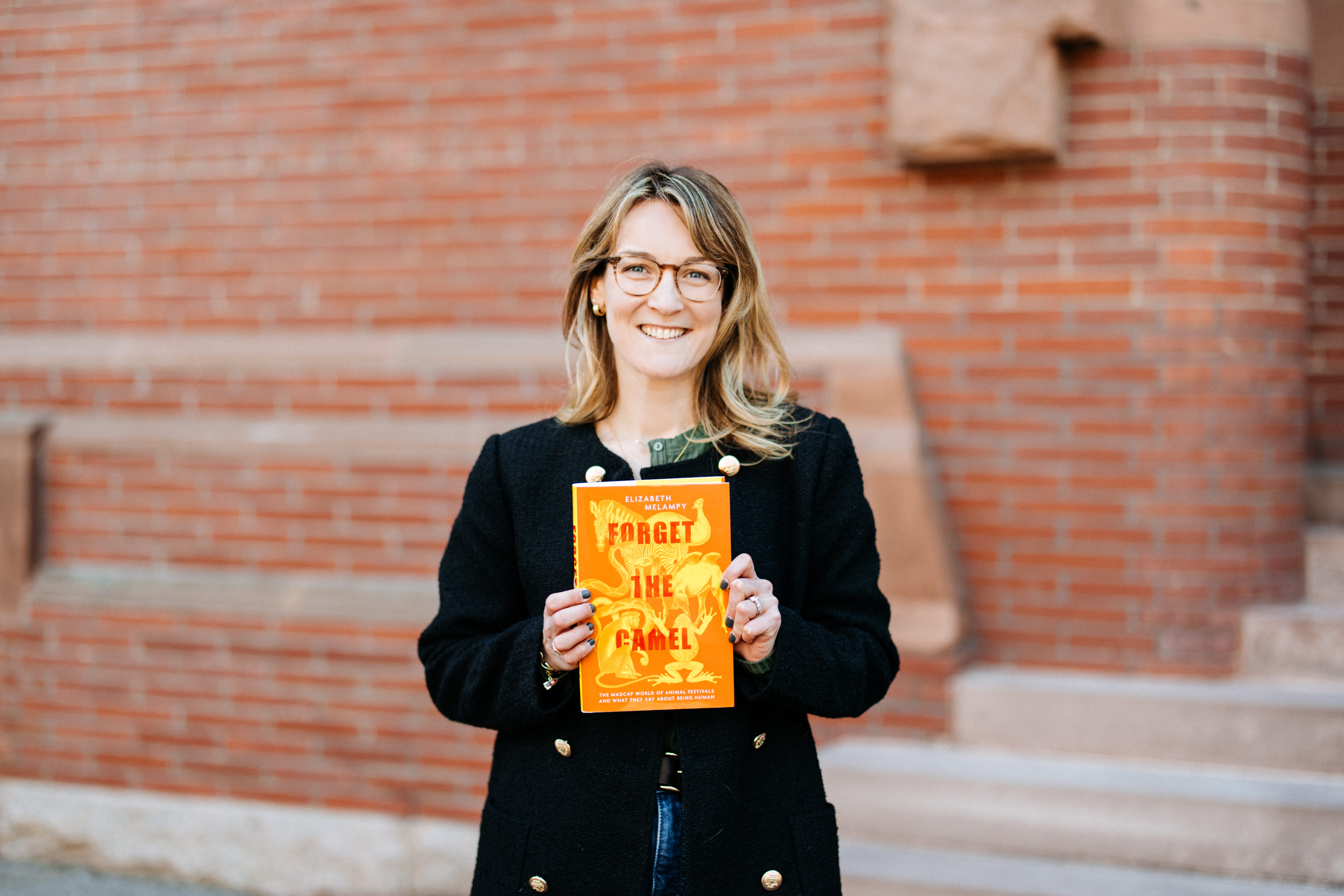
I started working on this book almost three years ago. I had a vague idea of what I wanted to write, but I had no idea how to start. I was anxious, confused, and overwhelmed by all I didn’t know. How do you conduct a research trip? How do you arrange an interview? What sorts of details are interesting? How much historical research needs to support my observations? How should the book be framed?
The questions mounted, and I was at risk of letting the uncertainty paralyze me. Instead of letting that happen, I took the pressure off. I bit off a smaller chunk. I told people I was writing “what I hope will become a book,” and focused on just one festival. Through trial and error, I stumbled my way through writing the first chapter—what now serves as the book’s conclusion. That experience gave me some confidence.
I could do this, I realized.
I kept working, one chapter at a time. The more I researched and wrote, the more passionate I became about the project. I believe this book matters. Animal festivals are niche, small, and in many cases hyper-localized. But taken together as a category, when you zoom out, you begin to see patterns and habits that undergird our relationships to animals more broadly. How we treat animals matters, and these festivals are paradigmatic examples of how stories shape our treatment of animals.
And now, today, three years later, the book is done! It’s surreal and strange to give up control over this book. Now the book in the readers’ hands. A few thousand people have marked it in their “to be read” pile on Goodreads. People I don’t know have commented on my social media that they ordered the book. It’s exciting to know this book will have a life of its own, but it’s also a little scary.
My emotions are complicated: I am thrilled, grateful, and excited; but I also feel vulnerable and a little anxious. It is a hard thing to put ideas out into the world. I don’t know how readers will react to my book. But I do know that I worked hard, researched thoroughly, and tried my best to articulate the complex, challenging, and urgent thoughts that swirl in my brain.
The urgency is this: animals are suffering every day at the hands of humans. These festivals offer concrete examples of how we use animals to tell stories about ourselves, and how those stories result in a world where animals are used as props, tools, and objects. Engaging with these events is a way of rethinking our relationships with animals.
Because there’s a better way. We can all choose a more compassionate future.
I sincerely hope you read the book. I’d love to know your thoughts, and I’m so excited to have conversations about these ideas.
Here’s a selection of recent media about Forget the Camel if you want to learn more:
An interview with renowned ethologist Marc Bekoff on Psychology Today;
A podcast interview on the popular show Species Unite;
An interview with Kim Stallwood on his Substack.
I’ll share new media as it releases, too, including an exciting interview with PBS and an upcoming podcast appearance on Sentientism.
If you’re in Boston, please join me at my book launch event at Parkside Bookshop tonight at 6:30.
Thank you all, so much, for your continued support!
Thanks for reading Being Animal! This post is public so feel free to share it.
Comments
Nothing yet. Say the first thing.
Sign in to join the conversation.