
Many sessions ago, my players wandered up to a food stall called Tastes of Life. Behind the counter stood Mortimer, a jovial, portly chef with a warm smile and a tray of beautiful little dishes. Berry Bliss tarts. Finger sandwiches. Grape skewers, bright and glistening.
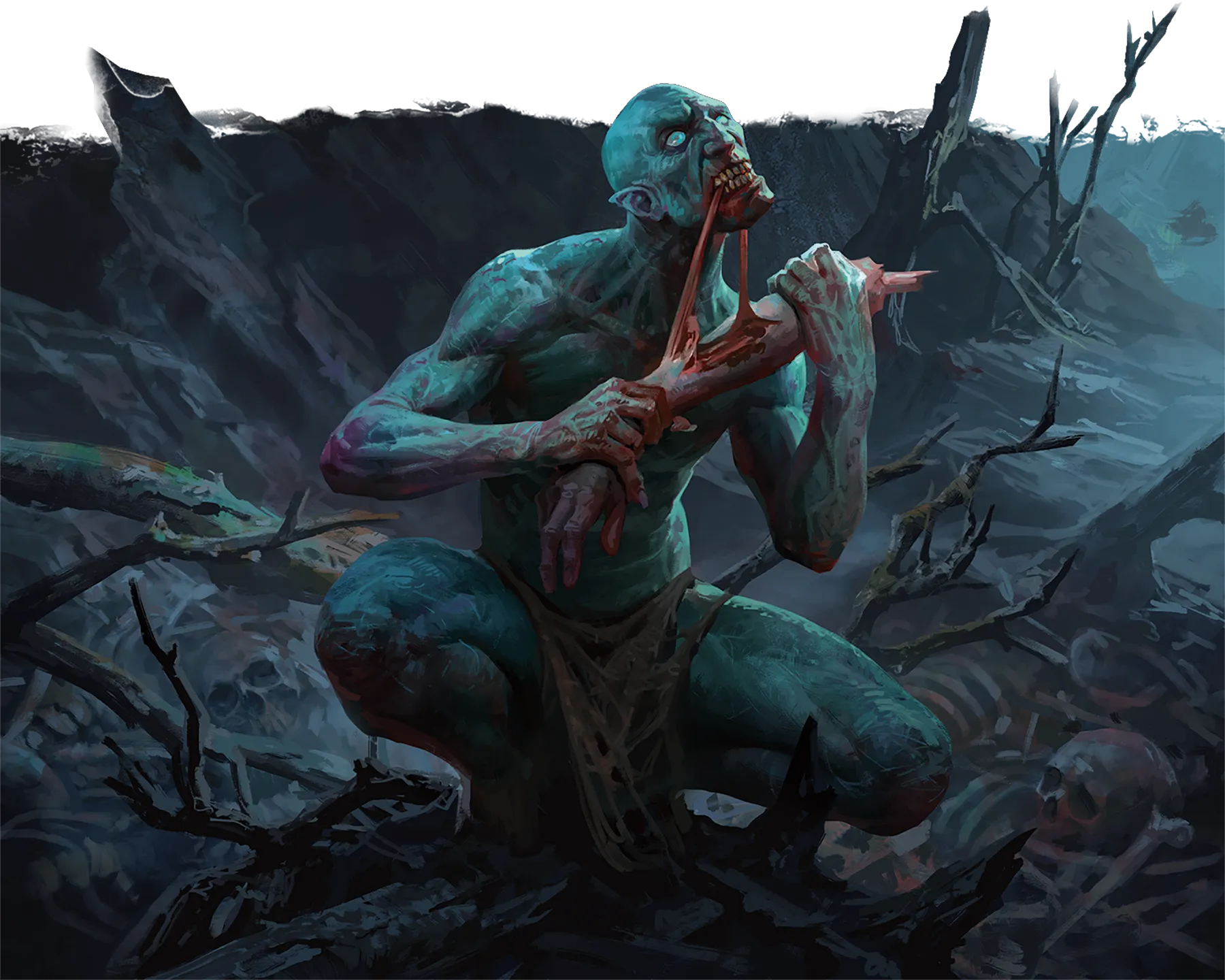
Mortimer was a ghoul. The tarts were blood pudding. The finger sandwiches were, well, fingers. The grapes were eyeballs.
On paper, that’s a gross-out gag and not much else. I’d written the whole stall out ahead of time, ingredients and all, and reading it back it isn’t really funny. What made the table lose it was me. I stood up and gesticulated. I cradled each horrible little dish like it was my newborn child and pressed the players to guess the secret ingredient, beaming the entire time. The food wasn’t the joke but the love was.
You can’t prep funny
Here’s the thing I keep running into. I run serious games. High fantasy, high stakes, real consequences, the kind of table where players argue tactics because their characters can actually die. That’s the tone I love, but in real life I’m a goofy guy who likes toilet humor, and that side of me wants in.
The trouble is that funny doesn’t respond well to effort. I liken my ability to be funny to my ability to flirt. If I’m trying, it’s not good. The second the table feels you reaching for the laugh, the laugh is gone.
So I stopped thinking about it as writing jokes. I learned you really can’t prep funny, but what you can do is prep for it. Set up the conditions where something silly has room to happen, then stay loose enough to grab it when it shows up. Mortimer worked because the prep was just a setup. The comedy happened live.
Let the unplanned stuff breathe
Most of my best comedic moments were never planned at all. A wizard duck I voiced on the fly. Two merchants who came out of my mouth as Will Good and Sal Vation before I could stop myself. A poop elemental in the ruined sewers of a lost city that I still don’t fully understand.
None of that was on a page because it came from the room, and half the time it came from my players. Somebody mishears an NPC’s name, or decides a perfectly ordinary shopkeeper is now the love of their character’s life, and the whole table is laughing.
When that happens, my instinct is to embrace it where I can, even if it bends the tone a little. The players are having fun. That’s the actual win. There’s always time for silliness when the spells start flying and the stakes climb back up, so let them have the moment. Give the moment a chance to breathe.
You can even lean into it in character. Mispronounce my NPC’s name and you might get a wounded, theatrical “How dare you. My mother would be most upset with you.” Now the flub is canon and we’re all in on it.
The thing to resist is the urge to snuff it out. Don’t be the DM who says “come on guys, this is serious.” Honestly, a little humor in a tense moment can release the pressure without breaking the mood. A good laugh right before the door creaks open makes the dread land harder.
Planting silliness on purpose
Sometimes you do want to build something in ahead of time, and that’s fine. The trick is knowing what kind of thing actually works.
The best candidate is small. So small and insignificant that it makes you question how it could possibly be true. Turn one dial and leave everything else completely straight. Like a name!
Boblin the Goblin lands because it’s a tiny play on words, not a whole bit. Or pick one habit, one preference, one way of doing things. I love the idea of a werewolf raised by cats, so he sits strangely in chairs and scratches the furniture instead of the door. A wizard who casts every spell through interpretive dance. The character is doing one thing with its own internal logic, and that logic is what sells it.
Why “weird” isn’t enough
Here’s the part people get wrong, including me: weird isn’t inherently funny.
You can’t bolt strangeness onto a character and call it comedy. Why does this orc only eat pancakes? Why is the gnome allergic to snails? Do your players ever actually encounter a snail? If the answer is no, then the allergy is just a fact sitting there, and “why does that exist” is not a laugh.
Now compare that to the werewolf raised by cats. That one has a grain of truth in it. We all know how an animal picks up the habits of whatever raised it, so the joke almost makes sense, and almost makes sense is the whole game. The funny isn’t the weird thing itself. It’s the logic underneath it.
And keep it small. A character who only speaks in rhymes gets old fast because it’s so in your face. Turn just one dial while keeping the rest grounded. The contrast is what makes the silly thing pop.
So what do you actually do
If you want to bring more of yourself into a serious game, don’t force it. Pick one thing to accentuate and let everything around it stay straight. Build the setup rather than the punchline, then watch your table and grab the moments they hand you.
Mortimer is still my favorite example because he’s both halves at once. The prep was one ghoul and a tray of awful food. The comedy was a grown man standing up at his own table, gesturing wildly about how much he loves his finger sandwiches. I couldn’t have scripted that second part. I just had to be willing to do it.
Not everything needs to be funny. Not everything needs to be serious. Keep it light when it wants to be light, turn one dial, and the rest takes care of itself.
If I tried to write a clever joke for this button, it’d really suck. So I’m not gonna. Subscribe.💕
Comments
Nothing yet. Say the first thing.
Sign in to join the conversation.