
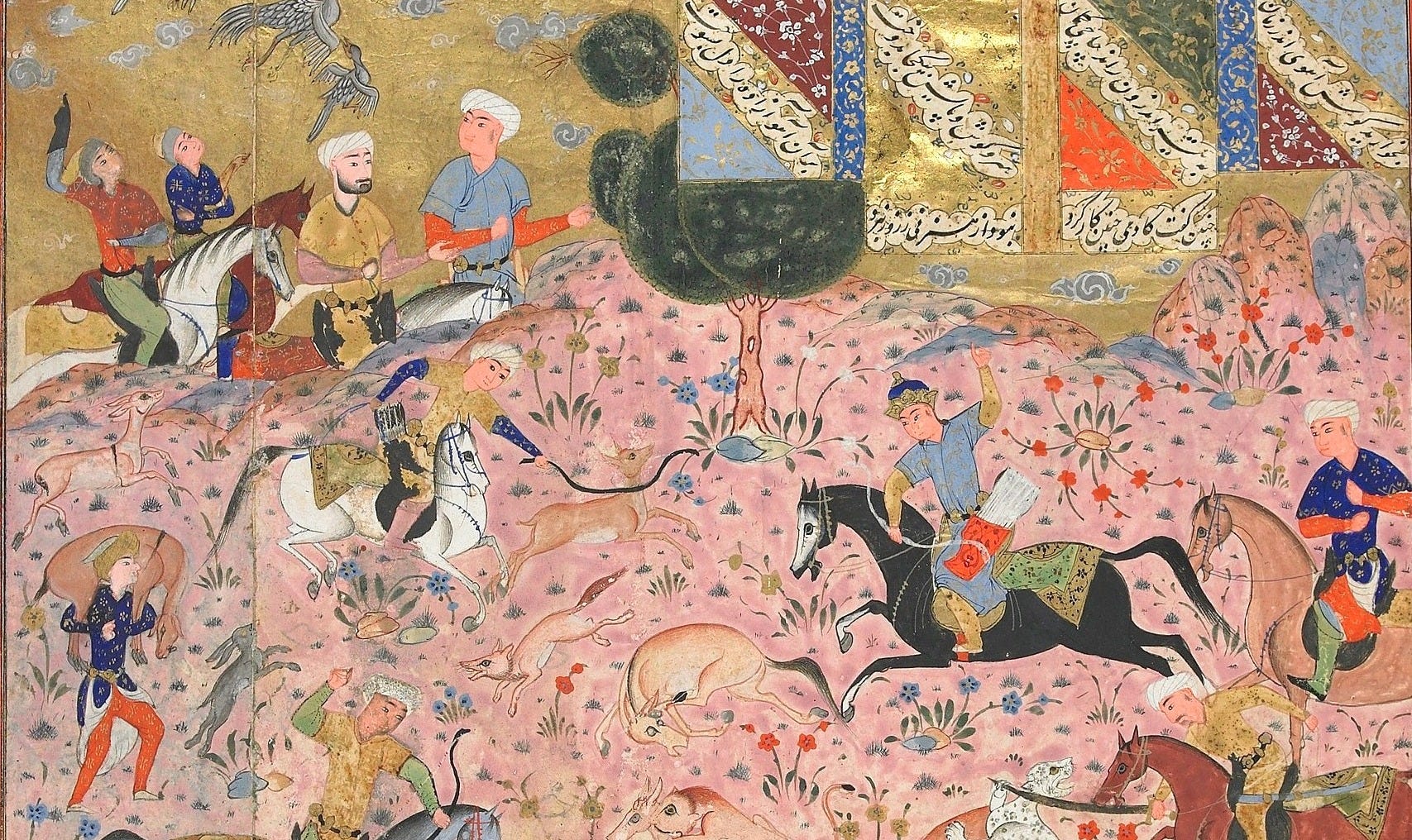
To understand the visual language of Iran, we have to look past the modern borders and the heartbreaking headlines that have dominated the news recently. It is a strange, sobering contrast: while geopolitical issues speak of conflict and the fragile cost of human life, the art of Iran tells a story of an enduring, creative resilience that has outlasted every empire and every war.
Persia isn’t just one chapter in our history books; it’s one of the oldest, most sophisticated continuous artistic lineages on the planet. It has one of the richest art heritages in the world, and an impressive collection of treasures that date back 5,000 years, from pieces by the earliest known civilizations to works by living artists today.
Persian artists have founded and practised many art forms. These include painting, pottery, sculpture, metalworking, calligraphy, and the most well-known of them all—celebrated worldwide—carpet weaving and architecture.
Due to its central location, art in Persia has drawn influence from both the East and the West over the years. Artistically, Persian art can be described as a mix of native Persian traditions with Mesopotamian, Egyptian, Chinese, and classical Greek and Roman art. This is a result of the numerous power shifts that Persia has seen.
Today, we will read about the evolution of Persian art as empires and rulers came and went.
(The term “Persian Empire” refers to a series of dynasties centred in modern-day Iran that spanned several centuries.)
Reminder: You can support Behind the Masterpiece and get access to members-only content for a few dollars per month, such as:
Access to paid subscriber articles
Unlock the full curriculum: From the ‘Language of a Masterpiece’ to the ‘History of Colors’
Ask me anything about your favorite works or upcoming museum trips
Ability to comment and join community chats
The first of them all was the Achaemenid Empire.
Founded and led by Cyrus the Great, it was known as the world’s first superpower. Achaemenid kings were devoted to Zoroastrianism, one of the earliest monotheistic religions, centered on the teachings of the Persian prophet Zoroaster. But they didn’t impose their Zoroastrian beliefs on their subjects.
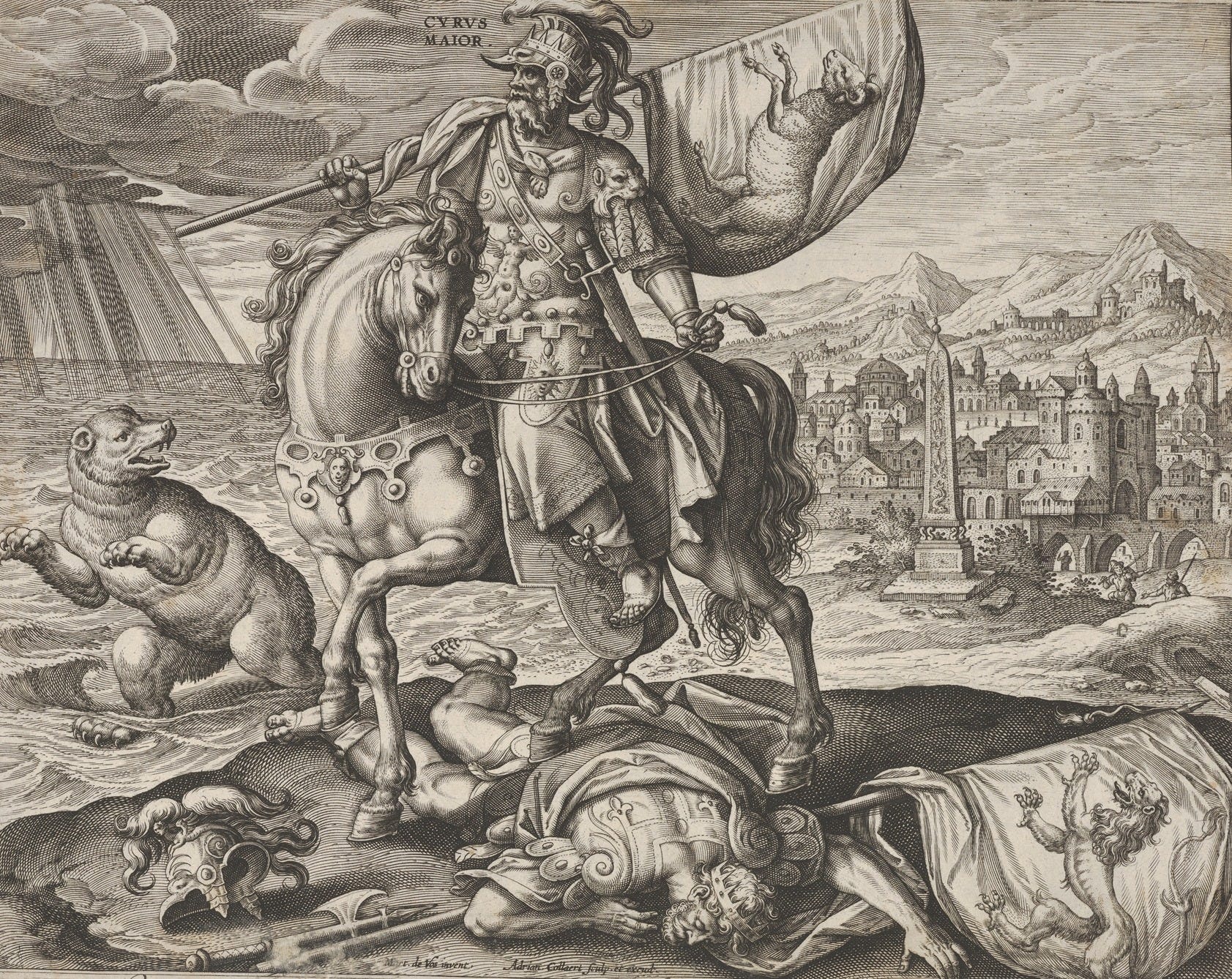
In fact, researchers have found that Cyrus the Great was a tolerant king and believed that everyone who was a part of Persia’s acquired territories should have the right to follow their own religious beliefs, practice their own cultures, and speak their own languages. And so the art of this time was greatly influenced by the many cultures that the Achaemenid Empire had ruled.
The most influential of these cultures were Egypt and Greece, especially in terms of their architectural accomplishments. As such, architecture became the art form of choice in which Persian artists demonstrated a high degree of skill. In the annals of Persian history, the Achaemenids’ reign stands unparalleled, as they were the ones who created one of the most impressive and well-preserved ancient structures: the ruins of Persepolis. Its name is derived from the Greek words Perses and Polis, meaning the City of the Persians.
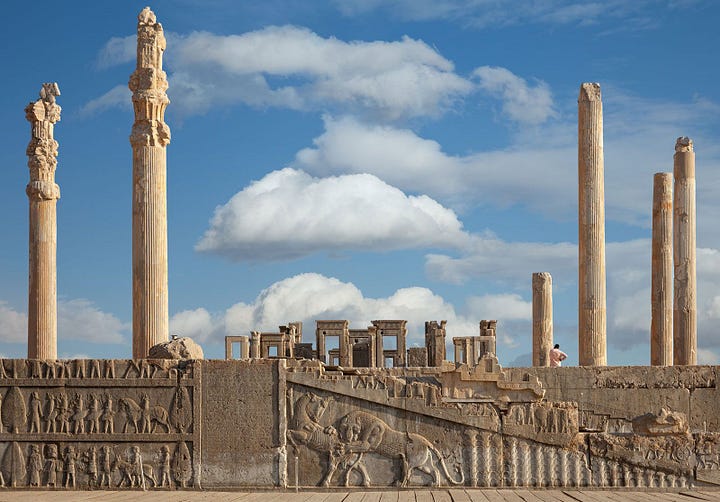
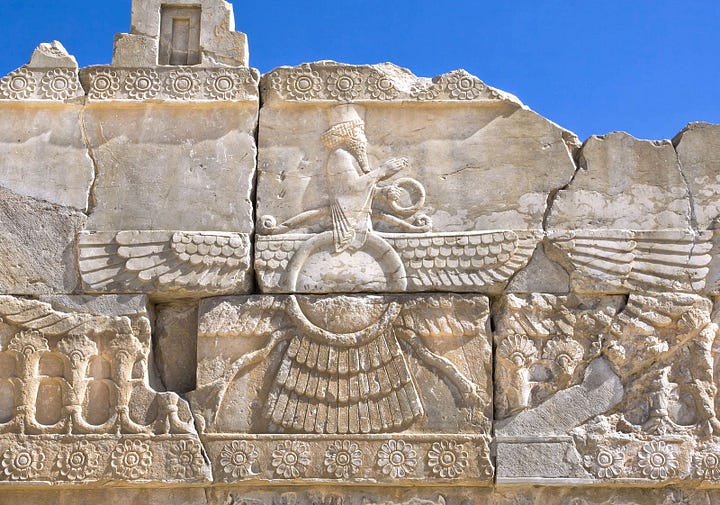
This complex was the ceremonial capital of the Achaemenid Empire and is built high on a walled platform, with grand entrances leading through five halls of varying size. The archaeologists who excavated the site in the 1930s believed that it was Cyrus the Great who chose the location of Persepolis, but it was Darius I, a later Achaemenid king, who actually ordered it to be built.
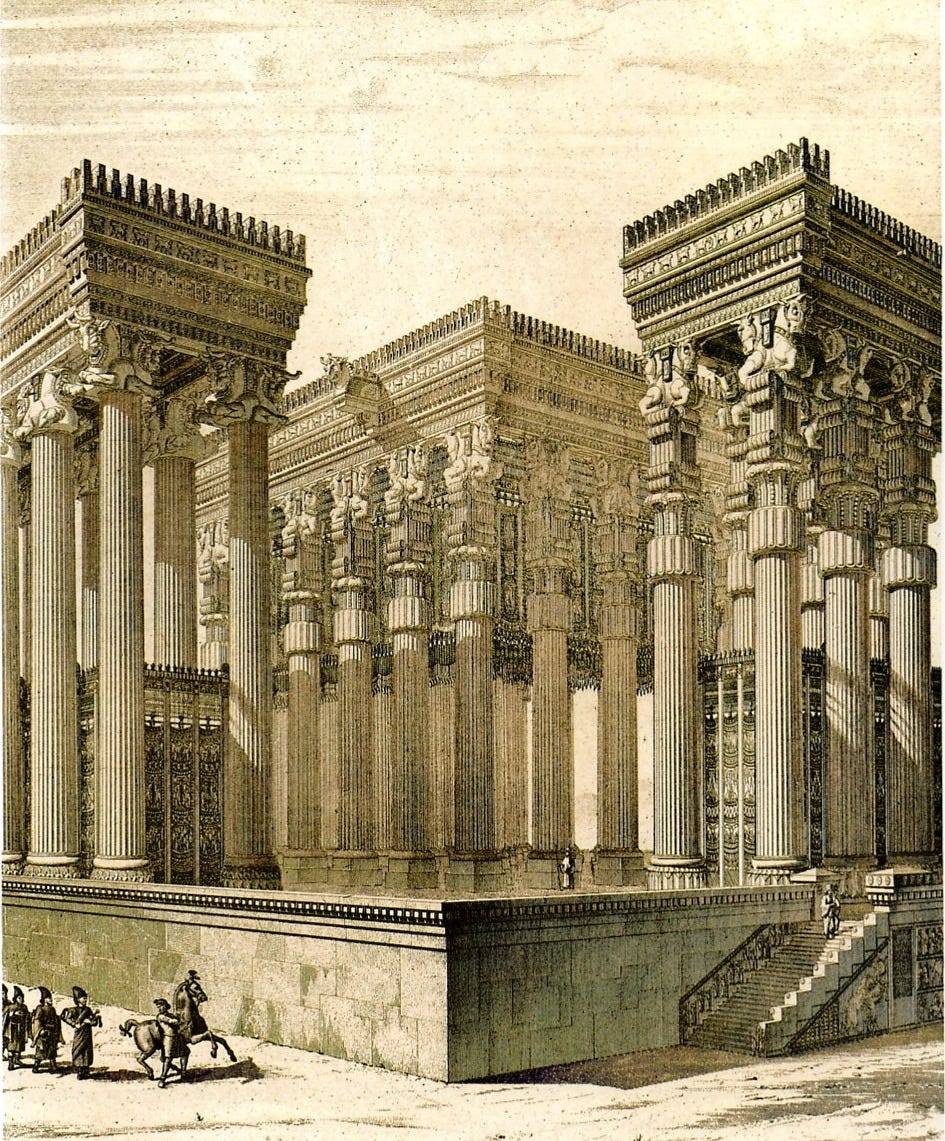
The artists of Persepolis created intricate stone reliefs, gates, columns, and sculptures that showcase their skill. The Apadana Palace at Persepolis is notable for its grand size, ornate decorations, and elaborate columns and staircases that are adorned with breathtaking relief sculptures. This palace was built with a purpose—to serve as a grand reception hall for foreign dignitaries and as a throne room for the powerful Achaemenid kings. And so the reliefs here depict the annual processions in which tribute was brought to the king, providing a rare look at the daily life and customs of the Achaemenid Dynasty.
Throughout this site, there is one particular sculptural motif that repeats itself: a lion pouncing on a bull.
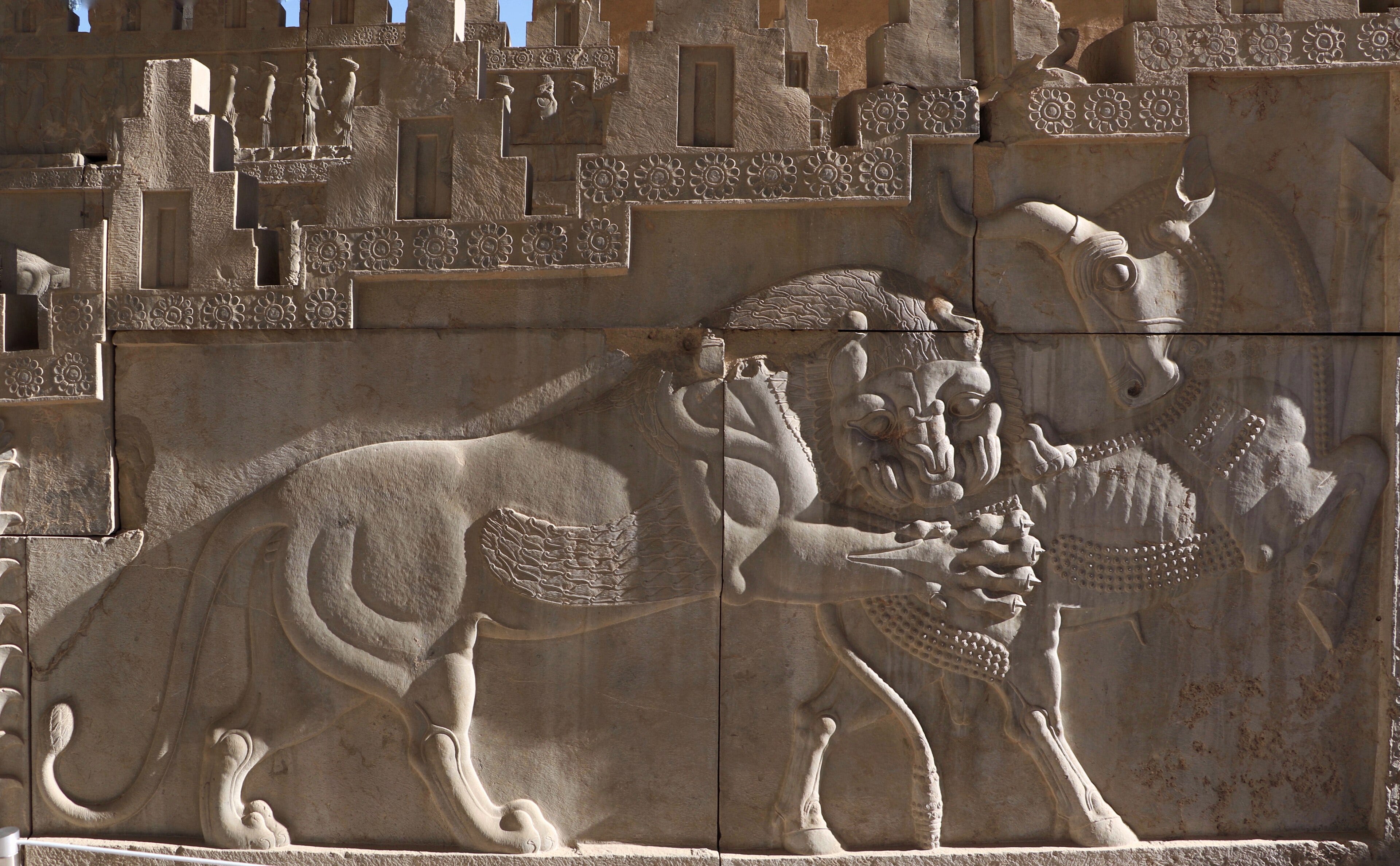
In Persian culture, these two creatures were regarded as the most powerful and prestigious, and so being depicted together in a landscape of architectural abundance, their unity is a symbol of the combined powers of nature brought together by and for the Achaemenid Empire.
Other important artworks from this empire include intricate jewellery made of precious metals. In the 1870s, a group of smugglers made a stunning discovery while rummaging through ruins near the Oxus River in present-day Tajikistan—180 pieces of gold and silver artifacts, including the coveted Gold Chariot.
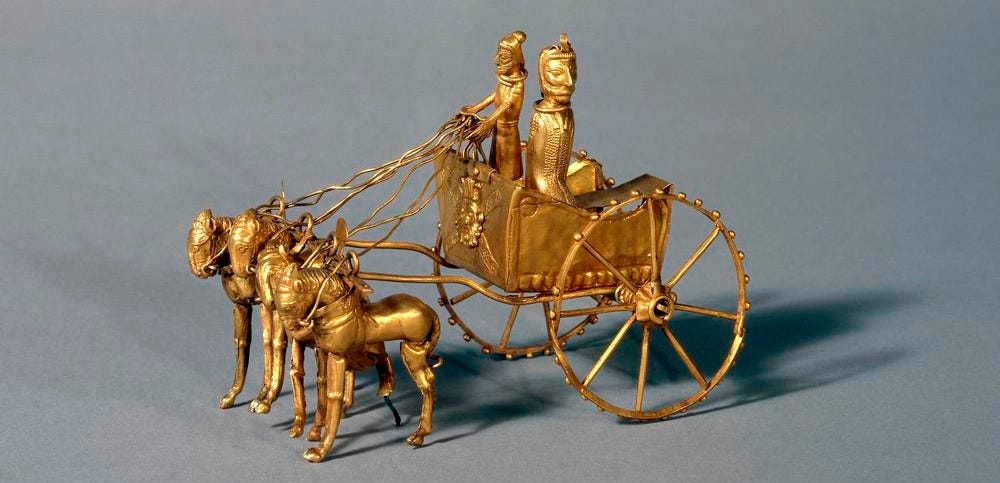
Standing at just a few inches tall, this small but remarkable sculpture of a four-horse-drawn chariot is constructed entirely out of gold and features two figures wearing Median dress, the customary garb of ancient Persian people from the Medes region.
Due to the length of time that has passed since this Golden Chariot was buried, only nine of the horses’ legs have survived, and the spokes in one of the wheels are damaged. Yet despite its imperfections, it is still a treasure to marvel at.
Today, it is housed at the British Museum in London, along with the rest of the Oxus Treasure, which was brought to the museum from Pakistan in 1897.
In 330 BC, Macedonian ruler and savvy strategist, Alexander the Great brought down the Achaemenid Empire, marking the end of an era and the introduction of Greek civilization to the region.
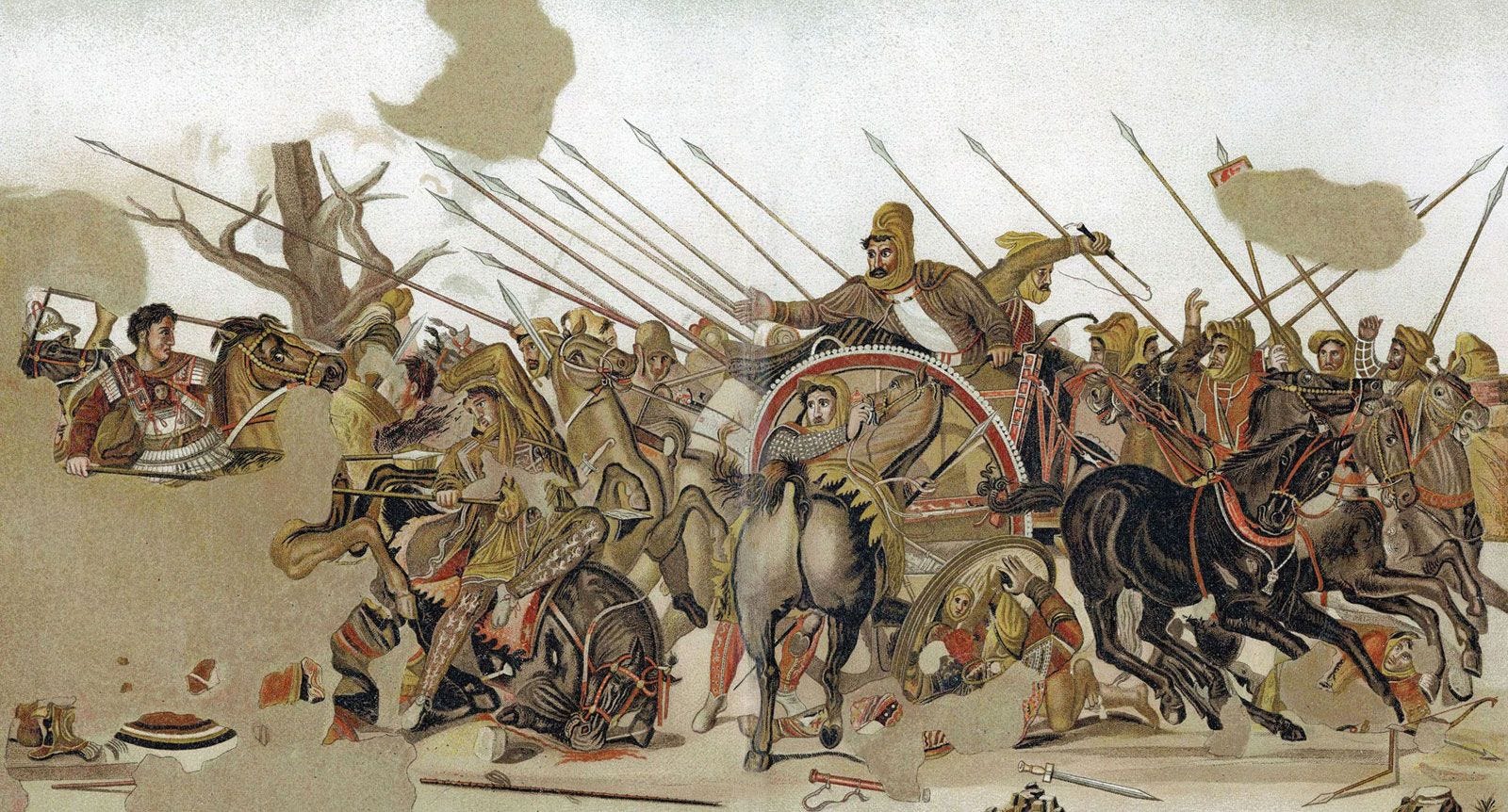
Alexander the Great ordered the destruction of Persepolis as a symbol of this change, leading to a blend of Greek and Persian motifs in the art that was produced afterwards. Yet his reign was short-lived. After his death, the fate of Persian art fell fully under the influence of the Parthians.
This marked the second phase of the history of Persian art.
This empire lasted almost 500 years and stretched from the Mediterranean in the west to India and China in the east. The Parthians were a semi-nomadic people whose art was influenced by the various regions they encountered. The art of this time reflected the diversity of this empire’s roots and history.
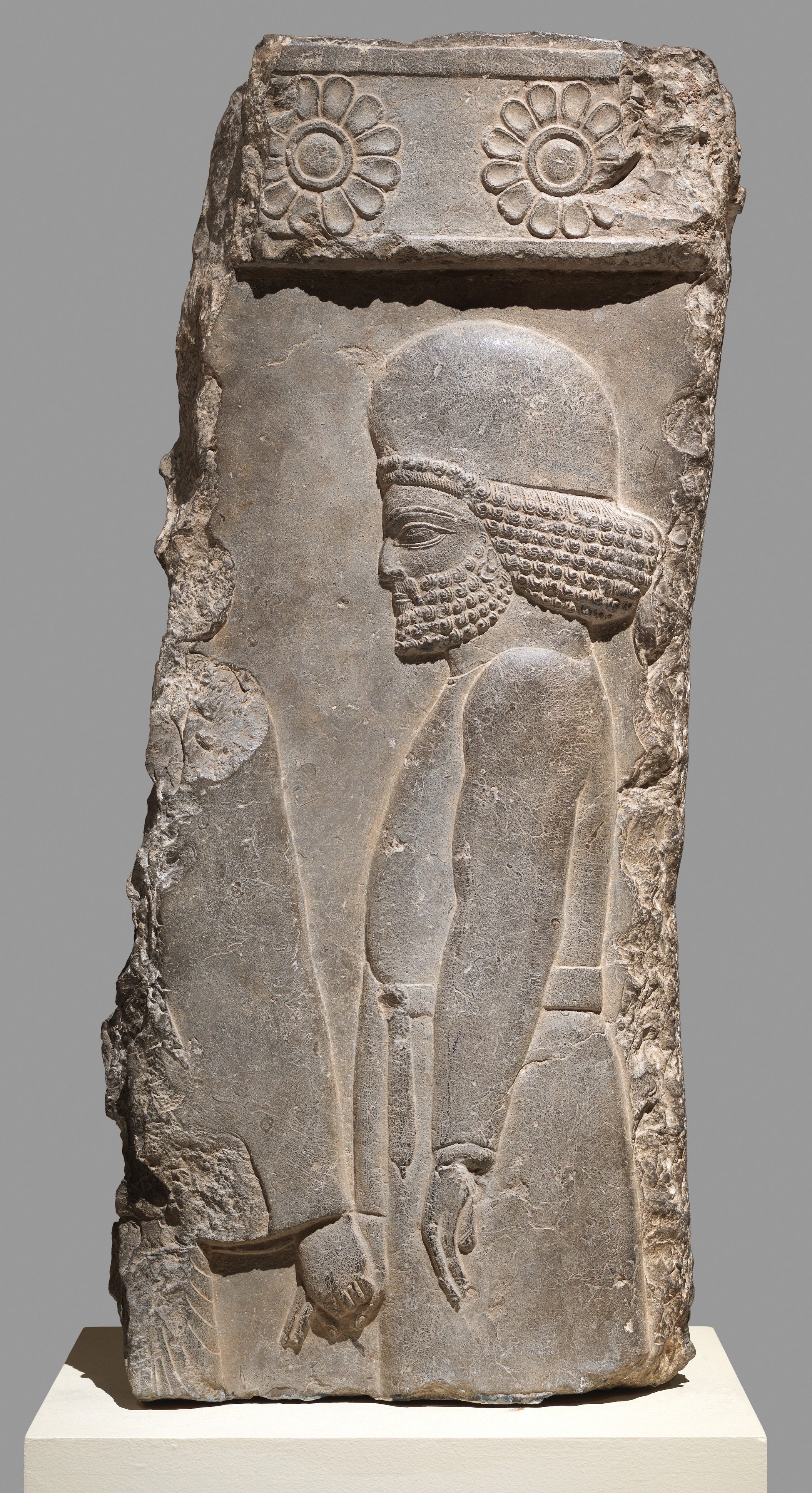
One of the main ways you can tell that a piece of art is from this period is the prevalence of frontal depictions of subjects. Persian art no longer featured images of individuals seen from their profiles, like those of the Achaemenid Empire seen above.
We can see an example of that below.
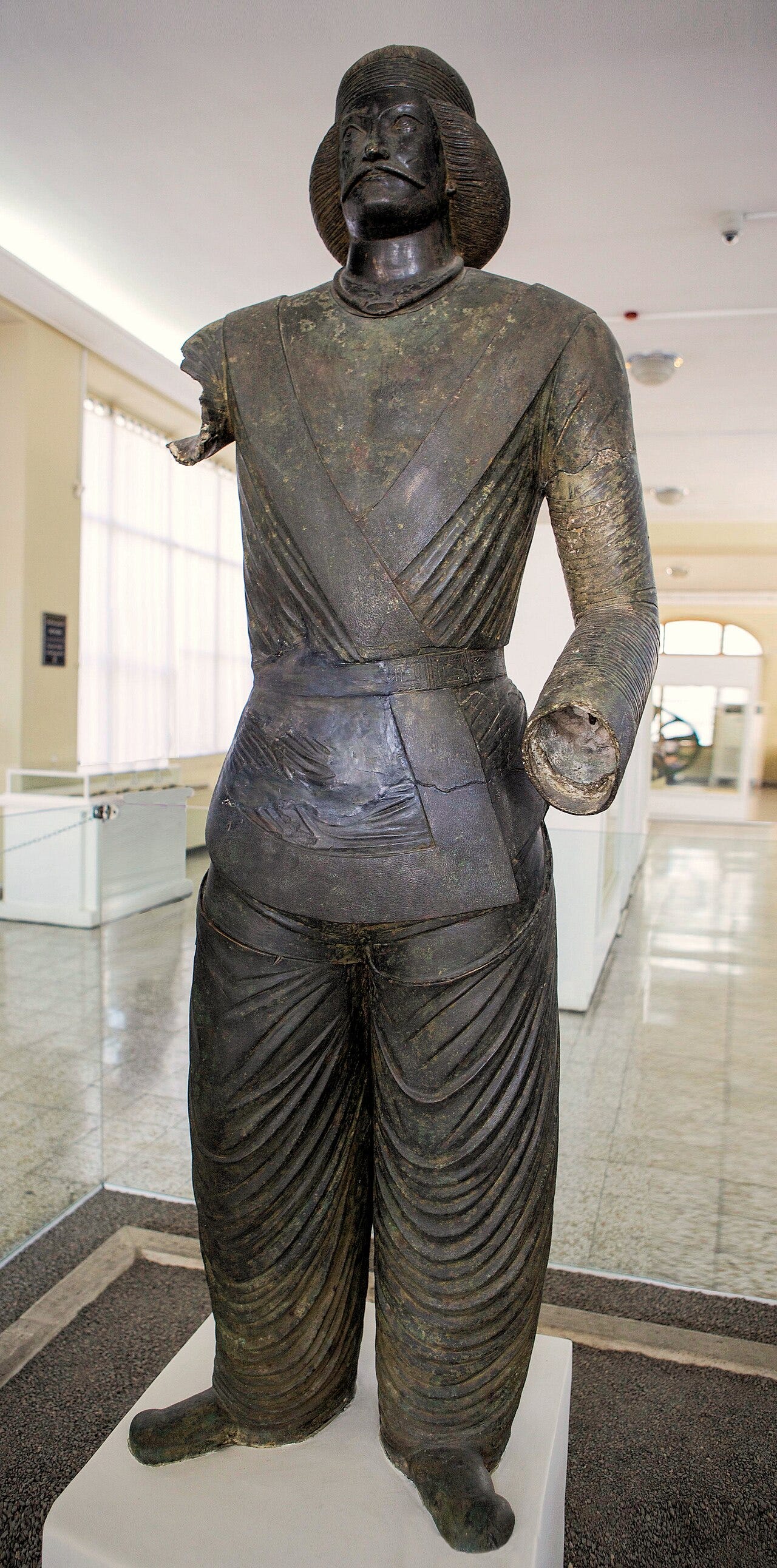
The Shami Statue is one of the main surviving works of the Parthian Empire. It is a six-foot-high bronze statue of a man with a commanding presence, seen from the front. His head is slightly smaller in proportion to the rest of his body, and his face is plain, bearing a short beard and a thick moustache. His left hand and the entire right arm are missing. The details of the man’s clothing are quite remarkable and lead him to sometimes be known as the “Shami Prince” or the “Shami Nobleman.”
Though the least well-known of the three distinct Persian empires, the Parthian era had a significant impact on the course of art history. The frontal view depictions of Parthian art can be found in Christian artworks of Byzantium and the Middle Ages, a thousand years after this empire’s reign.
The third and last Persian empire to rule this region before the advent of Islam was the Sassanian Empire. It was established by Ardeshir I, a general for the Parthians who overthrew the last Parthian king.
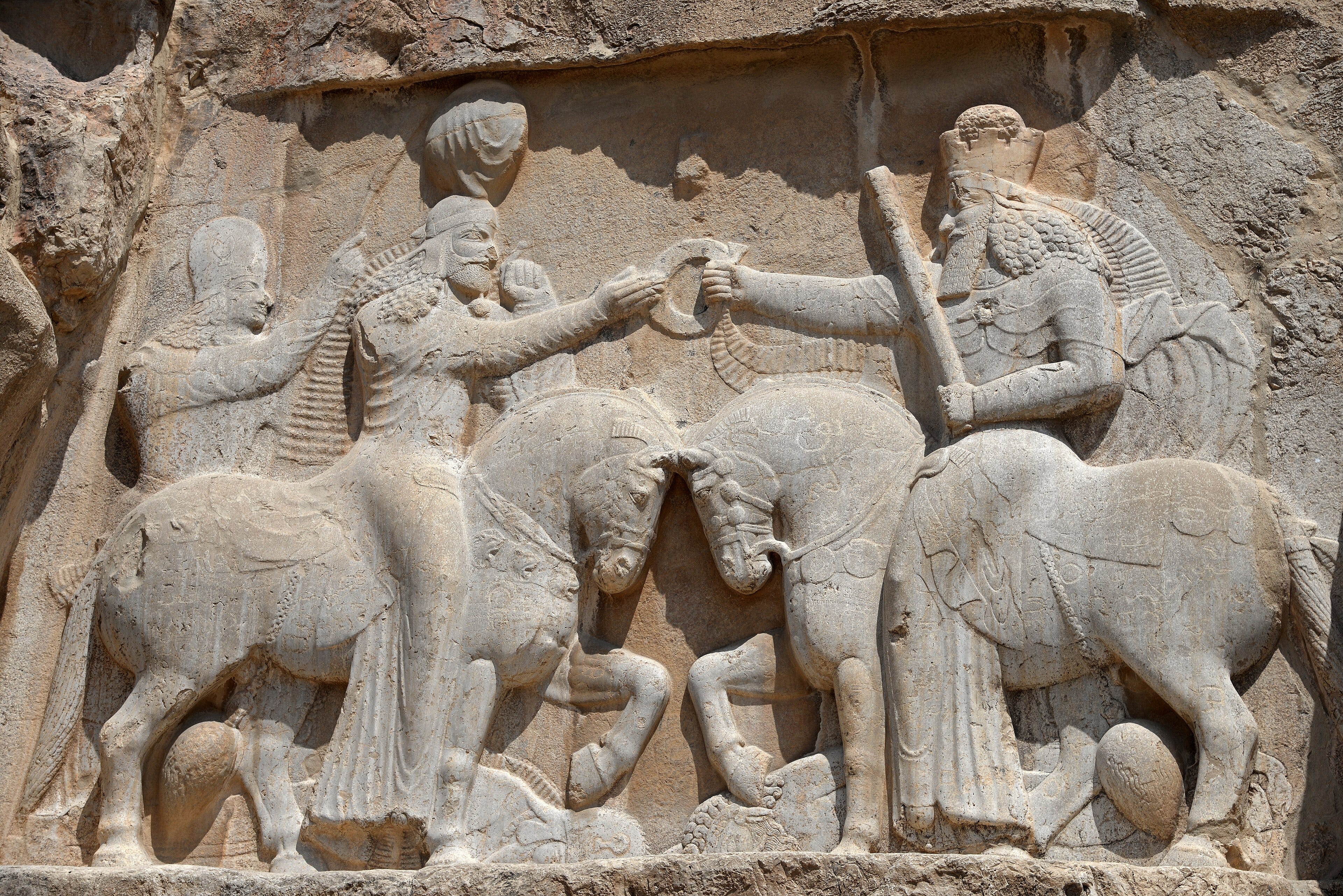
This empire’s art was important as it restored much of Persia’s lost power and culture, and it was receptive to foreign influences while adapting them to the traditions of the native land.
Sassanian artists abandoned the frontality of the Parthian era and returned to the profile and three-quarter views commonly used in the Achaemenid Empire. The rock reliefs scattered throughout the empire’s territory—of which there are thirty in present-day Iran alone—are the most significant and insightful examples of this empire’s art.
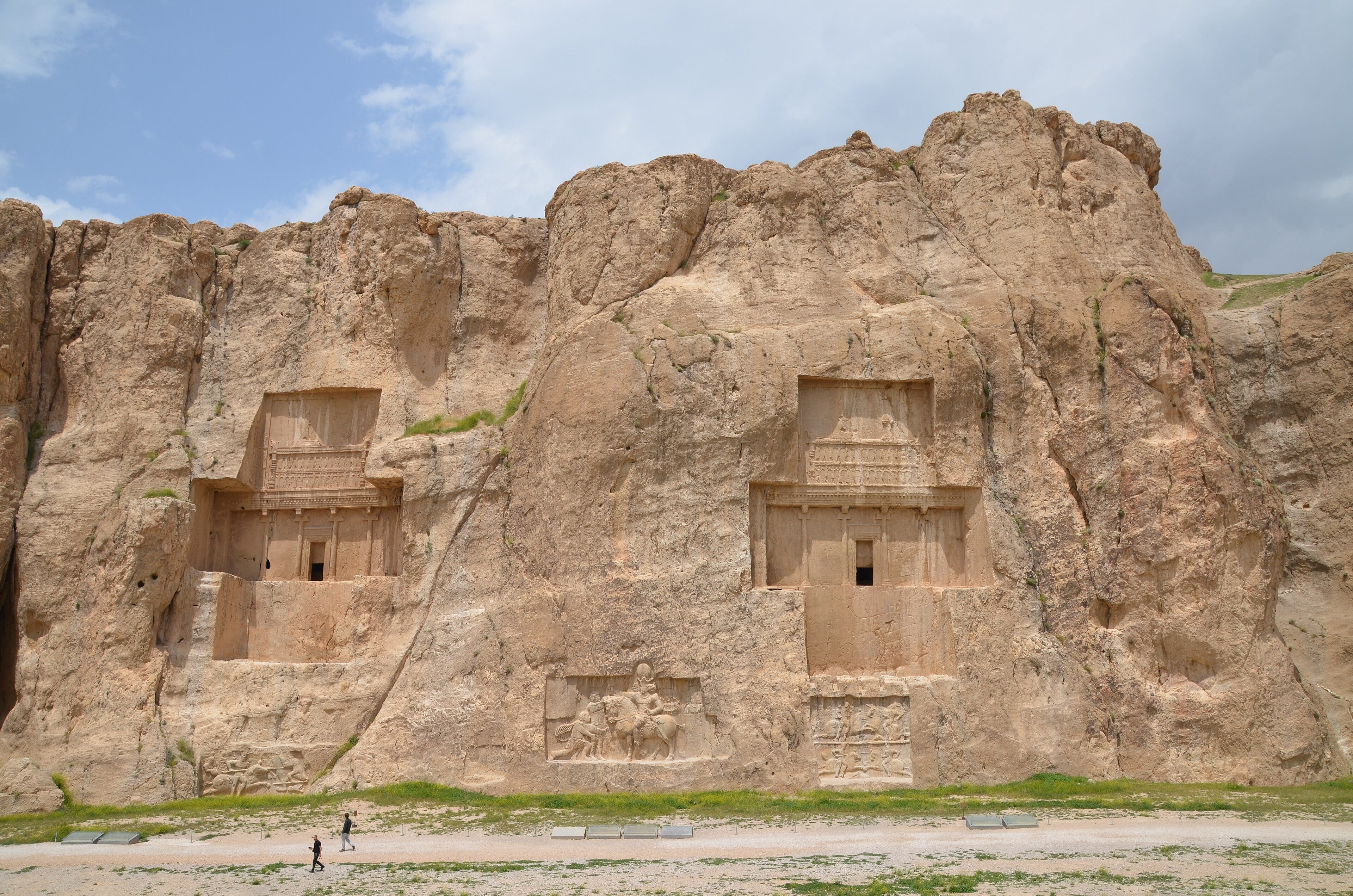
The scenes generally depict the triumphs and victories of Sassanian rulers and royalty. Possibly the most striking artworks of this period are the reliefs of Taq-e Bostan.
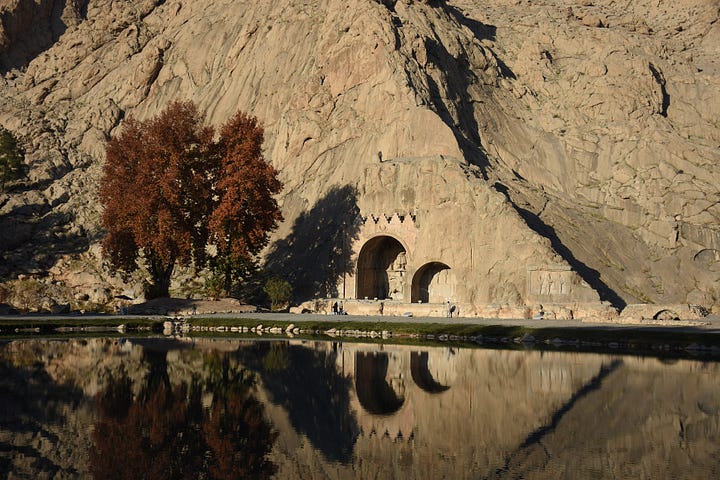
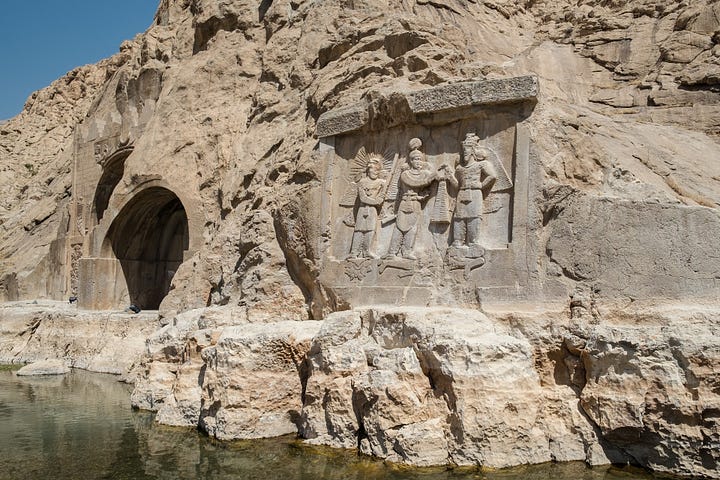
Located in the heart of the Zagros Mountains near Kermanshah, Taq-e Bostan is a series of rock reliefs carved into the mountain. Depicting scenes of coronation ceremonies and royal hunting grounds, these highly narrative murals, immortalized in stone, are a sight to behold, with the site’s natural landscape adding to their beauty.
One of the most vivid and notable reliefs is the Deer Hunting Scene.
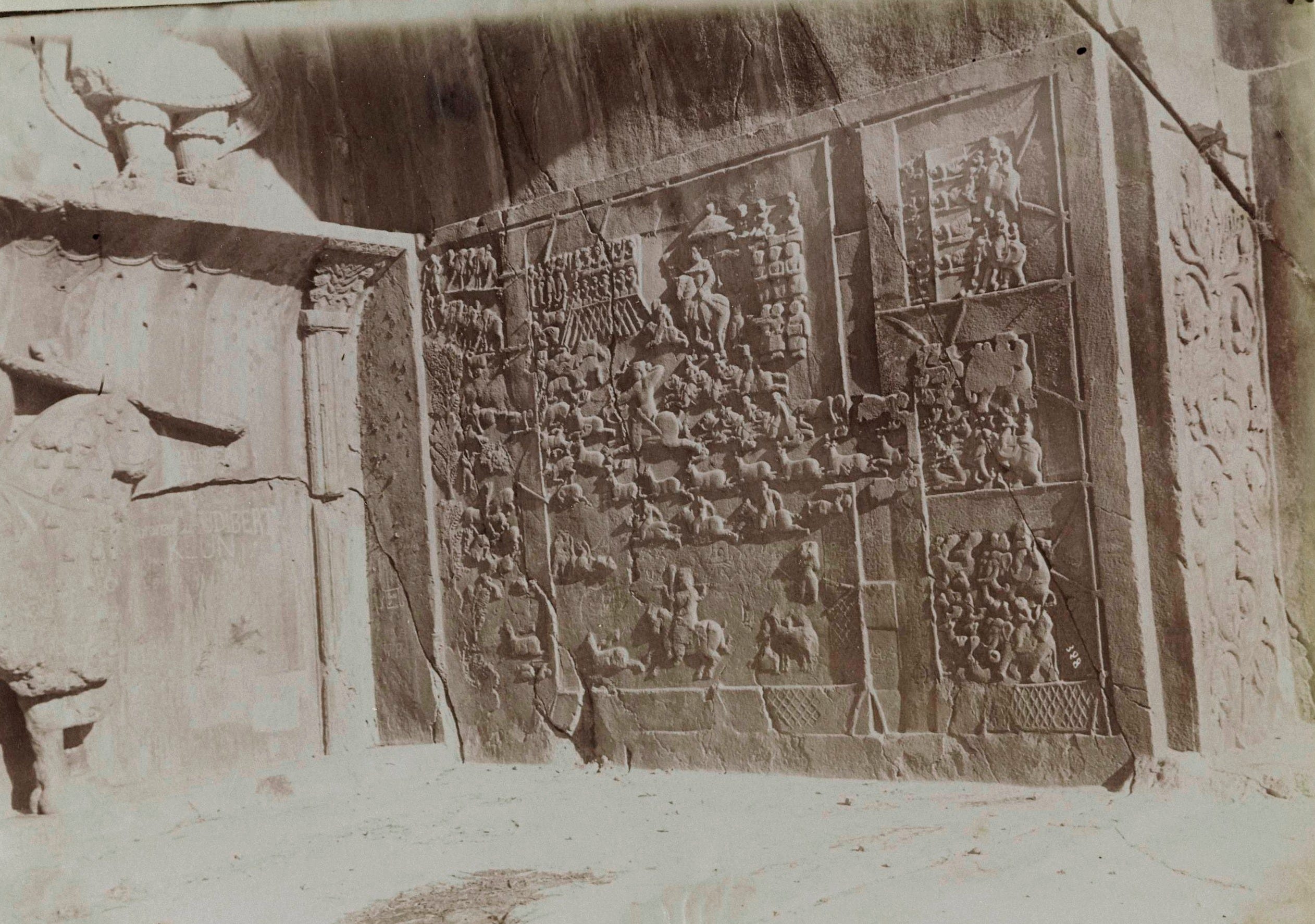
Depicted in three levels, the king on his horse is the main character of every level, whether he prepares to hunt, is in the midst of hunting, or awaits his attendants to clear his path.
The artist makes the choice to place the king in an arbitrary frame and surrounds him with incidental detail, which might have been inspired by similar designs in Roman and Greek mural paintings.
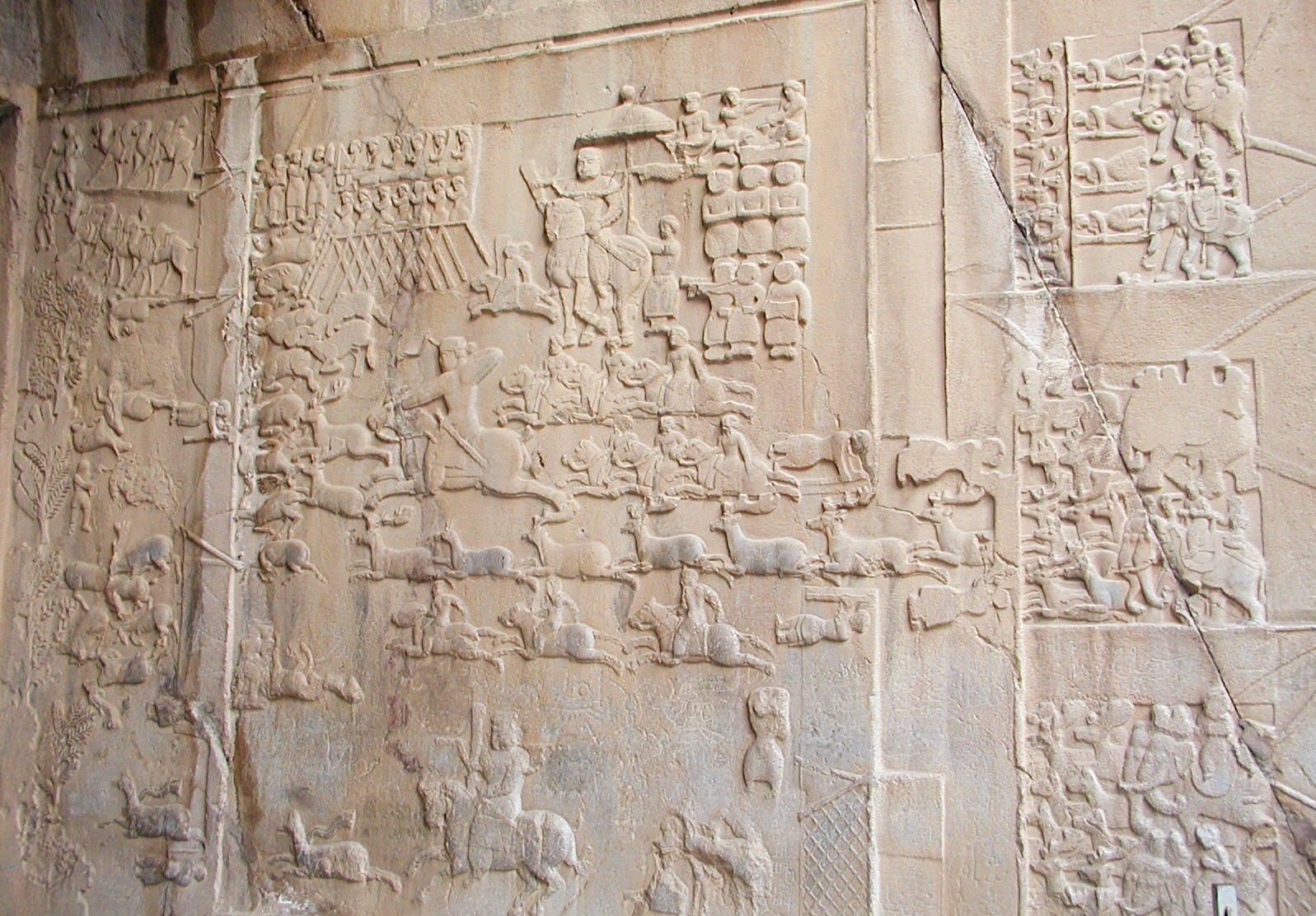
The use of multiple levels to depict the relief makes this entire scene a true masterpiece of inscription, visually telling a story through movement and representation. Yet the scenes are combined deliberately without narrative—snapshots of moments in time, imbued with an eternal significance—which makes these reliefs some of the most important accomplishments of Sassanian art.
Another important achievement of this period is the art of carpet-making and silk weaving.
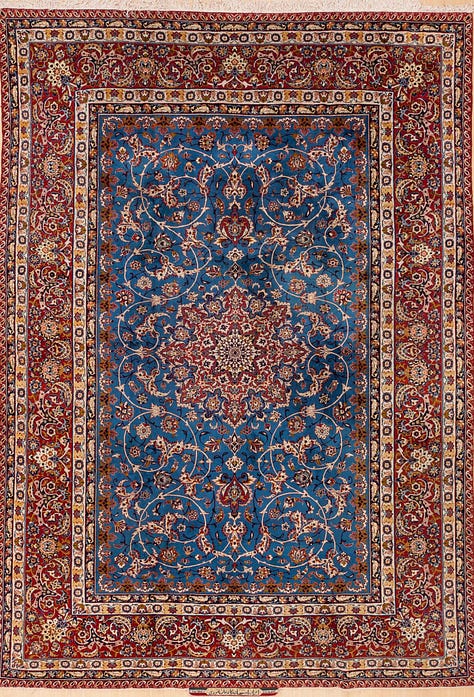
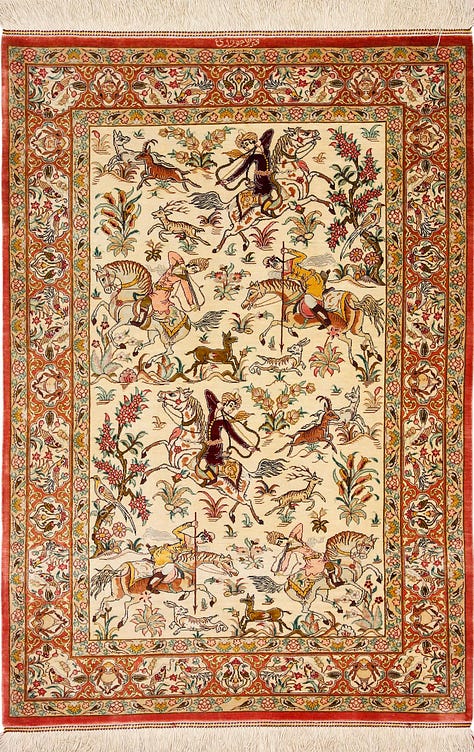
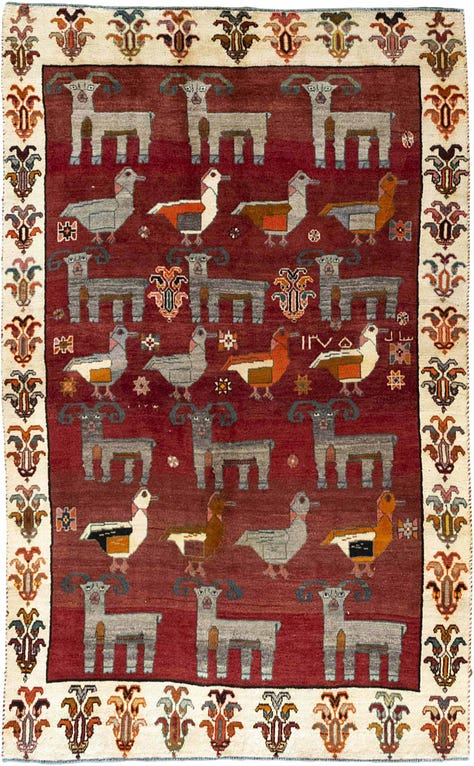
This skill led to the development of the iconic Persian carpets known worldwide. Creating a single Persian rug can take years or even decades, with different regions of the country using their own signature weaving techniques, materials, colours, and patterns to create unique and stunning pieces.
Like the beautiful, subdued palettes and floral designs of Isfahan rugs, the intricate details of landscapes or historical scenes of Qom carpets, or the bold designs of Gabbeh rugs from the Fars province.
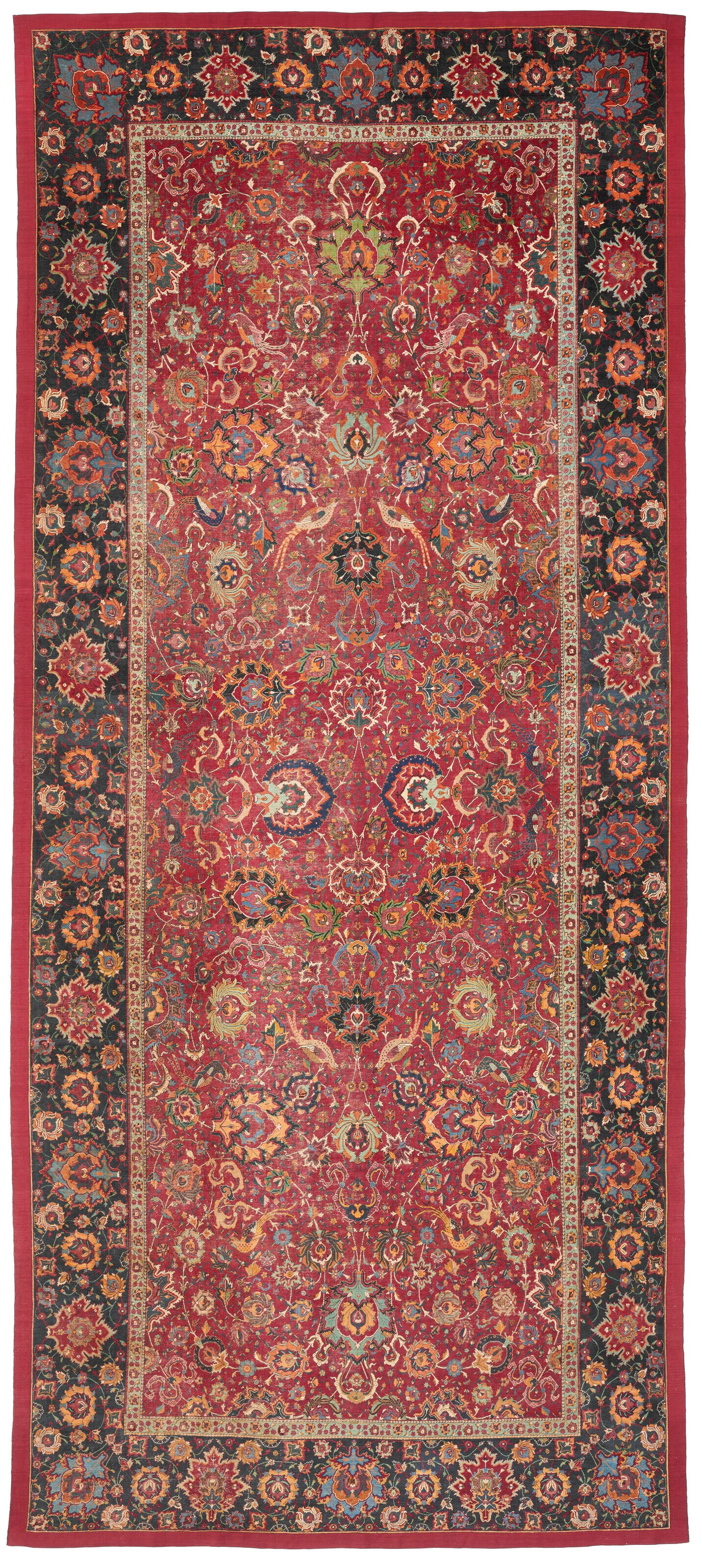
The stunning beauty of Persian rugs is reflected in their prices, with authentic pieces costing tens of thousands of dollars. In fact, the Persian rug below, believed to be from Kerman in the southeast of Iran, set a record at auction in 2013 when it sold for a staggering $33.8 million—and we can see why.
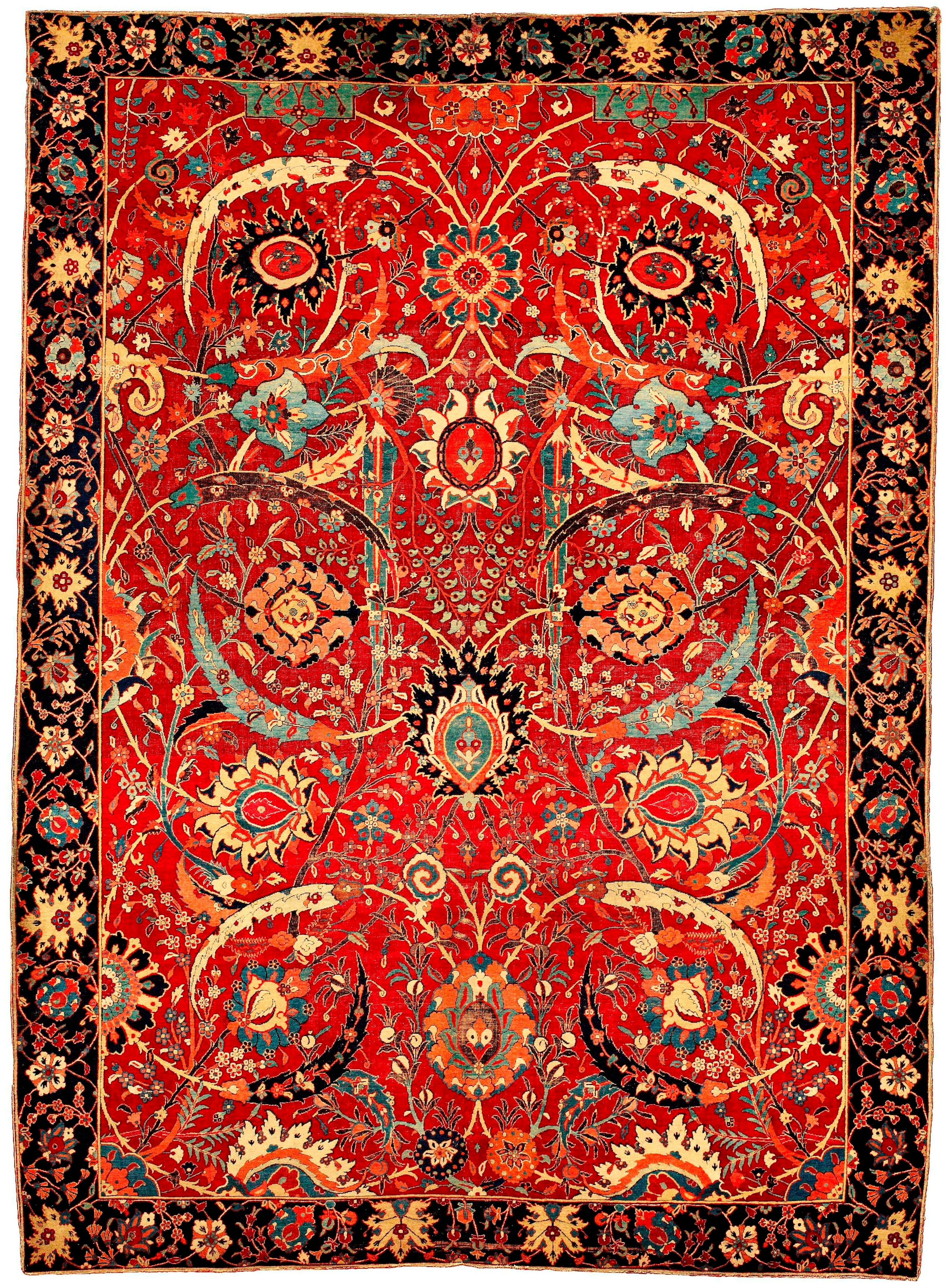
The rug consists of beautiful vines, gorgeous flowers and sickle-shaped leaves. Although it was woven in the 17th century, the breathtaking deep reds still look as bright as the day they were made, even centuries later.
In the 7th century, Islam emerged as a new power from the Arabian Peninsula, leading to the fall of the Sassanian Empire and the invasion of Persia by Arabs. Islam became the dominant religion and has remained so to this day, marking a turning point in Iran’s history.
Unlike their predecessors, the Muslim Arabs did not allow, much less support, each region’s cultural identity. In fact, certain ancient Persian traditions and cultures were forced out in an effort to securely establish an Islamic worldview in the new Persia. As a result, the art that emerged during this period allowed for little spontaneity and freedom, as it had to follow Islamic laws.
One of these rules forbade the depiction of three-dimensional figures, which led to an immediate decline in the creation of Persian sculptures. Artists were forced to find alternative media for their creative expression while under Islamic rule.
The paintings of this time adapted to be more decorative and flatter. This led to the creation of the world-famous Persian miniatures that were influenced by Chinese paintings and peaked in popularity from the 13th to the 16th centuries.
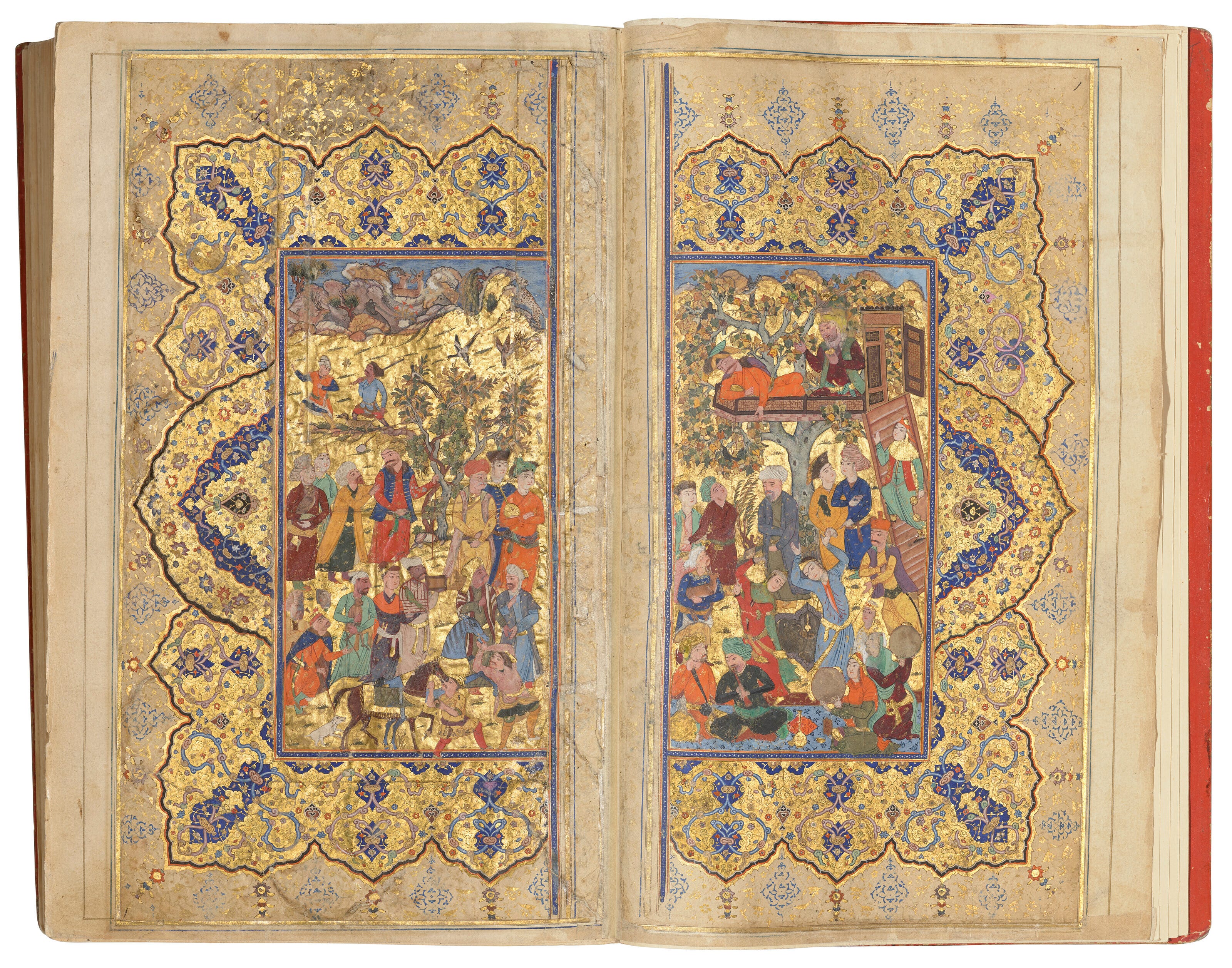
Miniatures are small paintings on paper that are intended to be kept in an album and have gone on to become a very significant art tradition in Iran. Perhaps the most famous Persian miniature is the illustration of Shahnameh, or the Book of Kings.
Written by the poet Ferdowsi in 1010, the Book of Kings is a 50,000-verse poem and one of the most voluminous epics of world literature. The poem tells the mythical and historical past of the Persian Empire, beginning with the creation of the world and continuing through the Muslim conquest in the 7th century. It was ordered to be illustrated by Shah Ismail I, the founder of the Safavids, one of Iran’s most significant ruling dynasties.
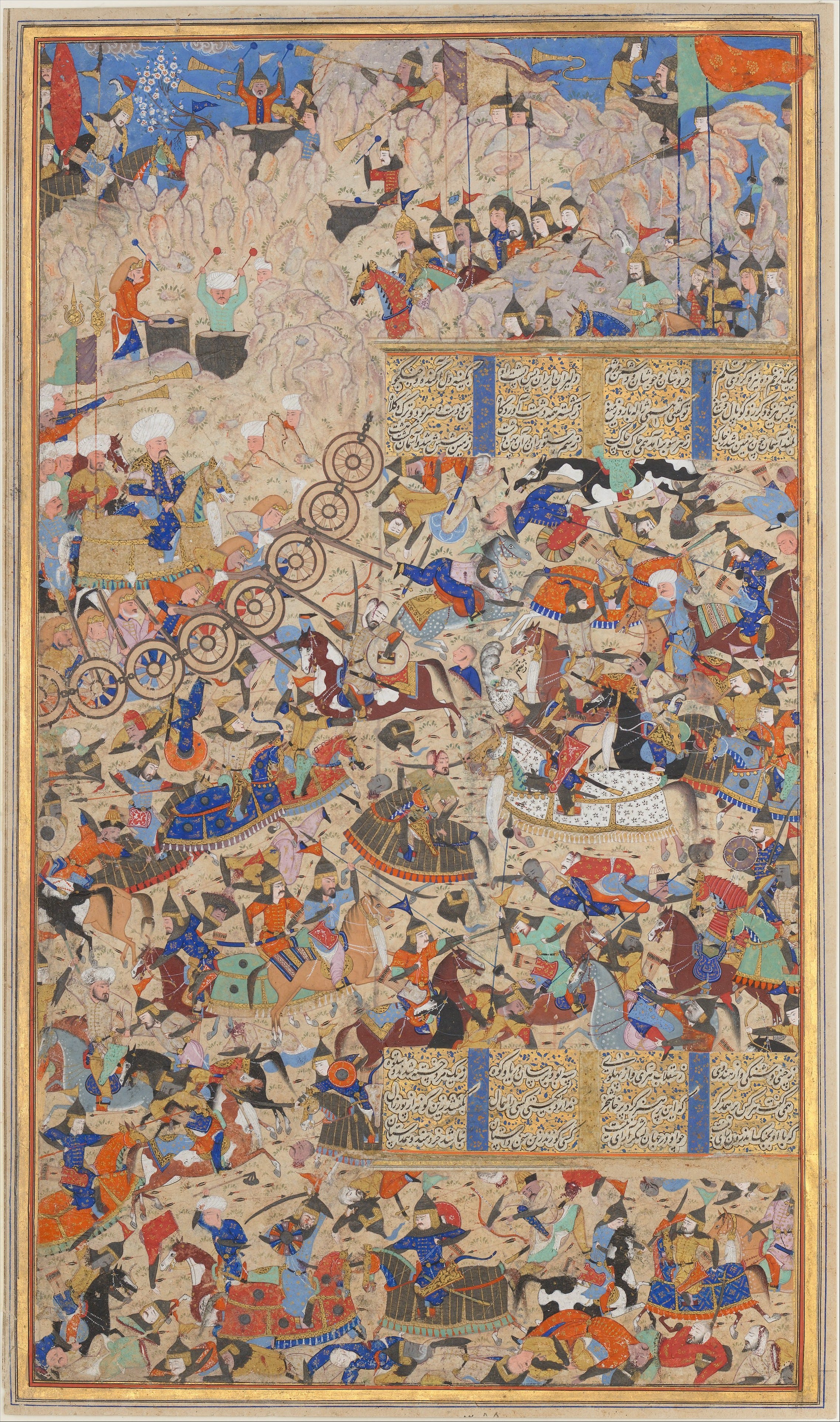
Ismail I wanted to assert his legitimacy as a ruler, and so the choice to illustrate this text—which portrays kings as strong, honourable individuals—was meant to gain him the respect of his subjects. It was then, in the 15th century, that two generations of the most renowned artists of the time worked to create the first illustrated copy of the Shahnameh.
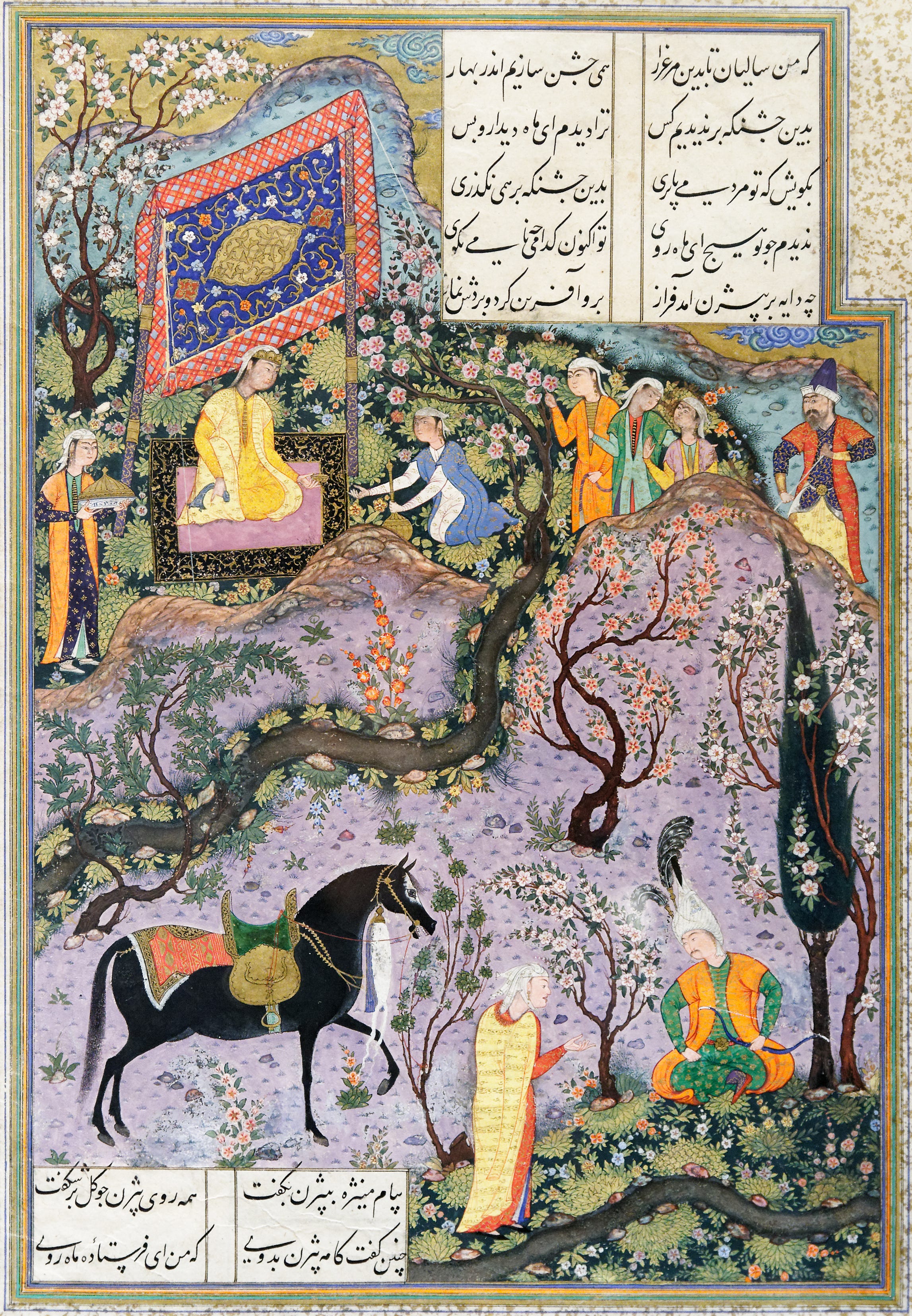
Among them were Sultan Muhammad, Mir Musavvir, and Aqa Mirak, who succeeded each other as directors of the project over the 52 years it took to complete. These artists created 258 illustrations of exquisite mastery to accompany 759 folios, or pages, of text.
The pages, measuring approximately 19 by 13 inches, are made of fine paper enriched with large gold-sprinkled borders. The bright and vivid palette of the Persian miniature is one of its most striking features, and we can see that here. The scenes are often populated with many figures, all being the same size regardless of importance. In fact, in miniatures, depth is indicated by placing more distant figures higher up in the space.
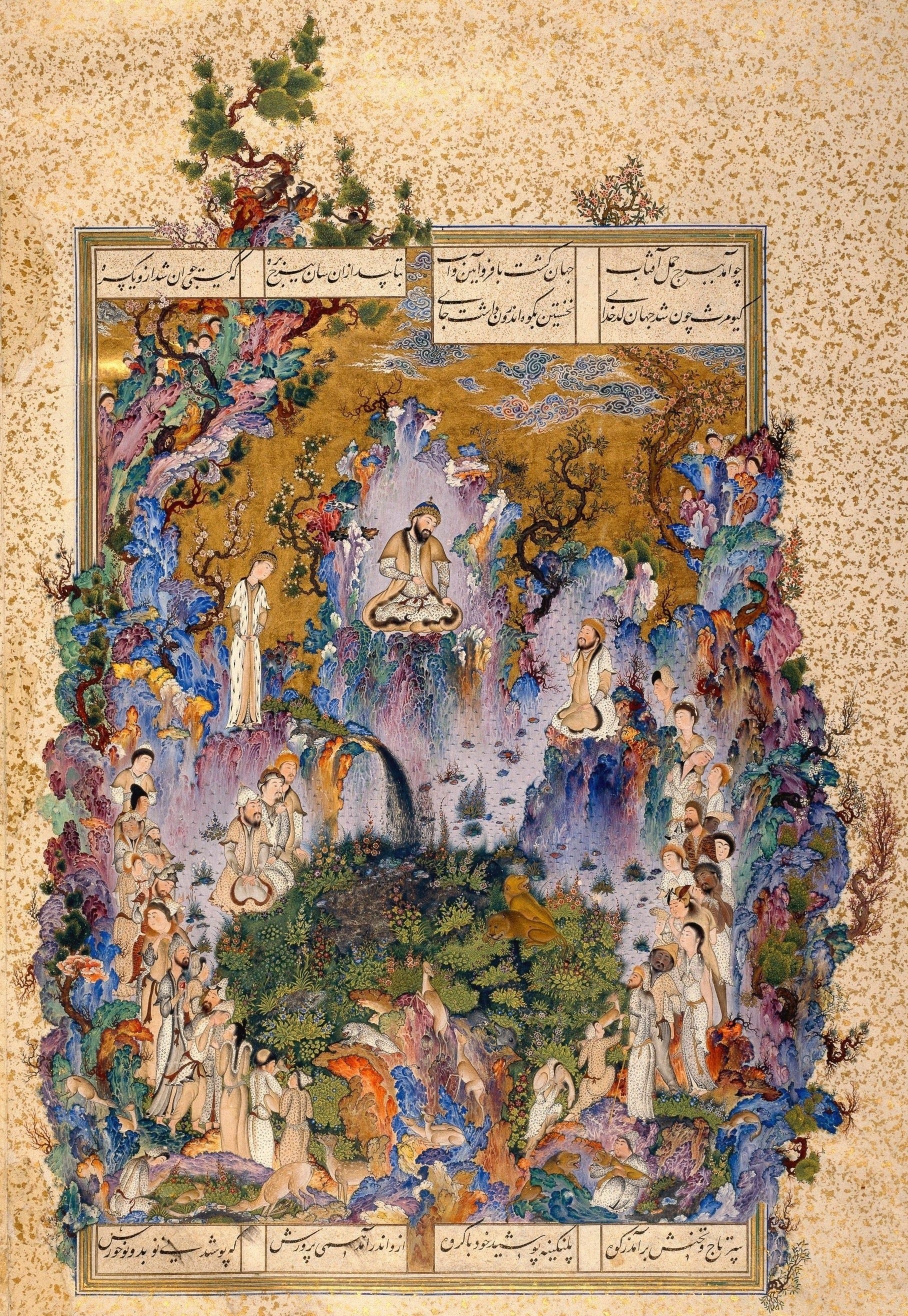
We can see that great attention is also paid to the background, whether it’s a landscape or a building, and the level of detail with which plants, animals, and fabrics are painted is what attracts viewers to keep looking.
Kamāl ud-Dīn Behzād is perhaps the most important Persian miniature painter to come out of this time and is regarded as marking the high point of the great tradition of Islamic miniature painting.
His work stands out for its unique artistic expression and his ability to combine the geometric attributes common to Persian paintings with his own visionary style. He builds vast empty spaces around his subjects that read, dance, and live on his pages. He guides the eyes of viewers around the picture plane in a whimsical yet organic flow. The placement of the figures and objects is not only uniquely natural, expressive, and active, but they are also arranged to further move the viewer’s focal point.
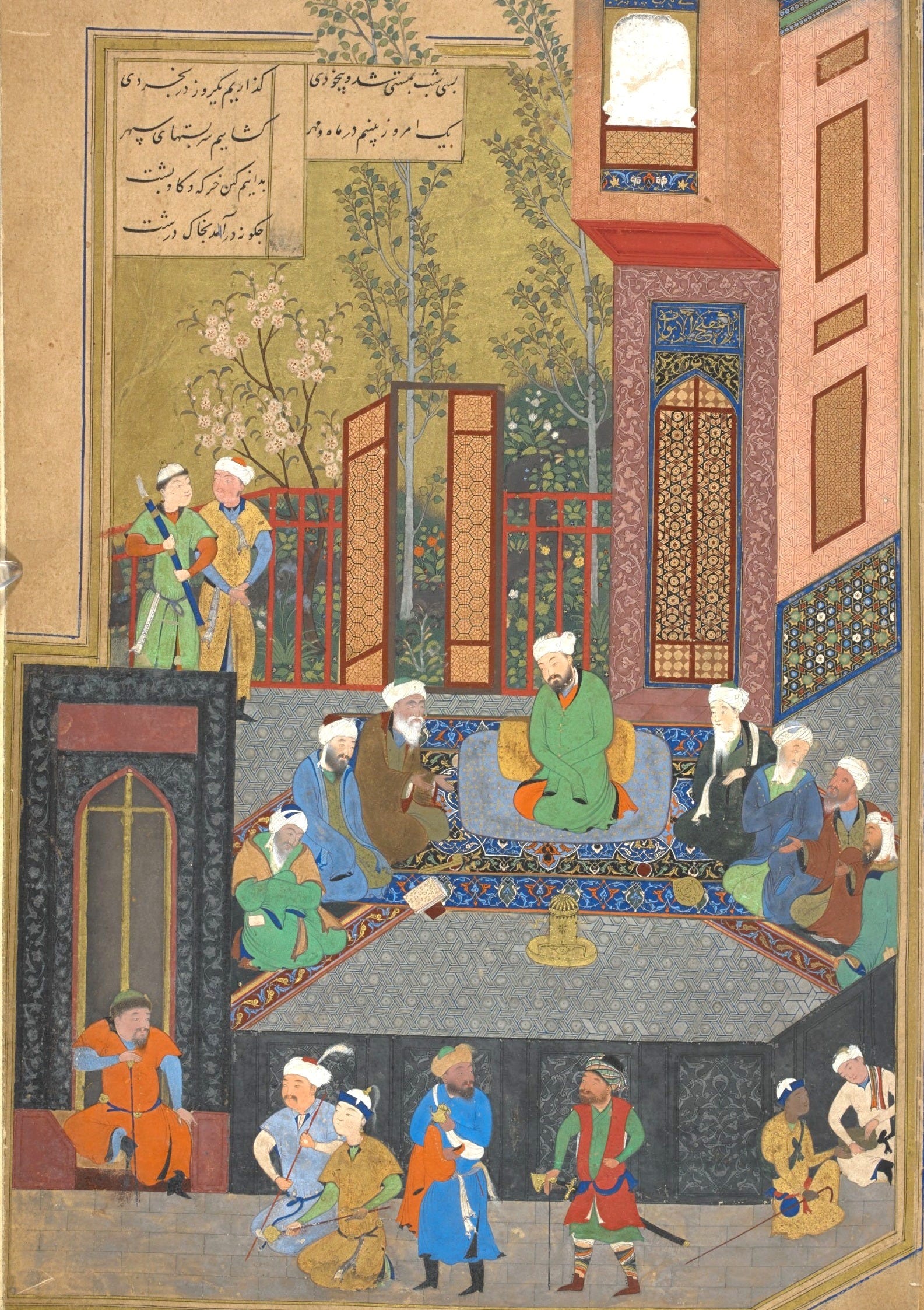
Through this and much more, he demonstrates the value of individuality, the weight of which is felt far beyond the confines of these pages. His realistic and powerful artworks opened the door for the development of portrait miniature art.
Like here, his Portrait of a Dervish, who is a member of a mystical religious fraternity, is one of the most famous miniature portraits in the world.
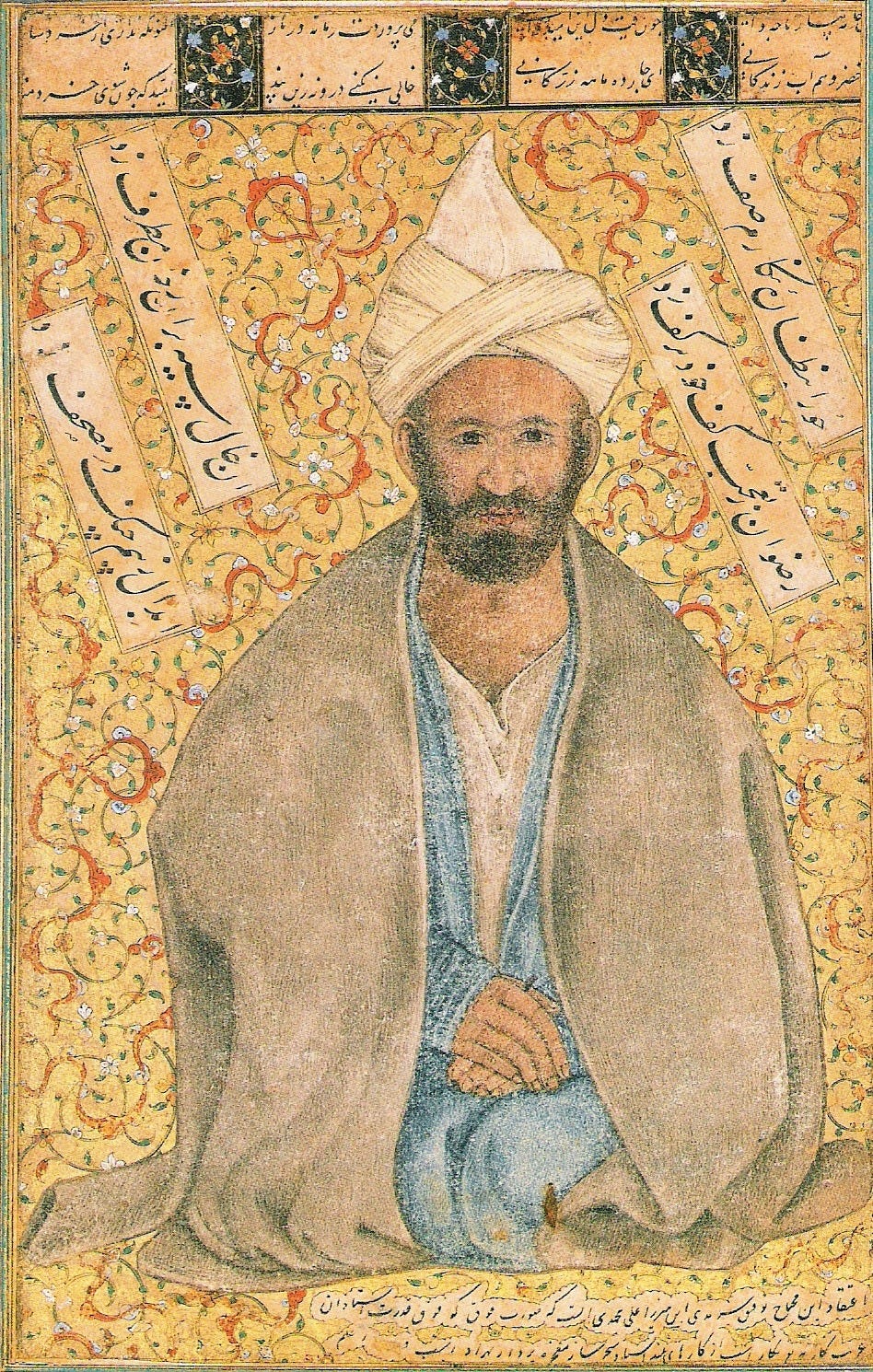
Surrounded by lines of poetry, the dervish is shown seated in his religious garb, experiencing the peaceful absorption of his faith. True to Behzad’s skills, it exhibits the meticulous detail we see throughout his entire collection of works.
During the 9th and 10th centuries, the use of glazed ceramic tiles to decorate mosques became a notable feature of the period’s architecture.
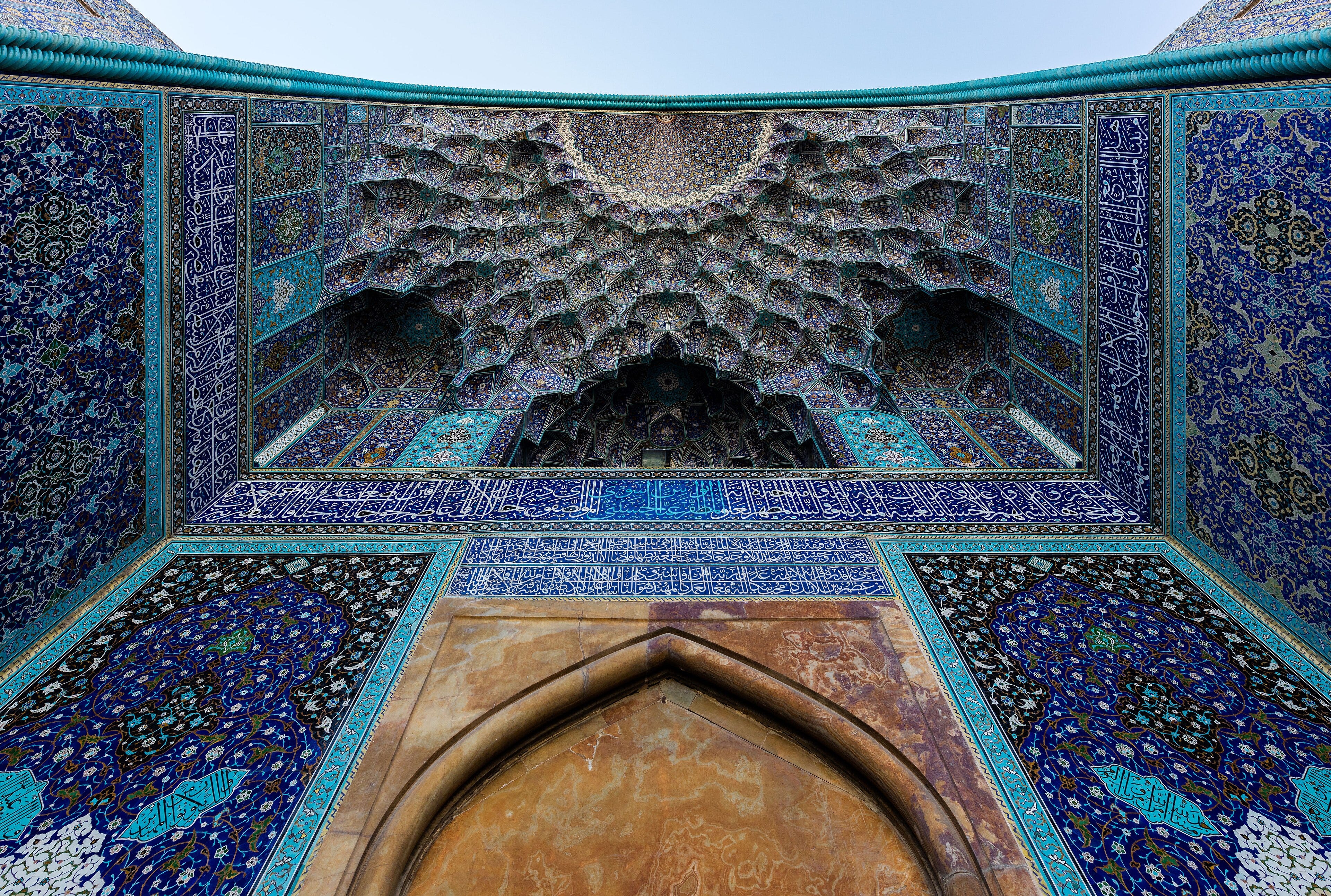
These tiles are typically glazed in bright colours and are used to create intricate patterns and designs inspired by traditional Persian motifs and styles.
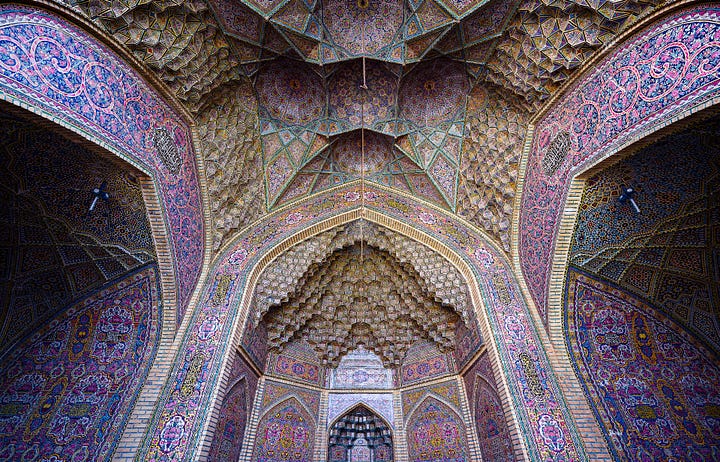
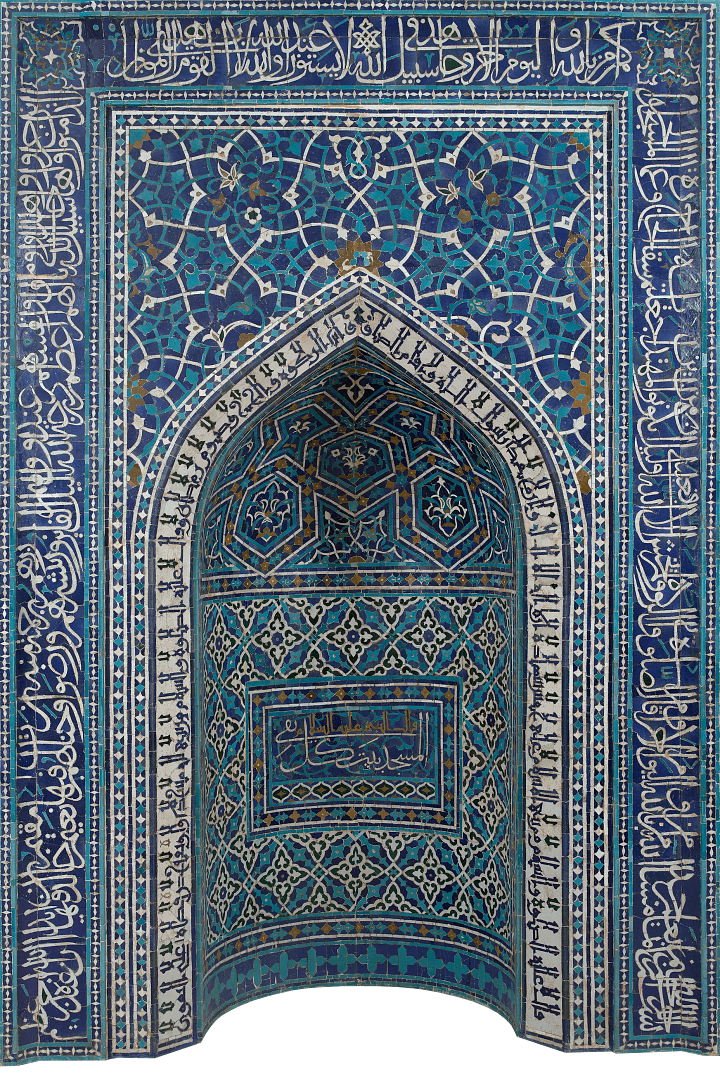
It reflects the Islamic faith, which places a strong emphasis on the beauty and ornamentation of religious buildings. This is not only aesthetically pleasing but also practical for the region, as the tiles are resistant to harsh desert conditions and provide long-lasting beauty.
The Qajar dynasty used art to strengthen their power and modernise Iran, incorporating Western influences into their works. This mixture of cultural elements is one of the defining characteristics of Qajar art. It helped establish their authority and contributed to a period of artistic growth that had a lasting impact on Iranian art and culture.
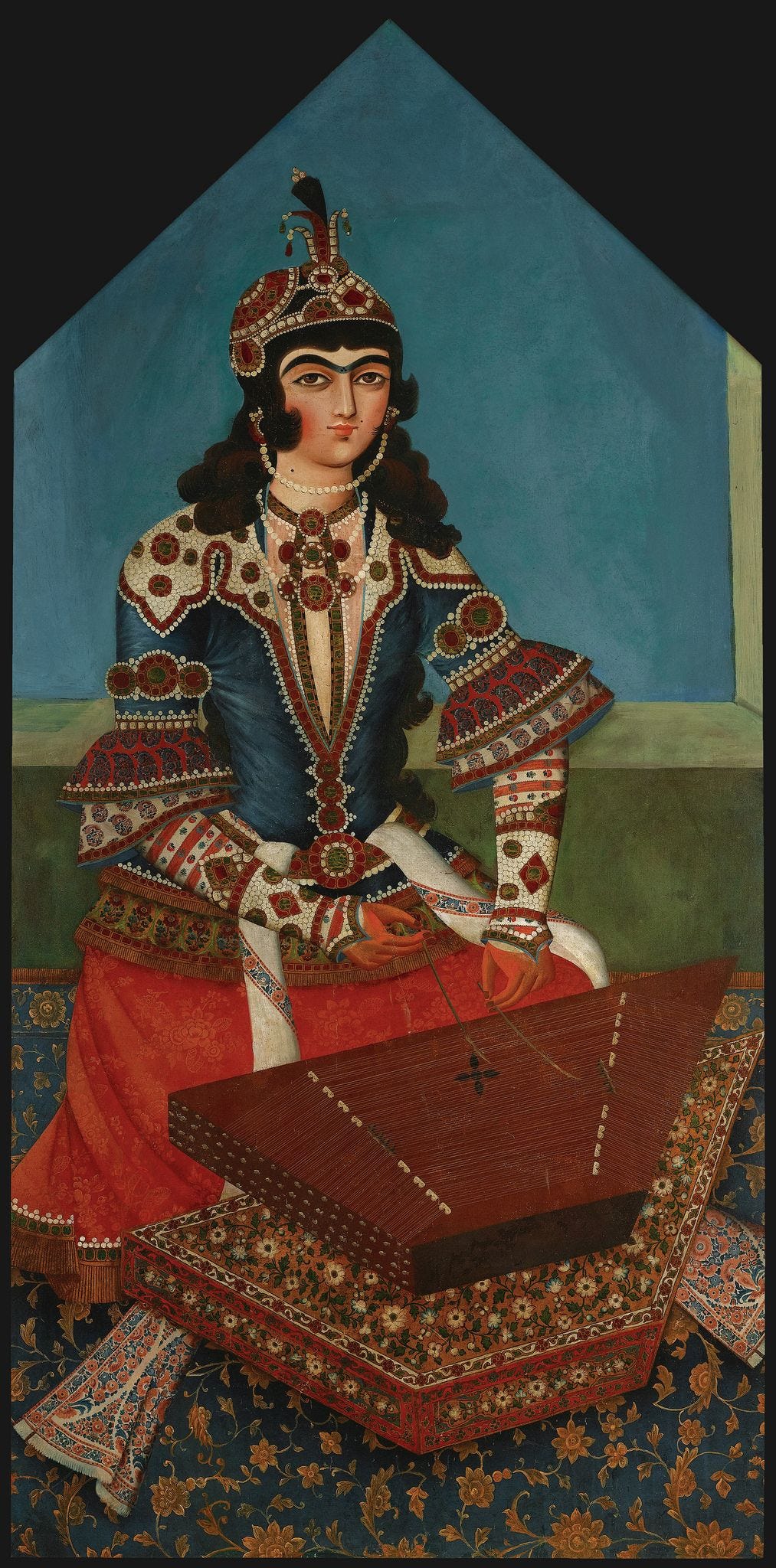
While Qajar paintings are known for their very realistic depictions of still lifes, they are unmistakably most famous for their portrayal of people, particularly the Qajar royalty. We can see that here in the portrait of Fath Ali Shah, the second Qajar ruler. This life-sized piece shows Fath Ali standing tall, with a narrow waist, a long black beard, and deep dark eyes.
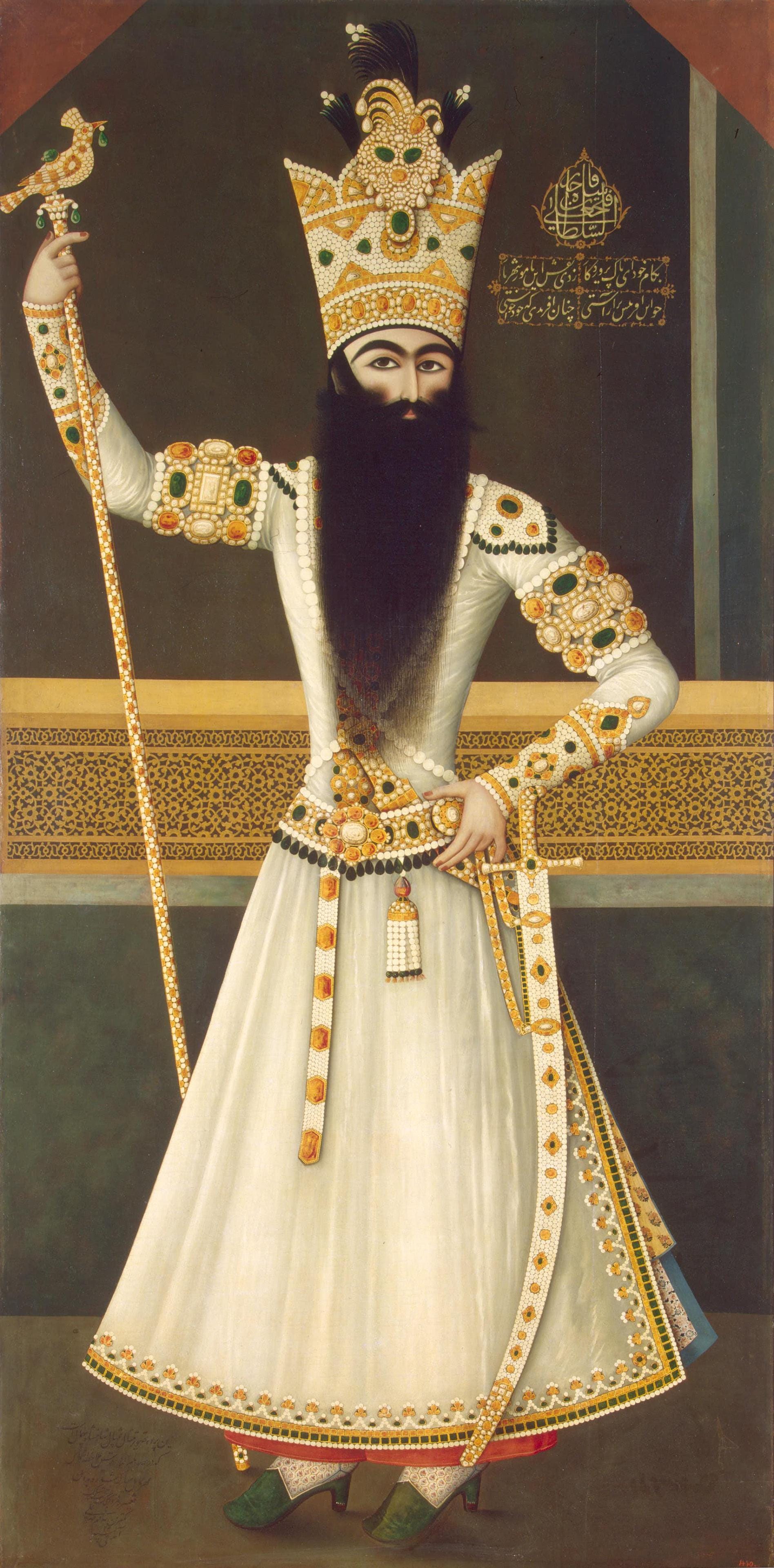
He commissioned many portraits, most of which are characterised by dark, rich colours and idealised features and poses.
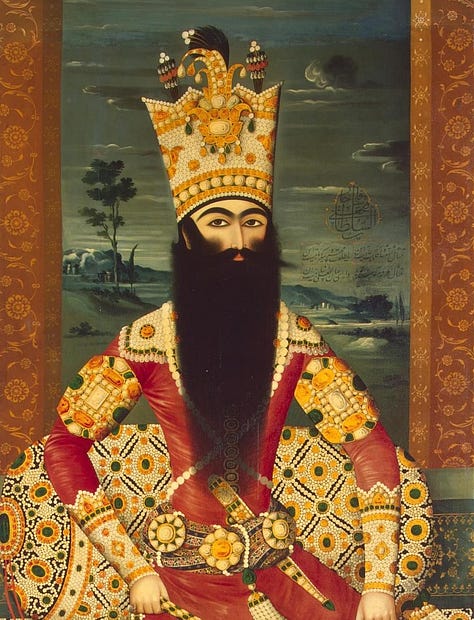


They were not meant to be realistic, but rather were intended to be icons of power. In fact, they were often displayed in the private areas of palaces, such as living quarters and small reception rooms, to emphasise the ruler’s authority and status.
Iran’s cultural heritage is deeply ingrained in its art, which has evolved and developed over time to become a major influence in the art world. From the grandeur of the Achaemenid Empire’s Apadana Palace to the intricate details of the Persian miniatures, the art and architecture of Iran tell the stories and ideals of its culture through the ages.
In spite of Iran’s own struggles to achieve democracy, it is home to a proud and ancient culture and peoples whose ideals of freedom and democracy under Cyrus the Great helped shape some of the foundations of the U.S. Constitution.
However, the freedom to create art in Iran without censorship has been met with resistance from the theocratic government, and many artists who create political art have faced persecution and imprisonment for their work. Despite this, political art remains a powerful means of expression and resistance in Iran. Art has the power to convey, in a single scene, the stories and ideals of a community from a moment in time—and without it, the world would be blank. It can serve as a tool to challenge the status quo and encourage critical thinking and dialogue about important issues.
In a world that often values speed and efficiency over contemplation and emotion, art invites us to take our time and—even if only for a moment—explore our emotions. To see the world in shades of grey rather than in black and white.
By the way, if you’d prefer this article in video form, you’re in luck!
Hi. I want to thank you for your time, truly. Your support, whether it’s reading these posts, liking them, or watching any of my videos, means so, so much to me.
And if someone has shared this post with you, please don’t forget to subscribe to make sure you get the weekly articles.
No posts
Comments
Nothing yet. Say the first thing.
Sign in to join the conversation.