
I’ve been thinking, writing, and designing around how to get the hard thing said. Hidden profiles, the courage tax, and the room that agrees fastest on what everyone already knew describe the failure of surfacing the perspective that would have changed the decision. Lower the cost of speaking, and you recover what the meeting would otherwise bury. But that’s only half the problem, and possibly the easier half.
The categorization-elaboration model (“CEM”) explains why diverse teams sometimes outperform and sometimes underperform homogeneous ones. Its claim is that difference doesn’t do one thing.1
One pathway runs through elaboration: the exchange, individual processing, and integration of divergent information. The diversity bonus is realized when the group thinks with its differences rather than past them.
Another pathway runs through social categorization. That’s the instinctive sorting of people into “us” and “them.” Note, though, that categorization isn’t automatic. Differences have to be clear, meaningful, and cognitively accessible to trigger categorization. Furthermore, categorization is only harmful when identity feels threatened, and categorization hardens into intergroup bias.
These two paths are joined by a single link: bias weakens elaboration. Consequently, the same diversity can help one group and wreck another.
When bias takes hold, members stop treating the out-group as a credible source and tune them out. The information is still there; the willingness to process it evaporates.
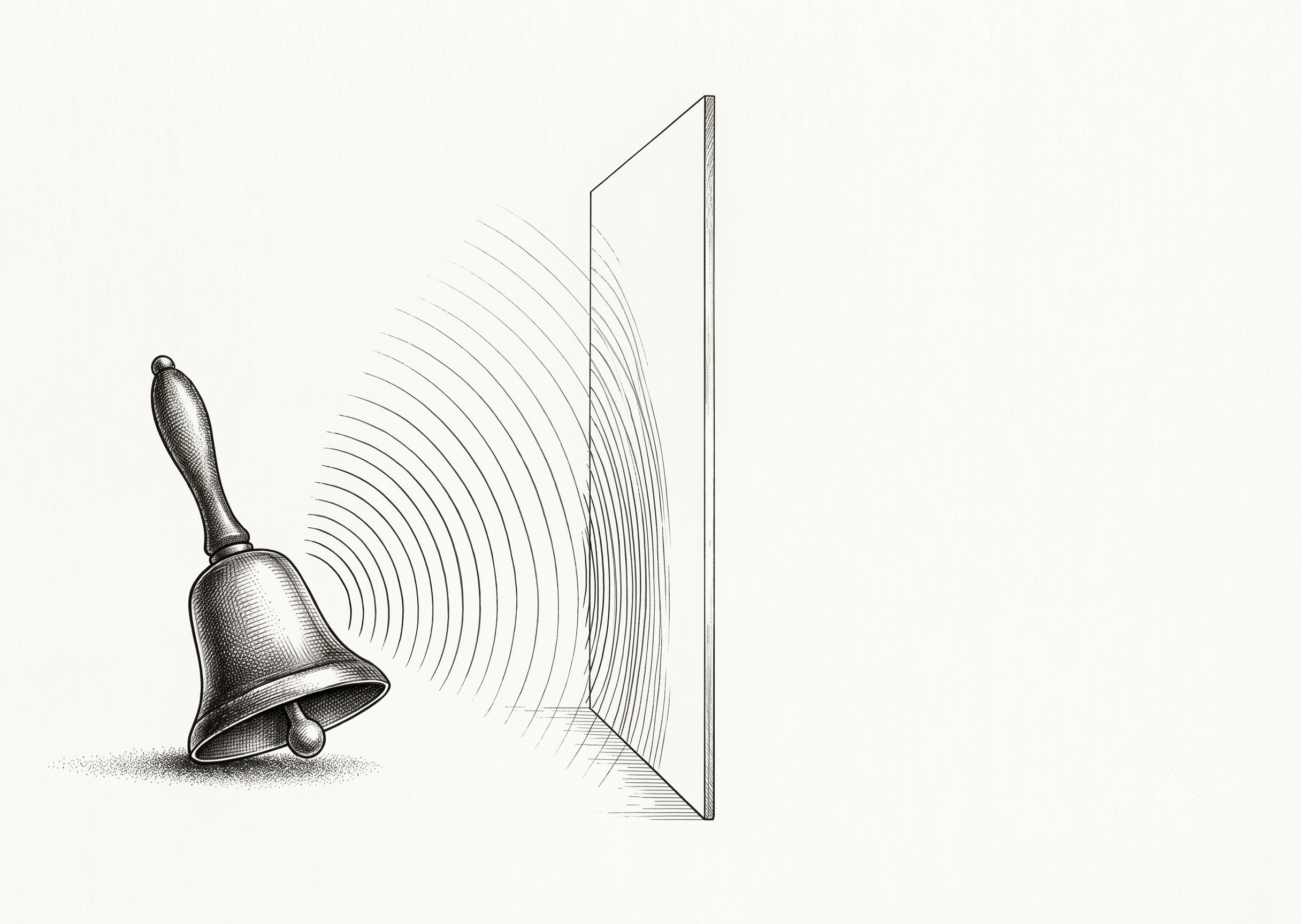
A minority perspective can be clearly articulated and still be discounted because the room has quietly decided the speaker isn’t worth crediting. Said is not heard. The obvious thing to do, then, is to disconnect the perspective from the speaker. That’s part of what I mean when I say Reflect & Engage — anonymous, asynchronous reflection before the meeting — works by subtraction.
Problematically, a position doesn’t need a face or name to trigger categorization. There’s a whole line of research on what social psychologists call opinion-based groups. As the name suggests, these are groups that form around a shared opinion, where a stance on the question stops being an idiosyncratic feature of me and becomes a defining feature of us.2 A minority view can crystallize that kind of split, because the categorization forms around the content, not the person. Anonymous reflection removes the person but leaves the opinion, and the opinion alone can be enough.
Elaboration can increase group performance, but it doesn’t just compete with social categorization; it can feed it.3 A group’s deep engagement can reveal previously hidden differences. These can become seeds for categorization, which can metastasize into bias. Ironically, the productive friction that yields higher group performance can catalyze the very dynamic that tears the group apart. There’s a depth at which thinking together might tip into identity threat, and you don’t get to know in advance where that is.
Reflection before the meeting still has meaning. Anonymous, asynchronous reflection removes the most immediately visible trigger for categorization: the person. The CEM says a difference must be clear, meaningful, and cognitively accessible before it sorts the room into “us” and “them.” A name and a face in the room are clear and accessible. Without their attachment to a position, the risk of social categorization and intergroup bias goes down. With that risk reduced, the hard thing is said, and the disagreements that would otherwise detonate in the decision rather than in the discussion are examined. This is the half of the problem we can address with design.
Anonymous reflection doesn’t address the split that forms around an opinion or the seeds of division that elaboration exposes. Both sources of bias are dynamic: neither exists until the conversation is underway. You can’t excise a division that hasn’t formed yet, around a position that no one has yet taken, at a depth no one can yet see. Reflection happens before the meeting; the hearing occurs during the meeting. Whatever ground-clearing accomplishes, a room can undo the moment it starts thinking out loud.4
This is why the method is called Reflect and Engage. It’s why it doesn’t work without a facilitator.
Anonymous, pre-meeting reflection can give differences a voice and can reduce — but not eliminate — the risk of social categorization and intergroup bias that inhibit the group’s ability to hear its own diversity. It takes someone in the room to listen for the cues that signal the shift from productive friction to an us-versus-them stance, and to intervene before hearing and thinking falter.
Design can improve the odds; it can’t substitute for the person. When the surfacing of diversity becomes something a tool can do, the judgment about what to do with what surfaces is precisely the part that stays human and hard.
Said is not heard. Pre-meeting, anonymous reflection can help the saying. Whether what is said is heard is answered in real time, by the people in the room, with anonymity stripped away.
van Knippenberg, D., De Dreu, C.K., & Homan, A.C., “Work group diversity and group performance: An integrative model and research agenda,” Journal of Applied Psychology 89, no. 6 (2004).
Bliuc, A.M., McGarty, C., Reynolds, K., & Muntele, D., “Opinion-based group membership as a predictor of commitment to political action,” European Journal of Social Psychology 37, no. 1 (2007). This research addresses commitment to political action. However, I believe it’s germane to meeting room dynamics.
This is my inference and extension to the CEM. It’s not an explicit feature of the original model.
Subtraction has costs as well as limits. For instance, removing the speaker also removes the witness who draws out what a person almost knows. This piece is about the limit rather than the cost: not what anonymity takes, but what it can’t reach. The two lines of thought are easy to conflate and worth keeping separate.
No posts
Comments
Nothing yet. Say the first thing.
Sign in to join the conversation.