
A drug company found the bacteria in Alzheimer’s brains, built a drug to kill it, tested that drug in 643 people, and watched it fail. That’s the sentence the thread removes.
You’ve seen the thread by now. Bacteria crawling through neurons. Enzymes slicing brain cells like scissors. Nine out of ten Alzheimer’s brains. And the answer at the bottom: a resin from a Greek island that kills the bug for about nine pounds a tub. Alzheimer’s, it tells you, starts in your mouth.
It’s built on a real study. Then it cuts the study off before the ending, and sells you gum where the ending should be.
Let’s put the ending back.
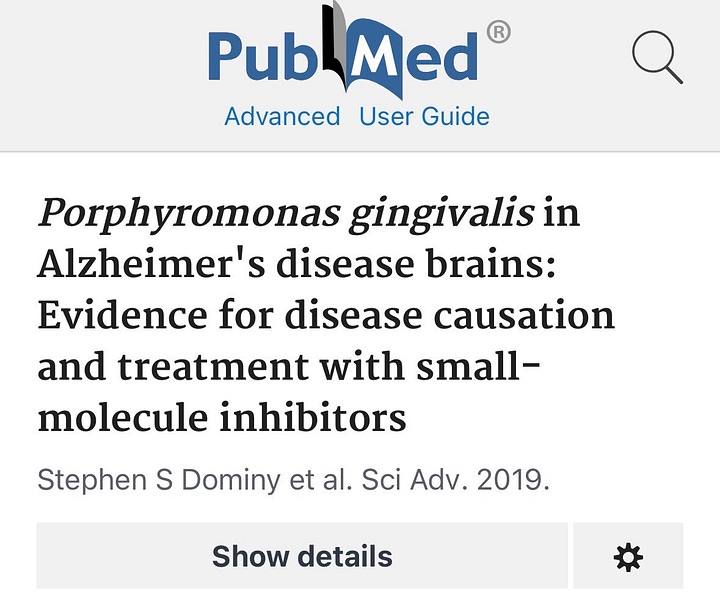
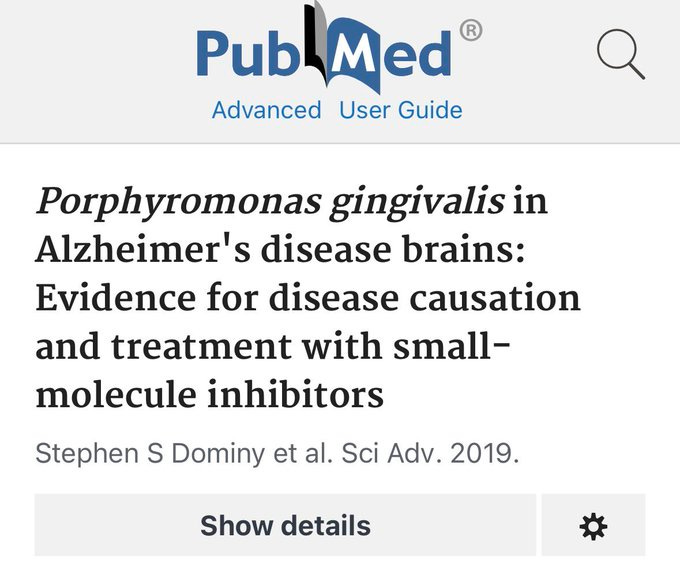
The study is Dominy 2019, in Science Advances (https://www.science.org/doi/10.1126/sciadv.aau3333). Researchers found P. gingivalis, the main gum-disease bacterium, and its toxic enzymes, gingipains, in the brains of people who died with Alzheimer’s. The enzymes tracked with tau, one of the disease’s fingerprints. In mice, infecting the mouth let the bacteria reach the brain and raised amyloid. A drug that blocked the enzymes cut the damage in those mice.
That finding is worth having. Now read the author line.
The study came from Cortexyme, a company that existed to sell the enzyme-blocking drug it was writing about. The finding and the product were the same project.
And the human half was a snapshot. Bacteria found in brains that had already died of Alzheimer’s. A photograph can’t tell you which came first: the bug that broke the brain, or a broken brain that stopped keeping its mouth clean and let the bug in.
The word “causation” in that thread came from the mice.
Then they tested it properly, and here’s what the thread skips.
Cortexyme took their drug, atuzaginstat, into a real trial. 643 people with Alzheimer’s. Placebo against two doses, about a year. The honest test of the whole theory.
It missed. The drug did not beat placebo on the main measures of thinking or daily function. Then the FDA put it on full clinical hold over signs of liver damage in the people taking it (GAIN trial, Cortexyme, 2021: https://clinicaltrials.gov/study/NCT03823404; reviewed in J Clin Med, 2026: https://doi.org/10.3390/jcm15135296).
The one time anyone built the exact drug this theory demands and gave it to humans, it didn’t work and it hurt some livers.
I can’t tell you whether the bacteria starts Alzheimer’s or moves into a brain that’s already failing. The one human trial designed to answer that couldn’t tell us either.
Read the thread again with the trial in mind. Every “blocked it, reversed it” line describes the patented drug in mice. Mastic gum appears nowhere in the Alzheimer’s research. It never touched a mouse, a brain, or a patient in these studies.
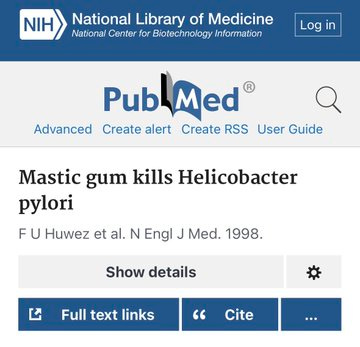
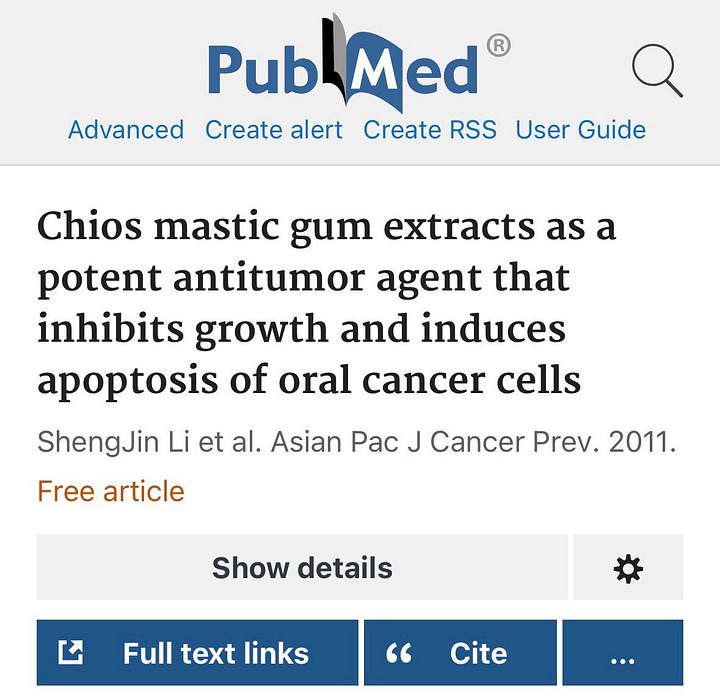
What mastic gum did is kill P. gingivalis in a dish (PMID 16822220: https://pubmed.ncbi.nlm.nih.gov/16822220/). A substance killing a bacterium in a plastic well tells you nothing about whether chewing it clears an infection buried in a living brain behind the blood-brain barrier.
The gap between “kills the bug on a bench” and “prevents dementia in a person” is the gap every supplement pitch jumps without landing.
The thread jumps it, lands on a product, and adds six more diseases on the way down, stomach and bowel cancers among them. Be careful with anything claiming a chewable resin treats cancer. No trial sits behind that claim. Take it as a warning about the seller.
If someone in your family already has this diagnosis, this isn’t the post for you tonight. Those are questions for a neurologist, and there are real trials recruiting. A far better use of hope than a tub of gum.
Here’s what survives once the drug data and the gum pitch come apart, and it costs nothing.
Gum disease is linked to higher dementia risk. Large observational studies keep finding it, and the mechanism is plausible: chronic infection in your gums leaks inflammatory signals into your blood, and chronic inflammation is hard on an ageing brain (J Clin Med, 2026: https://doi.org/10.3390/jcm15135296).
Bleeding gums → inflammation in the bloodstream → a brain that ages under more pressure. That path is real and measured, though it can’t yet prove that treating your gums saves your memory
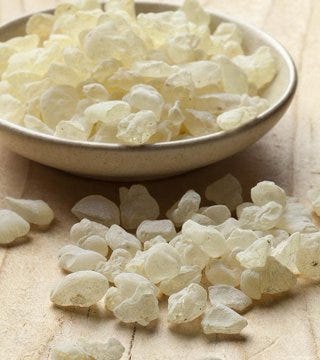

So the move the evidence supports is the one nobody can sell you. Brush. Floss. Treat bleeding gums instead of ignoring them. See a dentist when you can.
No island. No resin.
Comments
Nothing yet. Say the first thing.
Sign in to join the conversation.