
The thread going round about alcohol reaches a conclusion the evidence mostly backs. Then it gets there by inventing two things that aren’t true, and the invented parts are what let people wave the whole thing away.
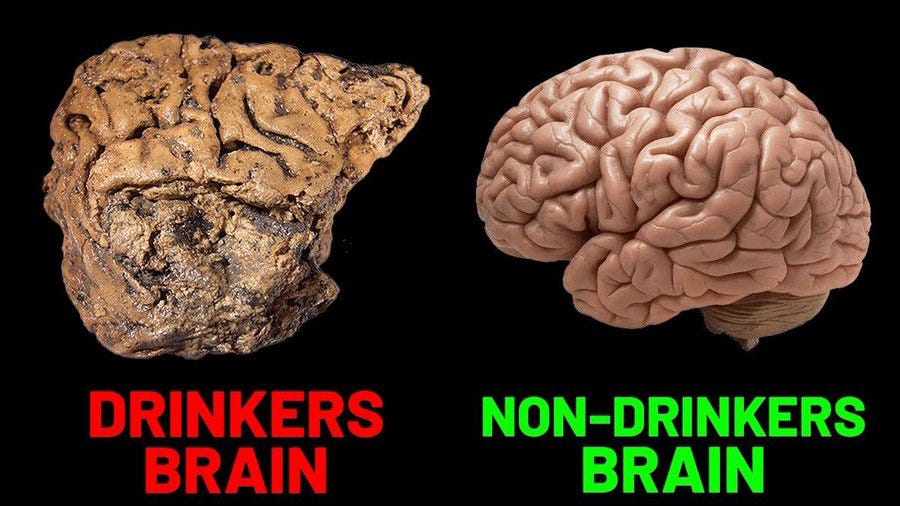
You’ve had the 9pm glass. After the kids, after the day, the one that finally lets your shoulders drop.
You’ve also been told two opposite stories about it. One: a glass of red is good for your heart, practically a health food. Two, this week: even one drink is instant brain death, cells dying on contact.
Both are sales pitches. The truth sits between them and it’s more useful than either.
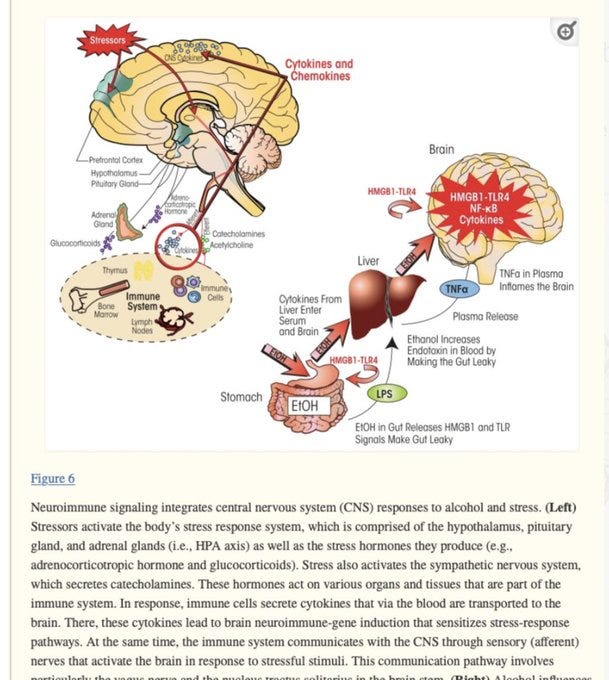
First. The thread says acetaldehyde, the chemical your body makes from alcohol, is what makes you feel drunk, so being tipsy is mild brain damage in progress.
Wrong. The drunk feeling comes from the alcohol itself, working on your brain’s calming and signalling systems.
Acetaldehyde is the nasty byproduct that comes after. It’s tied to the flushing, part of the hangover, and the real DNA damage. It mostly doesn’t reach your brain in the amounts needed to make you feel anything.
So “tipsy equals brain cells dying on contact” is a scary line built on a mix-up.
Second. “Alcohol kills brain cells” is the oldest myth in the drawer, and this thread dresses it up as new.
A night of drinking doesn’t wipe out neurons on contact. What alcohol does is slower: it wears at the connections between cells and the wiring that links brain regions. Real, worth knowing, and nothing like the horror-film version.
Here’s why the wrong mechanisms matter. Build a true warning on a false engine, and the first person who knows a bit of biology spots the false engine and throws out the warning with it.
The real evidence on alcohol is strong enough that it never needed the fake stuff bolted on.
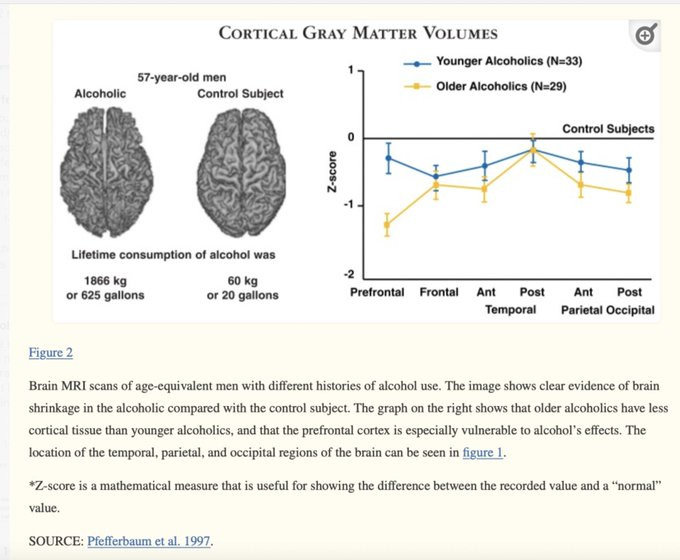
The brain-scan finding is real. Researchers scanned the brains of nearly 37,000 middle-aged adults and matched the images to how much each person drank.
More alcohol tracked with less brain volume, grey matter and the white-matter wiring both. It showed up in people drinking as little as one to two drinks a day (Daviet, 2022: https://www.nature.com/articles/s41467-022-28735-5). A related analysis put it bluntly in its title: no safe level for brain health (Topiwala, 2022: https://www.sciencedirect.com/science/article/pii/S2213158222001310).
Read the limit in the same breath. These are snapshots, not films. They show a link between drinking and smaller brain volume. They can’t fully prove the drink shrank the brain, because people who drink more differ in a hundred other ways, and the researchers say so.
Strong signal, honest ceiling.
The cancer link is the true claim the thread almost throws away by burying it in the junk. Alcohol is classed as a definite human carcinogen, in the same tier as tobacco and asbestos, and the risk starts low. Mouth, throat, oesophagus, liver, bowel and breast cancer all climb with intake, including at levels most people call moderate.
That acetaldehyde the thread misused? This is its real crime. It damages DNA. That’s the mechanism that earns the fear, and it’s the one society talks about least.
And the part that lands closest to home for a tired parent: sleep. The glass that helps you fall asleep wrecks the back half of the night.
Alcohol sedates you early, then clears around 2 to 3am, and your brain rebounds into a lighter, broken, wired kind of sleep right as it should be deepest (Ebrahim, 2013: https://onlinelibrary.wiley.com/doi/abs/10.1111/acer.12006). Two drinks is roughly where the disruption reliably starts, and it worsens from there (Gardiner, 2025: https://www.sciencedirect.com/science/article/pii/S1087079224001345).
Here’s the food-brain bridge under the wine. Alcohol pushes your brain’s calm signal up fast, which is the relief you feel. As it clears overnight, the brain overshoots the other way into an excited, alert state.
That rebound is the 3am wake and the low, anxious, foggy morning after even a couple of glasses. The “hangxiety” has a mechanism, and this is it.
I can’t hand you a clean number. I can’t tell you one glass a night is safe, and I can’t tell you one glass is damaging you, because the biggest studies are snapshots that can’t prove the drink caused the shrink.
What I can tell you is that the old “moderate drinking is good for you” line is in worse shape than the wine industry wants, and the reasons are below.
This isn’t the post for you if you’re already stopped, or if drinking is something you’re fighting hard. You don’t need the brain scans tonight. Everything below is for the parent with the ordinary 9pm glass, wondering what it’s doing.
For decades the headlines said light drinkers outlived teetotallers. It felt settled. It’s now the shakiest claim in the field.
The problem is who sits in the “non-drinker” group. It’s stuffed with people who quit because they were already ill, and lifelong abstainers who differ from drinkers in income, health, and a dozen other ways.
Compare a glass-a-night drinker to that group and the drinker looks healthy. Not because the wine helped. Because the comparison group was sicker to begin with.
When researchers clean that up, most of the protective glow fades.
Some of it survives for certain heart and stroke outcomes, and that’s a real, unsettled part of the picture I won’t pretend away. But brain volume and cancer point one direction, and the honest summary is that no intake can now be called clearly safe across the board.
That’s a long way from “it’s medicine.”
You get to decide what your glass is worth to you. My job is the real information, not your choices.
So here’s what blunts the damage, minus the myths.
The biggest lever for a parent is timing, not amount. Alcohol close to bed is what steals the second half of your night. A glass with dinner at seven clears far more before sleep than the same glass at ten. If you’re keeping it, move it earlier and stop earlier.
Amount is the next lever, and it’s linear. Less is better, with no magic threshold under which it’s free. Two is where the sleep disruption reliably kicks in, so one, earlier, does real work.
Food in your stomach slows the rise and softens the peak.
Water between drinks helps the dehydration slice of the hangover. It does nothing for the brain-inflammation and rebound parts, so don’t let “but I hydrated” become permission for the fourth.
The thread’s “drink to cure the hangover” line is the one bit of harm-reduction advice to bin outright. It moves the crash later and deepens it.
coach dylan and i run the coaching side of this together. if you want the eating-and-training version built around your week, not a generic plan, it's here
If any of this is landing too close, if you’ve tried to cut down and couldn’t, if the glass has quietly become most nights, if the morning anxiety is running your days, that’s worth a real conversation. There’s no shame in it.
Your GP is a good start, and in the UK, Drinkaware and your local NHS service can help without judgement.
Comments
Nothing yet. Say the first thing.
Sign in to join the conversation.