
Share Emotional Liberation with Becca Williams
I attend about one psychedelic science conference a year. The lectures teach me plenty but the hallways tell me things the slide decks don’t. I notice who’s in the room, what’s selling at the exhibit tables, and what people say to each other between sessions, when nobody’s presenting for a panel.
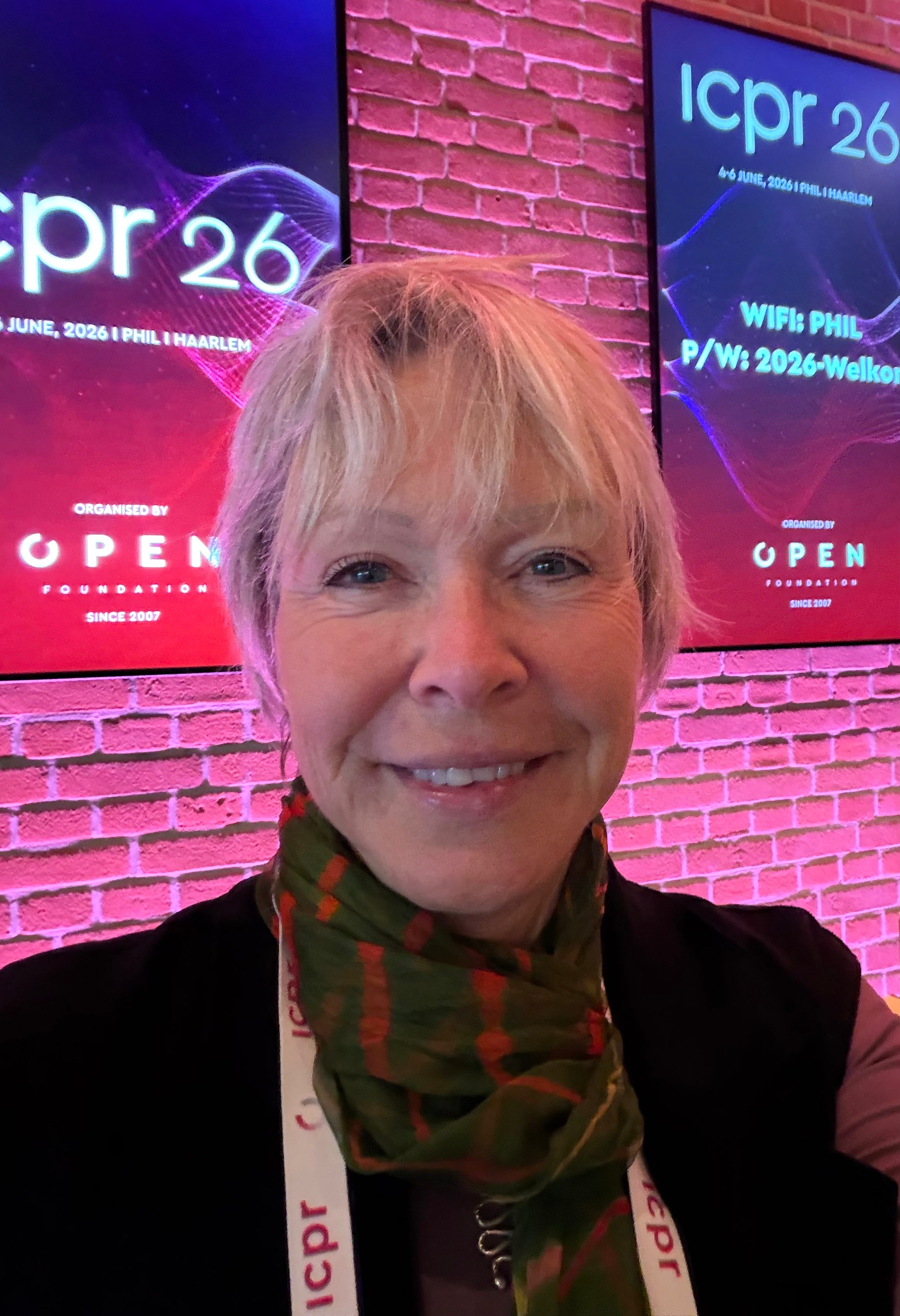
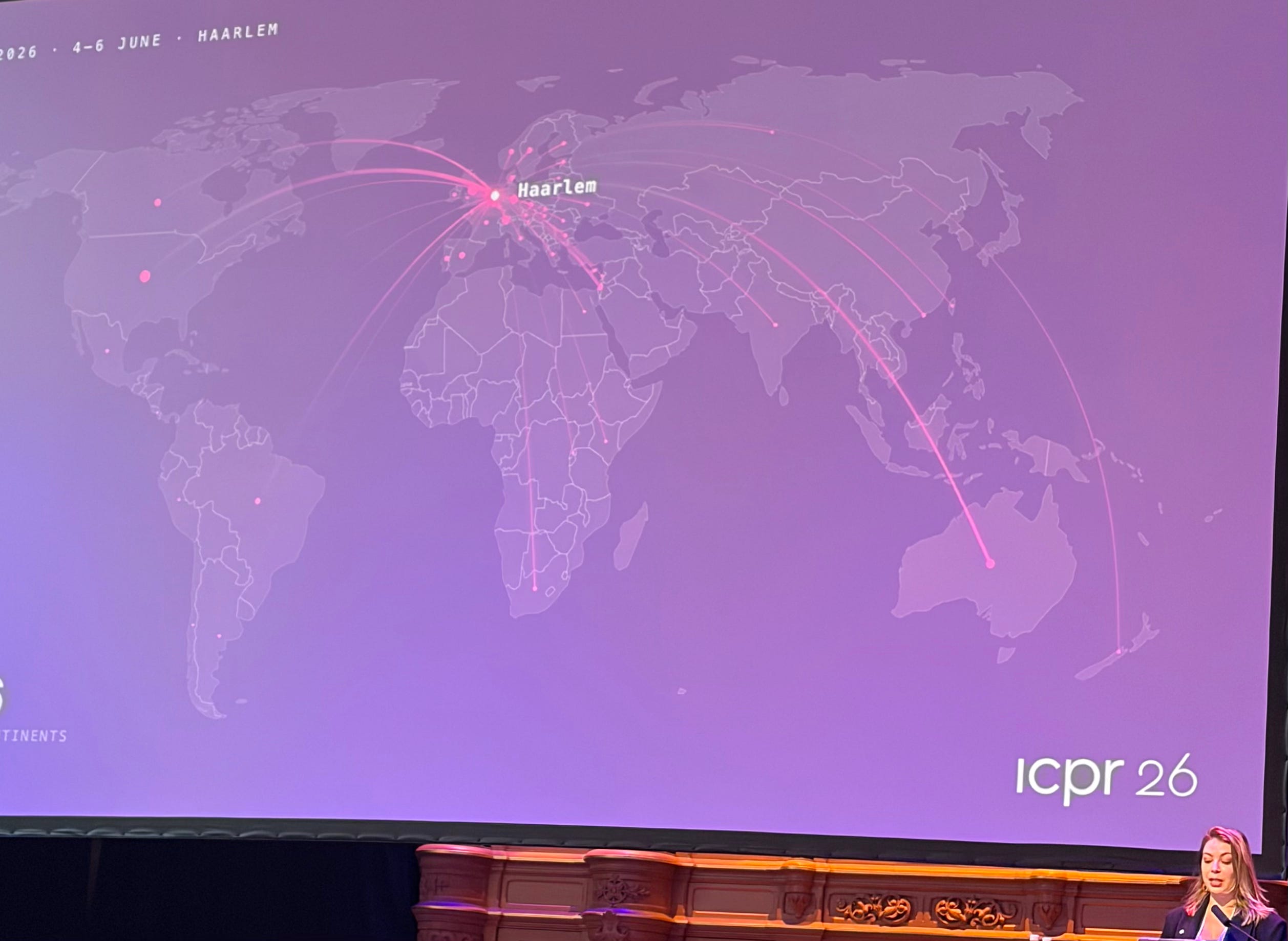
This year, earlier this month, that meant Haarlem, just outside Amsterdam, for ICPR, the Interdisciplinary Conference on Psychedelic Research. One of the most respected gatherings in the field, and roughly a thousand people made the trip – 142 American, 40 Australians and the rest, overwhelmingly European.
I’ve attended this conference before and this year it appeared there was a huge uptick in psychiatrists and other doctors, psychotherapists, and researchers.
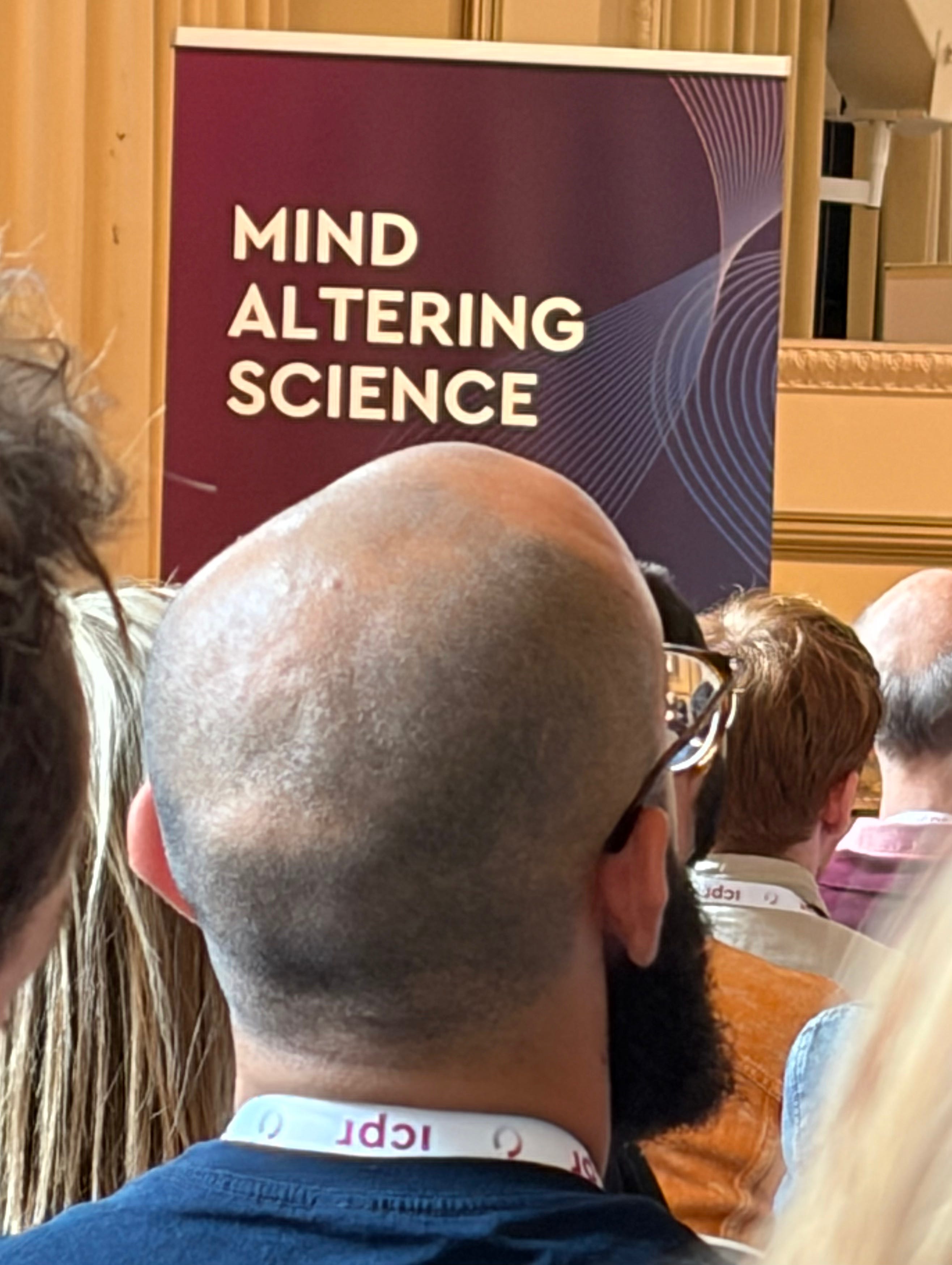
I find that reassuring as a field that has spent decades fighting for legitimacy needs rigor, and this was a room full of people building it. But part of me also finds it a little strange.
Some of these medicines, like psilocybin, ayahuasca, and peyote come out of ceremonial and spiritual traditions far older than clinical trial design. Others, like LSD, ketamine, and MDMA, were synthesized in a lab and only later found their way into ceremony and underground therapy.
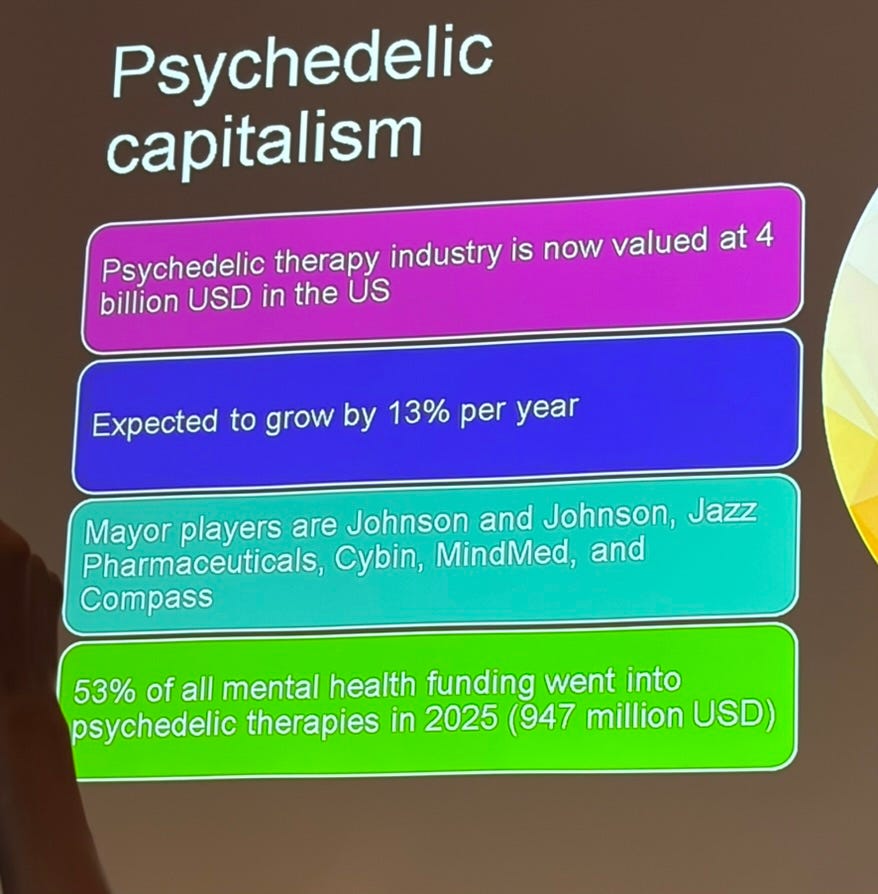
Either way, the more this field gets absorbed into institutions, clinics, and capital, the more I find myself wondering who actually gets to decide what these medicines are for.
The data didn’t flatter the field
Three separate presentations took on challenging psychedelic experiences directly, by name. Not a footnote or a warning label tucked in at the end.
It’s been seeping into the field for a while now, mostly thanks to the Challenging Psychedelic Experiences Project, which has spent years pushing the research community to take a harder look at what happens when these experiences go wrong.
But this conference made it clear: looking at the downside is no longer optional. It’s becoming a standard part of doing the research.
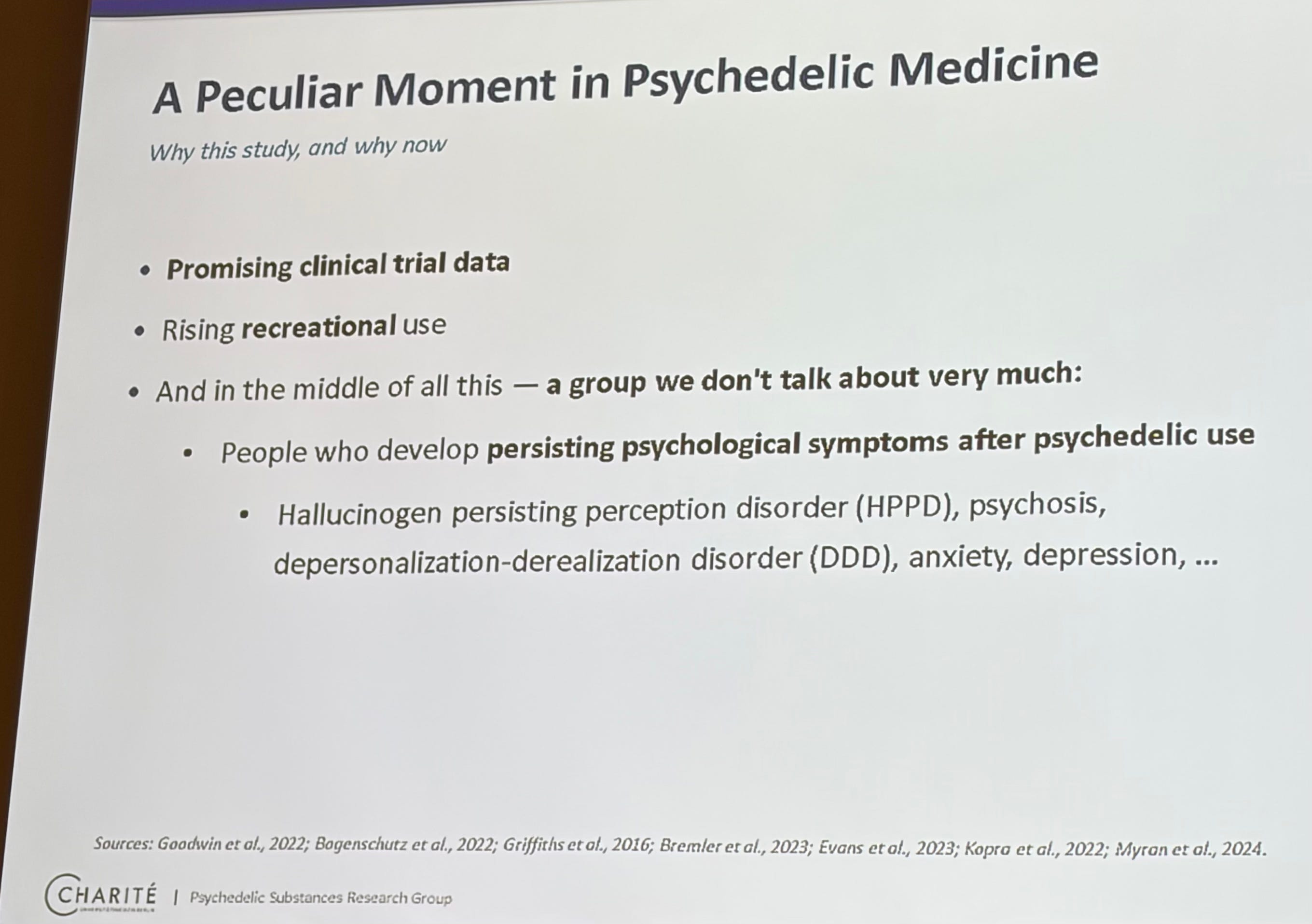
In addition, several sessions were built entirely around negative findings, which feels like a field finally willing to show its warts. Researchers reported, for example, that LSD microdosing performed no better than placebo for depression.
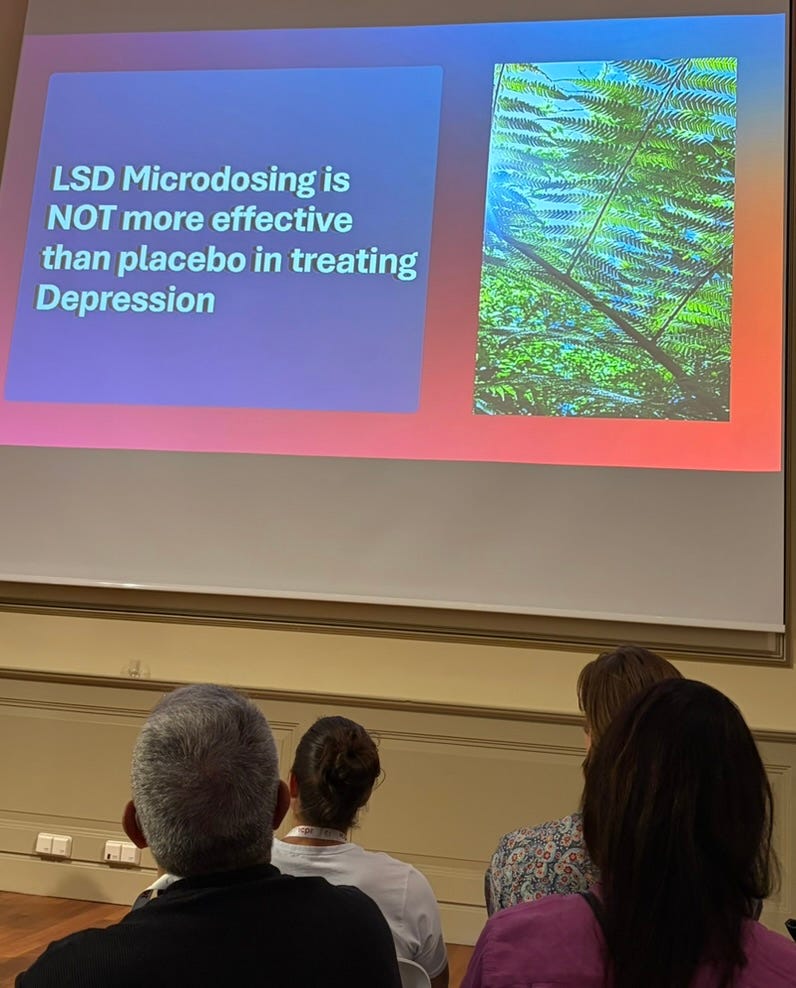
A ketamine trial for suicidality showed no real advantage over a standard benzodiazepine.
Here’s a surprise I hadn’t expected: one presentation stated that no studies to date have actually examined microdosing of psilocybin (technically called non-hallucinogenic daily microdosing) for Generalized Anxiety Disorder. Given how often psilocybin gets floated as an anxiety solution, that’s a real hole in the research.
Psilocybin and SSRI’s
Here’s something significant: you may not need to stop SSRIs (or SRIs more broadly), before a full-dose psilocybin experience. New indications are pointing that way, and for anyone weighing this path for their own health, that’s a big shift.
For years, the standard guidance has been to taper off these antidepressants first, full stop. But tapering isn’t simple. It isn’t always safe to do quickly, and for a lot of people it’s an emotionally loaded decision before they’ve even gotten to the medicine itself.
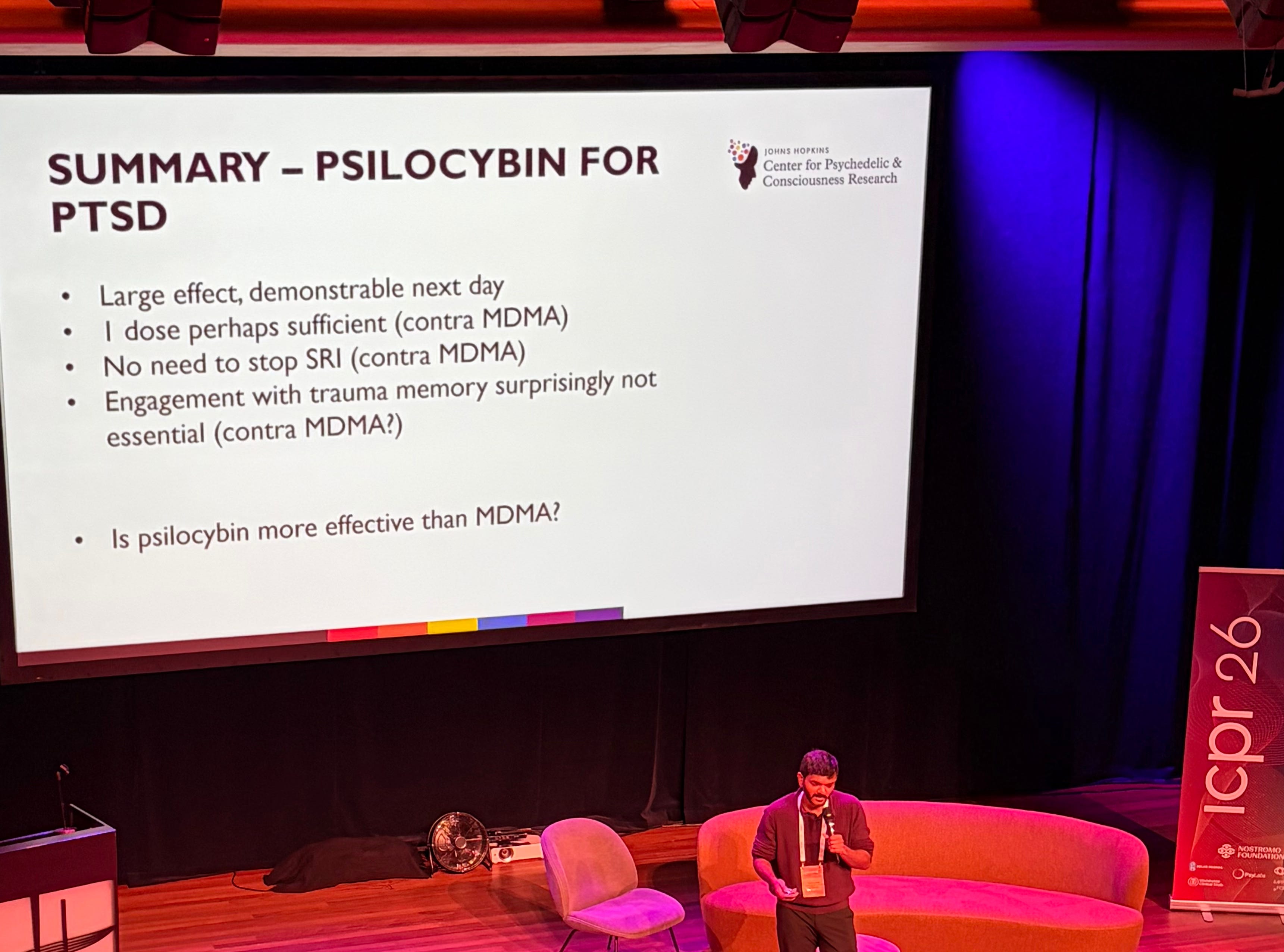
With that requirement loosening, it changes the calculus for a lot of people who’ve been stuck choosing between their current treatment and exploring a psilocybin psychedelic experience.
Science sitting next to the mystical
Alongside all the data, there were entire sessions on mystical experience, ego dissolution, consciousness itself. Three major figures in consciousness research debated on stage whether psychedelics reveal anything fundamental about reality. None of it felt out of place next to the clinical material.
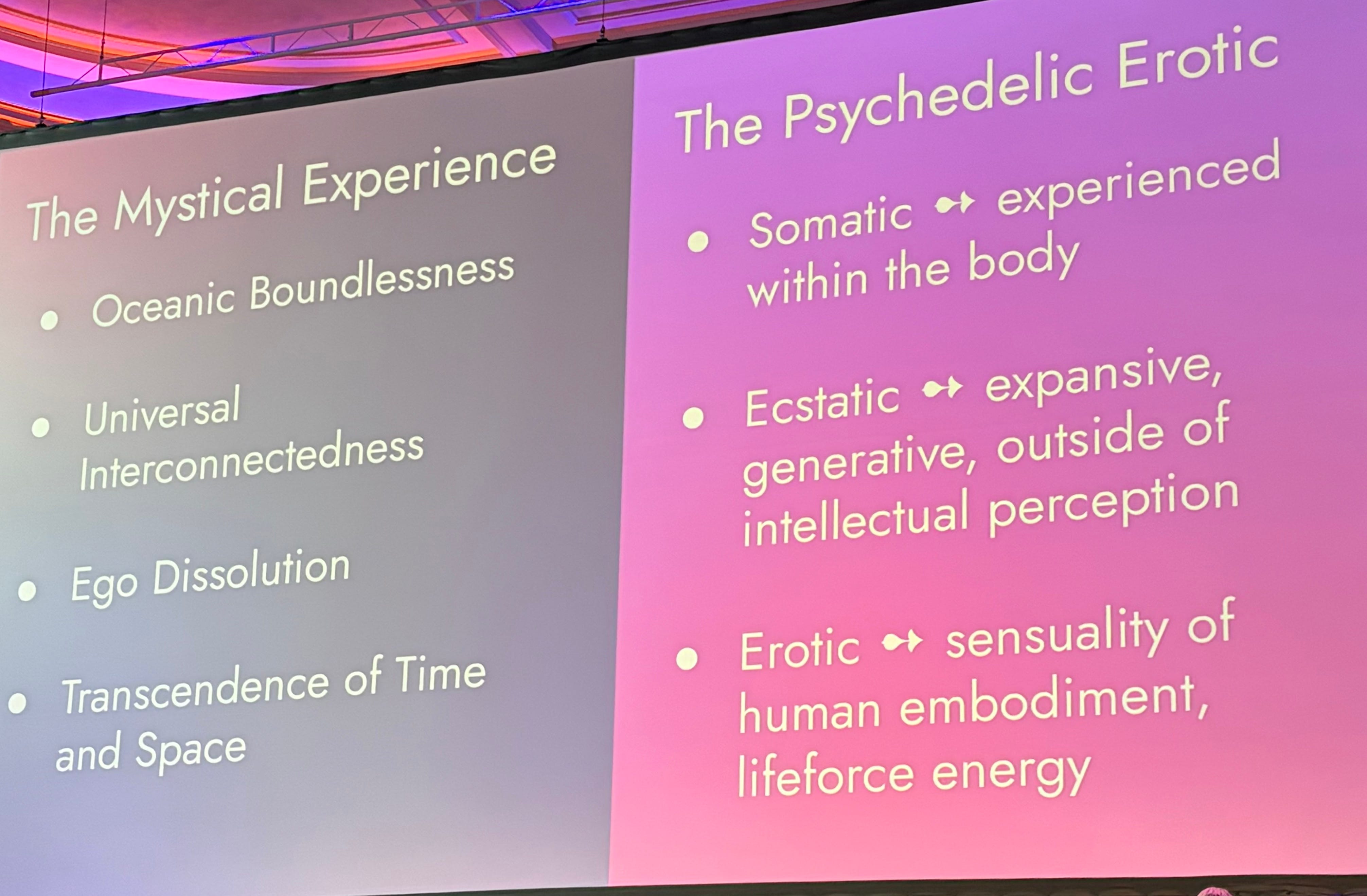
This is a field built on science trying to make sense of something it didn’t invent and still can’t fully explain.
What the hallways revealed
The exhibit hall told a different story than the lecture rooms. Schools were everywhere, selling certificate programs in psychedelic-assisted therapy with great enthusiasm.
Tuition ranges from a few hundred dollars for an online course to upward of $20,000 for full clinical training. Which raises an obvious question: where do all these graduates actually go to practice, given how restricted the legal landscape still is almost everywhere?
On other fronts, the sacred and the commercial were set up side-by-side.
Flyers for retreats were strewn over every surface while vendors in traditional garb sold rattles, Shipibo textiles, ceremonial rapé, and other goods from Amazon basin traditions.
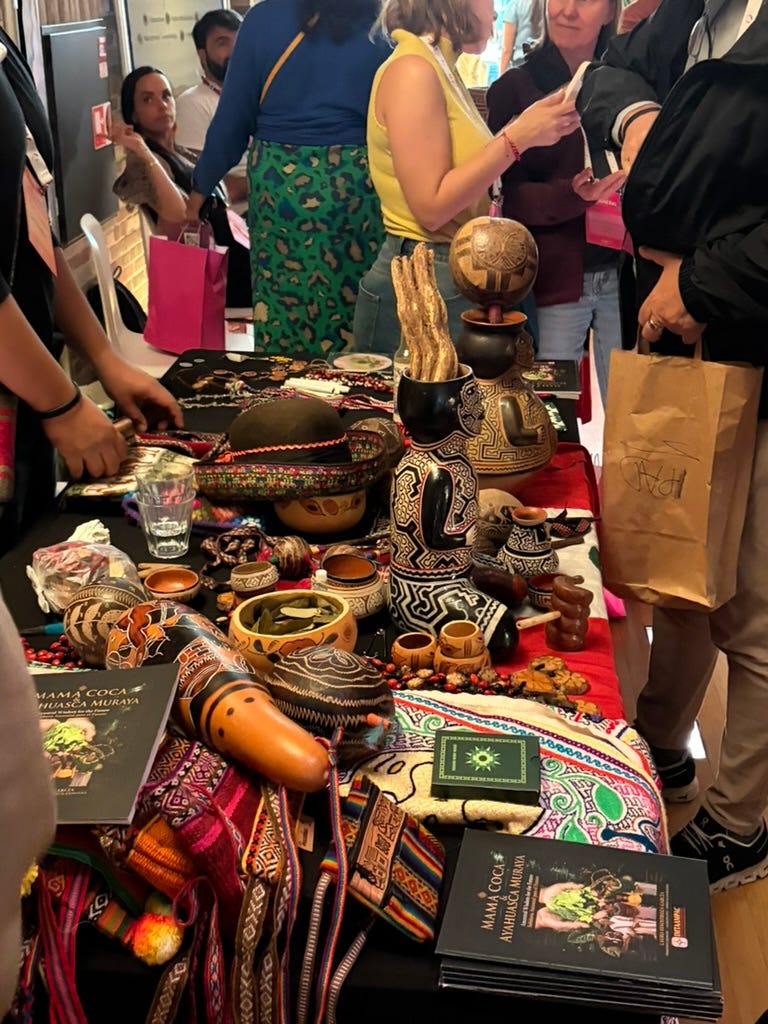
You couldn’t ask for a clearer snapshot of where this field stands right now.
However, one absence stood out to me specifically. Cannabis, which I bring into my own work as a plant medicine in its own right, from microdosing to full psychedelic doses, didn’t appear anywhere in the program. Not one session.
There are conferences built entirely around cannabis, to be sure. But its near-total absence here, inside a community this expansive about everything else, leaves a genuinely versatile medicine sitting on the outside of a conversation it belongs in.
Where we land
The science is getting more rigorous. The money is moving faster. And the traditions that handed us these medicines in the first place are still, for the most part, watching from the edges of a room they used to define.
If any of this is on your radar, even out of plain curiosity, it’s worth paying attention to where it’s all headed. I’d love to hear what you think.
With Love, Becca
Thanks for reading Emotional Liberation with Becca Williams! This post is public so feel free to share it.
Comments
Nothing yet. Say the first thing.
Sign in to join the conversation.