
Hi everyone,
Welcome to Lesson One. Over the next three weeks, we’ll be walking through these practices together, one step at a time. There's absolutely no need to rush. Just pace yourself this week and let the ideas settle.
I remember sitting at my kitchen table a few years ago, right in the middle of a massive anxiety spiral. Chest tight. Mind screaming. I desperately grabbed my journal to try and write my way out of it. I just started scribbling down everything that was bothering me, thinking that if I filled enough pages, I’d eventually hit a thought that would fix the feeling.
Ten minutes later? My hands were shaking. My heart was racing even faster. I had to close the book because I felt physically sick.
One of the biggest shifts I made after that had nothing to do with writing itself. It was learning that I didn’t have to open my notebook the very second I sat down. I had to stop writing entirely from the neck up.
See, anxiety completely screws up our starting point. Instead of starting in the actual room we’re sitting in, we start inside the noise. We sit down already replaying yesterday, rehearsing tomorrow, or trying to fix a problem before we’ve even penned a single sentence. The page just becomes another place to spiral.
Writing can help us understand ourselves, sure. But we have to actually be in the room first. Not because we need to be perfectly calm to write; if that were true, none of us would ever write a thing.
It’s actually much simpler than that. When I take just sixty seconds to look around and notice where I actually am, rather than where the panic took me, things change. I’m not chasing my thoughts anymore. I’m writing from a steady place.
That’s the whole purpose of this first practice. Not to magically stop your anxiety, but simply to change where you begin.
Before you reach for your pen, leave your notebook exactly where it is. Give yourself just one minute.
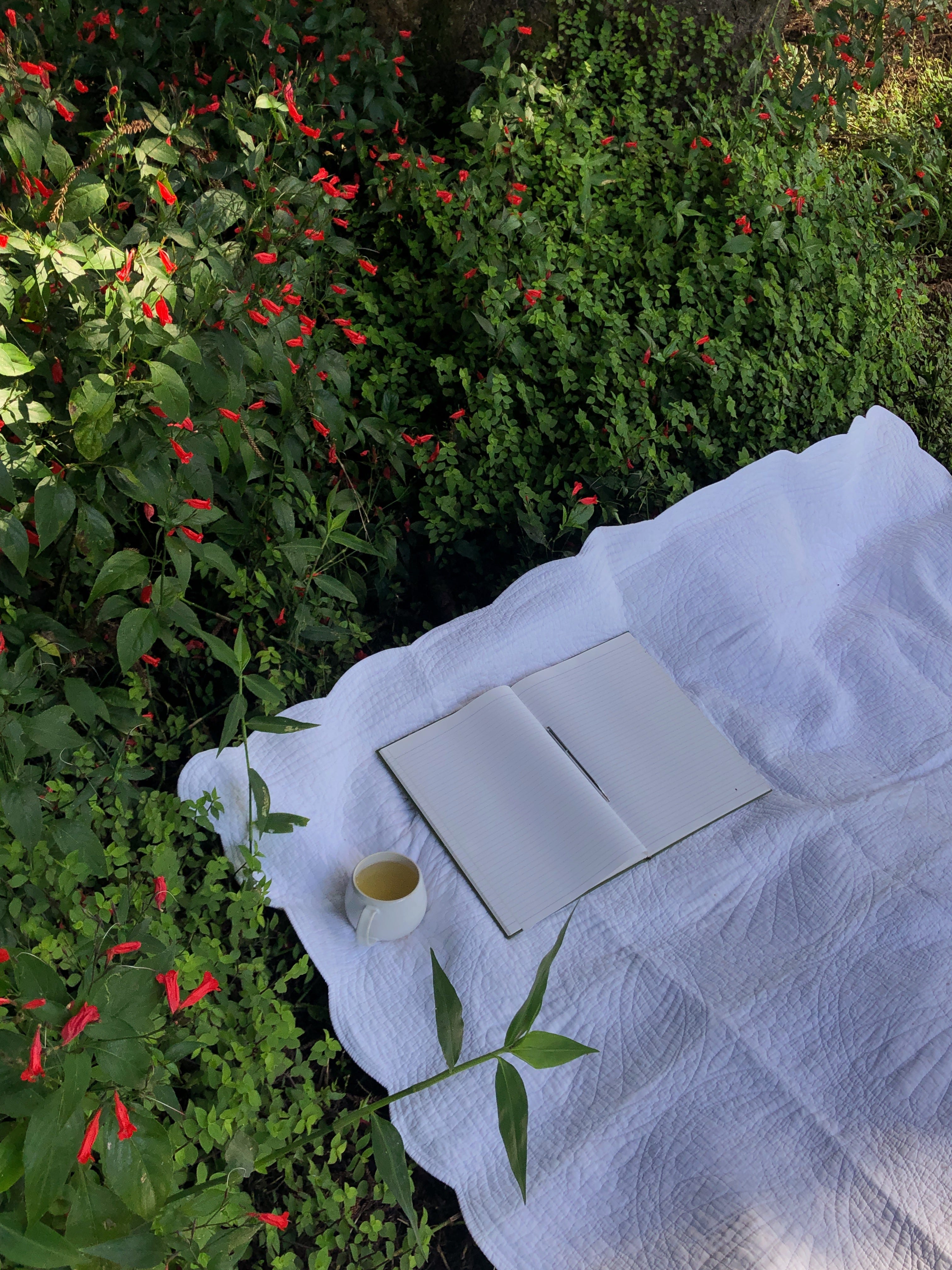
Let your eyes move naturally around the room. There’s nothing you’re trying to find or look for. You might just catch the way the afternoon light falls across the floor, realize your tea has gone cold, or hear a bird outside that you hadn’t noticed until now.
Then, bring your attention back to yourself. Feel the chair beneath you. Rest both feet flat on the floor. Notice the weight of your hands resting on your lap or on top of your closed notebook.
Take a deep breath in and slowly exhale. That’s all. Now you’re ready to write.
Most of us begin a journal entry by diving straight into our racing thoughts. Today, I’d like you to do the opposite. Write about the room before you write about what’s inside your head.
Spend five minutes describing the place you’re sitting in right now. Strip away the big emotions and just look at the details. Try to find three specific things you usually ignore. The grain of the wood on your desk, the color of a shadow on the wall, the heaviness of the pen in your hand. Look at the room as if you’ve never sat in it before.
As you write, you might notice your mind trying to pull you back into whatever is making you anxious. If it does, try not to fight it or get frustrated. Simply bring your eyes and your pen back to the room.
When the five minutes are over, stop. Draw a line across the page, and beneath it, write one final sentence that begins with:
Now that I’m here, this is what actually needs to be said...
See if those words take you somewhere a bit different than they would have five minutes earlier.
Before you move on with your day, spend a moment reflecting on how that felt. Not whether the anxiety left, that’s not what we’re doing here.
Instead, just ask yourself: What changed when I didn’t rush straight into the panic?
You might discover the answer today, or you might notice it after repeating this practice a few times this week. Either way, it’s worth paying attention to.
A quick note before you go: Next week we will be moving into Lesson Two, where we’ll talk about how to write near the hard things without falling back into the spiral.
If you’re a free subscriber and want to walk through the rest of this practice with us over the next two weeks, you can upgrade your subscription right here:
Get 20% Off Paid Subscriptions
The comments are open below as a safe space for us. If you feel moved to do so, I’d love for you to share a single line from your room description today, or just leave a word to let us know you’re here walking through the soil with us.
See you next week for Lesson Two.
Debra 💕
Share Beautiful Things Grow Here
• share this with someone who might need it
• Try my 5-Minute Safety Check card deck, created for people writing through trauma and healing.
• read my books or visit my print shop
• or you can support my work with a Ko-fi ☕️
Debra King is a writer, poet, and trauma-informed creative with training in somatic therapy, exploring emotional healing, chronic pain, childhood trauma, and the hard work of rebuilding yourself after survival. Beautiful Things Grow Here is her space for personal essays, poetry, and honest reflections on the body, grief, healing, and becoming softer with yourself.
Comments
Nothing yet. Say the first thing.
Sign in to join the conversation.