
Today I’m delighted to share that my second journal paper has finally been published.
Many of you have followed my recent writing on emotional access, culture, and psychotherapy. In my previous paper, Culture as Predictive Infrastructure: A Constructionist Account of Emotional Access in Schema Therapy, I introduced the idea of delayed labelling.
The idea is simple, but I believe it has important implications for psychotherapy.
Sometimes the emotions we observe at the beginning of a session are not the emotions that are actually driving a person’s experience. This is particularly true when culture influences not only how emotions are expressed, but also which emotions become accessible to awareness in the first place.
If emotional access is shaped by culture, immediately naming what appears on the surface may lead us to mistake the client’s initial emotional presentation for their deeper emotional experience.
That led me to a practical question:
If we delay labelling, what should therapists do instead?
This new paper is my attempt to answer that question.
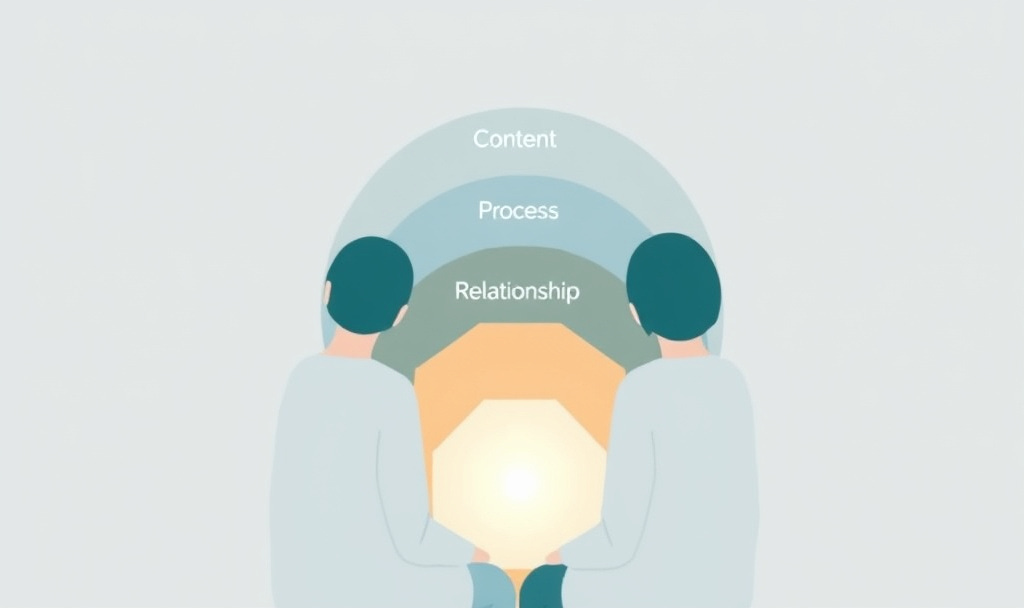
The Content–Process–Relationship (CPR) Framework is not another therapeutic technique. Rather, it is a process-oriented framework that helps therapists understand when deeper emotional experience is becoming accessible.
Instead of asking only “What emotion is this?”, the framework encourages us to ask three questions:
Content: What is the client telling me?
Process: How are they emotionally engaging with (this/that) experience?
Relationship: How is (our/their) relationship influencing what becomes emotionally possible in (this/that) moment?
Only after understanding these three layers do we begin to make sense of emotional meaning.
For me, this framework is not about making therapy slower for its own sake. It is about making our understanding more accurate—particularly when working across cultures, where emotional accessibility is shaped by relational, developmental, and cultural contexts.
I’m grateful to everyone who has been part of this journey. I hope this paper contributes something useful to the ongoing dialogue about culture, psychotherapy, and emotional processing.
📖 Read the paper here: APA PsycNet FullTextHTML page
For readers who would like a short plain-language explanation of the research paper, see the Kudos summary.
As always, I’d love to hear your reflections.
Comments
Nothing yet. Say the first thing.
Sign in to join the conversation.