
YOU MIGHT BE morally disgusted by things like optimization culture and self-enhancement, rendering you morally immune to its effects. And perhaps you decided to read this because the title made you expect the moral equivalent of a bad car accident, and you couldn’t look away. If that’s you; I offer congratulations. I am, myself, morally disgusted by the pervasive culture of optimization and self-enhancement. It seems to me politically myopic, narcissistic, and evidence of the extent to which our lives and imaginations have been captured by projects that erode our commitment to any sort of commons, and just draw us always toward the most superficial and enclosed forms of inner life (like digestion). And yet, I know myself well enough to recognize that I am not immune to its effects.
I have an antagonistic relationship with my FitBit, which I wear religiously. Nevertheless, I serve it. I mock myself, like when I say out loud to my husband that I need to go out for a short walk, or get to bed early, so that I can “get my points.” But below the mockery is the seriousness of a driving sense of discipline that I choose to expend in a way that is not quite beyond my own contempt.
I appreciated Derek Thompson’s recent critical take on this current American moment in self-enhancement. And I agreed with much that he had to say. But I disagree with his argument that this iteration of self-enhancement is different from others in the sense that it’s not religious. It may indeed be more secular, in the sense that it’s not primarily driven by a religious organization or explicit religious ideology. But I would counter that our current culture of optimization and self-enhancement is deeply theological. That’s what makes optimization feel, for many, as if it produces what seems oddly and uncannily like a thing that might only really be described as virtue.
THE QUESTION AT the heart of Thompson’s recent essay is one that has probably ghosted me for my entire adult life, or perhaps since I was sixteen and got an after-school job scanning member cards behind the desk of our local YMCA. With my new free membership I started taking yoga classes, lifting weights, running on their treadmills, trying new diets, and becoming mildly obsessed—like so many of my fellow Americans—with the pursuit of the sort of “health” that can be best measured by mirrors and PRs. Thompson, like me, recognizes the extent to which he’s susceptible to the collective drive toward self-enhancement. But he’s curious to know “at what point is it unhealthy” for people (nations, individuals) “to be obsessed with health?” Interesting that even the question itself is health-oriented, isn’t it? What better way to convince health-obsessed people to stop obsessing over health than to convince them that their obsession is unhealthy?
Thompson acknowledges that American culture has, for most of its history, always been obsessed with self-improvement of various sorts. But, he argues, “these earlier iterations of self-improvement drew their power from religion, community, or characterological projects to promote civic virtue.” Self-improvement used to be sort of deep, but now it’s shallow. Temperance, for instance, was fundamentally a social enterprise. There were many campaigners who believed that temperance would reduce poverty and domestic abuse. What makes the current era of self-improvement different, Thompson argues, is that it’s fundamentally asocial and apolitical: it’s just about the self. It’s about nothing but our own individual bodily perfection. It’s selfish, and it’s one of the factors that’s eroding our fragile social connections.
Because I study religion and theology, I’m always a little suspicious when people say “this has absolutely nothing to do with religion.” It’s rarely the case: religion has its tentacles in most dimensions of American life, if often subtly. And one of the most common tropes for pointing out the absence of religion, in a given cultural practice or discourse, is to say “this can’t possibility be about religion, because it seems self-oriented or self-obsessed” (as if religious ideas or religious people are never self-obsessive and religion is only ever prosocial). Liz Bucar’s recent work (including her new book Beyond Wellness) has also made me much more aware of the extent to which many facets of contemporary American wellness culture are drawing on religion (even when it seems as if they’re not). So I was immediately skeptical about Thompson’s claim, but I couldn’t quite articulate why.
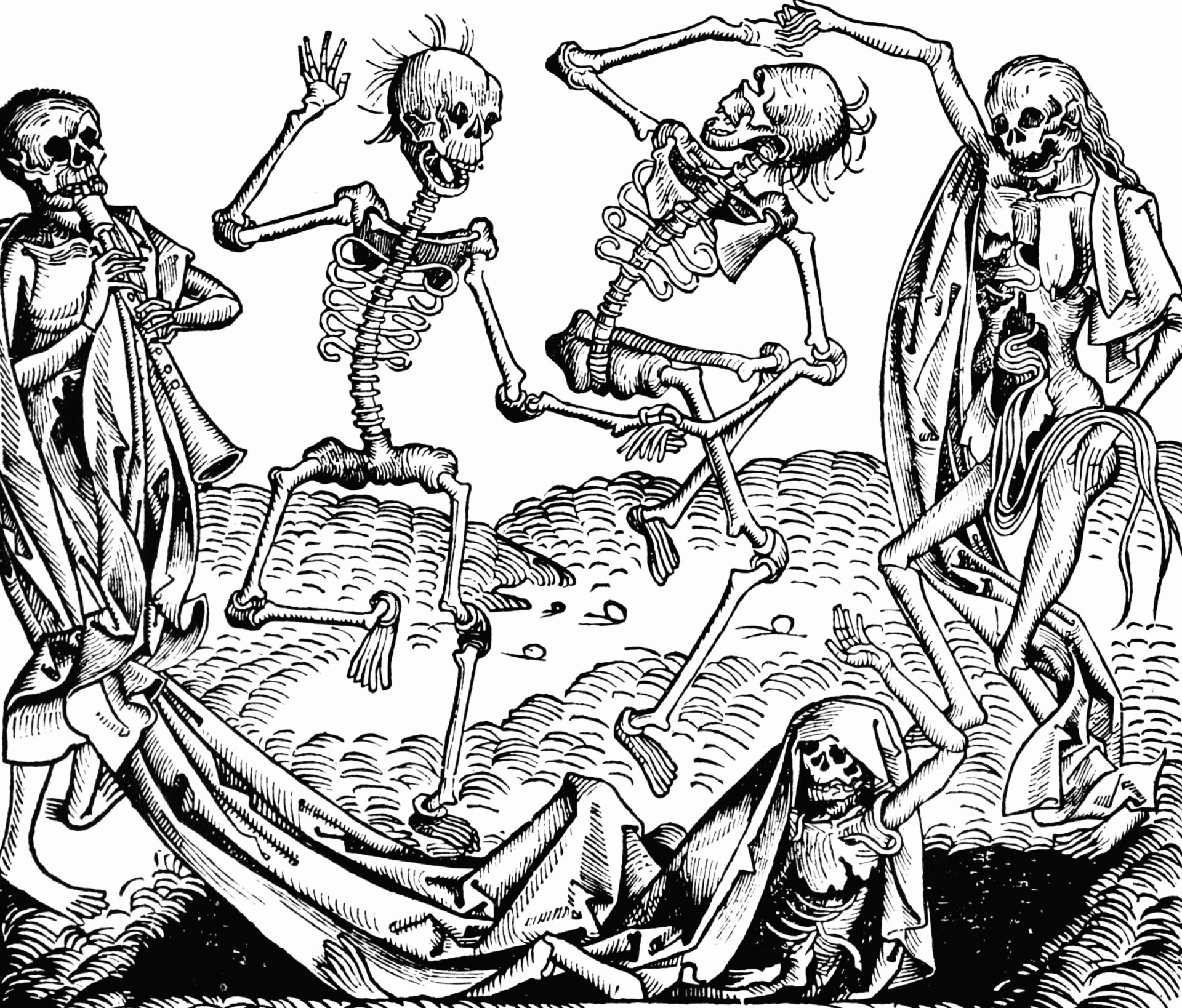
It wasn’t until I read the end of his essay—a coda, on death—that I understood where my skepticism was coming from. It’s in this section that Thompson tries out his argument that “at bottom, enhancement culture is a disposition towards death.” It’s a form of “thinking about death” and “calculating distance from death”. This is why the self-enhancement of wellness culture has experienced such a boom since the COVID-19 pandemic. I totally agree with him that our culture of optimization and self-enhancement is a disposition towards death. I think it’s a massive mortality cope. And that’s precisely why I think it’s religious, or theological.
DEATH IS ONE OF THE least secular aspects of secular life. It’s one of the areas of life that most resists being detached from religious powers and cosmovisions. Even very secular people often default to what they know are religious burial or mourning traditions, because they’ve found nothing richer or more resonant to replace them. And even very secular people often find their skepticism eroding (and some other strange thing blooming) when they sit with a dying person, or experience a genuine brush with death.
It’s also, we could say, one of the least religious aspects of religious life. It’s one of the areas of life where the confidence of religious answers tend to quickly unravel. I recognize that one of the great and enduring appeals of Christianity, for many people, is the fact that prominent forms of it promise to do away with (or erase) death for the faithful. But I also know, from conversations with many Christians, that this tends to be the part of the faith that raises the most skeptical questions for them. Clear religious explanations or dogmas tend to fall apart, in the enduringly mysterious face of death, and even religion often obligates us to make some degree of peace with its mystery.
In other words, I think that death is the crossroads where religious and secular culture become most tangled up with one another, whether we recognize that publicly or not. It’s perhaps the most difficult area of life, where a great abyss opens up and all the powers we have at our disposal (religious and secular) seem to need marshaling. Death is a phenomenon that tends to make it difficult to draw hard lines between the religious and the secular.
Even Thompson exhibits this, in his own essay, where he wants to make the argument that contemporary self-enhancement culture is non-religious. It’s not about religion, he argues, it’s about death. And yet Thompson nevertheless draws upon the language of religion as he describes enhancement culture as “worshipping death like some Aztec priest offering sacrifices to appease the angry sun god.” Does the fact that he’s referring to an indigenous tradition make it seem like something more primitive and fanatical than “real” religion? Does it make it sound like mere superstition? Maybe to him. But I read it as a sign that talking about death draws him ineluctably back toward religious (or quasi-religious) language.
In my book Sister Death, I write about an understanding of death that floats easily between religious and secular contexts (what I call a political theology). But it has its origins in ancient religious ideas, and you can easily find it at work in mainstream Christian discourses on life and death (where this particular ideology has really had a powerful, though not a singular, grip). It’s a theological argument that you can find the Apostle Paul (among others) advancing pretty clearly in biblical texts: the idea that life and death are enemies, and life is on the side of God. In this view, death becomes a kind of demonic double of life. It becomes the force of evil, in essence, that works against life at all odds. In the battle between good and evil, death is on the side of evil and it’s fundamentally at odds with the divine. It’s a horrible curse.
This is a religious, a theological, a fundamentally metaphysical idea that we can also see everywhere in secular culture when we really start to look around. We can see it in our wars against cancer, as well as our contemporary enhancement culture. Shallow and vapid as it might actually be, I think that part of what contemporary enhancement culture teaches people is that the more we can increase the vital signs within our own bodies (the more we feel alive) the more it looks or feels like we are getting the evil out.
This is why enhancement and self-optimization can feel so uncannily close to virtue.
I DON’T THINK that my FitBit makes me more virtuous: I want to be clear about that. I do think that it can sometimes make me feel something, and that thing feels strangely like what I (perhaps mistakenly) might describe as virtue. I think that feeling can be seductive. And I think it probably scratches an itch that many people feel.
Many people (though perhaps not all) want to be good. They want to do good things. They want to bring more good into the world, and enjoy those little moments when they feel as if they have. But maybe they’re not living for that feeling in every moment. So, once that feeling has been sated (once you feel as if you’ve participated in the good thing, acted on behalf of life, or created something like more life in your own body), they’re willing to let that drive go for a bit and focus on other things. Maybe optimization or self-enhancement sates them just enough. It gives them just enough of the feeling of being good, or on the side of the good. They get a bit of the evil out, so it’s time to move on and do something else.
Maybe it’s enough to simply dismiss this as false virtue or self-deception. Maybe it’s enough to tell people to go do something more genuinely virtuous. But that doesn’t seem like enough, for me. None of that makes us more aware of the fact that we might be doing this because we fear death. Or that our fear of death is a really profound and ancient religio-secular mystery that humans have been trying to cope with, in new ways, for our entire history.
If our current obsession with wellness can take us anywhere, I think it should at least take us to the edge of the great and mysterious conundrum of mortality. There’s not a lot of dopamine to be found there, on the edge of that abyss. But it is a place where more than human powers (ones that don’t clearly resolve into either life or death) have been feeding people, existentially and metaphysically, for centuries and centuries. There’s inevitably something more for us there, at that crossroads.
If you liked (or even hated!) this essay, please help me share it with others.
No posts
Comments
Nothing yet. Say the first thing.
Sign in to join the conversation.