
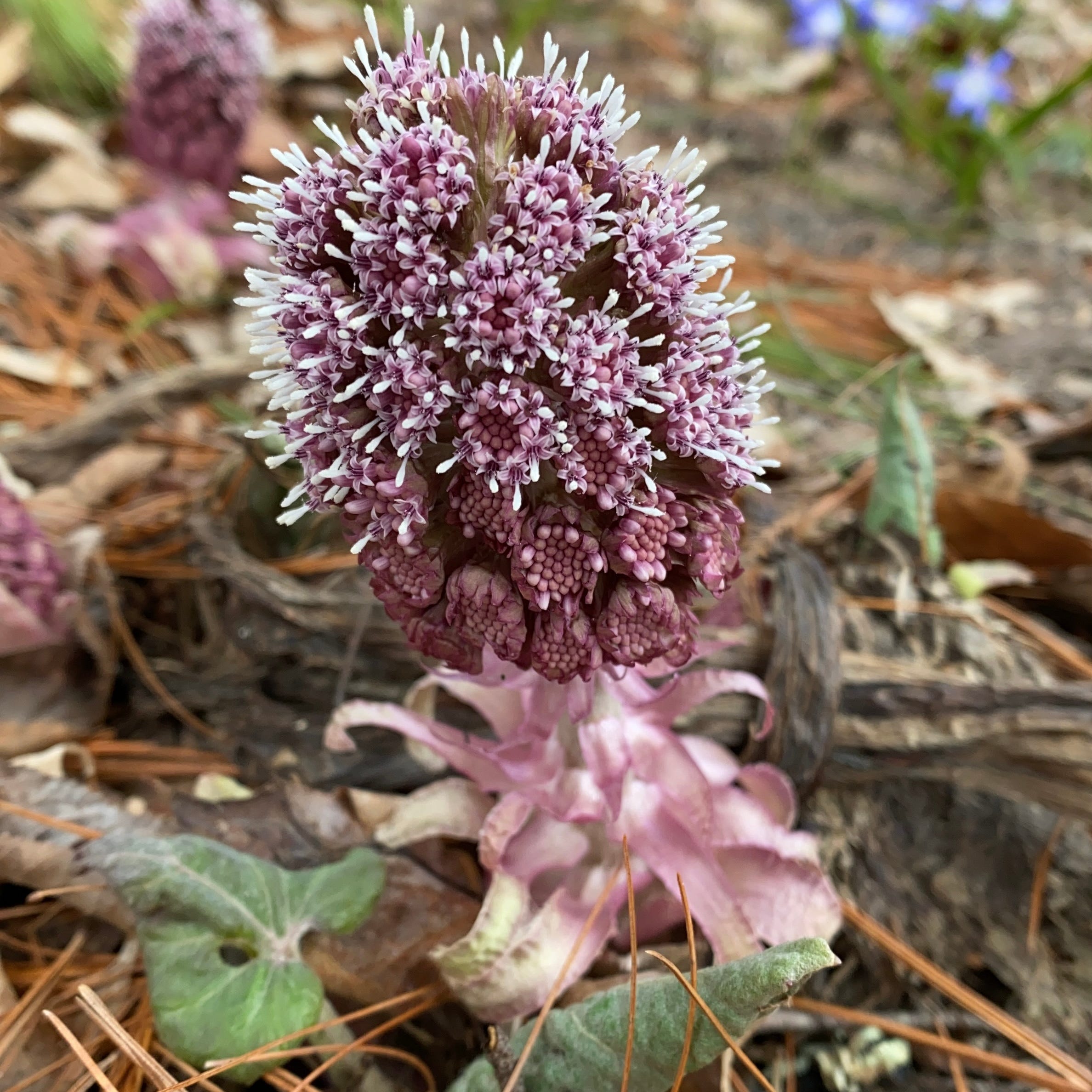
When I visited the Berkshire Botanical Garden on April 4th, I saw these strange purple things poking their heads up out of the ground here and there.
Eric, the Director of Horticulture at the garden, told me they were Japanese butterbur. I looked it up and learned it was ふき (Fuki). I grew up eating this, but I had only ever seen it in a grocery store or on a table! It made me think of my mother who would cook it for us when I was a child.
*Update: this plant may actually be Petasites hybridus, European Butterbur, rather than Petasites japonicus which is what I grew up eating - further looking into this.
There were many brown dead stems and leaves from last year lying around the flowers. I looked inside of the stem and extracted some white fiber. Apparently, in Hokkaido (the large island in the north), they produce 富貴紙 (Fukigami), a handmade washi paper. This means the production process has been fully established and can be scaled up successfully. There’s no need to reinvent the wheel. I think someone should send someone (or me!) to Hokkaido to learn the skills and bring them back!
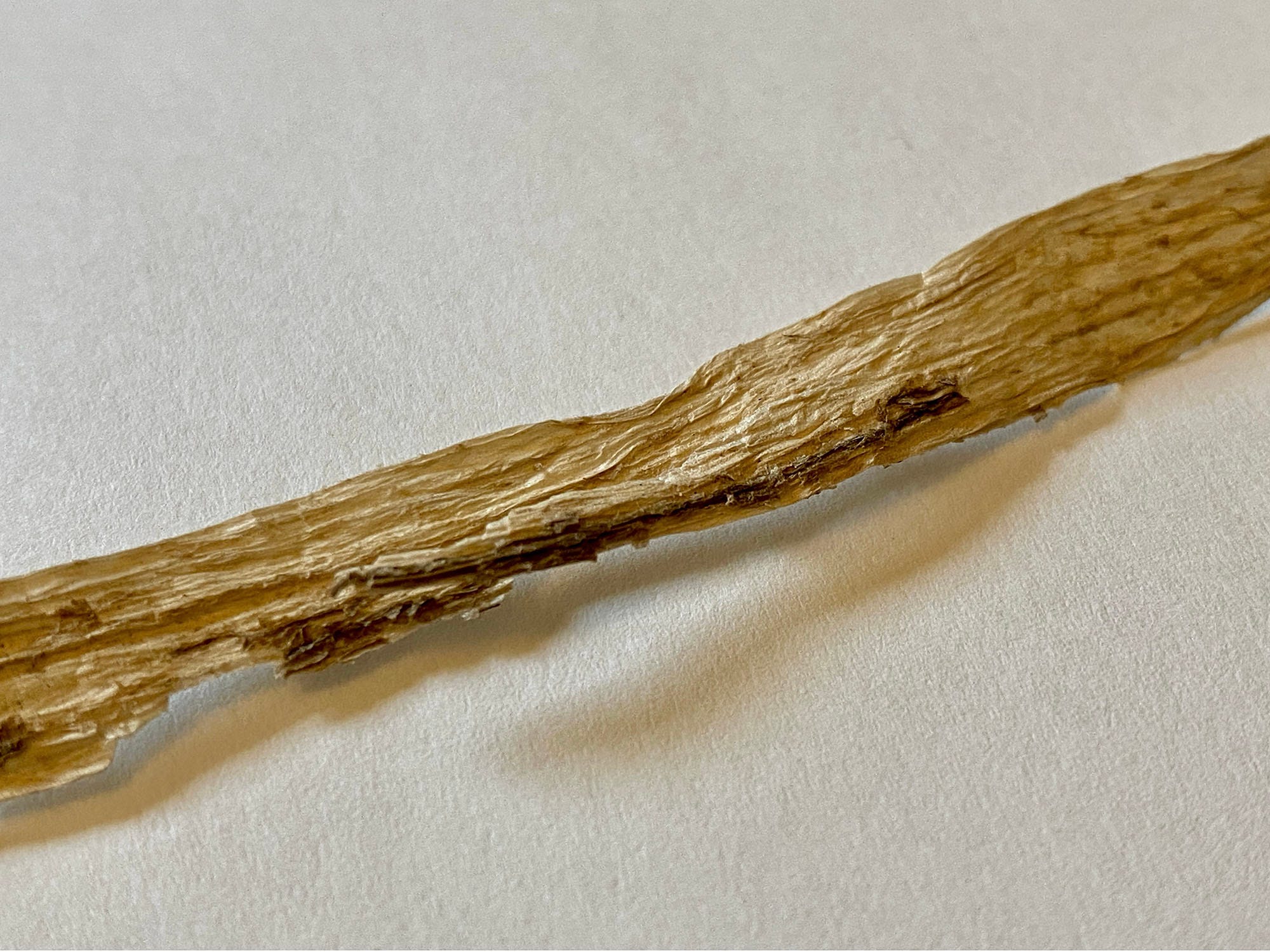
The paper is crafted from the skin discarded in the preparation of Fuki for the food market. So I guess people here need to start eating Fuki as well. It’s delicious! I haven’t eaten it forever and can’t wait to try it this summer as well as making paper.
Also, an exciting collaboration with the Berkshire Botanical Garden is happening this year. More on this project in the future.
Participated in invasive plant removal at the Buttercup Audubon Sanctuary on April 6th. I worked mostly on Japanese barberry, so that’s the harvest of the day.
But what a prickly plant this is. I get stabbed collecting them, and I get stabbed preparing them for pigment extraction. Is this any way to treat your countrymen?
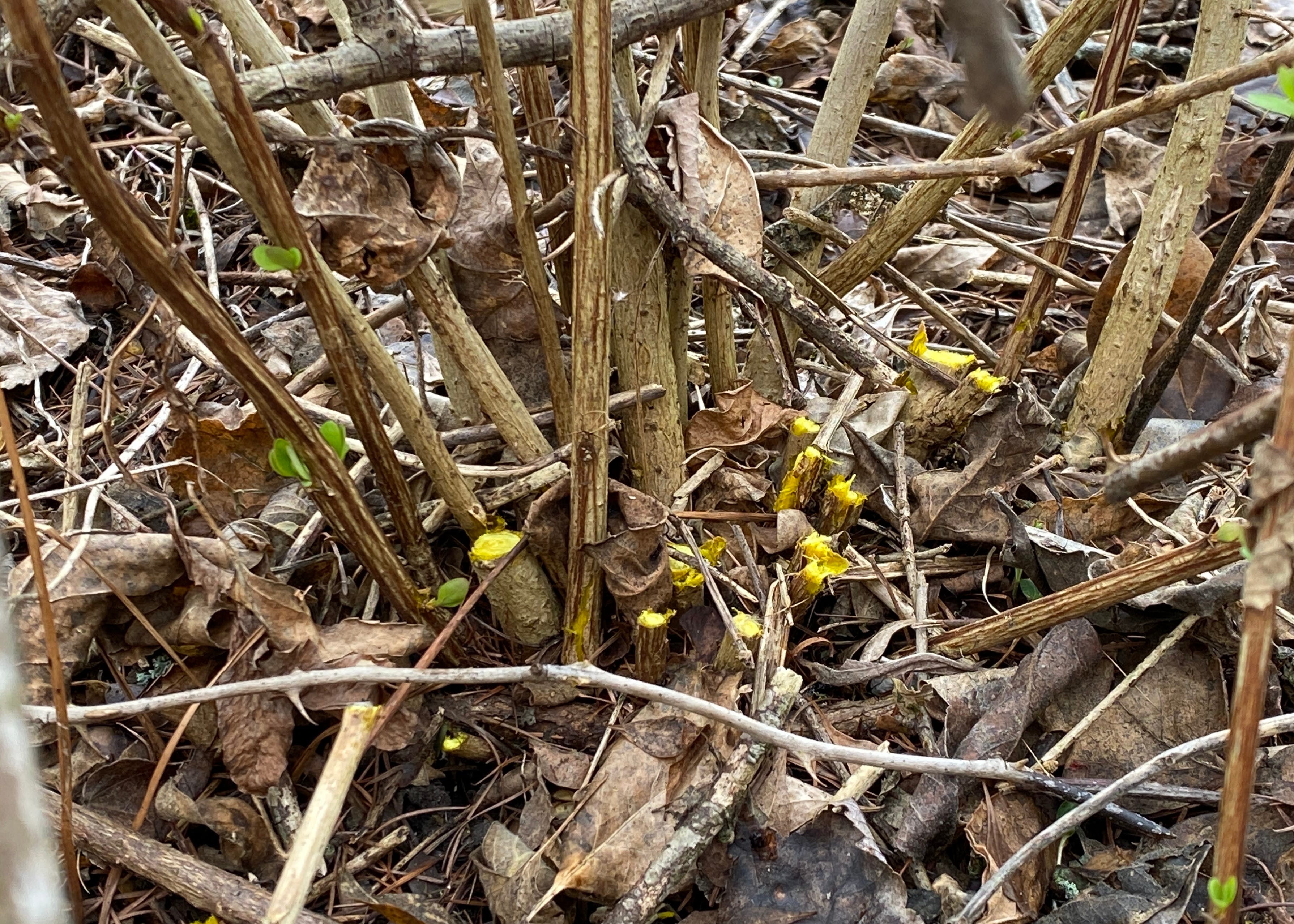
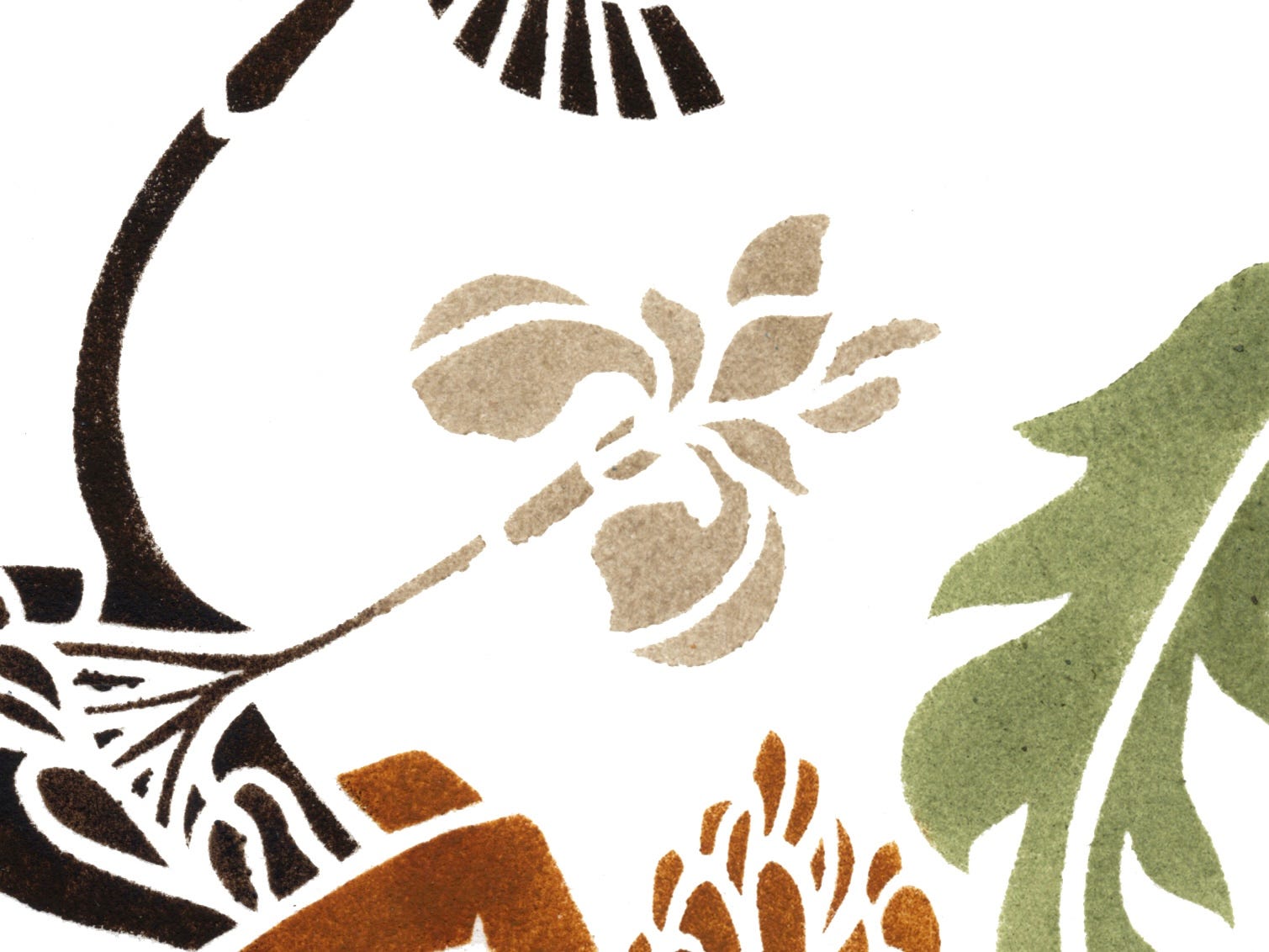
Yet I’ve come to love the warm gray that Japanese barberry bark yields (shown in the closeup shot of my painting below), so I must keep taking the abuse. It’s been a mystery to me why the inner branches and roots are such bright yellow — almost neon — and yet the color I extract is gray. How the color shifts from one to another in this process reminds me that colors are not separate; they are seamlessly connected, truly a spectrum, and every time I witness for the first time this mysterious transition, from the dye water to the filtering stage, dried up and then ground, I am amazed. It often brings to mind the line “Green is the true color of the sun” from Haruomi Hosono’s 1993 track Laughter Meditation.
I was also struck by how different this plant looks now compared to what I harvested last November. It’s spring, so it shouldn’t have been a surprise, but it was very much a “did you get a haircut?” moment. Tiny green leaves are popping out. I noticed two variations in the stems, both close to the ground and similar in thickness, but one is reddish and the other light gray, both different from the dark branches I’d been working with.
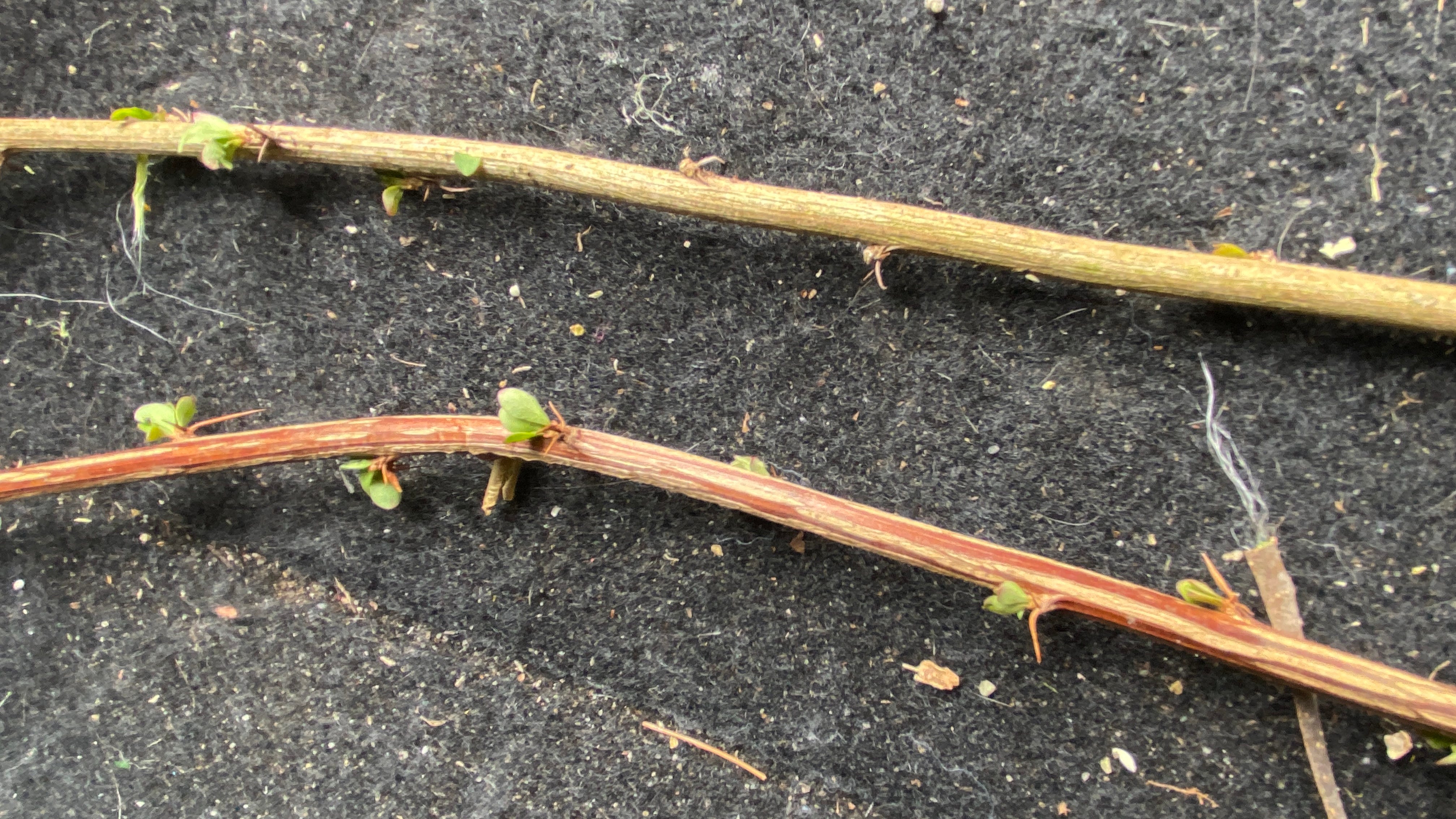
I asked Dave Decker, the land steward of New York Audubon, and he told me the reddish one is younger and the other older. I’ve cooked each separately to see if they yield different pigments. The younger one seems to have produced a much darker gray, the other the warm gray I’ve become familiar with. I’m still waiting for them to dry. Everything about this process is endlessly fascinating. I can’t wait to paint with them.
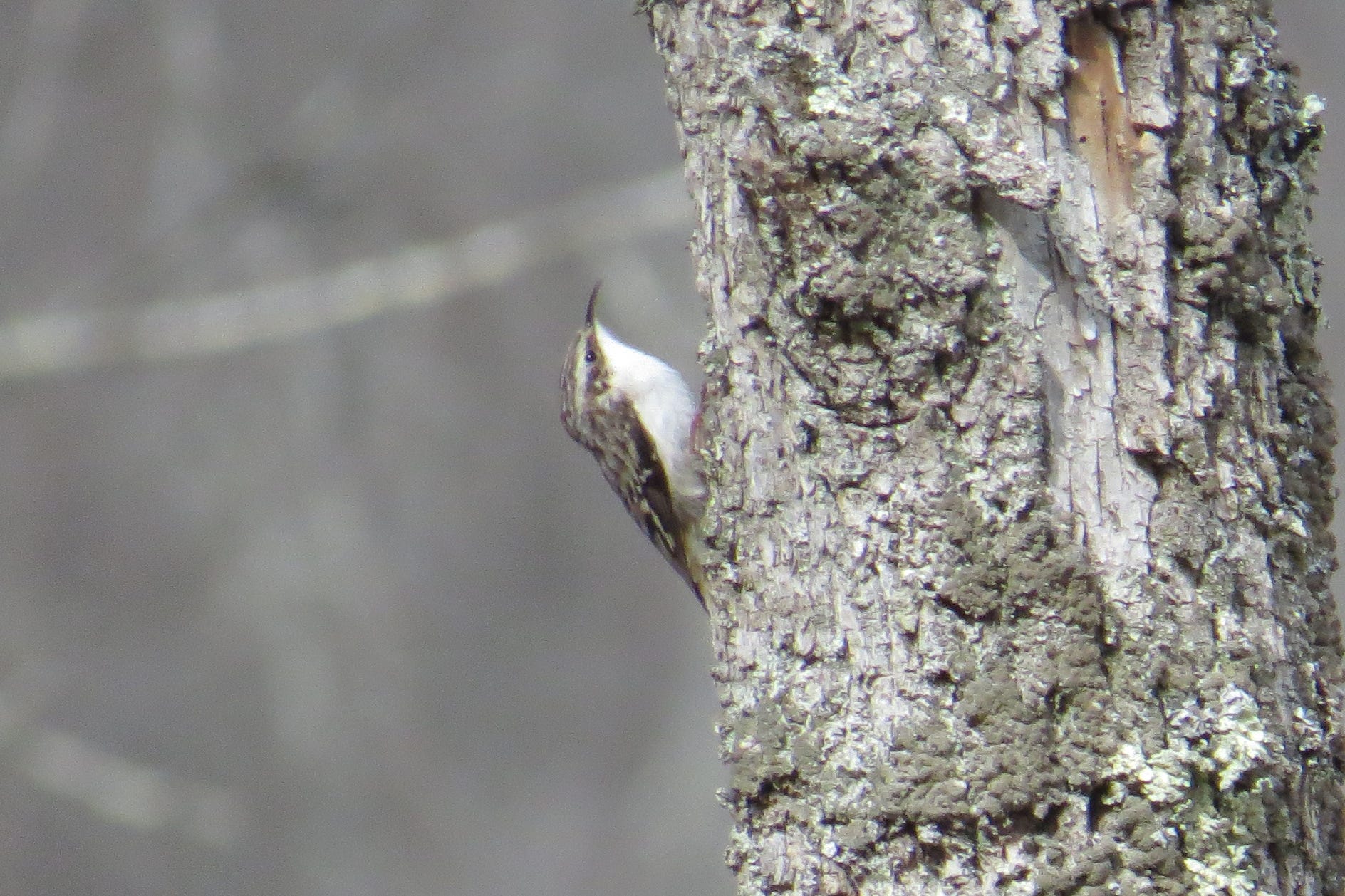
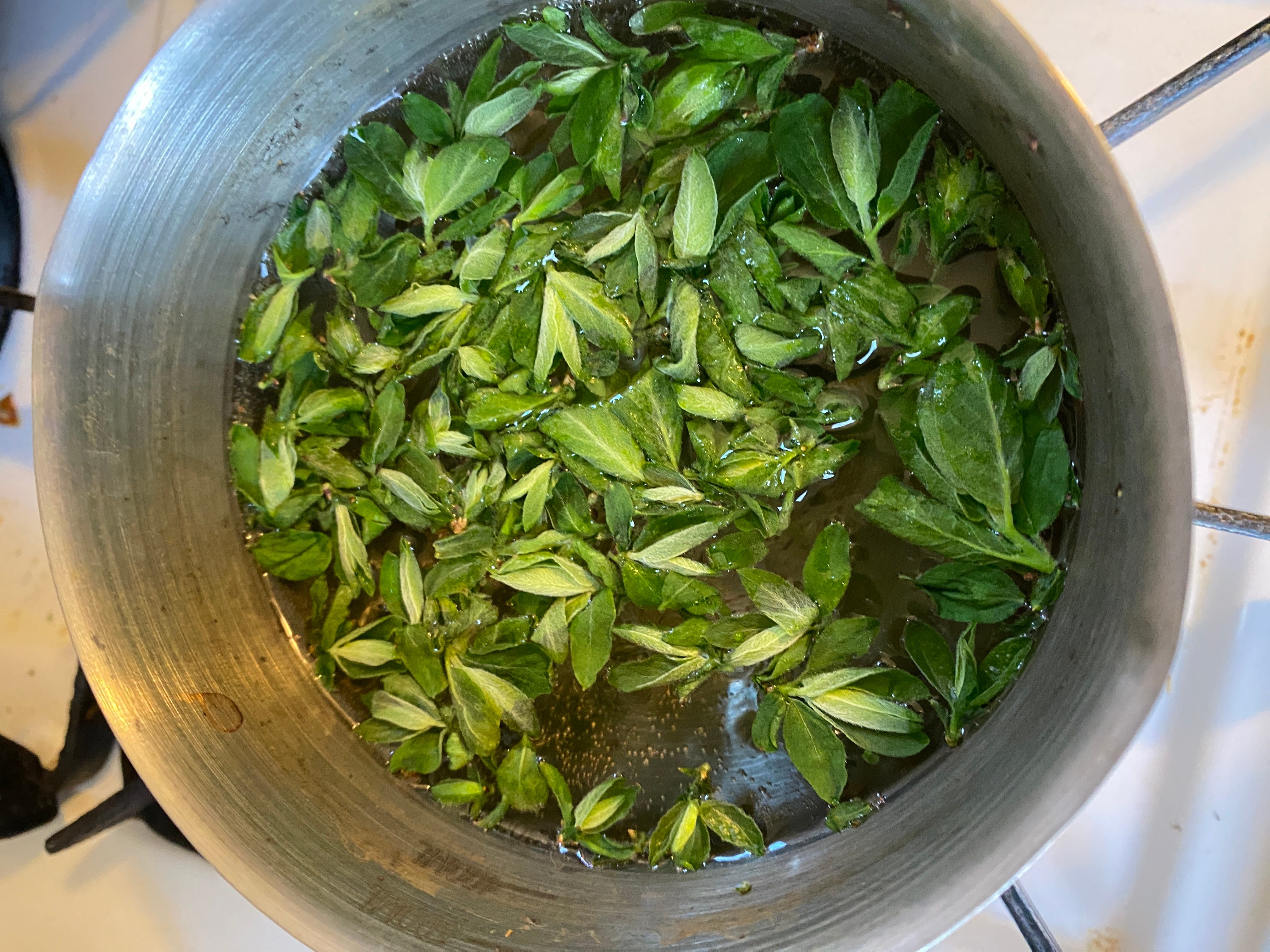
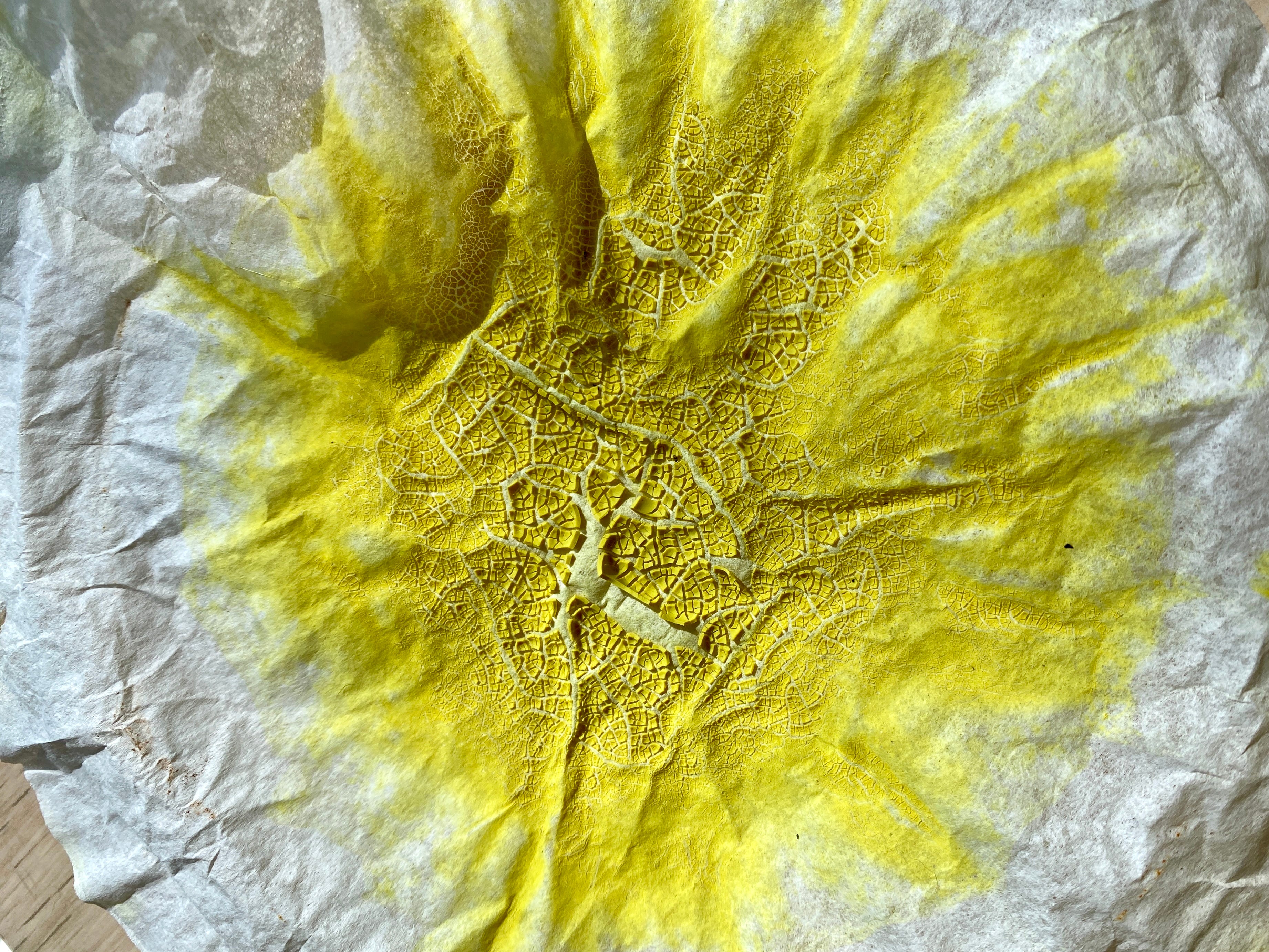
While birding with the gang at the Drowned Lands Swamp on April 7th, I collected a few Honeysuckle branches along the trail. Thanks to Kathy Schneider in the gang, one of my birding mentors and also a master gardener, I didn’t have to worry about misidentifying plants. The honeysuckle was already starting to leaf out. I meant to experiment with the bark, but since the leaves came with it, I thought, why not experiment with them too? The leaves amounted to 3.6g.
The color the leaves yielded shocked me. It’s SO bright! I had been so used to the muted colors these plants from the winter produce (and coming from eastern Japan, I’m naturally a sucker for muted color palettes). But this yellow feels like truly a color of something forcefully striving to thrive. And I guess of course it is. It came from baby leaves. “Gather Ye Rosebuds While Ye May” came to mind. I’ve heard that colors from flower petals and leaves are not as lightfast as those yielded from roots and bark. But I will find out.
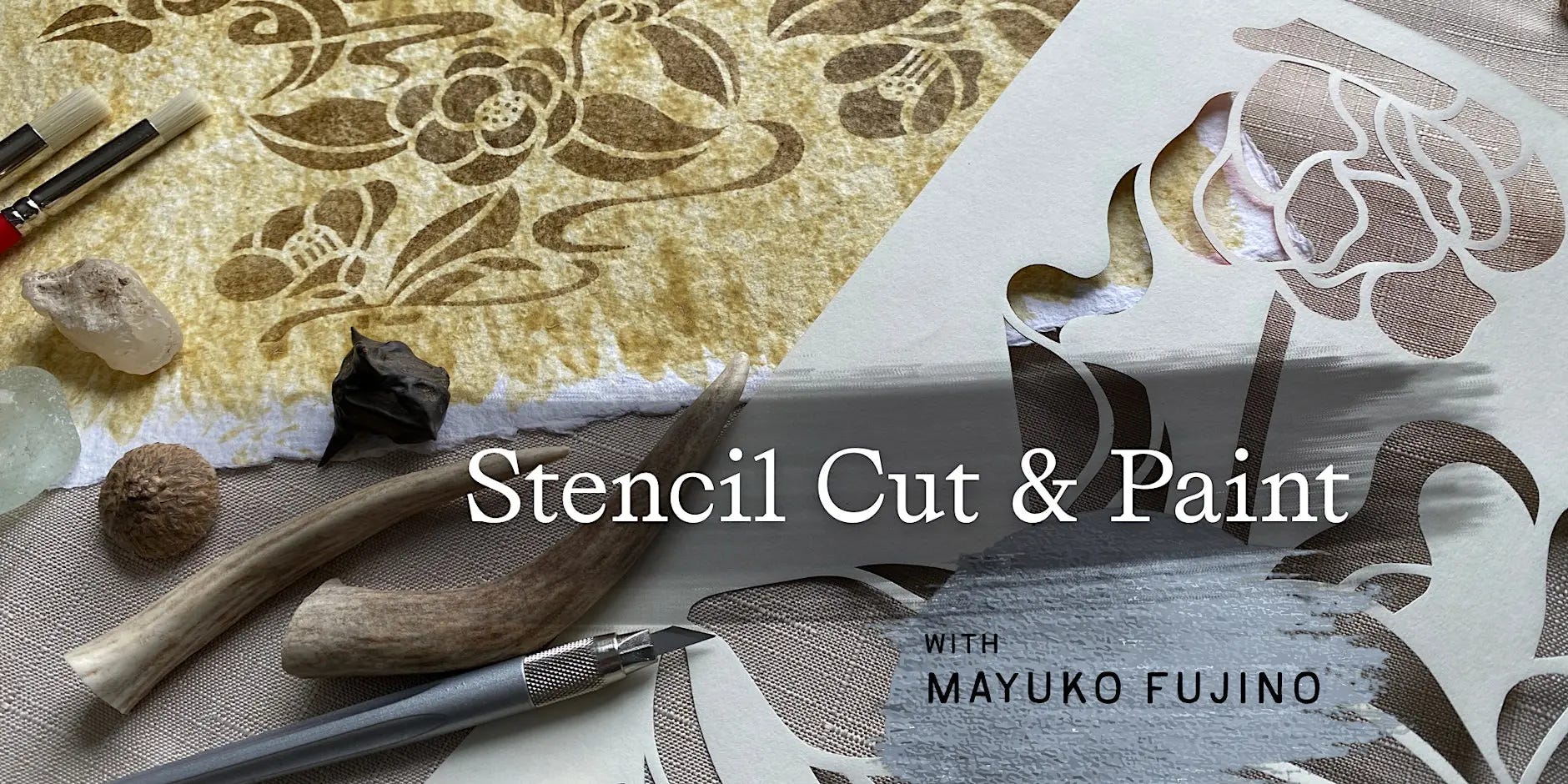
Join us as we venture into nature to find simple shapes and transform them into unique stencil designs. Participants will create stencil paintings on paper to take home, using cutting tools with safety guidance provided. All materials are included, and the workshop is suitable for beginners.
Fee: $75 + taxes, all materials included. RSVP here.
WORKSHOP EXPERIENCE WEEKEND is a weekend festival of hands-on learning, creativity, and community with over 26 workshops and events. For more information, please visit here.
Fee $45, all materials included. RSVP here.
Comments
Nothing yet. Say the first thing.
Sign in to join the conversation.