
Sam Altman has written one of the defining essays of our time. An inspiring ode to the future, Altman declared that “it is possible that we will have superintelligence in a few thousand days,” bringing forth a “shared prosperity to a degree that seems unimaginable today; in the future, everyone’s lives can be better than anyone’s life is now.”
He imagines a world where “we can each have a personal AI team, full of virtual experts in different areas, working together to create almost anything we can imagine,” and that, “although it will happen incrementally, astounding triumphs – fixing the climate, establishing a space colony, and the discovery of all of physics – will eventually become commonplace.” All that is left, in Altman’s mind, is scaling the technology, simply through “more compute and data”, and then maximising “AI’s benefits while minimising its harms.”
After months of relative silence, this was a masterfully defining intervention in the debate. Whatever the challenges we inevitably encounter, they should be framed by the maxim: “the upside is so tremendous that we owe it to ourselves, and the future, to figure out how to navigate the risks in front of us.”
Now, Altman clearly has every incentive to make us misty-eyed about a future of superintelligent superabundance. He needs to raise billions to scale (with the latest round targeting $6.5 billion reportedly oversubscribed, even with a minimum contribution of £250 million), and, now that he’s turned OpenAI into a fully for-profit company of which he could have a £10 billion share, he has a personal stake as well. Nevertheless, the onus is now on AI sceptics to prove Altman wrong.
This week has felt a bit like the film ‘Don’t Look Up’. Starring Leonardo Di Caprio and Jennifer Lawrence, the 2021 comedy sci-fi depicted humanity’s inability to respond effectively to a giant asteroid headed towards Earth, despite the warnings of scientists. First, politicians, the media and the public laughed, then they didn’t believe, then they tried to embrace it, and finally, they reacted ineffectively.
Written as a thinly veiled allegory for the climate crisis, perhaps it’s more fitting for how we’re reacting to the spectre of superintelligence. Astoundingly, not a single UK newspaper covered Altman’s essay.
While I’m wary of using cultural memes like ‘Don’t Look Up’ (it’s easy to slide into the arrogant mentality of ‘people are talking about X, but what I care about is the real issue behind everything’), I think it has merit here. The timeframes are too short for AI to be a buzzword people use to appear ‘up with the latest technology’. We have months before things change very quickly.
I enjoyed this FT opinion piece by Lindsay Hooper, CEO of the University of Cambridge Institute for Sustainability Leadership, which argues that ESG is often a drag on profitability, and therefore is almost always a secondary consideration. Here’s the key paragraph on the problem:
“The core issue is not intention but execution. ESG has been largely an extra layer on top of traditional business models to manage risks and enhance reputations. But this fails to address the fundamental tension between profitability and sustainability. As long as the market rewards short-term gains over long-term resilience, businesses will harm the planet, and markets will destroy the foundations on which they depend.”
And here’s her solution:
“Leverage the market’s potential to deliver change quickly and at scale by redesigning business incentives and penalties. This will require a critical mass of businesses to push for government action — and a corporate mindset shift to view sustainability as a matter of competitiveness, not responsibility. We need proactive business support for a redesign of markets.”
This makes a lot of sense and appeals to my general view that almost everything is downstream of incentives, but I think it lets governments off the hook. It would be great if business pushed for legislation which eliminated “the tension between profitability and sustainability,” but we should acknowledge that effectively means reducing the profitability of markets, i.e. it’s not in their own interests.
Hooper is correct that “climate change and biodiversity loss are not abstract threats but real and measurable factors that will undermine business as usual,” but over what timeframe? For most businesses, we’re talking decades before they encounter serious trade-offs. Businesses don’t act on periods that long, making Hooper’s request a little fanciful. Sure, business needs to step up. But first and foremost, governments need to step in.
Apologies for anyone who’s sick of Labour’s slogan at their Party Conference this week, but I thought I’d take the opportunity to highlight some change that really matters.
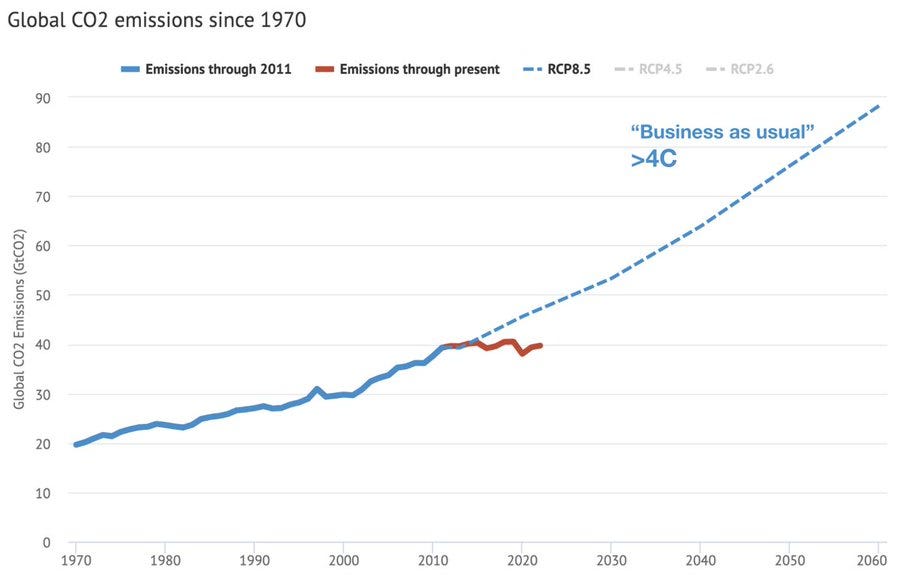
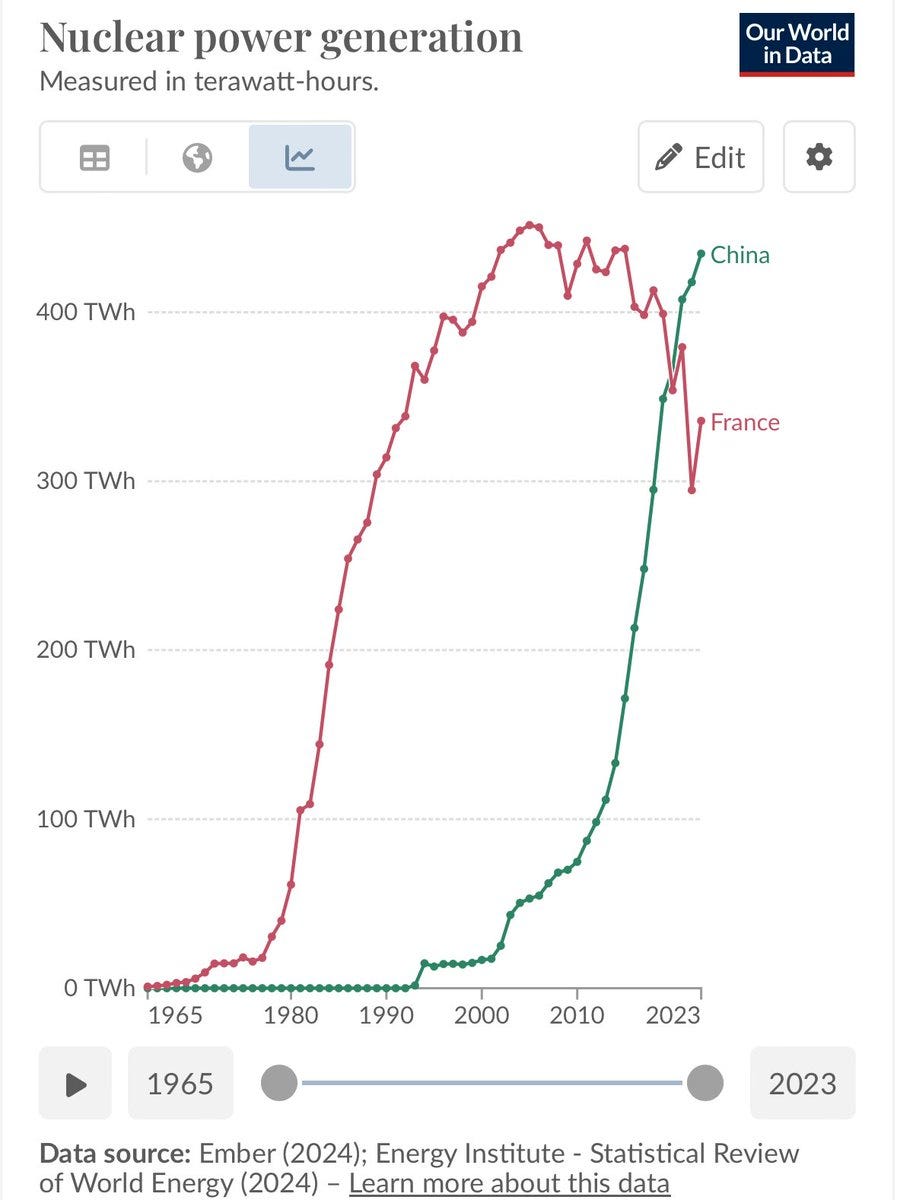
Jade S. Sasser wrote a fascinating promotional article in the Los Angeles Times for her new book, Climate Anxiety and the Kid Question: Deciding Whether to Have Children in an Uncertain Future, quoting extended passages from interviews with people spurning parenthood.
The article was predictably ridiculed by natalists, who accused the interviewees of prematurely giving up on the future and condemning it as a result (or, less sympathetically, calling it “anti-human propaganda”).
But I think these critiques failed to engage with the substance of the interviewees’ arguments. I was expecting the familiar line of ‘every additional human, particularly in developed countries, adds yet more burden to the planet through the resources they will inevitably consume, and the greenhouse gases they will emit, worsening climate change.’
Although I disagree with that argument (because we need young, smart people to innovate and implement advanced sustainable economies, as others pointed out), this isn’t the argument the interviewees made. Instead, they didn’t want to inflict the future’s lower and unstable living standards, caused by climate change, on their children. See these quotes:
“I’m worried about what they would have to deal with growing up.”
“Would my child have a good quality of life? Will they be able to survive?”
“With all of the things we see going on in the world, it seems unfair to bring someone into all of this against their will.”
“[I] started feeling like having kids is definitely not a sustainable thing to do. … I don’t want them to grow up and have to leave their home because of sea level rise. Or be worried because of really weird weather patterns.”
These people aren’t diehard environmentalists, forgoing having children to save the planet. They’re caring paternalists who are so scared about climate change that they think the only way to protect their future children is to stop them living through it.
This is an important distinction because it requires a very different response. What do you do when people are scared? You comfort, console and tell them everything will be ok. Eventually, you put their fears in context, hoping that they’ll see that things aren’t as bad as they’d thought. That’s what we need to do here. We need to tell people that, even as the planet warms, life will be worth living.
I’m late to this news, but I wanted to note that, two weeks ago, China increased its retirement age for the first time since 1978. The country will gradually extend it for all men from 60 to 63, for women in white-collar jobs from 55 to 58, and for women in blue-collar work from 50 to 55. The change will take effect in January and be phased in over 15 years. For context, the UK retirement age is now 66 and will soon increase to 67.
China faces a particularly acute crisis because of a combination of its low fertility rate (rapidly approaching 1.0), low retirement age (see above), and ageing early-boomer population (see below). In just a few years, the bulge of 50-year-olds will all enter retirement.
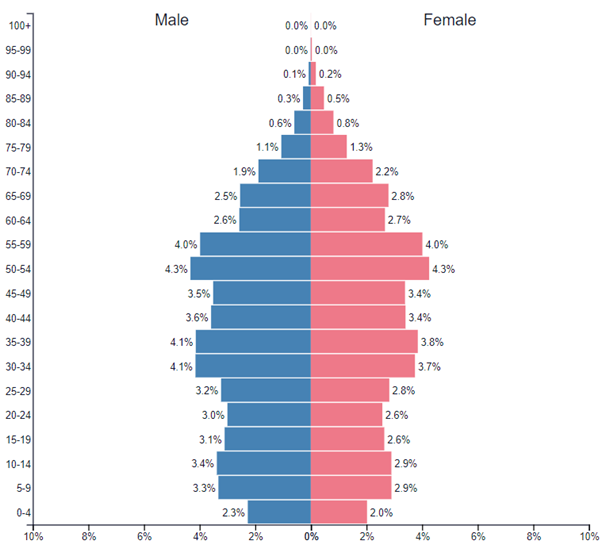
This leads to a punishing old-age dependency ratio. Although the standard definition of ‘% of population over 65’ / ‘% of population aged 16-64’ puts China is a slightly more favourable position to the US (e.g. 21% vs 27% today), a more sensible definition of ‘% of population of retirement age’ / ‘% of population aged 16-64’ leads to a bleak place in the future. In 2050, China’s will be 52% compared to America’s 39%, while in 2100, China’s will reach 83% compared to America’s 55%.
You might think that China is uniquely disadvantaged, but in the latter half of the century, I predict Turkey will be suffering too. Its fertility rate is hovering just above 1.5 and its retirement age is… 49 for women and 52 for men!!
No posts
Comments
Nothing yet. Say the first thing.
Sign in to join the conversation.